Clarity Act: What the Senate Crypto Vote Means in 2026
Affiliate Disclosure: This article may contain affiliate links. We may earn a commission at no extra cost to you. All opinions are our own.
Marcus Chen
Senior Crypto Analyst & Educator
Certified Blockchain Professional | Former Wall Street Analyst
Marcus Chen is a cryptocurrency analyst and educator with over 8 years of experience in digital asset trading. He has helped thousands of beginners navigate the crypto markets through practical, actionable education.

This article contains affiliate links. We may earn a commission at no extra cost to you if you make a purchase through these links. See our affiliate disclosure for details.
+Clarity Act Crypto Regulation: What the Senate Vote on May 14 Means for Bitcoin and DeFi in 2026
+ +The Clarity Act crypto regulation bill is days away from a pivotal Senate Banking Committee vote — and if you hold Bitcoin, use DeFi protocols, or trade on U.S. exchanges, this legislation will directly affect you. Scheduled for May 14, 2026, the vote could be the most consequential moment for U.S. crypto policy since the SEC approved spot Bitcoin ETFs in early 2024.
+ +Here's what's actually in the bill, why it matters, and what it means for your portfolio right now.
+ +What Is the Clarity Act?
+ +The Clarity Act is a comprehensive crypto market structure bill working its way through the U.S. Senate. The House passed its own version back in July 2025, and now the Senate Banking Committee — chaired by Senator Tim Scott — is set to mark up and vote on the Senate version on May 14, 2026.
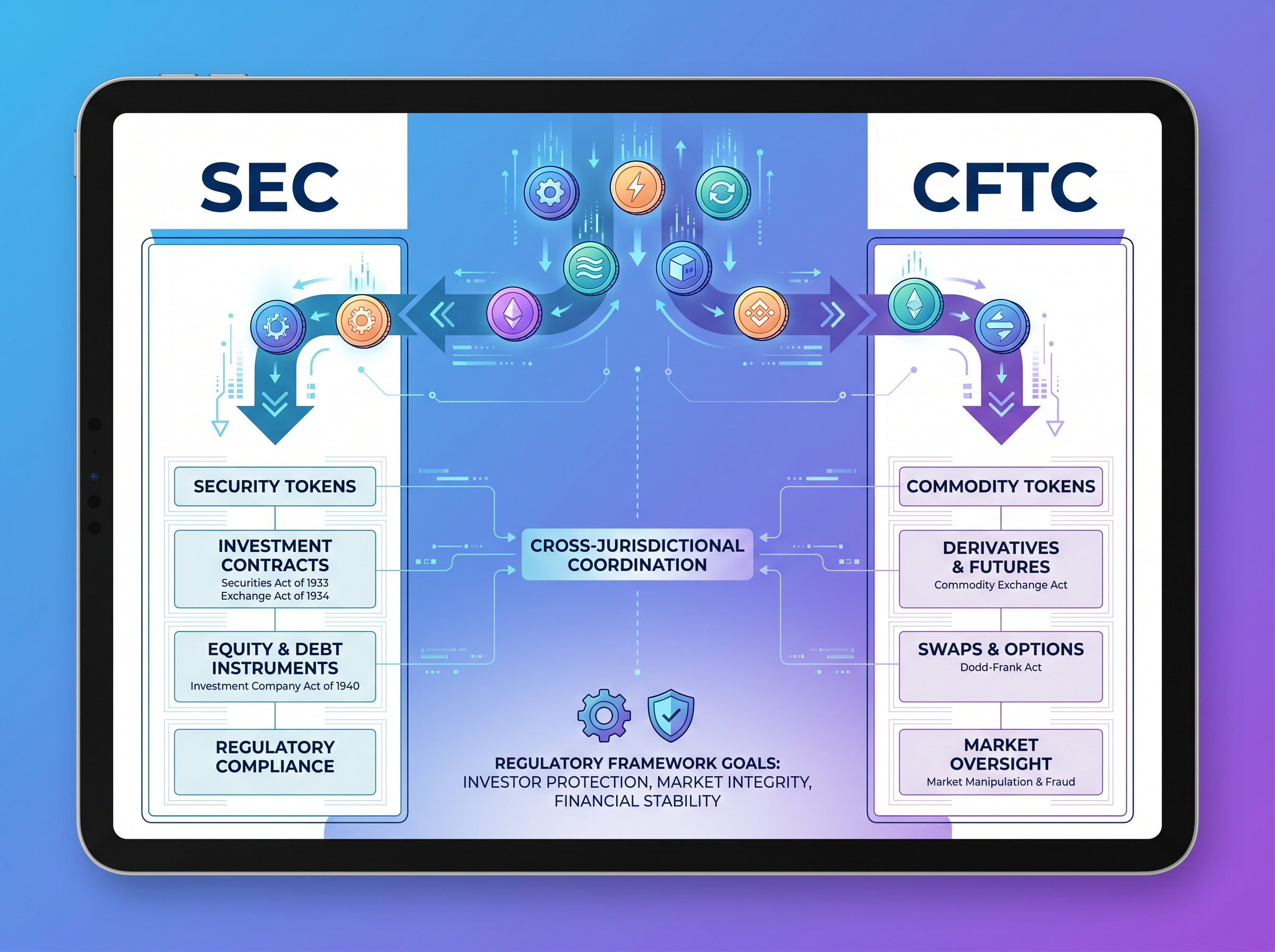
+ +Think of it as the rulebook the crypto industry has been waiting years for. Right now, exchanges, token issuers, and DeFi developers operate in a legal gray zone. The Clarity Act aims to end that ambiguity by drawing clear lines between what counts as a security (SEC territory) and what counts as a commodity (CFTC territory).
+ +Prediction markets currently assign a 75–89% probability that the Clarity Act becomes law in 2026. That's not a guarantee, but it's a strong signal that Washington is finally serious about getting this done.
+ +The Five Key Provisions You Need to Know
+ +1. SEC vs. CFTC: Who Regulates What
+ +The bill splits crypto oversight between two regulators. Digital assets deemed securities — think tokens that represent ownership stakes or profit-sharing rights — fall under SEC jurisdiction. Commodity-style assets like Bitcoin and Ethereum would be overseen by the CFTC. This matters enormously for exchanges like Coinbase and Kraken, which have faced years of SEC enforcement actions over which tokens they can list.
+ +2. Stablecoin Rules — With a Yield Twist
+ +Only "permitted issuers" would be allowed to issue payment stablecoins for U.S. persons. The bill also restricts paying interest or yield on stablecoin balances in ways that mimic bank deposits — a provision that has banking groups like the American Bankers Association cheering and crypto firms pushing back hard.
+ +Senators Thom Tillis and Angela Alsobrooks reached a compromise on the yield language, but it remains one of the most contested parts of the bill. If you're earning yield on USDC or USDT through DeFi protocols, watch this closely.
+ +3. DeFi Developer Protections
+ +One of the more developer-friendly provisions mirrors the "Blockchain Regulatory Certainty Act." Software developers who build DeFi protocols but don't control user funds would be explicitly protected from being classified as money transmitters. This is a big deal for Ethereum-based DeFi — it could unlock a wave of U.S.-based development that has been quietly moving offshore to avoid regulatory risk.
+ +
4. Anti-CBDC Provisions
+ +The bill includes explicit language blocking the development of a U.S. Central Bank Digital Currency (CBDC). This aligns with the current administration's stance and has broad Republican support. For Bitcoin maximalists, it's a win — it keeps the field clear for decentralized alternatives.
+ +5. The Ethics Controversy
+ +Here's where it gets messy. Democratic senators, led by Elizabeth Warren, are pushing for ethics provisions that would prevent government officials from profiting from the crypto industry. The current draft doesn't include those provisions. Warren has called the bill a vehicle for "turbocharging crypto corruption," referencing the President's reported crypto interests. White House officials have signaled they won't accept language that singles out specific officeholders.
+ +This ethics fight is the biggest threat to bipartisan support — and the bill needs 60 votes to pass the full Senate. Getting there without Democratic buy-in is a steep climb.
+ +What the Market Is Saying Right Now
+ +Bitcoin is trading at $82,029 as of May 11, 2026 — its strongest opening price since January 31. The total crypto market cap sits at $2.73 trillion. Institutional money is flowing in at a pace that would have seemed impossible two years ago.
+ +Spot Bitcoin ETFs recorded $2.44 billion in inflows during April 2026 alone — a year-to-date peak. In early May, daily inflows hit $532 million on a single day, driven primarily by BlackRock's IBIT and Fidelity's FBTC. ETFs are now absorbing an estimated 4,500–5,000 BTC per day, while miners produce only about 450 BTC daily. That supply-demand gap is structural, not speculative.
+ +Strategy (formerly MicroStrategy) added another 535 BTC last week for $43 million at an average price of $80,340. Their total holdings now stand at 818,869 BTC — acquired for $61.86 billion at an average cost of $75,540 per coin. With Bitcoin above $82K, they're sitting on a substantial unrealized gain.
+ +The Clarity Act vote is adding a regulatory tailwind to all of this. Markets are pricing in a high probability of passage, and that confidence is showing up in price action.
+ +Want to understand the economics behind Bitcoin? The Bitcoin Standard is essential reading for every crypto enthusiast.
+ +What Happens If the Bill Passes — And If It Doesn't
+ +If It Passes
+ +Regulatory clarity would likely accelerate institutional adoption. Exchanges could list more tokens without fear of SEC enforcement. DeFi protocols could operate more openly in the U.S. Stablecoin issuers would have a clear compliance path. Analysts expect this scenario to be broadly bullish for crypto markets — not because of a single price spike, but because it removes a persistent overhang that has kept some institutional capital on the sidelines.
+ +Key resistance levels to watch: $85,000, then $90,000, with $100,000 as the medium-term target if institutional inflows continue.
+ +If It Fails
+ +A failed vote wouldn't be catastrophic — the market has survived regulatory uncertainty before. But it would delay reform discussions past the 2026 elections, potentially by years. Enforcement actions would continue. Some projects would keep moving offshore. The regulatory vacuum that has defined U.S. crypto policy since 2017 would persist.
+ +Protect your assets regardless of how the vote goes. Protect your crypto assets with a Ledger hardware wallet — the gold standard in cold storage security.
+ +
What This Means for DeFi Users Specifically
+ +The stablecoin yield restrictions deserve special attention from DeFi participants. If the bill passes as written, protocols that pay yield on stablecoin deposits — think Aave, Compound, or Curve — may face new compliance requirements for U.S. users. The exact implementation details will matter enormously, and the final language is still being negotiated.
+ +The DeFi developer protections, on the other hand, are genuinely positive. If you're building on Ethereum or Solana, having explicit legal protection from money transmitter classification removes a significant legal risk that has been hanging over the space for years.
+ +The Senate Path Forward
+ +Even if the Banking Committee votes yes on May 14, the bill still needs to pass the full Senate (60 votes), get reconciled with the House version, and land on the President's desk before the end of 2026. That's a lot of steps. But the momentum is real — this is the furthest a comprehensive crypto market structure bill has ever gotten in the U.S. legislative process.
+ +Senator Tim Scott has framed the bill as putting consumers first, combating illicit finance, and keeping the future of finance in the United States. Whether you agree with that framing or not, the political will to pass something is clearly there on the Republican side.
+ +Want to accelerate your trading journey? Explore Icoinpro's daily trading signals and education platform.
+ +Actionable Takeaways for Crypto Investors
+ +- +
- Watch May 14: The Senate Banking Committee vote is the next major catalyst. A yes vote will likely be bullish for crypto markets in the short term. +
- DeFi yield strategies may need adjustment: If you're earning yield on stablecoins through U.S.-accessible protocols, monitor how the stablecoin yield provisions evolve in the final bill text. +
- Bitcoin's supply-demand math is compelling: ETFs absorbing 10x the daily mining output is a structural dynamic, not a temporary trend. The Clarity Act passing would add regulatory tailwind to an already strong fundamental picture. +
- Don't ignore the ethics fight: The lack of ethics provisions is the biggest wildcard for bipartisan support. If Democrats walk away, the 60-vote threshold becomes very difficult to clear. +
- Secure your holdings: Regulatory clarity or not, self-custody remains the gold standard. Hardware wallets keep your private keys offline and out of reach of exchange failures or regulatory freezes. +
Disclaimer: This content is for informational purposes only and should not be considered financial advice. Cryptocurrency investments carry significant risk. Always do your own research (DYOR) before making any investment decisions.
+July 2026 Update: CLARITY Act Still Stalled — What Happened Since May
When we first covered the CLARITY Act in May 2026, the bill had just passed the Senate Banking Committee. Two months later, the picture is more complicated — and the stakes are higher. Here's the current state of play as of mid-July 2026.
Where the Bill Stands Now
The CLARITY Act (H.R. 3633) is now on the Senate Legislative Calendar as Calendar No. 423, placed there on June 1, 2026. But being on the calendar doesn't mean it gets a vote. As of mid-July, no cloture motion has been filed and no floor vote has been scheduled. The bill needs 60 votes to overcome a filibuster — and right now, it doesn't have them.
The Republican-led Senate holds 53 seats. That means at least 7 Democrats need to cross the aisle. Currently, only two — Senators Ruben Gallego and Angela Alsobrooks — have signaled potential support, and only if their specific conditions are met. The math is brutal.
Three Sticking Points Blocking the Vote
Three specific disputes are preventing the bill from moving forward:
- Ethics and Financial Disclosures: Senate Democrats want enforceable language restricting government officials from maintaining crypto business ties. The White House has reportedly opposed provisions targeting the president's personal holdings — creating a negotiation deadlock that's proving very hard to break.
- Developer Protections (Section 604): The bill includes BRCA-derived language shielding non-custodial software developers from being classified as money transmitters. Law enforcement groups argue this could impede criminal investigations. DeFi advocates say it's essential. Neither side is budging.
- Stablecoin Yields: Following the GENIUS Act's enactment in July 2025, there's ongoing debate about whether platforms can offer yield on stablecoins. The American Bankers Association argues current drafts contain loopholes that bypass yield prohibitions.
The August Recess Deadline
Analysts — including those at Galaxy Digital — estimate the probability of passage in 2026 at approximately 50%. The Senate calendar is congested with competing priorities: the National Defense Authorization Act (NDAA) and FISA Section 702 reauthorization are both competing for floor time. If the CLARITY Act doesn't pass before the August recess, most observers believe it effectively dies for the year.
For context on how the SEC is already acting under existing authority, see our analysis of SEC Regulation Crypto 2026: The $75M Token Exemption and Safe Harbor. And for the broader market impact of regulatory uncertainty, our Crypto Cycles in 2026 analysis covers how regulation affects altcoin season timing.
Frequently Asked Questions: CLARITY Act 2026
Q: Has the CLARITY Act passed as of July 2026?
No. As of mid-July 2026, the CLARITY Act has not passed the Senate. It's on the Senate Legislative Calendar (Calendar No. 423) but has no scheduled floor vote and lacks the 60 votes needed to overcome a filibuster.
Q: What are the main obstacles to the CLARITY Act passing?
Three main disputes: (1) ethics/financial disclosure requirements for government officials, (2) developer protections under Section 604 that law enforcement opposes, and (3) disagreements about whether stablecoin platforms can offer yield. All three remain unresolved as of July 2026.
Q: What happens to crypto regulation if the CLARITY Act fails?
If the bill fails, the SEC and CFTC continue operating under existing, ambiguous frameworks. The SEC's recent $75M token exemption and safe harbor provisions (enacted separately) would remain in effect, but comprehensive market structure clarity would be delayed — potentially until 2027 or later.
Q: What is the GENIUS Act and how does it relate to the CLARITY Act?
The GENIUS Act, enacted in July 2025, established the first federal framework for payment stablecoins. The CLARITY Act is broader — it covers the full digital asset market structure, including which tokens are securities vs. commodities, exchange registration, and DeFi developer liability. They're complementary but separate pieces of legislation.
Q: How does the CLARITY Act affect DeFi developers?
Section 604 of the CLARITY Act would shield non-custodial software developers from being classified as money transmitters — a significant protection for DeFi builders. However, law enforcement groups oppose this language, arguing it could impede criminal investigations. This remains one of the bill's most contentious provisions.
Understanding the market is step one. Profiting from it is step two.
Reading analysis is valuable, but knowing how to generate your own — and act on it with discipline — is where real results come from. That skill is trainable.
The program I recommend to people who ask me is this crypto trading course — it\'s the one I point friends and family to when they\'re serious about learning. Daily lessons, live analysis, and a community that actually helps.
Affiliate link — I may earn a commission at no extra cost to you. I only recommend what I genuinely use.
Disclaimer: The information provided on this website is for educational and informational purposes only. It should not be considered financial or investment advice. Cryptocurrency investments carry significant risk. Always do your own research and consult with a qualified financial advisor before making investment decisions.
Free Crypto Insights
Get weekly trading tips, market analysis, and exclusive strategies delivered to your inbox.