MetaMask vs Coinbase Wallet 2026: Which Crypto Wallet Should You Use?
Affiliate Disclosure: This article may contain affiliate links. We may earn a commission at no extra cost to you. All opinions are our own.
Marcus Chen
Senior Crypto Analyst & Educator
Certified Blockchain Professional | Former Wall Street Analyst
Marcus Chen is a cryptocurrency analyst and educator with over 8 years of experience in digital asset trading. He has helped thousands of beginners navigate the crypto markets through practical, actionable education.
MetaMask vs Coinbase Wallet 2026: Which Crypto Wallet Should You Use?
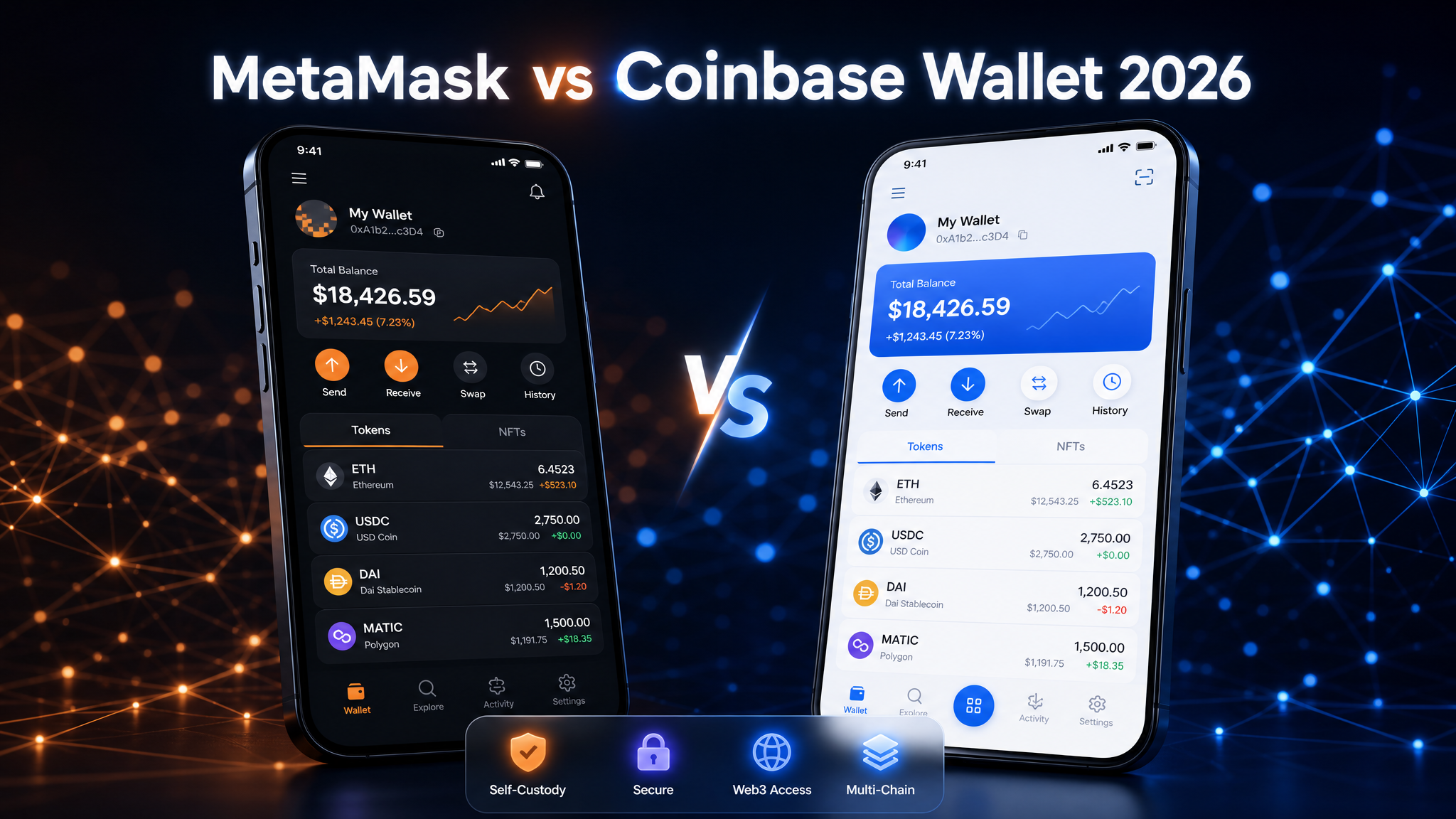
The MetaMask vs Coinbase Wallet 2026 debate has never been more relevant. Both wallets have evolved dramatically — MetaMask now offers Smart Transactions with MEV protection and account abstraction, while Coinbase Wallet has split into a legacy EOA wallet and a brand-new Smart Wallet that ditches seed phrases entirely. Choosing the wrong one could mean paying higher swap fees, missing DeFi opportunities, or struggling with a wallet that doesn't fit how you actually use crypto.
I've spent the last several months testing both wallets across Ethereum mainnet, Base, Arbitrum, and Solana. Here's the honest breakdown.
Quick Verdict: MetaMask vs Coinbase Wallet 2026
Neither wallet is universally "better" — they serve different users. MetaMask wins for DeFi power users who want granular control, open-source transparency, and the widest dApp compatibility. Coinbase Wallet wins for beginners, multi-chain traders, and anyone who wants a cleaner experience without the seed-phrase anxiety.
| Feature | MetaMask | Coinbase Wallet |
|---|---|---|
| Best For | DeFi power users, developers | Beginners, multi-chain traders |
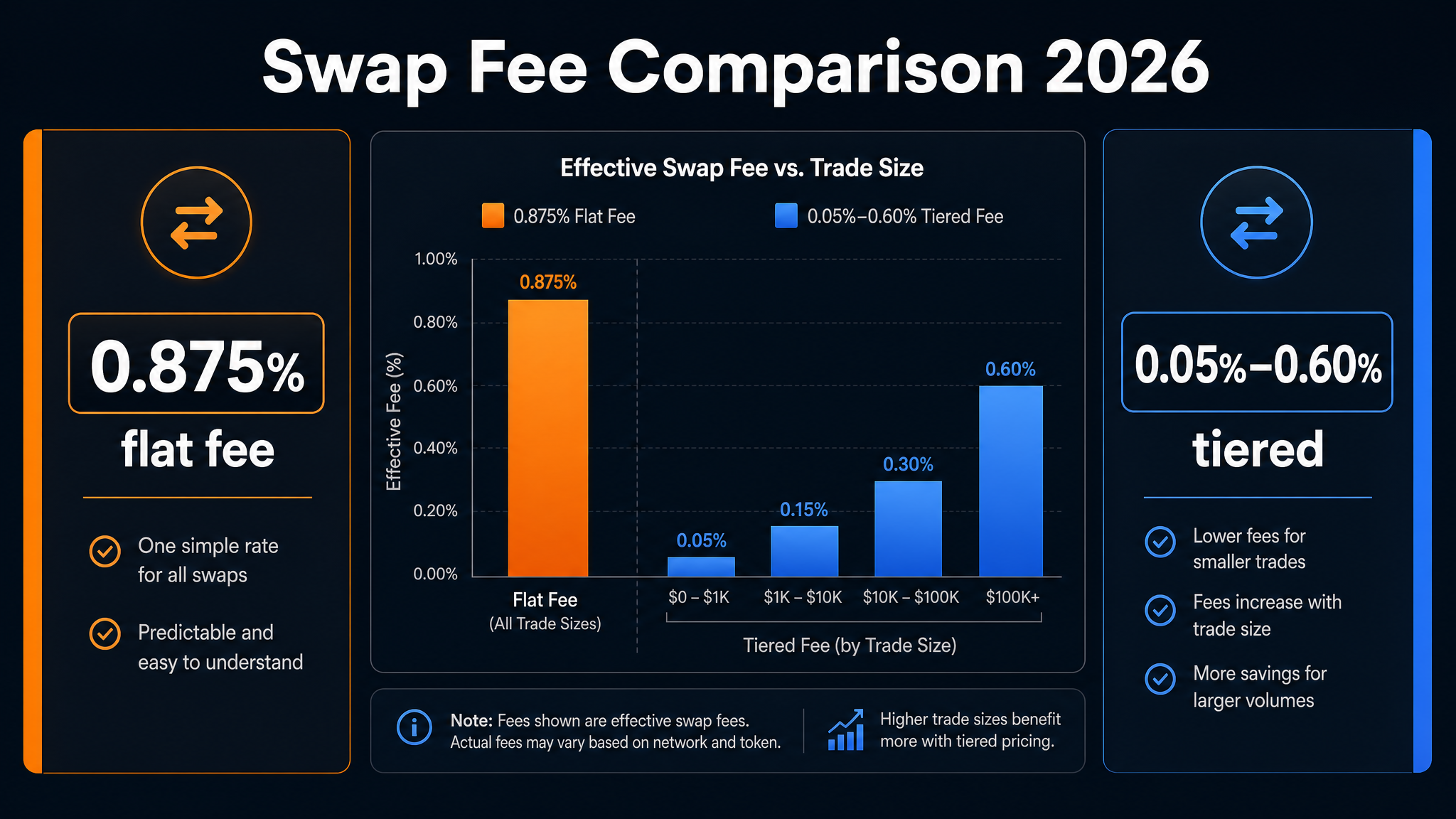
| Swap Fee | 0.875% flat | 0.05%–0.60% tiered |
| Chain Support | EVM-native + Snaps for others | Native BTC, SOL, ETH, Base |
| Seed Phrase | Required (self-custody) | Optional (Smart Wallet uses passkeys) |
| Open Source | Yes | Partially / Audited |
| MEV Protection | Yes (Smart Transactions) | Limited |
| Hardware Wallet | Excellent (Ledger, Trezor) | Supported |
MetaMask in 2026: Still the DeFi Standard
MetaMask launched in 2016 and has spent a decade becoming the default "connect wallet" button across virtually every Ethereum dApp. That ubiquity is its biggest strength. Walk into any DeFi protocol — Uniswap, Aave, Curve, Pendle — and MetaMask just works. No configuration, no plugins, no friction.
Smart Transactions: MetaMask's Biggest 2026 Upgrade
The headline feature for MetaMask in 2026 is Smart Transactions. Enable it in Settings → Transactions and your swaps get routed through a specialized mempool that keeps them private until confirmed on-chain. The result: 99.9% success rate in testing, zero MEV sandwich attacks, and pre-simulation that flags risky transactions before you sign.
It's free. MetaMask earns nothing from Smart Transactions — the infrastructure is funded by block builders who bid to include the transactions. For active DeFi traders, this alone is worth sticking with MetaMask.
Smart Accounts and Account Abstraction
MetaMask also rolled out Smart Accounts in 2025, enabled by Ethereum's Pectra upgrade. You can upgrade your existing EOA to a smart account without changing your address or moving funds. The practical benefits: batch multiple transactions into one (approve + swap in a single click), and pay gas in tokens other than ETH. If you've ever been stuck with ETH in a wallet but no gas, this solves that problem.
MetaMask Fees: The Honest Picture
Here's where MetaMask takes a hit. The built-in swap aggregator charges a flat 0.875% fee. On a $10,000 swap, that's $87.50 — not trivial. Power users typically bypass MetaMask's swap UI entirely and go directly to Uniswap or 1inch, where fees are lower. If you're doing that anyway, the 0.875% is irrelevant. But casual users who rely on the built-in swap will pay more than they would on Coinbase Wallet.
Chain Support: EVM-First, Everything Else via Snaps
MetaMask is built for EVM chains. Ethereum, Arbitrum, Optimism, Base, Polygon, BNB Chain — all native. For Bitcoin and Solana, you need MetaMask Snaps, which are third-party plugins. They work, but the experience isn't as seamless as a wallet built for those chains from the ground up. If you're primarily an ETH/L2 user, this doesn't matter. If you're splitting time between Solana and Ethereum, it's a real friction point.
Coinbase Wallet in 2026: Two Products, One Brand
Coinbase Wallet is actually two distinct products in 2026, and confusing them leads to bad decisions.
Legacy Coinbase Wallet: The Familiar Option
The original Coinbase Wallet is a standard EOA wallet — seed phrase, self-custody, non-custodial. It's deeply integrated with Base (Coinbase's L2) and the Coinbase exchange, which means free transfers between the two. It natively supports Bitcoin, Solana, and all major EVM chains without any plugins. The UI is cleaner than MetaMask's, with less technical jargon exposed to the user.
Swap fees are tiered: 0.05% to 0.60% depending on the asset and liquidity. For most common pairs, you'll pay significantly less than MetaMask's 0.875%. On that same $10,000 swap, you might pay $30–$60 instead of $87.50.
Coinbase Smart Wallet: The Seed-Phrase Killer
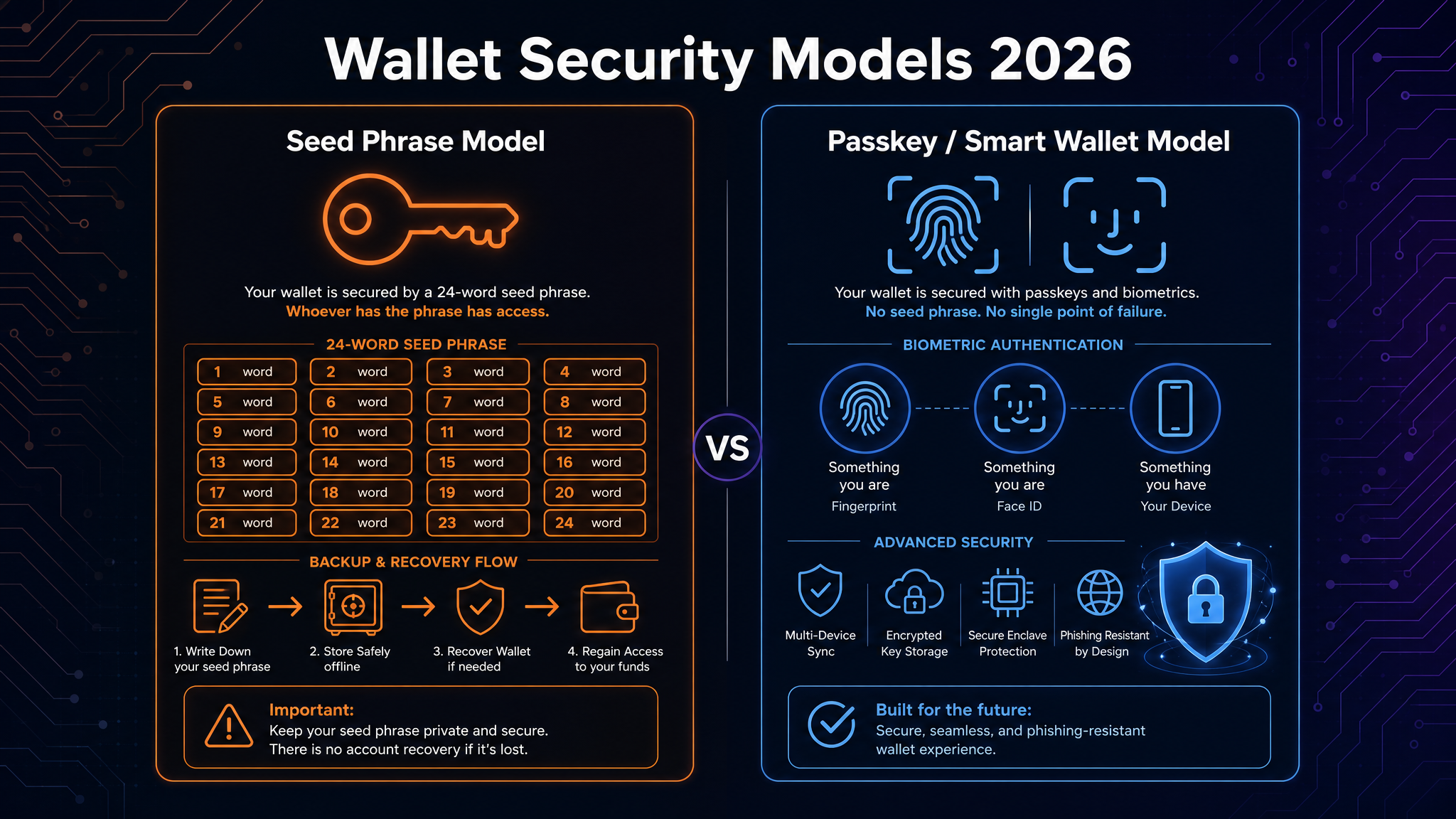
The Smart Wallet is where things get genuinely interesting. It's an ERC-4337 smart contract wallet that uses passkeys — your phone's Face ID or fingerprint — instead of a seed phrase. No 24-word backup to lose. No phishing attacks that steal your recovery phrase. Your wallet is secured by the same biometric hardware that protects your banking app.
Recovery works through iCloud Keychain or Google Password Manager, with an optional on-chain recovery key as a backup. For mainstream users who've lost funds to seed phrase mistakes, this is a genuine breakthrough.
The trade-offs are real though. The Smart Wallet is optimized for Base (Coinbase's L2) because passkey signature verification is expensive on Ethereum mainnet — Base supports EIP-7212, which makes it cheap. You'll also notice a slight delay (0.5–1 second) per transaction from the biometric prompt, which power users find annoying. And the wallet currently doesn't support multiple simultaneous passkeys, so you can't have both your phone and a YubiKey active at once.
Coinbase Wallet and DeFi Compatibility
Coinbase Wallet connects to most major DeFi protocols, but MetaMask's browser extension has deeper integration with the EVM ecosystem. Some niche dApps only show a "MetaMask" connect button and require manual configuration to use Coinbase Wallet. This gap has narrowed significantly in 2026, but it hasn't closed entirely.
For Base-native DeFi — Aerodrome, Morpho on Base, Base-native NFT markets — Coinbase Wallet is actually the superior choice. The integration is tighter and gas costs are lower.
Protect your crypto assets with a Ledger hardware wallet — the gold standard in cold storage security. Both MetaMask and Coinbase Wallet integrate with Ledger for maximum protection of large holdings.
Security: How Each Wallet Protects You
MetaMask Security Model
MetaMask is fully open-source — every line of code is publicly auditable. It integrates seamlessly with Ledger and Trezor hardware wallets, which is the gold standard for securing significant holdings. The Smart Transactions feature adds MEV protection. The weakness: if you lose your seed phrase, your funds are gone. No recovery option, no customer support that can help. That's the price of true self-custody.
MetaMask also includes transaction simulation and scam detection, flagging suspicious contracts before you sign. These features have improved substantially in 2026.
Coinbase Wallet Security Model
The legacy Coinbase Wallet is non-custodial but offers cloud backup for seed phrases (iCloud/Google Drive). Convenient, but it introduces a centralized recovery point that purists dislike. The Smart Wallet eliminates this concern by using passkeys — there's no seed phrase to steal.
The Smart Wallet's security gap: Coinbase sets user verification to "preferred" rather than "required," which security researchers have flagged as a potential vulnerability. It's not a dealbreaker, but it's worth knowing.
For either wallet, pairing with a hardware wallet is the right move for holdings above $5,000. The Trezor Model T offers top-tier security with an intuitive touchscreen interface and works with both wallets.
Who Should Use MetaMask?
MetaMask is the right choice if you:
- Actively use DeFi protocols on Ethereum and EVM L2s (Arbitrum, Optimism, Polygon)
- Want open-source, auditable code you can verify yourself
- Use a hardware wallet (Ledger or Trezor) for cold storage
- Need MEV protection via Smart Transactions
- Prefer granular gas control during network congestion
- Are a developer building or testing dApps
The 0.875% swap fee stings, but if you're routing trades through Uniswap directly (which most active DeFi users do), you never pay it.
Who Should Use Coinbase Wallet?
Coinbase Wallet makes more sense if you:
- Are new to crypto and want a cleaner, less intimidating interface
- Hold assets across Bitcoin, Solana, and Ethereum simultaneously
- Are active on Base or Coinbase's ecosystem
- Want lower swap fees for casual trading
- Are interested in the Smart Wallet's passkey model (no seed phrase risk)
- Already use Coinbase exchange and want seamless transfers
The Verdict: It's Not Either/Or
Many experienced crypto users run both. MetaMask handles their Ethereum DeFi activity — Uniswap, Aave, Pendle, Hyperliquid. Coinbase Wallet manages their Bitcoin, Solana, and Base positions. The wallets serve different parts of a portfolio.
If you're picking just one: beginners should start with Coinbase Wallet. The cleaner UI, native multi-chain support, and optional passkey recovery reduce the learning curve and the risk of catastrophic mistakes. Experienced DeFi users should stick with MetaMask — the Smart Transactions, hardware wallet integration, and universal dApp compatibility are hard to replace.
Either way, once your holdings grow past a few thousand dollars, pair your software wallet with a hardware wallet. Ready to master crypto trading beyond just wallet selection? Icoinpro's comprehensive trading course covers wallet security, DeFi strategies, and portfolio management in a structured format.
Key Takeaways
- MetaMask is the DeFi standard — best for EVM power users, open-source, MEV protection via Smart Transactions, excellent hardware wallet support
- Coinbase Wallet offers lower swap fees (0.05%–0.60% vs 0.875%), native multi-chain support, and the innovative Smart Wallet with passkey recovery
- MetaMask's 0.875% swap fee is avoidable by using DEXs directly; Coinbase Wallet's tiered fees are lower for casual swaps
- The Coinbase Smart Wallet eliminates seed phrase risk — a genuine breakthrough for mainstream adoption
- For large holdings, pair either wallet with a hardware wallet (Ledger or Trezor)
- Many advanced users run both wallets for different purposes
Tools are only as good as the trader using them.
The best platform in the world won't help if your analysis is off. Before investing in more tools, consider investing in your trading education — it's the one thing that compounds everything else.
The program I recommend to people who ask me is this crypto trading course — it\'s the one I point friends and family to when they\'re serious about learning. Daily lessons, live analysis, and a community that actually helps.
Affiliate link — I may earn a commission at no extra cost to you. I only recommend what I genuinely use.
Disclaimer: The information provided on this website is for educational and informational purposes only. It should not be considered financial or investment advice. Cryptocurrency investments carry significant risk. Always do your own research and consult with a qualified financial advisor before making investment decisions.
Free Crypto Insights
Get weekly trading tips, market analysis, and exclusive strategies delivered to your inbox.