Trust Wallet Review 2026: Is It Still the Best Multi-Chain Crypto Wallet?
Affiliate Disclosure: This article may contain affiliate links. We may earn a commission at no extra cost to you. All opinions are our own.
Marcus Chen
Senior Crypto Analyst & Educator
Certified Blockchain Professional | Former Wall Street Analyst
Marcus Chen is a cryptocurrency analyst and educator with over 8 years of experience in digital asset trading. He has helped thousands of beginners navigate the crypto markets through practical, actionable education.
Trust Wallet Review 2026: Is It Still the Best Multi-Chain Crypto Wallet?
If you've spent any time in crypto, you've heard of Trust Wallet. It's the go-to Trust Wallet review 2026 topic for good reason — with support for 100+ blockchains and over 10 million digital assets, it's one of the most versatile free wallets on the market. But "versatile" doesn't always mean "best." After testing it extensively this year, here's the honest breakdown of what Trust Wallet gets right, where it falls short, and who should actually be using it.
What Is Trust Wallet?
Trust Wallet is a non-custodial, self-custody software wallet originally built for Binance Smart Chain in 2017. Binance acquired it in 2018, but it operates independently — your keys, your coins. Today it runs on iOS, Android, and as a browser extension for Chrome-based browsers.
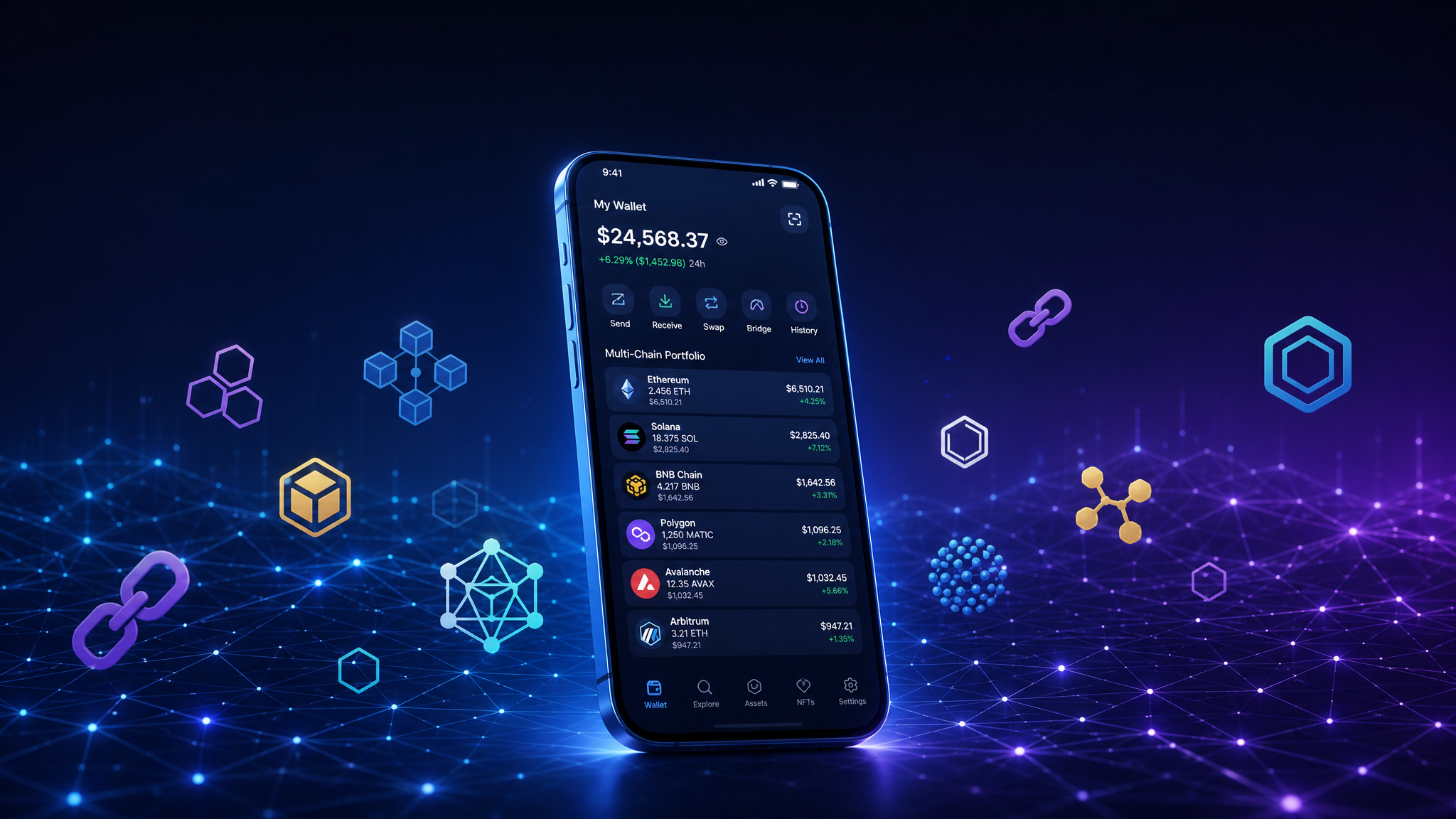
The core pitch: one app to rule them all. Bitcoin, Ethereum, Solana, BNB Chain, Cosmos, Tron, Polygon — you name it, Trust Wallet probably supports it. That breadth is genuinely impressive. Most competing wallets force you to juggle multiple apps for different chains. Trust Wallet doesn't.
Trust Wallet Key Features in 2026
Multi-Chain Asset Management
Trust Wallet supports over 100 blockchains natively. That includes non-EVM chains like Bitcoin and Solana — something MetaMask still struggles with without workarounds. You can hold BTC, ETH, SOL, BNB, ATOM, and thousands of altcoins in a single wallet interface. For anyone managing a diversified portfolio, this alone saves significant headache.
The asset discovery is solid too. New tokens on supported chains appear automatically once you receive them. No manual contract address entry required for most assets.
Built-In DEX Swaps
Trust Wallet includes a DEX aggregator that routes swaps across multiple liquidity sources. You can swap tokens without leaving the app. The fees are embedded in the exchange rate rather than shown as a separate line item — which some users find cleaner, though it does make comparison shopping harder. Always check the rate against a standalone DEX before confirming large swaps.
Staking Directly in the App
Native staking for 20+ assets is available right inside Trust Wallet. You can stake BNB, SOL, ETH, ATOM, TRX, and others without bridging to a separate platform. Current yields vary by network — SOL validators were returning around 6-7% APY in mid-2026, while BNB staking hovered near 3-4%. These aren't the highest rates you'll find in DeFi, but the simplicity is hard to beat for passive income beginners.
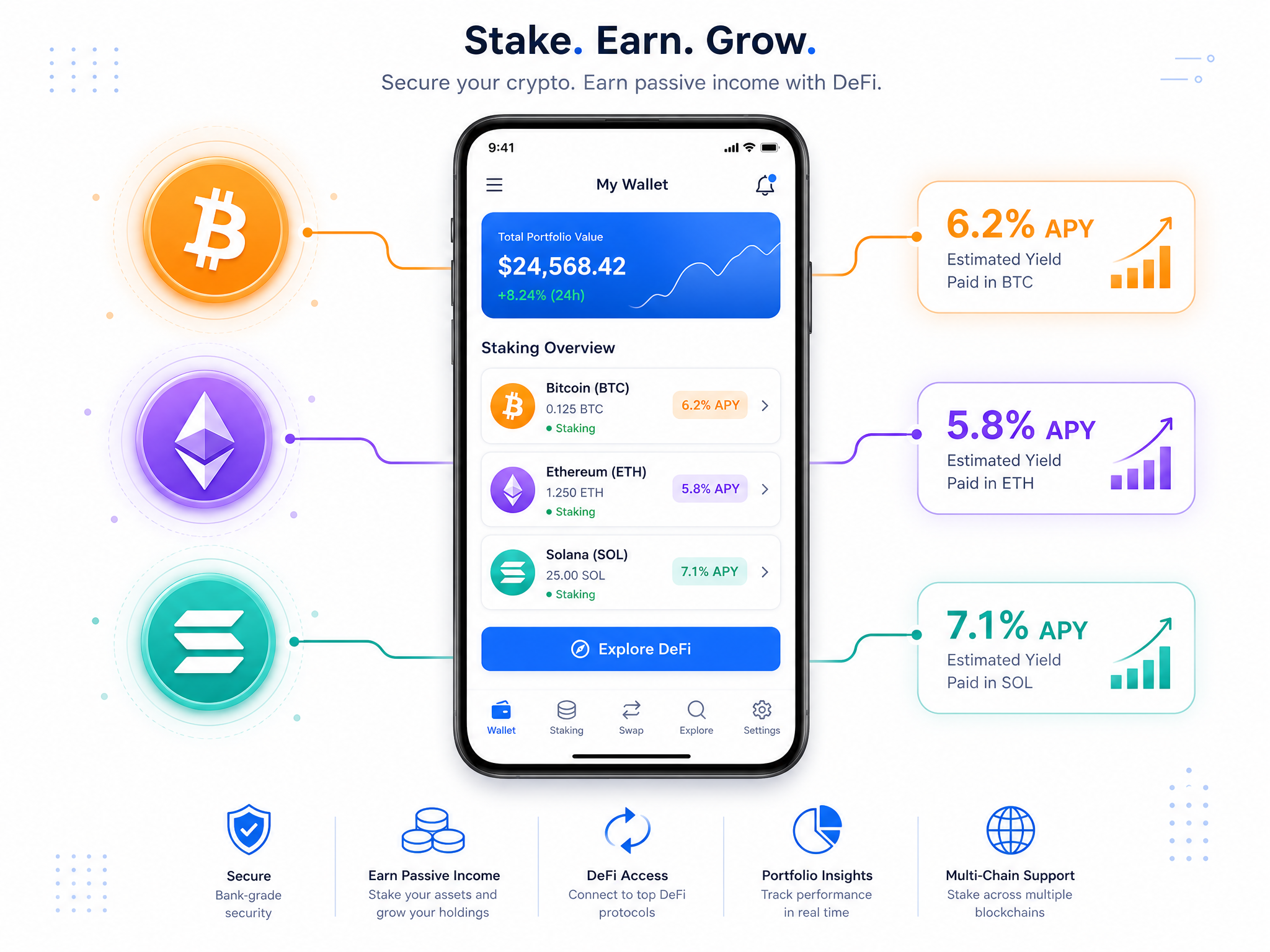
Trust Wallet SWIFT — Account Abstraction Wallet
This is the most interesting 2026 development. Trust Wallet launched SWIFT, a smart contract wallet built on account abstraction. It lets you authenticate with biometrics or passkeys instead of a seed phrase, pay gas fees in various tokens (not just the native chain token), and recover accounts without a traditional recovery phrase. It's still in early rollout, but it signals where self-custody wallets are heading.
NFT Management and dApp Browser
The NFT gallery handles multi-chain NFTs with spam filtering — a genuinely useful feature given how many junk NFT drops land in wallets. The in-app dApp browser connects to DeFi protocols, though it's less polished than using MetaMask with a desktop browser for complex DeFi interactions.
Trust Wallet Security: The Honest Assessment
Security is where Trust Wallet's story gets complicated. The good: it's non-custodial, uses AES encryption for local key storage, and includes a Security Scanner that flags risky dApp connections and suspicious transaction requests. You can also connect a Ledger hardware wallet via the browser extension for offline signing on high-value transactions.
The less good: in late 2025, a vulnerability in the browser extension (v2.68) resulted in approximately -7 million in user losses. Trust Wallet disclosed the issue publicly and implemented fixes, but it's a reminder that browser extensions carry inherent risks. The mobile app has a stronger security track record — mobile OS sandboxing provides meaningful protection that browser environments don't.
Practical security advice: use Trust Wallet mobile for day-to-day DeFi and altcoin management. For holdings above ,000-0,000, pair it with a hardware wallet. Serious about security? The Ledger Nano X keeps your private keys offline and safe — it integrates directly with Trust Wallet's browser extension for the best of both worlds.
Trust Wallet Fees: What You Actually Pay
Trust Wallet itself charges nothing for installation, storage, or holding assets. The costs you'll encounter:
- Network (gas) fees: Paid to blockchain validators. These vary wildly — Ethereum gas can spike to -20 per transaction during congestion, while Solana and BNB Chain transactions cost fractions of a cent.
- Swap spreads: No explicit swap fee, but the exchange rate includes a spread. On a ,000 swap, expect to give up roughly -10 depending on the pair and liquidity.
- Fiat on-ramp fees: Buying crypto with a card through MoonPay or Alchemy Pay typically costs 2-4% — standard for third-party providers.
Bottom line: Trust Wallet is genuinely free for self-custody. The costs are network costs, not wallet costs.
Trust Wallet vs MetaMask: Which Should You Use?
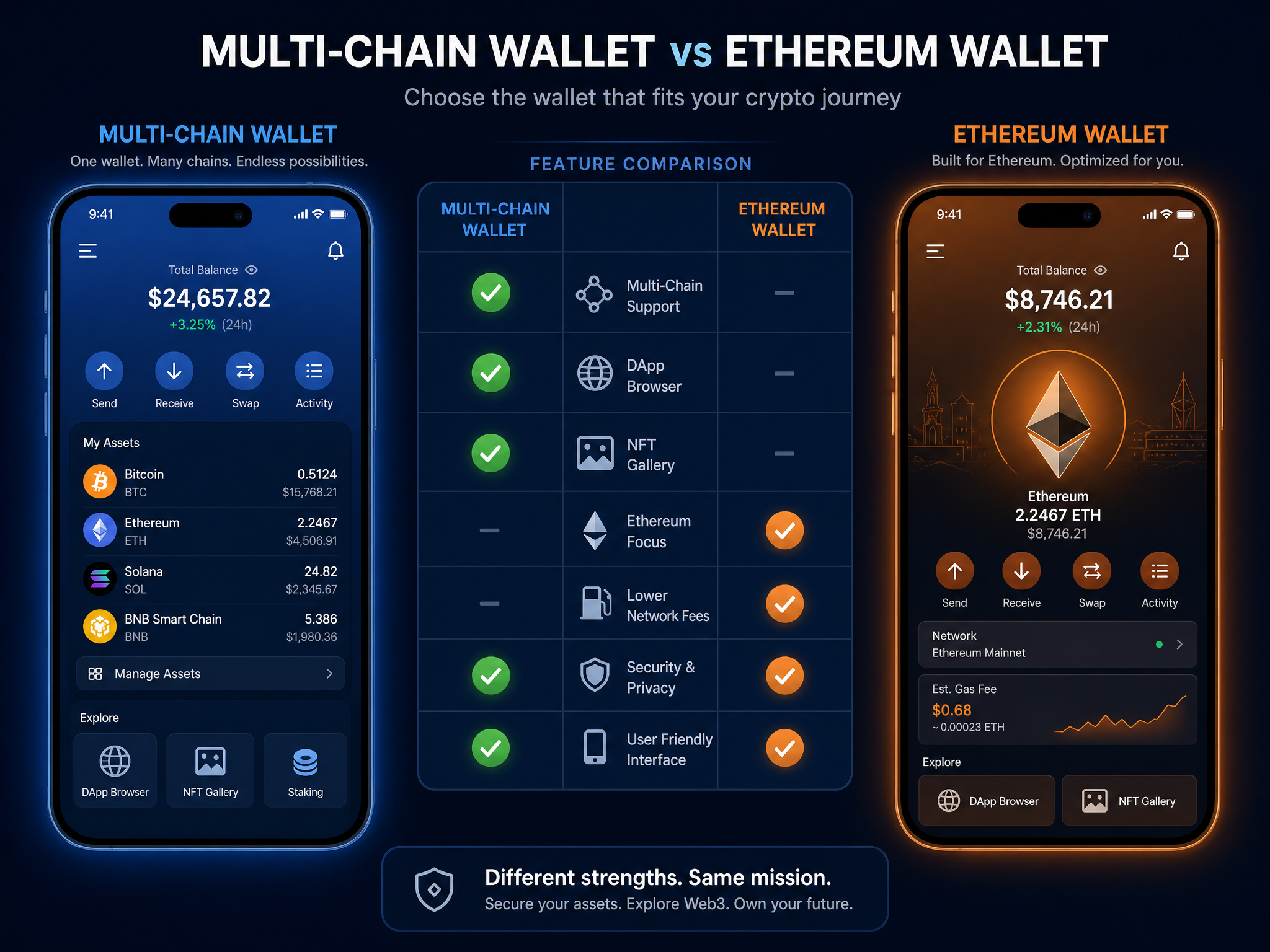
This is the comparison most people actually want. Short answer: they serve different users.
Choose Trust Wallet if: You're mobile-first, hold assets across multiple chains (especially non-EVM chains like Bitcoin or Solana), or you're newer to crypto and want a simpler setup without manual RPC configuration.
Choose MetaMask if: You're primarily on Ethereum and EVM chains, do heavy DeFi on desktop, or need deep integration with specific dApps and NFT platforms like OpenSea. MetaMask's browser extension is more battle-tested for complex EVM interactions.
Many experienced users run both — Trust Wallet on mobile for multi-chain management, MetaMask on desktop for Ethereum DeFi. That's not a bad setup at all.
Who Is Trust Wallet Best For?
After testing it across multiple chains and use cases, here's where Trust Wallet genuinely shines:
- Multi-chain portfolio holders who don't want five different wallets
- Mobile-first users who manage crypto primarily from their phone
- Beginners who want staking and DeFi access without complex setup
- Altcoin explorers who need broad token support across emerging chains
It's less ideal for: Ethereum power users doing complex DeFi on desktop, anyone who needs 24/7 live customer support (Trust Wallet doesn't offer it), or users who want 2FA on the wallet itself (it doesn't have it).
Trust Wallet Pros and Cons
Pros
- 100+ blockchain support including Bitcoin and Solana natively
- Completely free — no wallet fees
- Clean, beginner-friendly mobile interface
- Native staking for 20+ assets
- Built-in DEX swaps and dApp browser
- SWIFT account abstraction wallet for seedless recovery
- Hardware wallet integration (Ledger) via browser extension
- Regular security audits and transparent incident disclosure
Cons
- Browser extension had a significant security incident in 2025
- No 2FA or biometric lock on the standard wallet
- No live customer support
- Swap rates aren't always the most competitive
- dApp browser less polished than desktop MetaMask for complex DeFi
Should You Use Trust Wallet in 2026?
Yes — with appropriate expectations. Trust Wallet is one of the best free multi-chain wallets available. For mobile users managing diverse crypto portfolios, it's hard to beat. The SWIFT account abstraction wallet is a genuinely exciting development that addresses the seed phrase problem that's plagued self-custody for years.
That said, treat it as a hot wallet. Keep your long-term holdings in cold storage. If you're serious about security, pair Trust Wallet with a hardware device. The Trezor Model T offers top-tier security with an intuitive touchscreen interface and works well alongside software wallets for a layered security approach.
And if you want to go beyond just holding crypto — actually trading it profitably — the wallet is just the starting point. For a structured approach to learning crypto trading, Icoinpro offers step-by-step training that has helped thousands of beginners move from confused to confident.
Key Takeaways
- Trust Wallet supports 100+ blockchains and 10M+ assets — best-in-class multi-chain coverage
- Completely free; costs are network fees only
- Mobile app is more secure than the browser extension (which had a 2025 incident)
- Native staking, DEX swaps, and dApp browser make it a full Web3 hub
- SWIFT wallet brings account abstraction and seedless recovery to self-custody
- Best for mobile-first, multi-chain users; MetaMask still wins for desktop Ethereum DeFi
- Always pair with a hardware wallet for significant holdings
Tools are only as good as the trader using them.
The best platform in the world won't help if your analysis is off. Before investing in more tools, consider investing in your trading education — it's the one thing that compounds everything else.
The program I recommend to people who ask me is this crypto trading course — it\'s the one I point friends and family to when they\'re serious about learning. Daily lessons, live analysis, and a community that actually helps.
Affiliate link — I may earn a commission at no extra cost to you. I only recommend what I genuinely use.
Disclaimer: The information provided on this website is for educational and informational purposes only. It should not be considered financial or investment advice. Cryptocurrency investments carry significant risk. Always do your own research and consult with a qualified financial advisor before making investment decisions.
Free Crypto Insights
Get weekly trading tips, market analysis, and exclusive strategies delivered to your inbox.