How to Build Your First Crypto Portfolio for Beginners in 2026
Affiliate Disclosure: This article may contain affiliate links. We may earn a commission at no extra cost to you. All opinions are our own.
Marcus Chen
Senior Crypto Analyst & Educator
Certified Blockchain Professional | Former Wall Street Analyst
Marcus Chen is a cryptocurrency analyst and educator with over 8 years of experience in digital asset trading. He has helped thousands of beginners navigate the crypto markets through practical, actionable education.
Affiliate Disclosure: This crypto portfolio for beginners guide contains affiliate links. We may earn a commission at no extra cost to you if you make a purchase through these links. See our affiliate disclosure for details.
How to Build Your First Crypto Portfolio for Beginners in 2026
Building a crypto portfolio for beginners sounds simple until you actually try it. You open an exchange, see hundreds of coins, and suddenly you're paralyzed — or worse, you throw money at whatever's trending on social media. I've watched this play out hundreds of times. The good news? Getting it right isn't complicated. It just requires a clear framework, a bit of patience, and the discipline to stick to a plan when the market gets noisy.
This guide walks you through exactly how to build your first crypto portfolio in 2026 — from choosing the right assets to securing what you own. No hype, no moonshot promises. Just a practical, step-by-step approach that actually works.
Why Most Beginners Get This Wrong
Here's the pattern I see constantly: someone hears about crypto, watches Bitcoin hit a new high, and buys whatever coin their friend mentioned at a party. Three months later, they're down 60% on a token nobody's heard of, and they swear off crypto forever.
The problem isn't crypto. It's the approach. Most beginners skip the fundamentals and jump straight to speculation. They treat a portfolio like a lottery ticket instead of a long-term wealth-building tool. The fix is straightforward — build from the ground up, starting with assets that have proven staying power.
In 2026, the crypto market has matured considerably. Spot Bitcoin ETFs have brought institutional capital into the space. Ethereum's ecosystem continues to expand. Regulatory clarity is improving in most major markets. This is actually a better environment for beginners than any previous cycle — but only if you approach it correctly.
Step 1 — Start With the Right Mindset (and Budget)
Before you buy a single satoshi, get clear on two things: how much you can genuinely afford to lose, and what your time horizon looks like.
Crypto is volatile. Bitcoin dropped 77% from its 2021 peak. Ethereum has seen similar drawdowns. If you invest money you need in six months, you're gambling, not investing. The rule of thumb most experienced investors use: allocate only what you'd be comfortable seeing cut in half temporarily without panicking.
A reasonable starting point for most beginners is $500 to $2,000 — enough to get meaningful exposure without catastrophic downside if things go sideways early. You can always add more as you learn.
Also worth considering: your financial foundation matters. High-interest debt should be paid off first. An emergency fund covering three to six months of expenses should exist before you put a dollar into crypto. This isn't just conservative advice — it's what separates investors who hold through downturns from those who sell at the worst possible moment because they need the cash.
Want a structured education before you start trading? Ready to master crypto trading? Check out Icoinpro's comprehensive trading course — it covers everything from reading charts to managing risk, and it's designed specifically for people who are serious about getting this right.
Step 2 — Choose Your Core Assets: Bitcoin and Ethereum First
The single best decision a beginner can make is to start with Bitcoin and Ethereum. Not because they're the most exciting options — they're not. Because they're the most proven, the most liquid, and the most likely to still be relevant in five years.
Bitcoin: The Foundation of Every Beginner Portfolio
Bitcoin has a fixed supply of 21 million coins. That's it. No central bank can print more. No CEO can dilute it. This scarcity, combined with growing institutional adoption — over $100 billion in Bitcoin ETF assets under management by 2025 — makes it the closest thing crypto has to a safe haven asset.
Think of Bitcoin as the anchor of your portfolio. It's the asset you hold through market cycles, the one you accumulate steadily, and the one that gives your portfolio its foundation. When altcoins are crashing 80%, Bitcoin typically holds up better. Not perfectly, but better.
For a deeper understanding of why Bitcoin's monetary properties make it unique, Want to understand the economics behind Bitcoin? The Bitcoin Standard is essential reading for every crypto enthusiast — it's the book that changed how I think about money entirely.
Ethereum: Your Gateway to the Broader Crypto Ecosystem
Ethereum is the programmable layer of crypto. It's where decentralized finance (DeFi) lives, where NFTs were born, and where most of the interesting blockchain innovation happens. Major institutions like BlackRock and JPMorgan are building on Ethereum for real-world asset tokenization. That's not a small thing.
Ethereum also has a deflationary mechanism — a portion of transaction fees gets burned, reducing supply over time. Since the Merge in 2022, Ethereum has become a proof-of-stake network, meaning you can earn yield by staking your ETH. For a beginner, this means your Ethereum holding can generate passive income while you hold it long-term.
Start with Bitcoin and Ethereum. Get comfortable with how they work. Then, and only then, consider adding anything else.
Step 3 — Build Your Allocation Strategy
Once you've decided to invest, you need a framework for how to split your capital. Random allocation is how people end up with 15 different coins and no clear strategy.
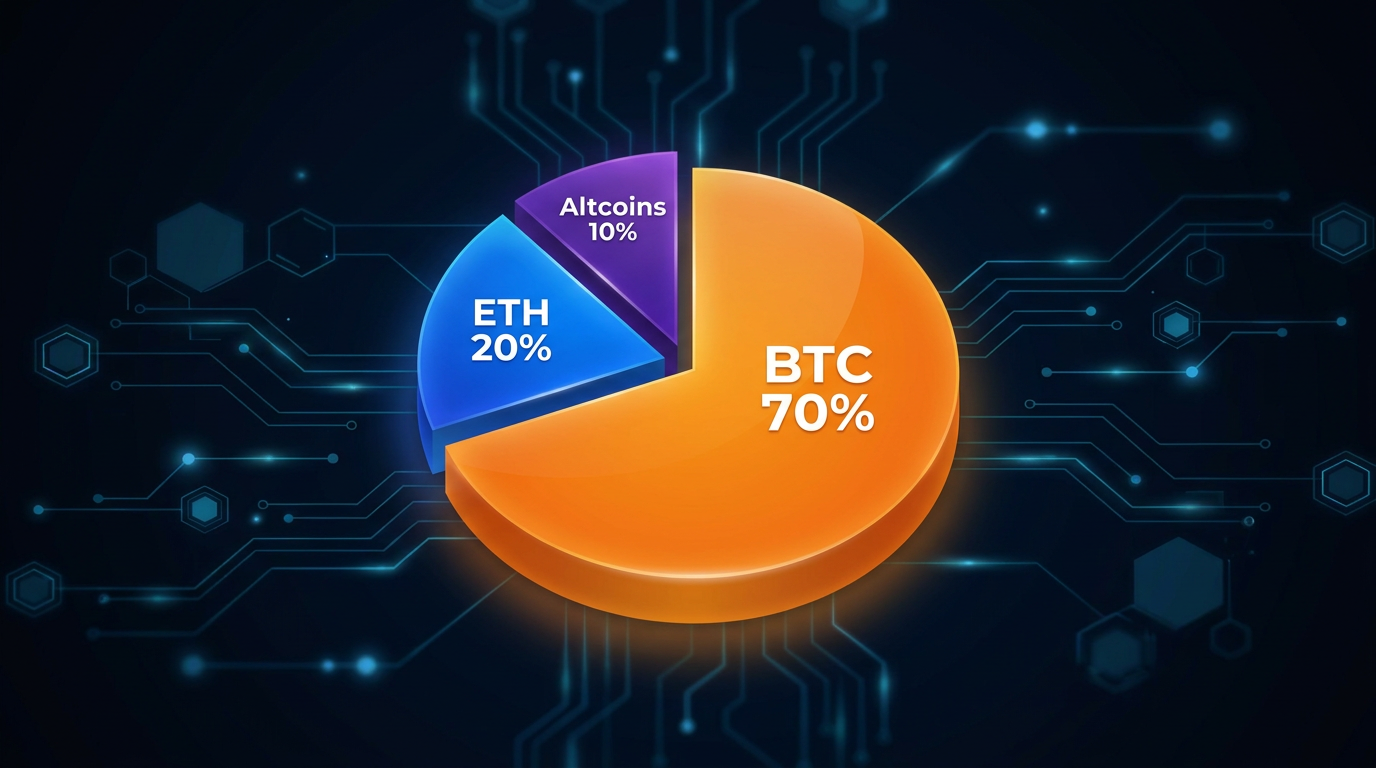
The 70/20/10 Rule for Beginners
Here's a simple allocation model that works well for most beginners:
- 70% Bitcoin (BTC) — Your core holding. Stable, liquid, institutional-grade.
- 20% Ethereum (ETH) — Your growth and ecosystem exposure.
- 10% Altcoins — Optional. Only add this if you've done real research on specific projects.
If you're investing $1,000, that's $700 in Bitcoin, $200 in Ethereum, and $100 in one or two carefully chosen altcoins — or just leave that 10% in stablecoins until you find something worth owning.
Some investors prefer a simpler 80/20 split between Bitcoin and Ethereum, skipping altcoins entirely. That's a perfectly valid approach, especially in your first year. The goal is to build a foundation, not to maximize short-term gains.
As your portfolio grows and your knowledge deepens, you can adjust these ratios. But starting with a heavy Bitcoin allocation protects you from the most common beginner mistake: over-allocating to speculative assets before you understand what you own.
Step 4 — Use Dollar-Cost Averaging (DCA) to Buy In
Timing the market is a fool's game. Even professional traders with years of experience get it wrong regularly. For beginners, trying to buy at the perfect moment is a recipe for either missing the entry entirely or panic-buying at the top.
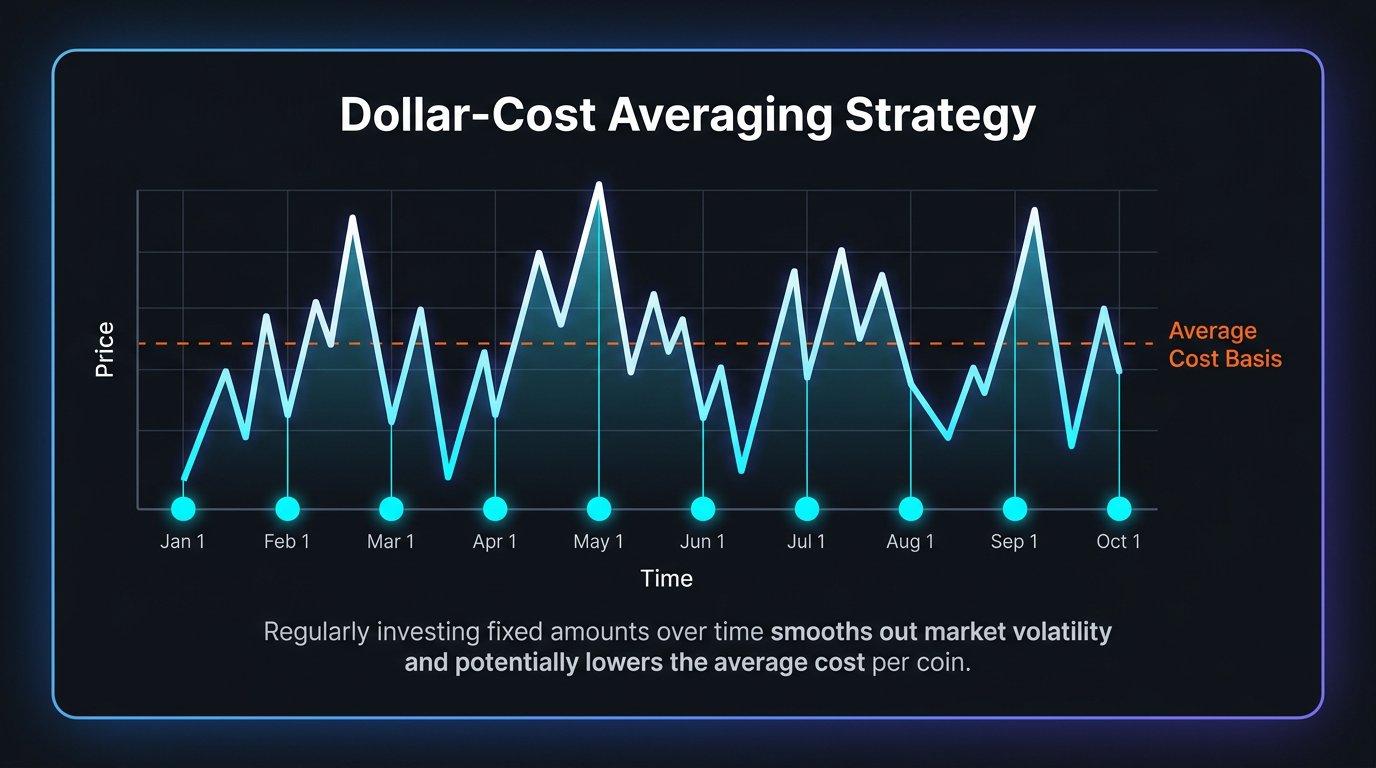
Dollar-cost averaging (DCA) solves this problem elegantly. Instead of investing a lump sum all at once, you invest a fixed amount at regular intervals — say, $100 every week or $200 every two weeks — regardless of what the price is doing.
The math works in your favor. When prices are low, your fixed amount buys more coins. When prices are high, it buys fewer. Over time, this averages out your cost basis and removes the emotional pressure of trying to pick the perfect entry.
Real-world example: $10 per week in Bitcoin from 2019 through 2024 turned $2,610 into approximately $7,900 — a 200% return — without ever timing the market. Just consistent buying through bull runs and crashes alike.
Most major exchanges — Coinbase, Kraken, Binance — offer automated recurring buy features. Set it up once, and it runs on autopilot. This is probably the single most powerful tool available to a beginner investor.
One practical tip: start your DCA immediately. The best time to start was yesterday. Markets can move significantly while you wait for the "right" moment that never comes.
Step 5 — Secure Your Portfolio Like a Pro
This is where most beginners cut corners — and where the most devastating losses happen. Not from bad trades, but from poor security.
The golden rule of crypto: not your keys, not your coins. When your crypto sits on an exchange, you don't actually own it. The exchange does. If the exchange gets hacked, goes bankrupt, or freezes withdrawals (all of which have happened), your funds are at risk.
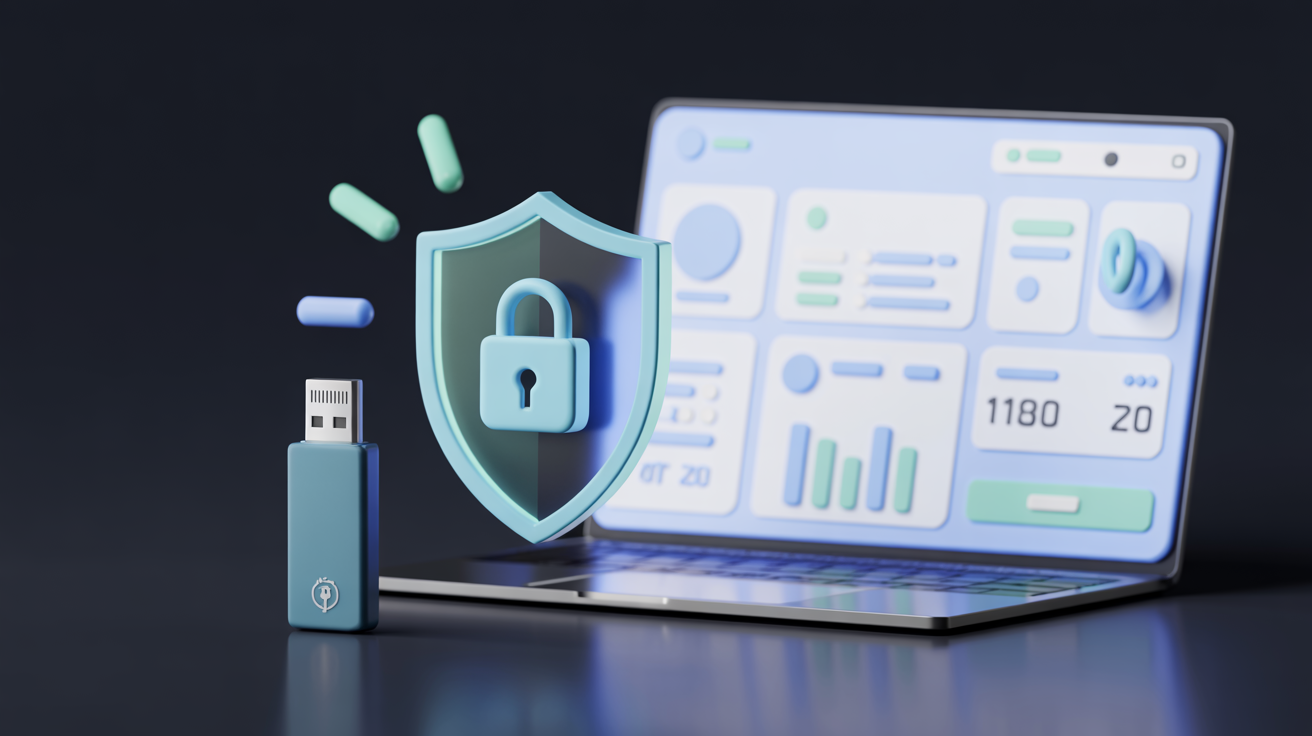
For any amount over $500, you should move your holdings to a hardware wallet. A hardware wallet stores your private keys offline, completely disconnected from the internet. Even if your computer gets infected with malware, your crypto stays safe.
Protect your crypto assets with a Ledger hardware wallet — the gold standard in cold storage security. The Ledger Nano X supports over 5,500 coins and tokens, connects via Bluetooth to your phone, and has a certified secure element chip that's been independently audited. It's the wallet I recommend to every beginner who's serious about protecting what they own.
Beyond hardware wallets, a few other security basics:
- Enable two-factor authentication (2FA) on every exchange account. Use an authenticator app, not SMS.
- Write down your seed phrase on paper (not digitally) and store it somewhere physically secure — a fireproof safe is ideal.
- Never share your seed phrase with anyone, ever. No legitimate service will ever ask for it.
- Use a dedicated email address for crypto accounts that you don't use for anything else.
Common Mistakes to Avoid
A few patterns I see repeatedly that derail beginner portfolios:
Chasing pumps. When a coin is up 300% in a week, it's already too late. By the time it's trending on social media, early buyers are looking for an exit. Buying into a pump usually means buying someone else's exit liquidity.
Over-diversifying too early. Twenty coins doesn't reduce risk — it dilutes your best ideas and makes the portfolio harder to manage. Three to five assets is plenty. Quality over quantity.
Ignoring taxes. Selling crypto for profit is a taxable event in most countries. So is trading one crypto for another. Keep records from day one — crypto tax software like CoinLedger or Koinly can automate most of it.
Panic selling during corrections. Bitcoin has dropped 30-50% multiple times during bull markets, only to recover and reach new highs. A correction is a buying opportunity, not a reason to exit.
Skipping the research. Before buying any asset, understand what it does and why it has value. If you can't explain it in two sentences, you probably shouldn't own it.
Your Action Plan: Start Today
Here's a concrete checklist to get your first crypto portfolio off the ground:
- Determine your budget — only invest what you can afford to lose
- Choose a reputable exchange (Coinbase, Kraken, or Gemini are solid starting points)
- Complete identity verification (KYC) — this is required on all regulated platforms
- Set up two-factor authentication immediately
- Start with a 70/20/10 allocation: Bitcoin, Ethereum, and optionally one researched altcoin
- Set up a recurring DCA purchase — weekly or bi-weekly works well
- Order a hardware wallet and transfer holdings once your balance exceeds $500
- Write down your seed phrase and store it securely offline
- Track your portfolio with a tool like CoinStats or Delta
- Commit to a minimum 12-month holding period before reassessing
Building a crypto portfolio for beginners doesn't require perfect timing or insider knowledge. It requires a clear plan, consistent execution, and patience. The investors who win in crypto aren't the ones who found the next 100x gem — they're the ones who bought Bitcoin and Ethereum consistently, secured their holdings, and didn't panic when markets got rough. Start small, stay consistent, and keep learning.
Disclaimer: This content is for informational purposes only and should not be considered financial advice. Cryptocurrency investments carry significant risk. Always do your own research (DYOR) before making any investment decisions.
2026 Update: Portfolio Strategy in a Maturing Market
The crypto market in 2026 looks meaningfully different from when this guide was first written. With over $115 billion in crypto ETP/ETF assets under management, institutional infrastructure has matured to the point where fundamentals — protocol revenue, staking yields, mining costs — carry more weight than social media narratives. Here's how to update your portfolio approach.
The Core-Satellite Model has become the institutional standard. Allocate 60–80% to Bitcoin and Ethereum as your core (VanEck research suggests a risk-adjusted optimal split of ~71% BTC / 29% ETH for crypto-only portfolios). Add 15–30% in established altcoins with strong use cases (Solana, XRP, BNB). Keep high-risk satellite positions (AI tokens, RWA projects, DePIN) to 5–10%, capped at 1–2% per project.
Stablecoin buffer: Maintain 5–15% in stablecoins for opportunistic rebalancing during drawdowns. This is the move that separates disciplined investors from those who panic-sell at the bottom.
Rebalancing discipline: Use a hybrid approach — quarterly reviews plus threshold-based triggers (rebalance if any asset drifts ±10% from target weight). Write down your investment policy before markets get volatile. Emotional decisions are portfolio killers.
Sector rotation awareness: Narratives in 2026 (AI compute, RWA tokenization) cycle faster than ever. Static buy-and-hold baskets often underperform rotational strategies that track capital inflows. Consider our guide to Best Crypto Lending Platforms 2026 for earning yield on your stablecoin buffer.
Frequently Asked Questions
What is the best crypto portfolio allocation in 2026?
The institutional standard is the Core-Satellite model: 60–80% Bitcoin and Ethereum, 15–30% established altcoins, 5–10% high-risk emerging projects. Keep 5–15% in stablecoins as a liquidity buffer.
How often should I rebalance my crypto portfolio?
Use a hybrid approach: quarterly reviews plus threshold-based triggers (rebalance when any asset drifts ±10% from its target weight). This forces disciplined "sell high, buy low" behavior without constant monitoring.
Should beginners buy Bitcoin or altcoins first?
Start with Bitcoin and Ethereum. They have the deepest liquidity, strongest institutional support, and the longest track records. Once you understand how crypto markets work, gradually add altcoin exposure within your risk tolerance.
How much of my net worth should be in crypto?
Major financial institutions recommend limiting total crypto exposure to 5–10% of your total net wealth. Crypto assets are highly correlated during market stress, so diversification within crypto doesn't protect you the way diversification across asset classes does.
What's the biggest mistake new crypto investors make?
Chasing narratives without a written investment policy. When markets get volatile, emotional decisions — panic-selling at the bottom, FOMO-buying at the top — destroy returns. Write down your allocation targets and rebalancing rules before you invest a single dollar.
Want structured training instead of piecing it together yourself?
Self-education works, but it's slow. The course that accelerated my learning the most gave me a daily framework — real market analysis, real setups, real accountability.
The program I recommend to people who ask me is this crypto trading course — it\'s the one I point friends and family to when they\'re serious about learning. Daily lessons, live analysis, and a community that actually helps.
Affiliate link — I may earn a commission at no extra cost to you. I only recommend what I genuinely use.
Disclaimer: The information provided on this website is for educational and informational purposes only. It should not be considered financial or investment advice. Cryptocurrency investments carry significant risk. Always do your own research and consult with a qualified financial advisor before making investment decisions.
Free Crypto Insights
Get weekly trading tips, market analysis, and exclusive strategies delivered to your inbox.