CLARITY Act Stalls in Senate: What the July 2026 Crypto Regulation Deadlock Means for Your Portfolio
Affiliate Disclosure: This article may contain affiliate links. We may earn a commission at no extra cost to you. All opinions are our own.
Marcus Chen
Senior Crypto Analyst & Educator
Certified Blockchain Professional | Former Wall Street Analyst
Marcus Chen is a cryptocurrency analyst and educator with over 8 years of experience in digital asset trading. He has helped thousands of beginners navigate the crypto markets through practical, actionable education.

CLARITY Act Stalls in Senate: What the July 2026 Crypto Regulation Deadlock Means for Your Portfolio
This article on CLARITY Act crypto regulation 2026 contains affiliate links. We may earn a commission at no extra cost to you if you make a purchase through these links. See our affiliate disclosure for details.
The CLARITY Act crypto regulation saga just hit another wall — and this time, the clock is ticking louder than ever. As of July 8, 2026, the Digital Asset Market Clarity Act sits in Senate limbo, blocked by three unresolved political fights with only weeks left before the August recess. If it doesn't pass by then, analysts say the bill's chances "deteriorate materially." For crypto investors, that's not just a Washington headline — it's a direct signal about where Bitcoin, altcoins, and DeFi markets are headed through the rest of 2026.
Here's what's actually happening, why it matters, and what you should do about it.
What Is the CLARITY Act and Why Does It Matter?
The Digital Asset Market Clarity Act (H.R. 3633) is the most significant piece of crypto legislation the U.S. has attempted since the industry went mainstream. Passed by the House in July 2025, it aims to draw a clear line between which digital assets fall under SEC jurisdiction (securities) and which fall under the CFTC (commodities). That distinction sounds technical, but it's everything — it determines whether your favorite altcoin can be legally traded on U.S. exchanges, whether DeFi protocols can operate without fear of enforcement, and whether institutional capital can flow in at scale.
The bill advanced out of the Senate Banking Committee on May 14, 2026, by a 15-9 vote. That was the easy part. Now it needs 60 votes on the Senate floor to overcome a filibuster — and right now, supporters are short by at least seven to nine votes.
The Three Fights Blocking the Bill
This isn't a simple partisan standoff. Three specific disputes are holding everything up, and each one is genuinely complicated.

1. Trump's $1.4 Billion Crypto Disclosure
On July 1, 2026, President Trump's financial disclosure revealed approximately $1.4 billion in crypto-related income. That number sent shockwaves through the Senate. Democratic senators immediately demanded enforceable ethics provisions — rules that would prevent government officials from personally profiting from crypto legislation they're shaping. The White House has pushed back hard, opposing any provisions that target the president's personal financial interests. Without a compromise here, at least two key Democratic votes remain off the table.
2. Developer Protections (Section 604)
Section 604 of the bill would shield non-custodial software developers and node operators from Bank Secrecy Act obligations. In plain English: if you write open-source code for a DeFi protocol, you wouldn't be treated as a financial institution. The DeFi industry considers this essential — you can't hold developers liable for how users interact with code they didn't control. But law enforcement groups, including the National District Attorneys' Association, argue this creates gaps in criminal investigations. Both sides have legitimate points, and no one has blinked yet.
3. Stablecoin Yield Dispute
The GENIUS Act, signed in July 2025, prohibits stablecoin issuers from paying interest. Now there's a fight over whether exchange-offered rewards on stablecoins constitute "interest" under that law. Banking groups say yes — it's a loophole that lets crypto platforms do what banks can't. Crypto advocates say no — activity-based rewards are fundamentally different from deposit interest. This dispute is less about ideology and more about competitive dynamics between traditional finance and crypto, which makes it surprisingly hard to resolve.
The August Deadline: Why This Window Is Critical
The Senate returned from its July 4 recess on July 13, leaving roughly three usable legislative weeks before the August break. After that, the fall calendar fills up with midterm election positioning, and complex financial legislation tends to die quietly. Analysts from Stifel and Beacon Policy Advisors have been blunt: miss August, and the CLARITY Act's prospects "deteriorate materially."
Republicans hold 53 Senate seats, but two — Josh Hawley and Rand Paul — are expected to vote against the bill. That means supporters need at least seven to nine Democratic votes. Currently, only Senators Ruben Gallego and Angela Alsobrooks have signaled support, and both have conditioned their floor votes on resolving the three disputes above. The math is tight.
The SEC's Backup Plan: Regulation Crypto
Here's where it gets interesting for investors. The SEC isn't just waiting around. Under Chair Paul Atkins, the agency updated its 2026 regulatory agenda in early July to include a "Regulation Crypto" proposal — a framework that would create safe harbors and exemptions for DeFi and tokenized securities without needing Congressional approval.
Key elements of the proposal include:
- Safe harbors for DeFi protocols and tokenized securities issuers
- Allowing qualifying startups to raise up to $75 million through crypto investment contracts
- Protections for early-stage projects valued under $5 million in their first four years
- A pathway for projects to transition toward decentralization without retroactive enforcement risk
The proposal is currently under White House Office of Information and Regulatory Affairs review before entering a public comment period. If the CLARITY Act fails, this SEC rulemaking becomes the primary regulatory framework for the industry — at least until after the midterms.
This matters because SEC rulemaking, while slower and more limited than legislation, can still move markets. A formal safe harbor announcement could unlock institutional participation in DeFi that's currently sitting on the sidelines due to legal uncertainty.
What This Means for Bitcoin and Crypto Prices
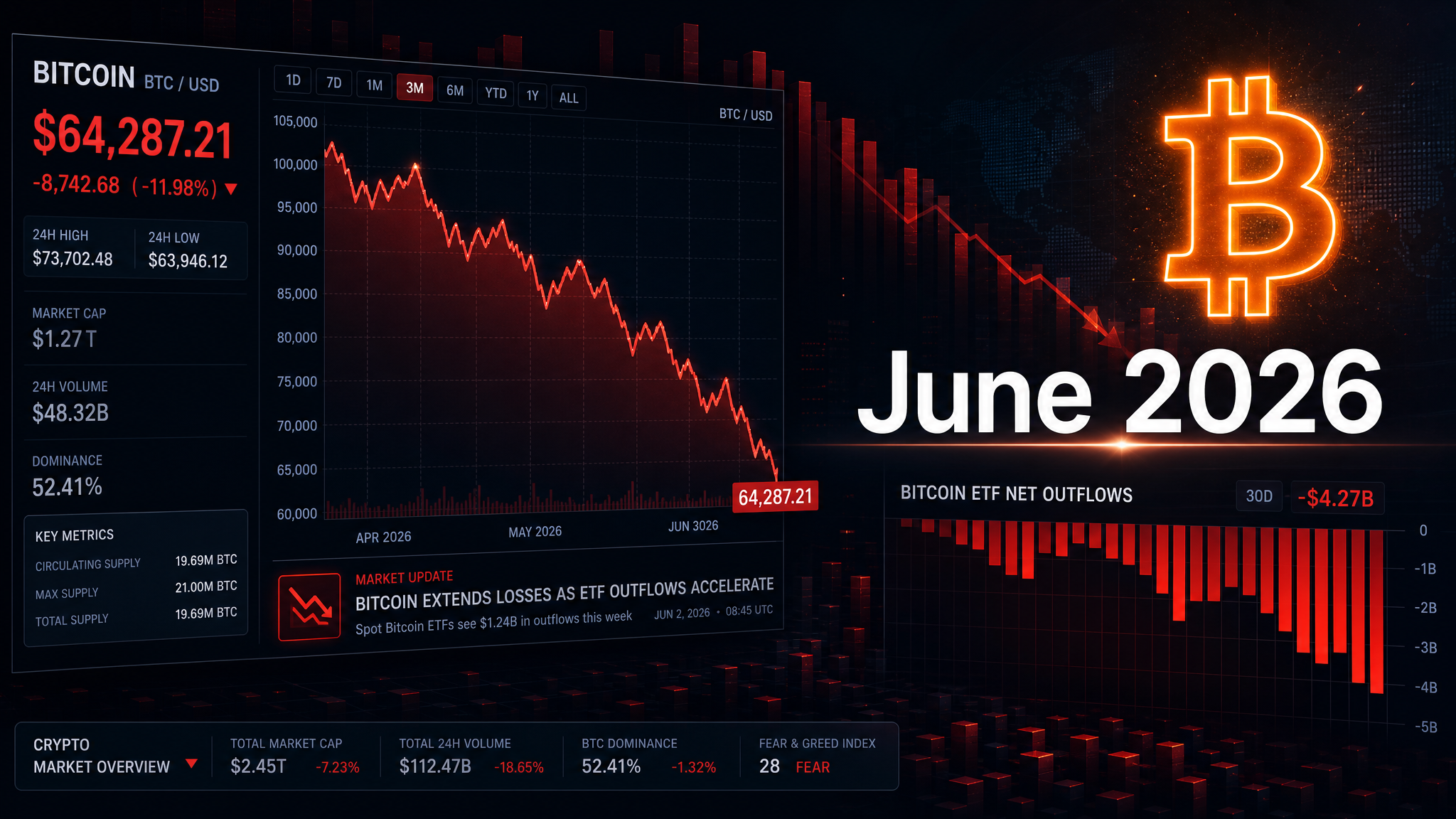
Bitcoin is trading around $62,280 as of July 8, 2026 — down roughly 41% from its October 2025 all-time high of $126,198, but showing signs of recovery after weak U.S. jobs data (only 57,000 jobs added in June) reignited Fed rate cut expectations. The July 28-29 FOMC meeting is the next major catalyst.
Regulatory uncertainty is one of several headwinds. June 2026 saw approximately $4.5 billion in spot Bitcoin ETF outflows — the worst month since launch. But the first week of July reversed that trend, with over $220 million in inflows on July 2 alone. That's a meaningful signal.
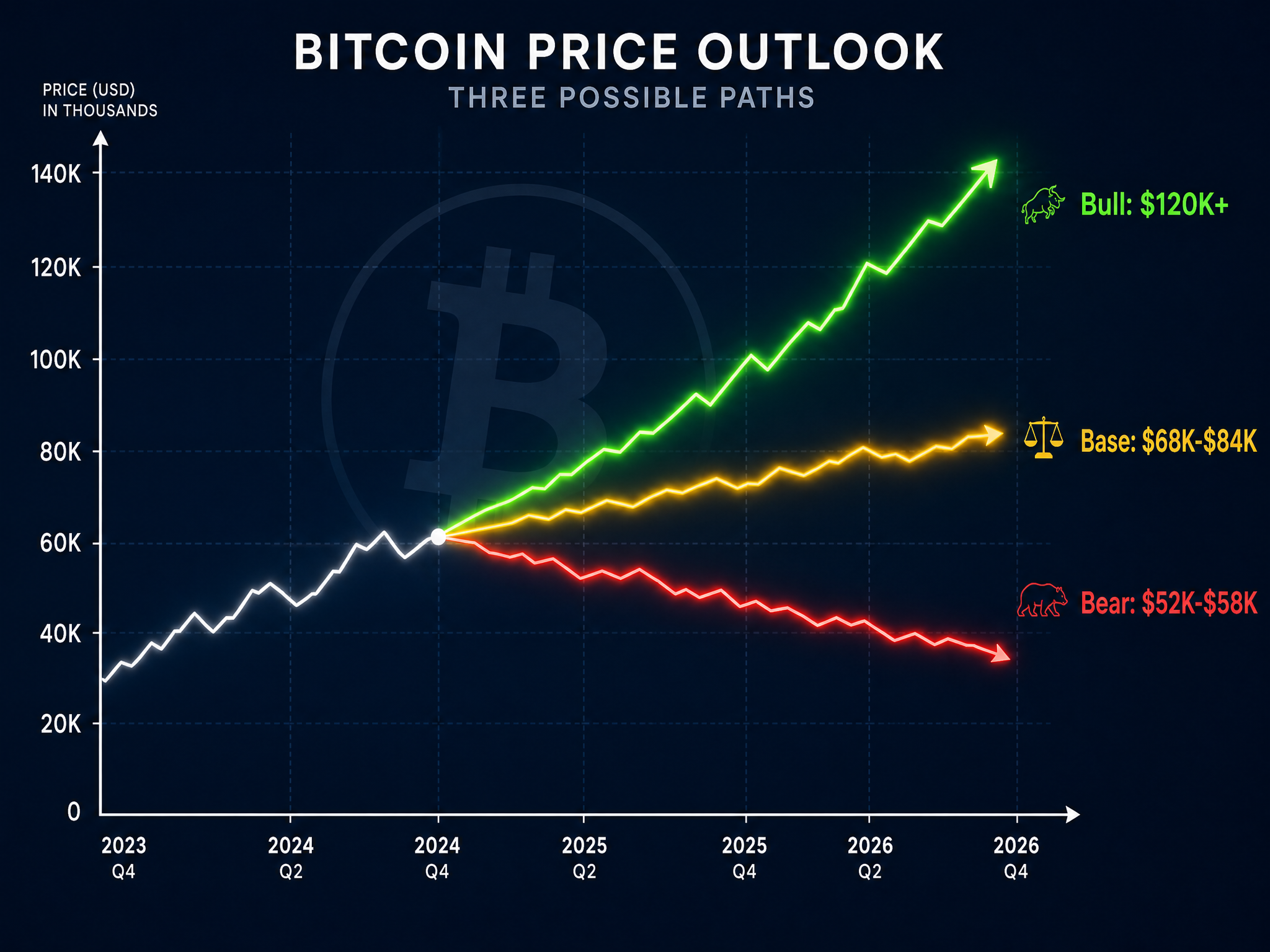
Three scenarios for the rest of 2026:
- Bear case ($52,000–$58,000): CLARITY Act fails, ETF outflows resume, Fed stays hawkish. Regulatory uncertainty keeps institutional capital on the sidelines.
- Base case ($68,000–$84,000): CLARITY Act passes or SEC safe harbor provides clarity, ETF inflows stabilize, Fed signals one or two cuts. Most analysts consider this the most likely outcome.
- Bull case ($120,000+): Full legislative clarity, sustained multi-quarter ETF inflows, Fed easing cycle begins. Possible but requires multiple things going right simultaneously.
Ready to master crypto trading? Check out Icoinpro's comprehensive trading course — it covers how to navigate volatile regulatory environments and position your portfolio for multiple market scenarios.
Altcoin Implications: Who Wins and Who Loses
The regulatory deadlock doesn't affect all crypto assets equally. Here's how to think about it:
Assets That Benefit from Regulatory Clarity
Ethereum stands to gain the most from the CLARITY Act passing. The bill's commodity classification for sufficiently decentralized networks would remove the SEC's ability to classify ETH as a security — a cloud that's hung over the asset for years. Ethereum closed three consecutive red quarters for the first time in its history through mid-2026, and regulatory clarity could be the catalyst for a reversal.
Solana's ecosystem is also watching closely. The upcoming Alpenglow consensus upgrade promises dramatically faster transaction finality, and a clear regulatory framework would accelerate institutional DeFi deployment on the network.
Assets at Risk from Continued Uncertainty
Smaller altcoins with unclear commodity vs. security status face the most risk if the CLARITY Act fails. Without a legal framework, exchanges may continue delisting borderline assets to avoid SEC enforcement risk. This is already happening — and it's one reason Bitcoin dominance has climbed to 58-60% in July 2026.
Protect your crypto assets with a Ledger hardware wallet — the gold standard in cold storage security. In a volatile regulatory environment, keeping your assets in self-custody removes exchange counterparty risk entirely.
DeFi: The Section 604 Stakes
For DeFi specifically, Section 604 is the most consequential part of the CLARITY Act. Without developer protections, U.S.-based DeFi development faces existential legal risk. The result? Talent and capital continue migrating offshore — to the EU (where MiCA provides a framework), to Singapore, and to the UAE.
Hyperliquid, which dominates on-chain perpetuals trading with over $2 billion in daily volume, is a prime example of what's possible when DeFi operates without regulatory overhang. If Section 604 passes, expect a wave of similar protocols to launch or expand U.S. operations.
Practical Portfolio Moves for the Regulatory Uncertainty Period
Given the three-to-eight week window of maximum uncertainty, here's how experienced investors are positioning:
- Increase Bitcoin allocation: BTC benefits from regulatory clarity regardless of which direction it comes from — it's already widely considered a commodity. It's the safest bet during legislative uncertainty.
- Reduce exposure to SEC-gray-area altcoins: If a token's legal status is genuinely unclear, the risk/reward is unfavorable until the CLARITY Act resolves.
- Watch ETF flows weekly: The reversal from June's $4.5B outflows to July's positive inflows is the most reliable leading indicator for Bitcoin price direction right now.
- Monitor the July 28-29 FOMC meeting: A dovish signal or rate cut would likely trigger a significant Bitcoin rally regardless of regulatory news.
- Keep 10-20% in stablecoins: Dry powder to deploy if the CLARITY Act passes or the SEC safe harbor is announced — both would likely trigger sharp rallies.
Want to understand the economics behind Bitcoin? The Bitcoin Standard is essential reading for every crypto enthusiast — it explains exactly why Bitcoin's regulatory status as a commodity is so defensible, and why that matters for long-term holders.
Key Dates to Watch
- July 13, 2026: Senate returns from recess — legislative clock starts
- July 18, 2026: GENIUS Act stablecoin rulemaking deadline
- July 20-30, 2026: Projected window for CLARITY Act floor vote (if it happens)
- July 28-29, 2026: FOMC meeting — potential rate cut catalyst
- Late July 2026: Zcash "Ironwood" upgrade (Network Upgrade 7)
- August 2026: Senate recess — CLARITY Act likely dead if not passed by then
The Bottom Line
The CLARITY Act's Senate stall is frustrating, but it's not a death sentence for crypto. The SEC's Regulation Crypto safe harbor proposal provides a meaningful fallback. Bitcoin's recovery from June lows — driven by Fed rate cut expectations and returning ETF inflows — shows the market isn't waiting for Washington to figure itself out.
The next three weeks are genuinely consequential. Watch the Senate floor schedule, the FOMC meeting, and weekly ETF flow data. Those three data points will tell you more about where crypto prices are headed than any price chart.
Stay positioned, stay informed, and don't let regulatory noise shake you out of fundamentally sound positions.
Key Takeaways
- The CLARITY Act needs 60 Senate votes but currently has ~45 — three unresolved disputes are blocking the remaining votes
- The August recess is the hard deadline; failure to pass by then likely kills the bill until after midterms
- The SEC's "Regulation Crypto" safe harbor proposal is the backup plan — watch for it to enter public comment in July
- Bitcoin is trading ~$62,280 with a base-case target of $68,000–$84,000 if regulatory clarity emerges
- Increase BTC allocation, reduce SEC-gray-area altcoin exposure, and keep dry powder for a clarity-driven rally
- The July 28-29 FOMC meeting is the next major price catalyst regardless of regulatory outcomes
Understanding the market is step one. Profiting from it is step two.
Reading analysis is valuable, but knowing how to generate your own — and act on it with discipline — is where real results come from. That skill is trainable.
The program I recommend to people who ask me is this crypto trading course — it\'s the one I point friends and family to when they\'re serious about learning. Daily lessons, live analysis, and a community that actually helps.
Affiliate link — I may earn a commission at no extra cost to you. I only recommend what I genuinely use.
Disclaimer: The information provided on this website is for educational and informational purposes only. It should not be considered financial or investment advice. Cryptocurrency investments carry significant risk. Always do your own research and consult with a qualified financial advisor before making investment decisions.
Free Crypto Insights
Get weekly trading tips, market analysis, and exclusive strategies delivered to your inbox.