MiCA Regulation Crypto 2026: Full Enforcement Is Here — What Every Investor Needs to Know
Affiliate Disclosure: This article may contain affiliate links. We may earn a commission at no extra cost to you. All opinions are our own.
Marcus Chen
Senior Crypto Analyst & Educator
Certified Blockchain Professional | Former Wall Street Analyst
Marcus Chen is a cryptocurrency analyst and educator with over 8 years of experience in digital asset trading. He has helped thousands of beginners navigate the crypto markets through practical, actionable education.

MiCA Regulation Crypto 2026: Full Enforcement Is Here — What Every Investor Needs to Know
The MiCA regulation crypto 2026 deadline has arrived — and it's reshaping the European digital asset landscape faster than most investors anticipated. As of July 1, 2026, the EU's Markets in Crypto-Assets regulation enters full enforcement mode, ending a transitional grace period that allowed hundreds of crypto firms to operate under legacy national registrations. The result? Binance is locked out of the EU, roughly 83% of previously active crypto providers have failed to secure authorization, and millions of European investors are scrambling to figure out what happens next. If you hold crypto on any exchange — European or not — this matters to you.
What Is MiCA and Why July 1, 2026 Is a Turning Point
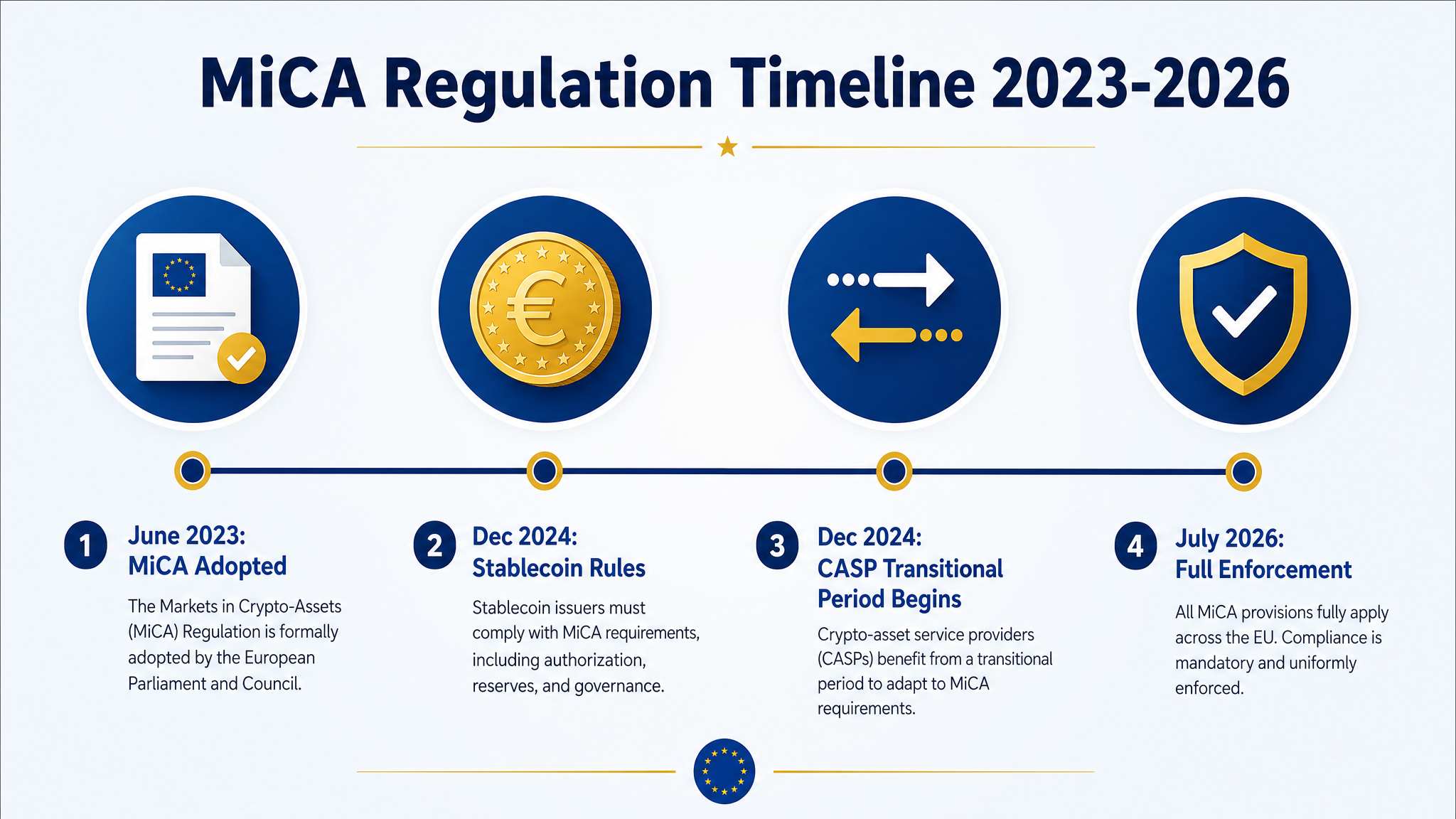
MiCA — the Markets in Crypto-Assets regulation — was officially adopted by the European Union in June 2023. It's the world's most comprehensive crypto regulatory framework, covering everything from stablecoin issuance to exchange licensing to consumer protection rules. Think of it as the EU's attempt to bring crypto under the same kind of oversight that governs traditional financial markets.
The regulation rolled out in phases. Stablecoin rules kicked in first, in mid-2024. Then came the broader framework for crypto-asset service providers (CASPs) — exchanges, wallet providers, trading platforms — which entered a transitional period in late 2024. Under Article 143(3), firms already operating under national registrations got a runway: keep operating as-is until July 1, 2026, or until you receive (or are refused) a full MiCA license.
That runway just ended.
Any firm without a valid CASP license is now legally barred from offering crypto services to EU residents. No new deposits. No new trading. No staking. Just wind-down mode — and the clock is ticking.
The Numbers Are Stark: Only 17% of Firms Made the Cut
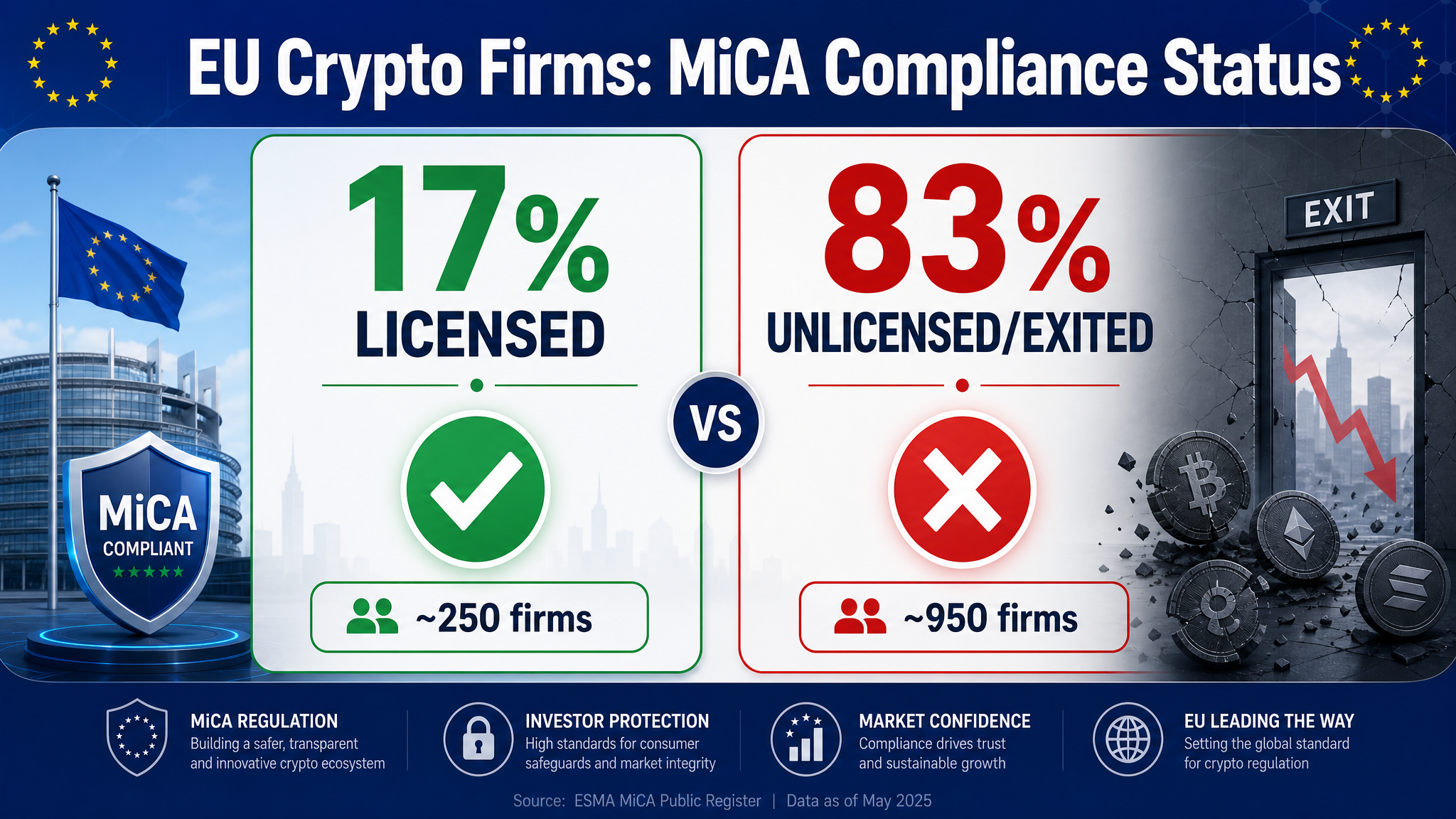
Here's the number that should make every crypto investor sit up straight: of the roughly 1,200 crypto-asset service providers that were active in the EU before MiCA's full enforcement, only about 250 — approximately 17% — have secured full authorization as of late June 2026.
That's not a rounding error. That's a regulatory wipeout.
Germany leads the pack with 56 licensed firms, followed by the Netherlands and France. The European Securities and Markets Authority (ESMA) has been unambiguous: there will be no extensions, no grace periods, no pardons. If you're not on the official CASP register, you're out.
Why did so many firms fail? The compliance burden is genuinely steep. Obtaining a MiCA license requires establishing a physical EU office, appointing resident directors, implementing military-grade AML/KYC systems, and meeting capital reserve requirements that vary by business type. Industry insiders have called it a "million-dollar compliance wall" — and for smaller operators, that wall was simply too high to climb in time.
Binance's EU Exit: What Happened and What It Means
No story illustrates MiCA's teeth better than what happened to Binance — the world's largest crypto exchange by trading volume.
Binance had been pursuing a MiCA license through Greece, betting that Greek authorization would give it passporting rights to serve the entire EU market. On June 24, 2026, the exchange abruptly withdrew its Greek application. The reason? Regulators in Greece — coordinating with counterparts in Ireland, Latvia, and at the ESMA level — were reportedly prepared to reject the bid over concerns about Binance's legal history, corporate structure, and the "fit and proper" assessment of its management.
The fallout was immediate. Without a valid license, Binance initiated an "orderly wind-down" of EU-facing services. New user onboarding stopped. New spot trading orders halted. Deposits were suspended. EU users can still withdraw their funds — Binance has been clear that assets remain safe and accessible — but the exchange is effectively frozen for European customers until it secures authorization elsewhere. France is reportedly the next target.
This is a seismic shift. Binance has dominated European crypto trading for years. Its absence creates a vacuum that licensed competitors — Coinbase, Kraken, Bitstamp, and a handful of EU-native platforms — are already moving to fill.
Ready to master crypto trading on a platform that's built for the long haul? Icoinpro offers step-by-step training that has helped thousands of beginners navigate exactly these kinds of market transitions.
How MiCA Changes Stablecoins and Trading Pairs
Beyond exchange licensing, MiCA has fundamentally altered the stablecoin landscape in Europe — and this affects traders everywhere, not just EU residents.
Under MiCA, stablecoins are classified as either Asset-Referenced Tokens (ARTs) or E-Money Tokens (EMTs). Both categories face strict reserve requirements, transparency mandates, and volume caps. The practical effect? Many exchanges have proactively delisted non-compliant stablecoins — most notably certain USDT trading pairs — to stay within the regulatory framework.
USDC and EURC have emerged as the preferred alternatives. Circle, which issues USDC, secured MiCA compliance early and has positioned itself as the go-to stablecoin for European institutional and retail traders alike. EURC, Circle's euro-denominated stablecoin, is seeing a surge in adoption as traders seek a MiCA-native alternative to traditional dollar-pegged assets.
If you're trading on a European exchange, check which stablecoins are still available. The pairs you relied on six months ago may no longer exist.
What This Means for Crypto Investors Outside Europe
You might be reading this from the US, Asia, or Latin America and thinking: "This is a European problem." It's not — at least not entirely.
First, the precedent effect. MiCA is the most comprehensive crypto regulatory framework ever enacted. Regulators in the US, UK, Singapore, and elsewhere are watching closely. The CLARITY Act in the US, still working its way through Congress, draws heavily on MiCA's framework. What happens in Europe doesn't stay in Europe.
Second, liquidity. European traders represent a significant chunk of global crypto volume. When Binance exits the EU market, that liquidity doesn't evaporate — it migrates. Some of it moves to licensed EU platforms. Some moves to non-EU exchanges. Either way, order books shift, spreads widen temporarily, and price discovery gets messier. That affects everyone.
Third, the stablecoin delistings have already created arbitrage opportunities and pricing discrepancies between EU and non-EU markets. Sophisticated traders are already exploiting these gaps.
Protect your crypto assets with a Ledger hardware wallet — the gold standard in cold storage security. In a regulatory environment where exchanges can be forced to wind down overnight, self-custody isn't optional anymore.
How to Protect Your Assets During the MiCA Transition
Whether you're in Europe or not, here's a practical checklist for navigating the MiCA transition without getting caught flat-footed.
1. Verify your exchange's status. ESMA maintains an official register of authorized CASPs. If you're using a European exchange, check it. If your platform isn't on the list, start moving your assets now — don't wait for a forced wind-down announcement.
2. Move to self-custody. This is the single most important action any crypto investor can take right now. When an exchange loses its license, withdrawal queues can get long fast. Hardware wallets put you in control regardless of what any regulator decides. The Trezor Model T offers top-tier security with an intuitive touchscreen interface — a solid choice for anyone serious about protecting their holdings.
3. Audit your stablecoin exposure. If you're holding USDT on a European exchange, check whether those pairs are still active. Consider diversifying into MiCA-compliant alternatives like USDC or EURC.
4. Watch the licensed platforms. Coinbase, Kraken, and Bitstamp all hold valid MiCA licenses. These are the exchanges that will absorb Binance's displaced European user base. Expect increased volume, potentially tighter spreads, and more institutional-grade features as they compete for market share.
5. Stay informed on the regulatory calendar. MiCA enforcement is ongoing. ESMA will continue issuing guidance, and individual member states may add their own requirements on top of the EU baseline. Set up alerts for ESMA announcements and your exchange's regulatory communications.
The Bigger Picture: Is MiCA Good or Bad for Crypto?
This is the question everyone's debating — and the honest answer is: both, depending on your time horizon.
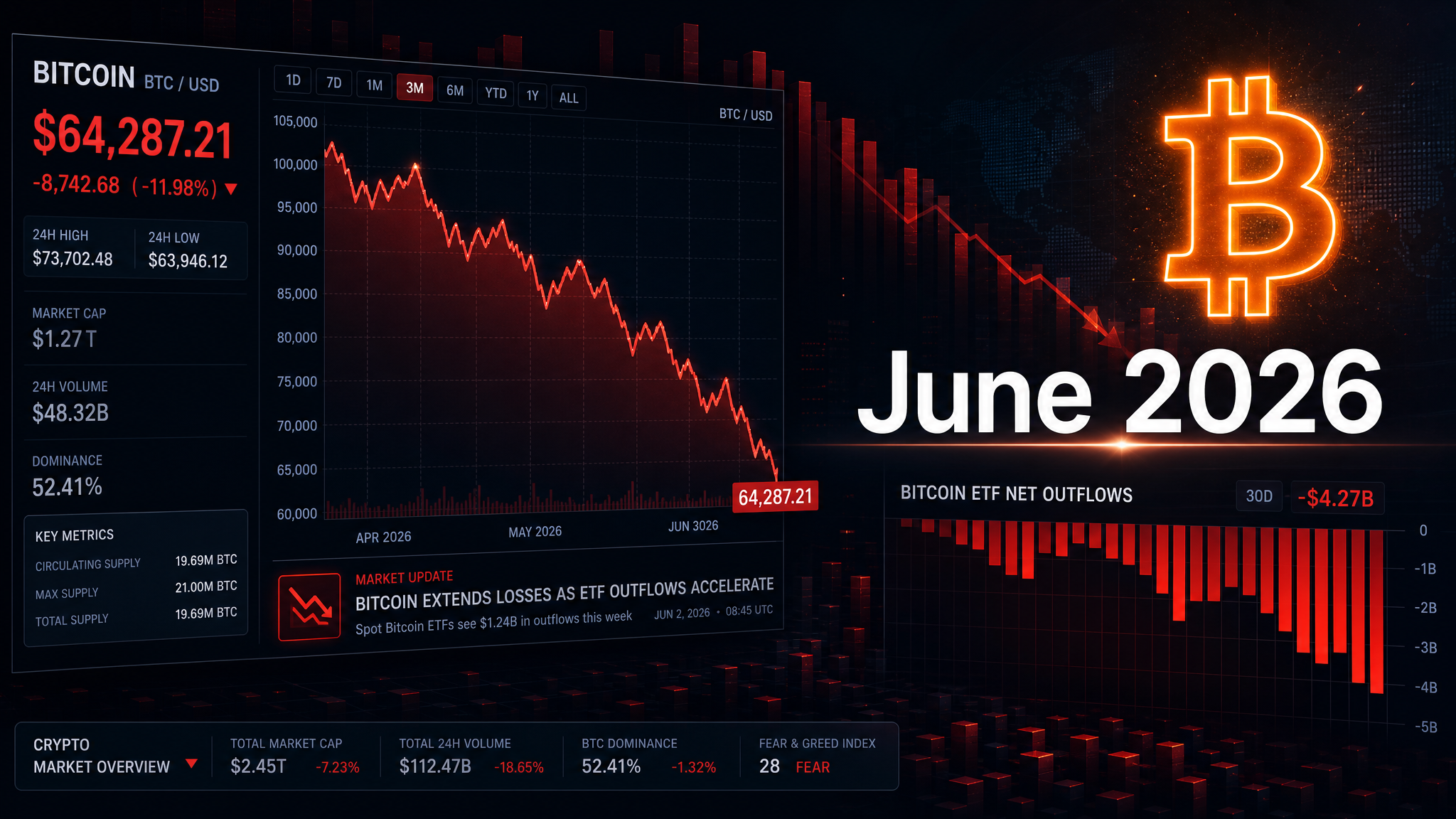
Short-term, MiCA is disruptive. Exchanges are exiting. Stablecoins are being delisted. Liquidity is fragmenting. The Fear & Greed Index hit 12 this week — deep in "extreme fear" territory — and MiCA uncertainty is part of that story.
Long-term, the picture looks different. Regulatory clarity is what institutional money has been waiting for. Pension funds, sovereign wealth funds, and major asset managers can't allocate to an asset class that operates in a legal gray zone. MiCA creates the framework that makes those allocations possible. The 250 firms that survived the compliance gauntlet are now operating in a legitimized market with a clear rulebook — and that's a foundation for sustainable growth.
The analogy I keep coming back to: the early internet was chaotic, unregulated, and full of fraud. Then came GDPR, data protection laws, and consumer rights frameworks. The internet didn't die. It matured. Crypto is going through the same growing pains, just compressed into a much shorter timeframe.
Key Takeaways and Action Steps
- MiCA is now fully enforced. As of July 1, 2026, any crypto firm without a CASP license is operating illegally in the EU.
- Only 17% of firms made it. Roughly 950 out of 1,200 previously active EU crypto providers have failed to secure authorization.
- Binance is locked out. The world's largest exchange withdrew its Greek MiCA application and has suspended EU services pending a new licensing bid.
- Stablecoins are changing. USDT pairs are being delisted on many EU exchanges; USDC and EURC are the MiCA-compliant alternatives.
- Self-custody is more important than ever. Don't leave assets on an exchange that may be forced to wind down. Hardware wallets are your best insurance.
- The long-term outlook is constructive. Regulatory clarity, while painful in the short term, creates the foundation for institutional adoption and sustainable market growth.
The MiCA transition is one of the most significant regulatory events in crypto history. It's messy, it's disruptive, and it's happening right now. The investors who come out ahead will be the ones who understand the rules, verify their platforms, and take control of their own custody. Don't wait for your exchange to send you a wind-down notice.
Understanding the market is step one. Profiting from it is step two.
Reading analysis is valuable, but knowing how to generate your own — and act on it with discipline — is where real results come from. That skill is trainable.
The program I recommend to people who ask me is this crypto trading course — it\'s the one I point friends and family to when they\'re serious about learning. Daily lessons, live analysis, and a community that actually helps.
Affiliate link — I may earn a commission at no extra cost to you. I only recommend what I genuinely use.
Disclaimer: The information provided on this website is for educational and informational purposes only. It should not be considered financial or investment advice. Cryptocurrency investments carry significant risk. Always do your own research and consult with a qualified financial advisor before making investment decisions.
Free Crypto Insights
Get weekly trading tips, market analysis, and exclusive strategies delivered to your inbox.