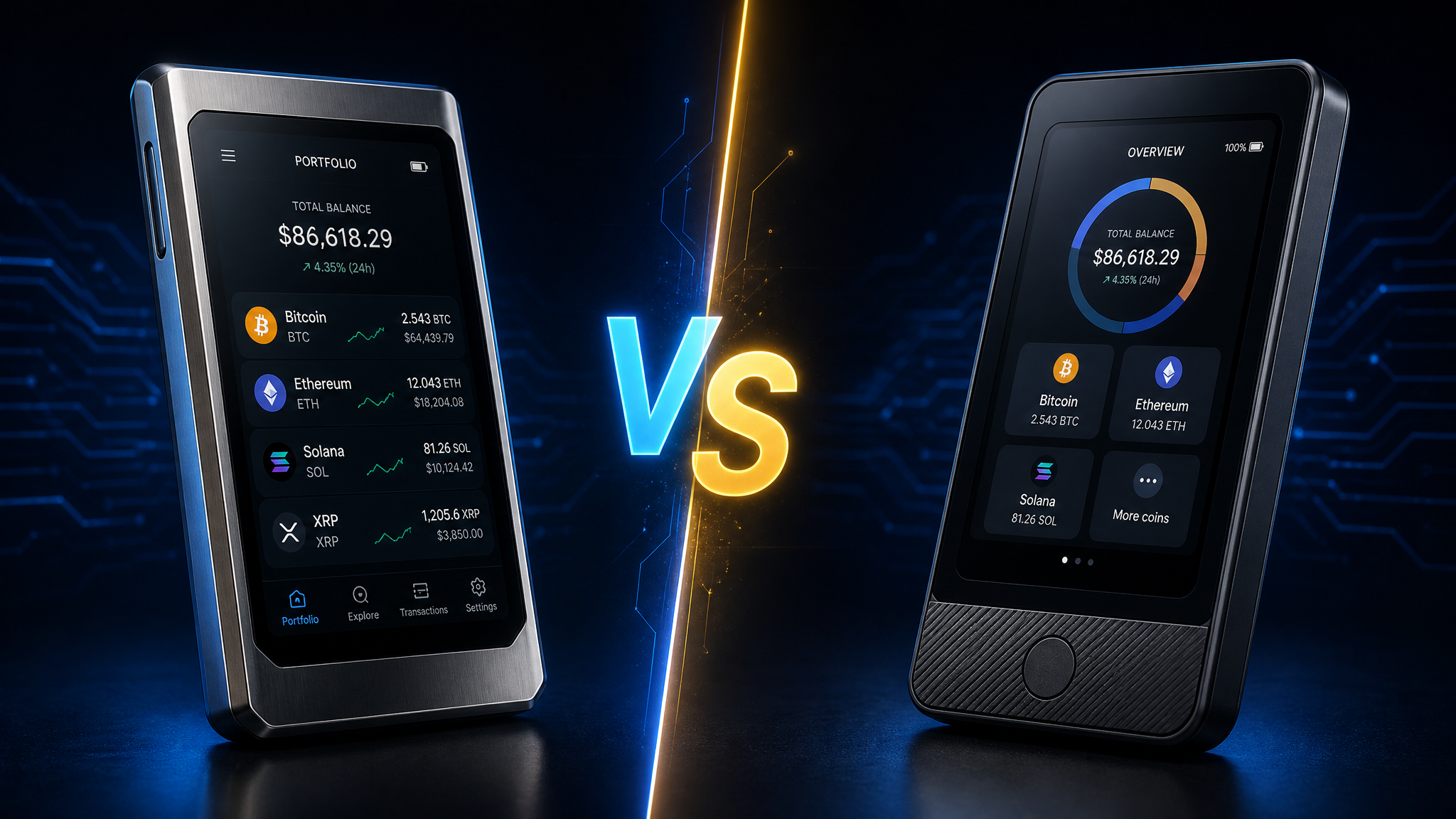
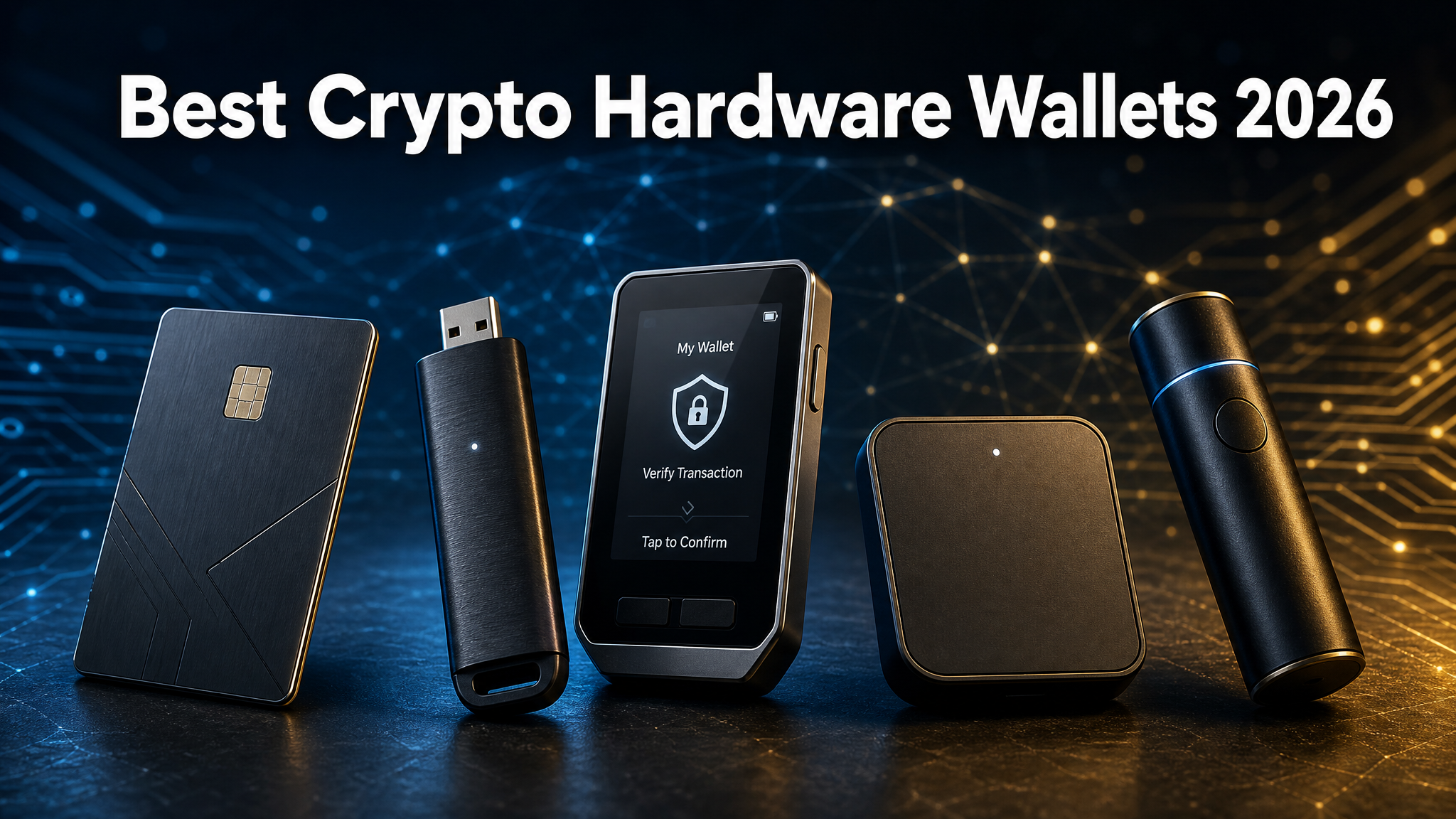
Best Crypto Hardware Wallets in 2026: Top 5 Cold Storage Picks Ranked
Affiliate Disclosure: This article may contain affiliate links. We may earn a commission at no extra cost to you. All opinions are our own.
Marcus Chen
Senior Crypto Analyst & Educator
Certified Blockchain Professional | Former Wall Street Analyst
Marcus Chen is a cryptocurrency analyst and educator with over 8 years of experience in digital asset trading. He has helped thousands of beginners navigate the crypto markets through practical, actionable education.
Affiliate Disclosure: This article contains affiliate links. We may earn a commission at no extra cost to you if you make a purchase through these links. See our affiliate disclosure for details.
Disclaimer: This content is for informational purposes only and should not be considered financial advice. Cryptocurrency investments carry significant risk. Always do your own research (DYOR) before making any investment decisions.
Best Crypto Hardware Wallets in 2026: Top 5 Cold Storage Picks Ranked
If you're holding any meaningful amount of crypto, the best crypto hardware wallets in 2026 aren't a luxury — they're the difference between keeping your assets and losing them forever. Software wallets are convenient, sure. But they're also connected to the internet, which means they're one phishing link or malware infection away from draining your entire portfolio. Hardware wallets keep your private keys offline, physically isolated from every threat that lives on your computer or phone.
I've spent the better part of eight years watching people lose crypto to hacks, exchange collapses, and simple mistakes. The investors who sleep well at night? They use cold storage. This guide breaks down the five best hardware wallets available right now — what each one does well, who it's built for, and where it falls short.
Why Hardware Wallets Matter More Than Ever in 2026
The crypto market has matured considerably, but the threat landscape has matured right alongside it. Sophisticated phishing attacks, clipboard hijackers, and supply-chain compromises have all become more common. Meanwhile, exchange failures — from FTX to smaller regional platforms — have reminded millions of investors that "not your keys, not your coins" isn't just a slogan.
A hardware wallet solves the core problem: your private key never touches an internet-connected device. Even if your computer is completely compromised, an attacker can't sign a transaction without physical access to your device and your PIN. That's a fundamentally different security model than any software wallet can offer.
Protect your crypto assets with a Ledger hardware wallet — the gold standard in cold storage security.
How We Evaluated These Wallets
Every wallet on this list was assessed across five criteria: security architecture (secure element chip, air-gap capability, open-source firmware), supported assets, ease of use, price, and ecosystem integration. No wallet is perfect for everyone — the right choice depends on your holdings, technical comfort level, and how you actually use crypto day-to-day.
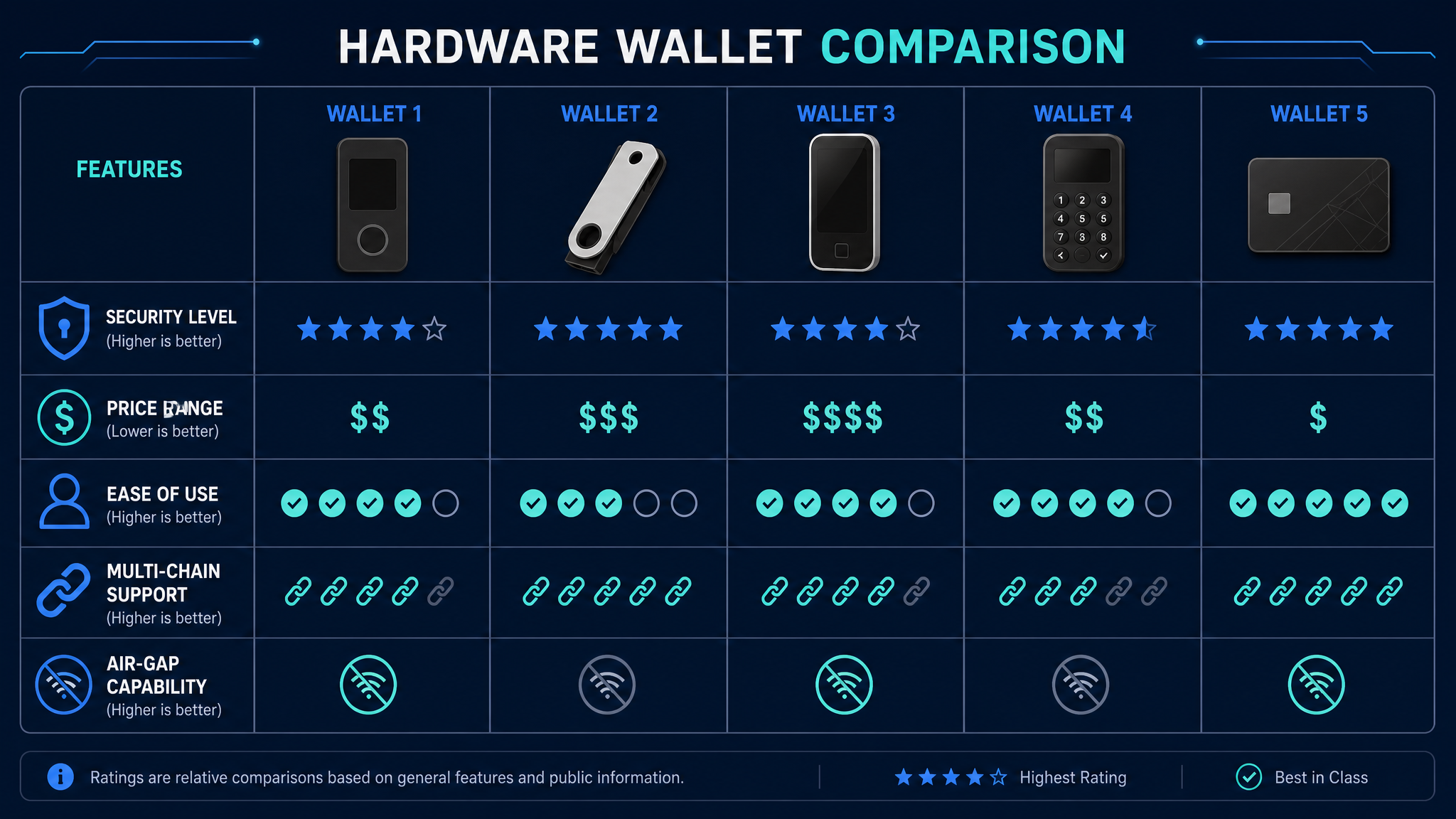
The 5 Best Crypto Hardware Wallets in 2026
1. Ledger Flex — Best Overall Hardware Wallet
Price: ~$249 | Best for: Multi-chain users who want top security with a polished experience
The Ledger Flex is the hardware wallet most people should buy in 2026. It combines a CC EAL6+ certified Secure Element chip with an E Ink touchscreen that's driven directly by the secure element itself — meaning the screen can't be spoofed by malware on your computer. That's a subtle but important security upgrade over older designs where the display was controlled by a separate, less-secure chip.
Ledger Live, the companion app, supports over 5,500 assets across dozens of blockchains. You can stake ETH, manage NFTs, and swap tokens directly through the interface. Connectivity options include Bluetooth, NFC, and USB-C, which makes it genuinely versatile for both desktop and mobile use.
The one legitimate criticism: Ledger's secure element firmware is closed-source. The company argues this is necessary for their security certification, and independent audits have consistently validated the architecture. But if total code auditability is a hard requirement for you, look at Trezor instead.
Verdict: The best balance of security, usability, and ecosystem support on the market. Hard to beat for most users.
2. Trezor Safe 5 — Best for Open-Source Security
Price: ~$169 | Best for: Security-conscious users who demand fully auditable firmware
Trezor has been building hardware wallets since 2014, and the Safe 5 represents their most refined product yet. Every line of firmware and hardware schematic is publicly available on GitHub — anyone can audit it, and many security researchers have. That transparency is genuinely valuable, not just a marketing claim.
The Safe 5 uses an Infineon OPTIGA Trust M secure element, which addressed the physical extraction vulnerabilities that plagued older Trezor models without a dedicated SE chip. It also supports Shamir Backup (SLIP-39), which lets you split your seed phrase into multiple shares — a meaningful upgrade for users who want redundancy without a single point of failure.
The touchscreen interface is clean and intuitive. Asset support is broad, though not quite as extensive as Ledger's. For most mainstream crypto users, that won't matter. If you're holding BTC, ETH, and a handful of major altcoins, the Safe 5 covers everything you need.
Verdict: The best choice if open-source auditability is non-negotiable. Excellent security at a lower price point than the Ledger Flex.
Looking for reliable crypto storage? Trezor wallets have been trusted by millions since 2014.
3. Coldcard Q — Best for Bitcoin Maximalists
Price: ~$249 | Best for: Advanced Bitcoin-only users who want maximum air-gap security
The Coldcard Q is not for beginners. It's a purpose-built Bitcoin fortress with a physical QWERTY keyboard, dual secure element chips (ATECC608 + DS28C36B), and multiple air-gap options including microSD card signing, NFC, and QR code-based PSBT workflows. It never needs to touch your computer via USB if you don't want it to.
Advanced features include duress PINs (which open a decoy wallet), a "Brick Me" PIN that permanently destroys the device if entered, BIP-85 for deriving child seeds, and native multisig support. For users managing significant Bitcoin holdings — think $50,000 or more — these aren't gimmicks. They're meaningful protections against sophisticated physical attacks.
The tradeoff is obvious: it only supports Bitcoin. No ETH, no altcoins, no DeFi. If your entire crypto strategy is Bitcoin cold storage, the Coldcard Q is arguably the most secure consumer device available. If you hold anything else, you'll need a second wallet.
Verdict: The definitive choice for serious Bitcoin holders. Overkill for most people, but exactly right for its target audience.
4. Tangem — Best for Beginners and Simplicity
Price: ~$55–$75 (3-card set) | Best for: Beginners who want cold storage without the complexity
Tangem takes a completely different approach to hardware wallet design. Instead of a device with a screen and buttons, it's a set of NFC-enabled smart cards — roughly the size and shape of a credit card. You tap the card to your phone to sign transactions. No seed phrase to write down and store. No USB cables. No firmware updates to manage.
The "seedless" design is genuinely innovative. Your private key is generated on the card's EAL6+ certified chip and never leaves it. Recovery is handled through the other cards in your set (you get 2-3 cards, any of which can restore access). For users who are intimidated by traditional hardware wallets — or who've lost seed phrases before — this is a compelling alternative.
The limitations are real: you need your phone to interact with the wallet, and the mobile-first design means desktop users will find it less convenient. Asset support is broad but not exhaustive. And the card form factor, while elegant, is easier to physically lose than a dedicated device.
Verdict: The most accessible hardware wallet on the market. Perfect for beginners or anyone who finds traditional cold storage too complicated.
5. NGRAVE ZERO — Best for Maximum Security
Price: ~$398–$425 | Best for: High-net-worth users who want the highest certified security level available
The NGRAVE ZERO holds an EAL7 OS certification — the highest security assurance level commercially available for any consumer device. It's completely air-gapped: no USB, no Bluetooth, no Wi-Fi, no NFC. The only way to communicate with it is through QR codes, which you scan with the companion app on your phone.
The device generates your seed phrase using a combination of its own hardware random number generator and a photo of your fingerprint, creating entropy that's unique to you. The companion app (NGRAVE LIQUID) handles the blockchain interaction side, while the ZERO handles all signing offline.
At $400+, it's the most expensive wallet on this list by a significant margin. The QR-code-only workflow is also slower than USB or Bluetooth alternatives. But for users managing very large holdings — or those in high-risk environments — the EAL7 certification and complete air-gap architecture represent a meaningful security upgrade over everything else here.
Verdict: The most secure hardware wallet available. The price and workflow complexity are real barriers, but justified for high-value holdings.
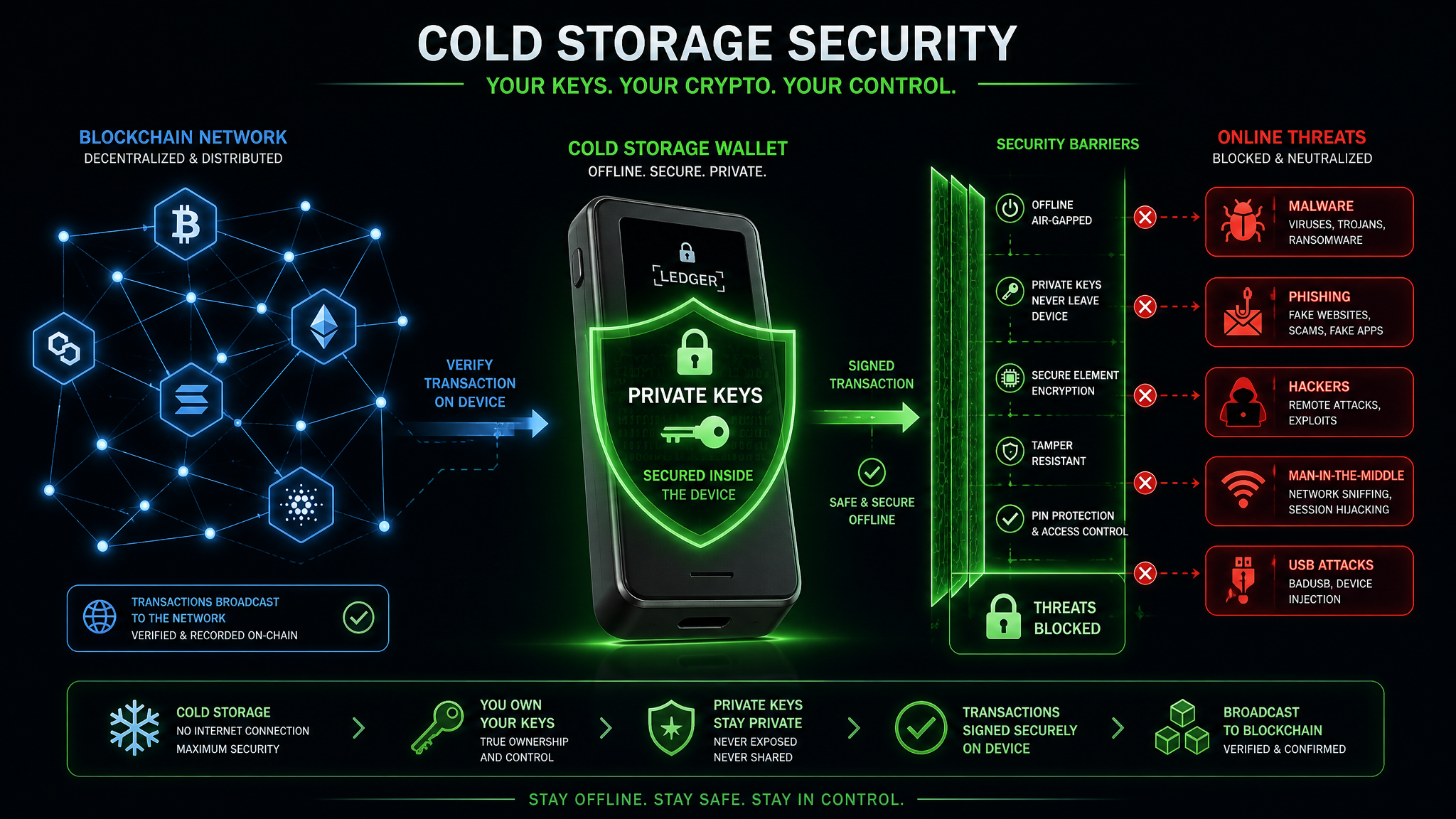
Hardware Wallet Security: What Actually Matters
The marketing around hardware wallets can get confusing fast. Here's what actually matters when evaluating security:
Secure Element (SE) chip: This is the dedicated security chip that stores your private key. Look for EAL5+ or higher certification. The SE chip is physically hardened against tampering and side-channel attacks in ways that general-purpose microcontrollers aren't.
Air-gap capability: Devices that can sign transactions without any wired or wireless connection to your computer eliminate an entire class of attack vectors. The Coldcard Q and NGRAVE ZERO are the strongest options here.
Open-source firmware: Publicly auditable code means the security community can verify there are no backdoors. Trezor and Coldcard are fully open-source. Ledger's secure element firmware is closed-source but independently audited.
Supply chain integrity: Always buy directly from the manufacturer. Verify packaging for tampering. Generate your seed phrase on the device — never accept a pre-generated seed from any source.
Which Hardware Wallet Should You Buy?
Here's the honest breakdown:
- Most people: Ledger Flex. Best overall security, widest asset support, polished experience.
- Open-source advocates: Trezor Safe 5. Fully auditable, excellent security, lower price.
- Bitcoin-only holders: Coldcard Q. The most advanced Bitcoin security device available.
- Beginners: Tangem. Lowest barrier to entry, genuinely simple to use.
- High-net-worth users: NGRAVE ZERO. Maximum certified security, worth the premium for large holdings.
One more thing worth saying: for holdings above $50,000, consider a 2-of-3 multisig setup using hardware from two different manufacturers. A single firmware bug or supply-chain compromise can't drain a properly configured multisig wallet. It's more complex to set up, but the security improvement is substantial.
Key Takeaways
- Hardware wallets keep private keys offline — the only reliable protection against remote hacks and exchange failures
- The Ledger Flex is the best all-around choice for most crypto users in 2026
- Trezor Safe 5 offers fully open-source security at a lower price point
- Coldcard Q is the gold standard for Bitcoin-only cold storage
- Tangem makes hardware wallet security accessible to complete beginners
- NGRAVE ZERO provides EAL7-certified maximum security for high-value holdings
- Always buy directly from manufacturers and generate your own seed phrase on-device
Ready to accelerate your crypto knowledge beyond just storage? Explore Icoinpro's daily trading signals and education platform — a structured way to build real trading skills alongside your security setup.
Tools are only as good as the trader using them.
The best platform in the world won't help if your analysis is off. Before investing in more tools, consider investing in your trading education — it's the one thing that compounds everything else.
The program I recommend to people who ask me is this crypto trading course — it\'s the one I point friends and family to when they\'re serious about learning. Daily lessons, live analysis, and a community that actually helps.
Affiliate link — I may earn a commission at no extra cost to you. I only recommend what I genuinely use.
Disclaimer: The information provided on this website is for educational and informational purposes only. It should not be considered financial or investment advice. Cryptocurrency investments carry significant risk. Always do your own research and consult with a qualified financial advisor before making investment decisions.
Free Crypto Insights
Get weekly trading tips, market analysis, and exclusive strategies delivered to your inbox.