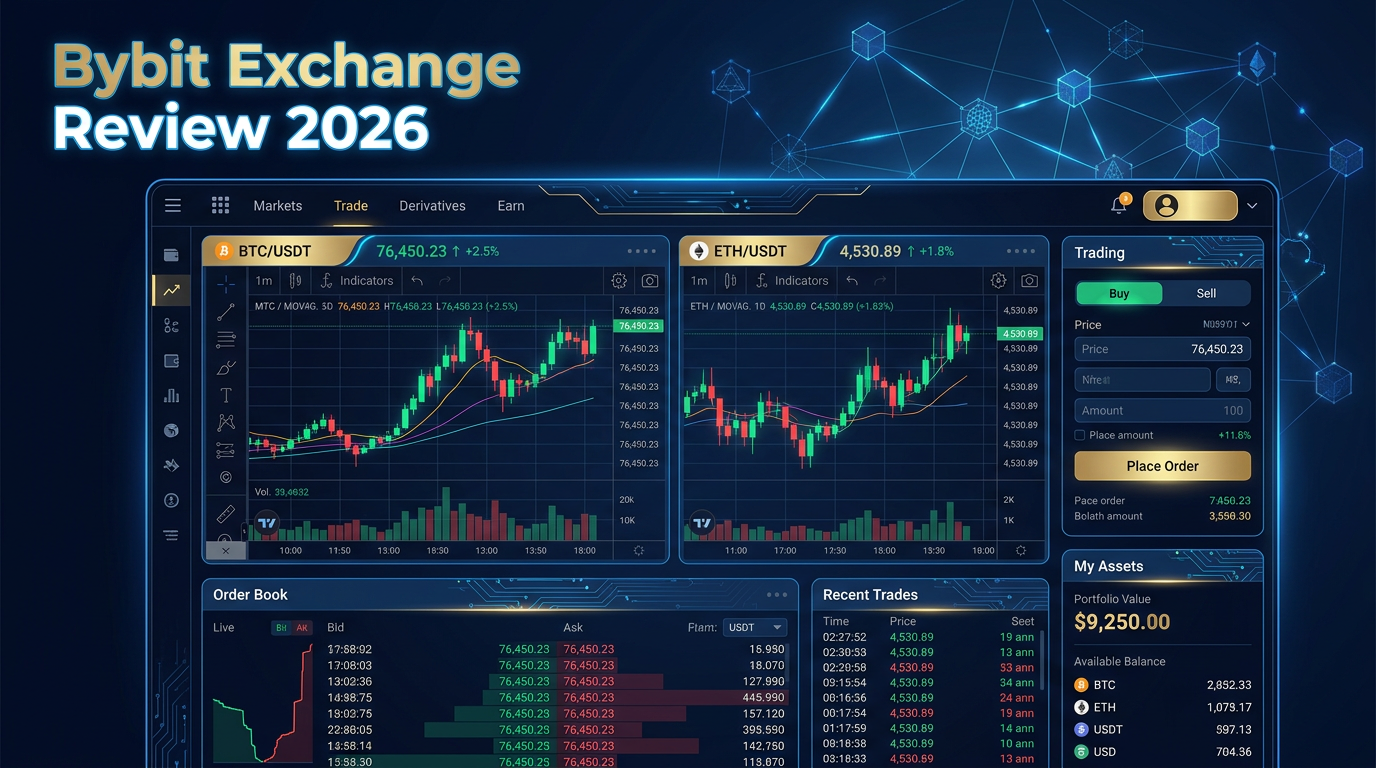
Exodus Wallet Review 2026: Is It Still Worth Using After the OFAC Settlement?
Affiliate Disclosure: This article may contain affiliate links. We may earn a commission at no extra cost to you. All opinions are our own.
Marcus Chen
Senior Crypto Analyst & Educator
Certified Blockchain Professional | Former Wall Street Analyst
Marcus Chen is a cryptocurrency analyst and educator with over 8 years of experience in digital asset trading. He has helped thousands of beginners navigate the crypto markets through practical, actionable education.
Disclaimer: This content is for informational purposes only and should not be considered financial advice. Cryptocurrency investments carry significant risk. Always do your own research (DYOR) before making any investment decisions.
This article contains affiliate links. We may earn a commission at no extra cost to you if you make a purchase through these links. See our affiliate disclosure for details.
Exodus Wallet Review 2026: Is It Still Worth Using After the OFAC Settlement?
The Exodus wallet has long been the go-to choice for crypto users who want a beautiful, all-in-one portfolio manager without the complexity of MetaMask or the limitations of exchange-based wallets. But 2025 was a rough year for Exodus — a $3.1 million OFAC sanctions settlement, a data breach exposing over 100,000 user emails, and a malware campaign targeting desktop users. So heading into 2026, the question isn't just "is Exodus good?" It's "can you still trust it?"
Short answer: yes, with caveats. This Exodus wallet review covers everything you need to know — the new features, the security reality, the fees, and who should (and shouldn't) use it in 2026.
What Is Exodus Wallet?
Exodus is a non-custodial, multi-chain software wallet launched in 2015. It's available on desktop (Windows, macOS, Linux), mobile (iOS and Android), and as a browser extension. One 12-word seed phrase syncs your portfolio across all platforms. The company behind it, Exodus Movement, Inc., is publicly traded on NYSE American under the ticker EXOD — which is unusual for a crypto wallet provider and adds a layer of corporate accountability most competitors lack.
The wallet supports over 300 cryptocurrencies across 50+ blockchain networks. Bitcoin, Ethereum, Solana, Cardano, Polygon, Cosmos — it's all there. You can stake, swap, track your portfolio, connect to DeFi apps, and now even buy tokenized stocks, all from one interface.
New in 2026: Exodus Markets and Payment Features
The biggest development this year is Exodus Markets, launched in June 2026 in partnership with Ondo Finance. This feature lets eligible users buy and sell over 200 tokenized stocks and ETFs — including the company's own tokenized EXOD shares — directly within the Exodus app on the Solana blockchain. It's a bold move that positions Exodus as something closer to a full financial platform than a simple crypto wallet.
Important caveat: these tokenized assets don't grant shareholder rights, and availability varies by region due to regulatory requirements. But the direction is clear — Exodus is betting on the convergence of traditional finance and crypto.
The company also completed its acquisition of W3C Corp (Monavate/Baanx), integrating payment infrastructure including the Exodus Card and Exodus Pay for stablecoin spending. Think of it as a crypto debit card ecosystem built into your wallet.
Security: The Honest Assessment
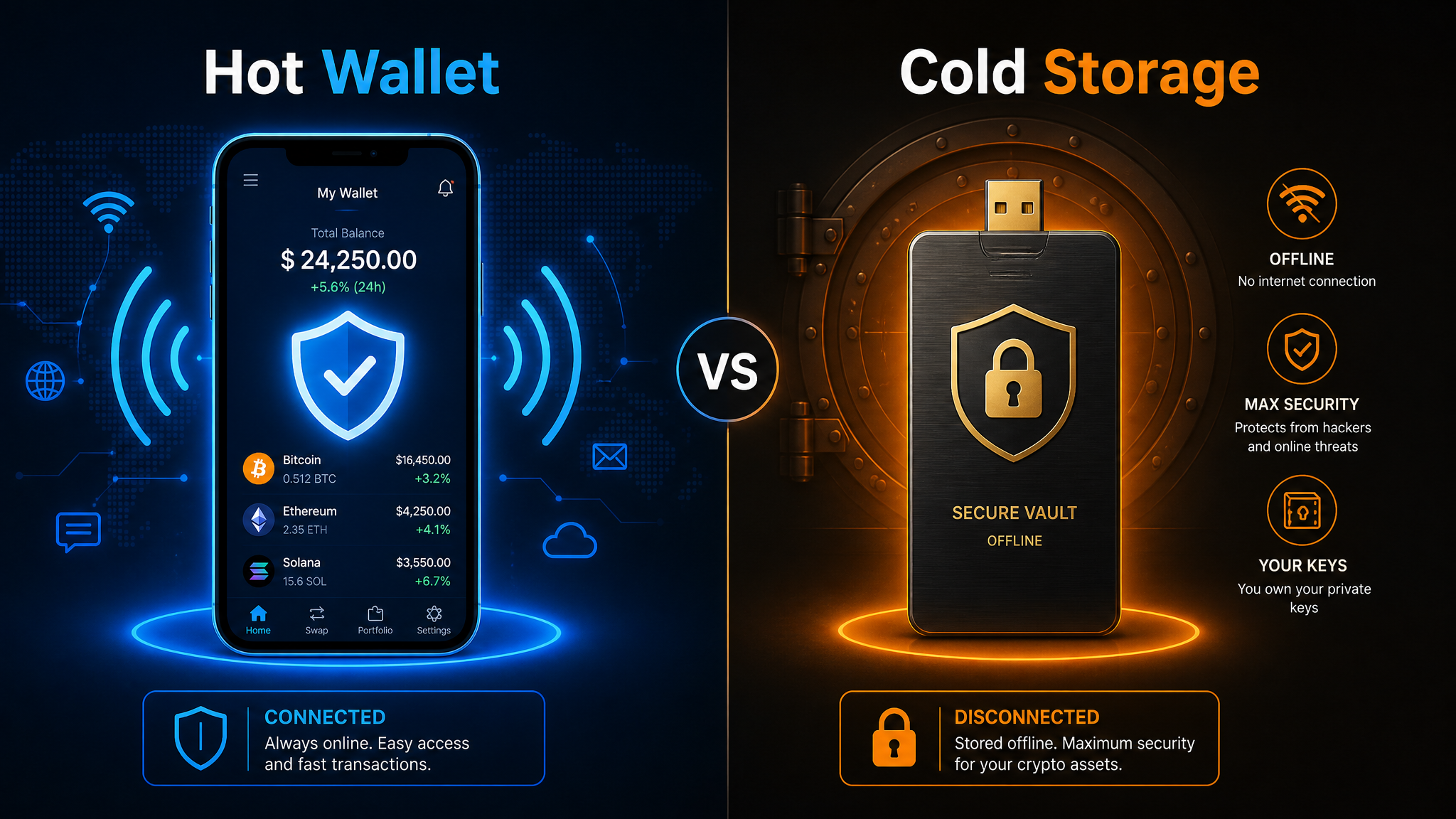
Here's where things get nuanced. Exodus is a hot wallet — your private keys live on your internet-connected device, encrypted with AES-256. The company never has access to your keys. That's the good news.
The less good news: the core wallet code is partially closed-source. You can't independently audit the transaction-signing logic. For most users, this is an acceptable trade-off. For security researchers and open-source purists, it's a dealbreaker.
The 2025 Incidents — What Actually Happened
Let's address the elephant in the room. Three things happened in 2025:
- OFAC Settlement ($3.1M, December 2025): Exodus settled with the U.S. Treasury for 254 apparent sanctions violations between 2017 and 2019. The core issue: Exodus staff allegedly advised Iranian users to use VPNs to bypass geoblocking controls on partner exchanges. OFAC flagged 12 instances as "egregious." Exodus has since implemented a standalone sanctions compliance policy, mandatory staff training, and automated screening tools.
- Email Data Breach (May 2025): Approximately 101,597 user email addresses were exposed. No private keys or funds were compromised — the non-custodial architecture protected users' actual assets. But affected users faced elevated phishing risk.
- Malicious npm Packages (April 2025): Malware targeting Exodus desktop users attempted to swap transaction addresses at the device level. This was an ecosystem-level attack, not a vulnerability in Exodus itself.
None of these incidents resulted in direct loss of user funds through the wallet's architecture. But they do highlight that Exodus, like any software company, has operational and compliance risks beyond just the code.
Hardware Wallet Integration: The Smart Move
Exodus integrates natively with Trezor (desktop) and Ledger (mobile) hardware wallets. This is genuinely useful — you get Exodus's beautiful interface as a front-end while your private keys stay offline. If you're holding significant crypto, this hybrid setup is the way to go.
Protect your crypto assets with a Ledger hardware wallet — the gold standard in cold storage security. Pair it with Exodus for the best of both worlds: cold storage protection with a polished interface.
Staking: Solid Selection, Reasonable Yields
Exodus offers built-in staking for a solid lineup of proof-of-stake assets. Here's what's available as of mid-2026:
- Ethereum (ETH): Minimum 0.1 ETH, smart contracts audited by ChainSecurity and Trail of Bits
- Solana (SOL): Minimum 1 SOL, rewards distributed periodically
- Cardano (ADA): Minimum 5 ADA, staked assets remain liquid
- Cosmos (ATOM): Minimum 0.735 ATOM, 21-day unbonding period applies
- Polygon (MATIC), Aptos (APT), Injective (INJ), Kava (KAVA), Tezos (XTZ)
Staking is handled through Everstake and similar third-party providers. Rewards land directly in your wallet. The interface is clean — no validator selection headaches, no command-line nonsense. For passive income seekers who don't want to manage a validator node, this works well.
Fees: The Swap Spread Problem
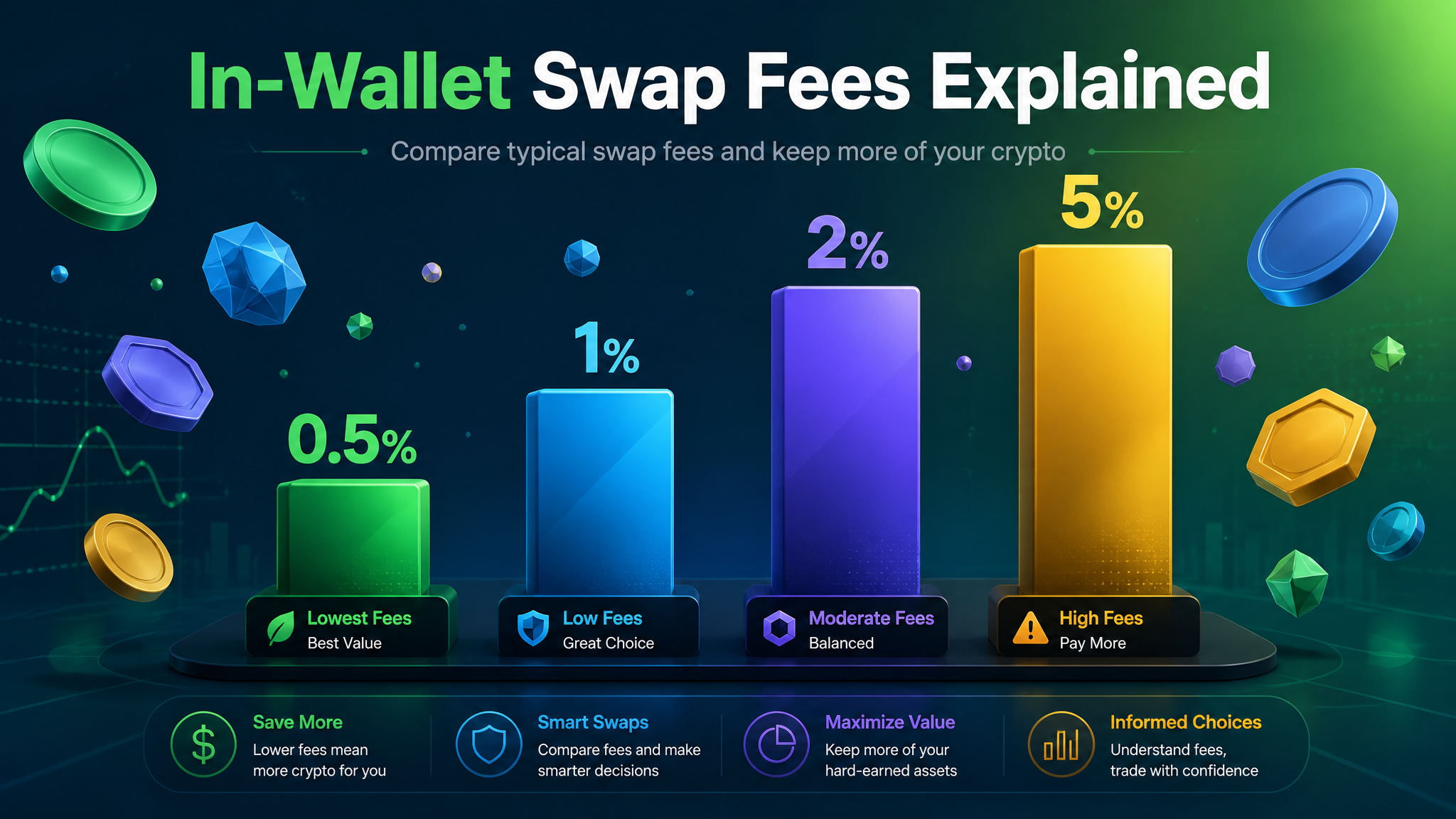
Exodus is free to download and charges no fees for storing or managing assets. Standard network (gas) fees apply to transactions — that's unavoidable on any wallet. Where Exodus makes money is the built-in XO Swap feature.
The marketing says "as low as 0.5%." Reality: independent testing shows effective spreads often run between 2% and 5% for retail-sized trades, depending on the pair and market conditions. For a $500 swap, that's $10–$25 in hidden costs. For a $5,000 swap, you're looking at $100–$250.
If you're swapping frequently or in large amounts, use a dedicated DEX like Uniswap or Jupiter instead. Exodus's swap is a convenience feature — pay the premium when you need speed and simplicity, not as your default trading venue.
User Experience: Still Best-in-Class
Whatever criticisms you level at Exodus, the interface is genuinely excellent. The color-coded portfolio dashboard, real-time price tracking, and seamless sync across desktop, mobile, and browser extension are hard to beat. MetaMask requires manual network configuration for non-EVM chains. Trust Wallet is solid but desktop-heavy. Exodus just works, everywhere, out of the box.
The wallet supports WalletConnect for DeFi app connections, NFT management, and direct DApp browsing. For a user who wants one app to handle Bitcoin, Ethereum, Solana, and a handful of altcoins without juggling multiple wallets, Exodus remains the most polished option available.
Who Should Use Exodus in 2026?
Exodus is a great fit if you:
- Want a beautiful, all-in-one wallet for managing a multi-chain portfolio
- Are a beginner who finds MetaMask confusing or Trust Wallet too bare-bones
- Plan to pair it with a Ledger or Trezor for cold storage of larger holdings
- Want built-in staking without managing validators
- Are interested in tokenized stocks alongside crypto (Exodus Markets)
Exodus is NOT the right choice if you:
- Require fully open-source, auditable code
- Trade frequently and need the lowest possible swap fees
- Need native 2FA or multisig security
- Are a privacy maximalist who needs shielded transactions
For those serious about learning to trade crypto actively, a structured education platform makes a real difference. Ready to master crypto trading? Check out Icoinpro's comprehensive trading course — it pairs well with a self-custody wallet setup like Exodus.
Exodus vs. Competitors: Quick Comparison
Exodus vs. MetaMask: Exodus wins on multi-chain support out of the box and overall polish. MetaMask is better for power users deep in EVM DeFi who need granular control.
Exodus vs. Trust Wallet: Both are strong multi-chain options. Exodus edges ahead on desktop experience and portfolio tracking. Trust Wallet has a slight edge on mobile DApp browsing.
Exodus vs. Rabby Wallet: Rabby is the security-first choice for DeFi power users — it shows pre-transaction simulations and has a fully open-source codebase. Exodus is better for beginners and multi-chain casual users.
Exodus vs. Hardware Wallets: Not really a fair comparison — Exodus is a software wallet. The smart play is using both: Exodus as your daily interface, Ledger or Trezor for cold storage. The Trezor Model T offers top-tier security with an intuitive touchscreen interface and works seamlessly alongside Exodus on desktop.
Final Verdict
Exodus in 2026 is a mature, feature-rich wallet that has weathered a difficult 2025 without any direct loss of user funds. The OFAC settlement and data breach are real marks against the company's operational track record, but they didn't compromise the wallet's core security architecture. The new Exodus Markets feature is genuinely exciting — tokenized stocks inside a self-custody wallet is a meaningful step toward financial convergence.
For everyday crypto management, especially across multiple chains, Exodus remains one of the best options available. Just don't use it as your only security layer for large holdings, and skip the in-app swap for anything over a few hundred dollars.
Rating: 7.5/10 — Excellent UX, solid feature set, but closed-source code and high swap spreads hold it back from a top score.
Key Takeaways
- Exodus is a non-custodial, multi-chain software wallet supporting 300+ assets across 50+ networks
- New in 2026: Exodus Markets (tokenized stocks via Ondo Finance) and Exodus Pay (stablecoin payments)
- The 2025 OFAC settlement and data breach didn't compromise user funds — but they're worth knowing about
- In-app swap spreads run 2–5% in practice; use a DEX for large trades
- Best used as a daily interface paired with a Ledger or Trezor hardware wallet for cold storage
- Publicly traded (NYSE: EXOD) — rare corporate transparency for a crypto wallet provider
Tools are only as good as the trader using them.
The best platform in the world won't help if your analysis is off. Before investing in more tools, consider investing in your trading education — it's the one thing that compounds everything else.
The program I recommend to people who ask me is this crypto trading course — it\'s the one I point friends and family to when they\'re serious about learning. Daily lessons, live analysis, and a community that actually helps.
Affiliate link — I may earn a commission at no extra cost to you. I only recommend what I genuinely use.
Disclaimer: The information provided on this website is for educational and informational purposes only. It should not be considered financial or investment advice. Cryptocurrency investments carry significant risk. Always do your own research and consult with a qualified financial advisor before making investment decisions.
Free Crypto Insights
Get weekly trading tips, market analysis, and exclusive strategies delivered to your inbox.