Trezor Safe 7 vs Ledger Flex: Which Premium Hardware Wallet Wins in 2026?
Affiliate Disclosure: This article may contain affiliate links. We may earn a commission at no extra cost to you. All opinions are our own.
Marcus Chen
Senior Crypto Analyst & Educator
Certified Blockchain Professional | Former Wall Street Analyst
Marcus Chen is a cryptocurrency analyst and educator with over 8 years of experience in digital asset trading. He has helped thousands of beginners navigate the crypto markets through practical, actionable education.
Trezor Safe 7 vs Ledger Flex: Which Premium Hardware Wallet Wins in 2026?
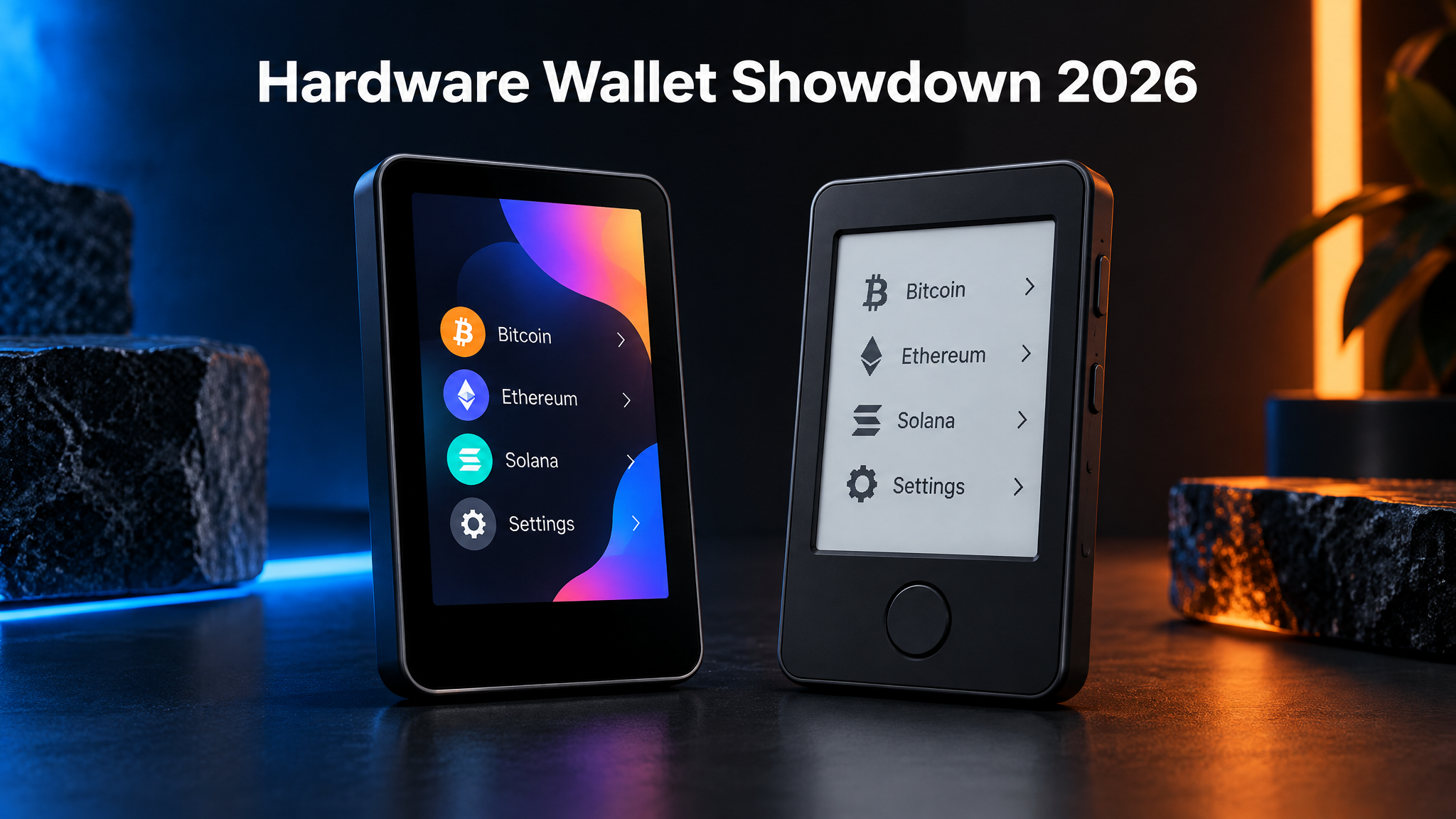
Both the Trezor Safe 7 vs Ledger Flex comparison comes down to a genuinely tough call — two $249 premium hardware wallets that each make a compelling case for your crypto security budget. One bets on open-source transparency and rugged durability. The other leans into a polished ecosystem and NFC convenience. After digging into the specs, security architecture, and real-world usability, here is what you actually need to know before you buy.
Disclaimer: This content is for informational purposes only and should not be considered financial advice. Cryptocurrency investments carry significant risk. Always do your own research (DYOR) before making any investment decisions.
This article contains affiliate links. We may earn a commission at no extra cost to you if you make a purchase through these links. See our affiliate disclosure for details.
Why Hardware Wallets Still Matter in 2026
Exchange hacks, phishing attacks, and supply chain breaches have cost crypto holders billions this year alone. Keeping your private keys on a hardware wallet — completely offline — remains the single most effective security upgrade most people can make. The question is not whether to get one. It is which one fits your threat model and daily habits.
At the $249 price point, both the Trezor Safe 7 and Ledger Flex are flagship devices. Neither is a budget compromise. So the comparison is really about philosophy, features, and fit — not price.
Security Architecture: Open Source vs. Proprietary
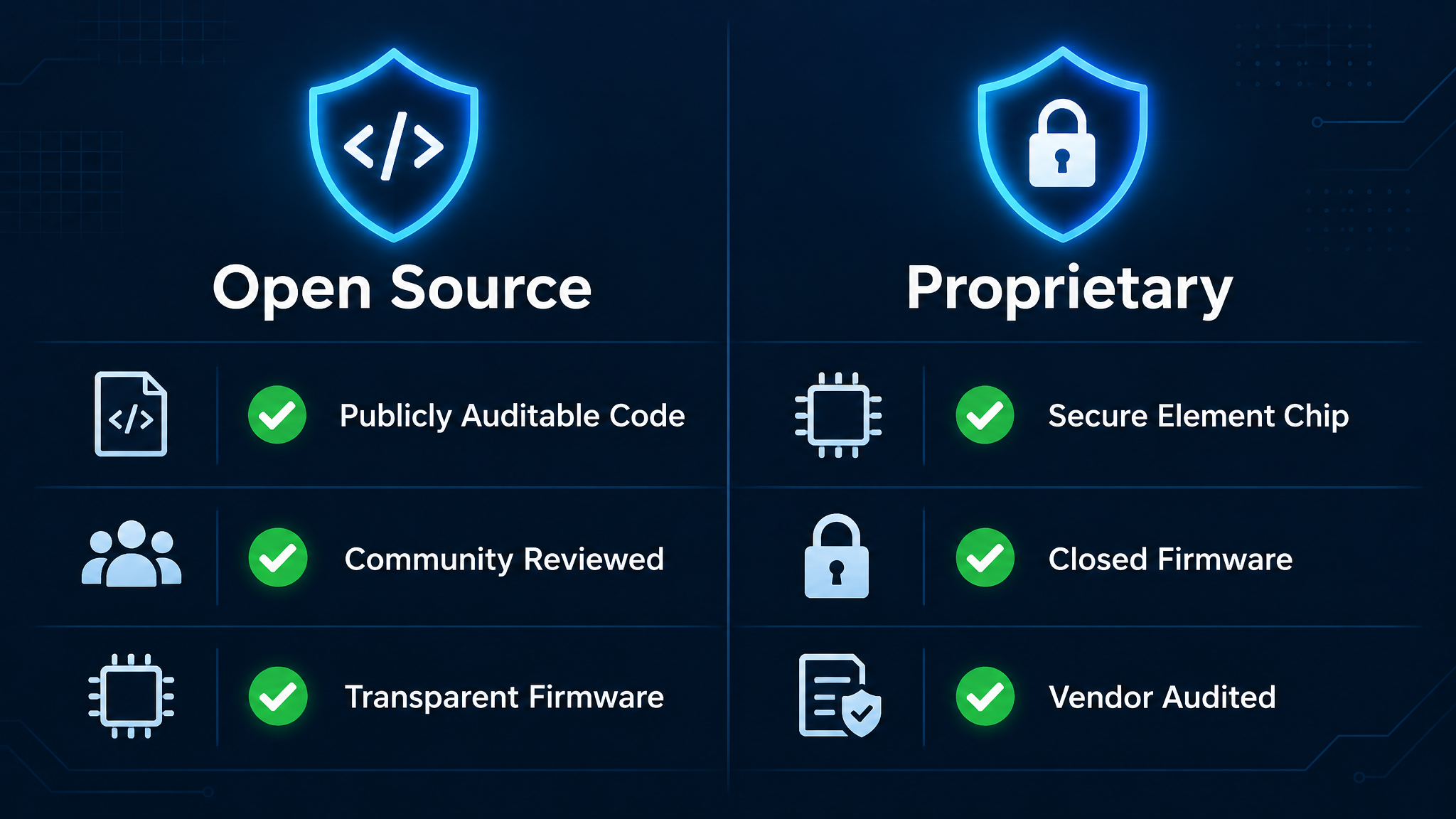
This is where the two wallets diverge most sharply, and it matters more than most buyers realize.
Trezor Safe 7: Fully Auditable Security
Trezor's flagship runs entirely on open-source firmware. Every line of code is publicly auditable — security researchers, developers, and paranoid users can verify exactly what the device does. The Safe 7 uses a dual-chip architecture: a certified EAL6+ secure element paired with the TROPIC01 chip, which is itself open-source and independently auditable. That is genuinely rare in the hardware wallet space.
Trezor also added post-quantum cryptographic protections to the Safe 7 — a forward-looking move that guards against future computing threats that could theoretically break current elliptic curve cryptography. For long-term Bitcoin holders thinking in decades, this matters.
Backup options are flexible: standard 12/20/24-word seed phrases, plus Shamir's Secret Sharing (SLIP39), which lets you split your backup into multiple shares. Lose one share and you are still fine. It is a more sophisticated recovery model than most wallets offer.
Ledger Flex: Proven but Proprietary
Ledger's operating system (BOLOS) is closed-source. You cannot audit it yourself. That is a philosophical problem for some users — you are trusting Ledger's internal security team rather than the broader open-source community. The hardware itself uses a single CC EAL6+ certified secure element, which is bank-grade and battle-tested.
The controversy around Ledger Recover — an optional cloud backup service that involves splitting your seed phrase across third-party servers — has not gone away. Ledger maintains it is opt-in and secure. Critics argue it fundamentally changes the trust model. If you plan to use Ledger Recover, understand what you are signing up for. If you will never use it, it is a non-issue.
Protect your crypto assets with a Ledger hardware wallet — the gold standard in cold storage security.
Display and User Experience
Both wallets have touchscreens, but they feel completely different in practice.
Ledger Flex: E-Ink Elegance
The Ledger Flex sports a 2.84-inch E-Ink display — the same technology used in e-readers. It is crisp, easy to read in direct sunlight, and draws almost no power when static. You can display an NFT or a static image on the screen indefinitely without draining the battery. The grayscale display (16 shades) is not as visually rich as a color screen, but it is genuinely pleasant to use.
NFC support is a standout feature. Tap the Flex against a compatible device for quick interactions — useful for FIDO2 authentication and certain app integrations. Bluetooth and USB-C round out the connectivity options.
Trezor Safe 7: Color and Haptics
The Safe 7 uses a 2.5-inch color touchscreen with haptic feedback — it vibrates slightly when you tap, which sounds minor but makes the interface feel noticeably more responsive. At 700 nits brightness, it is vivid and easy to read. The color display makes transaction details easier to parse at a glance.
No NFC on the Safe 7, but it adds Qi2 wireless charging — a feature the Flex lacks. USB-C and encrypted Bluetooth are both present. The IP67 rating means it is fully dust-proof and can survive submersion in up to 1 meter of water for 30 minutes. Drop it in a puddle, fish it out, keep going.
Coin Support and Ecosystem
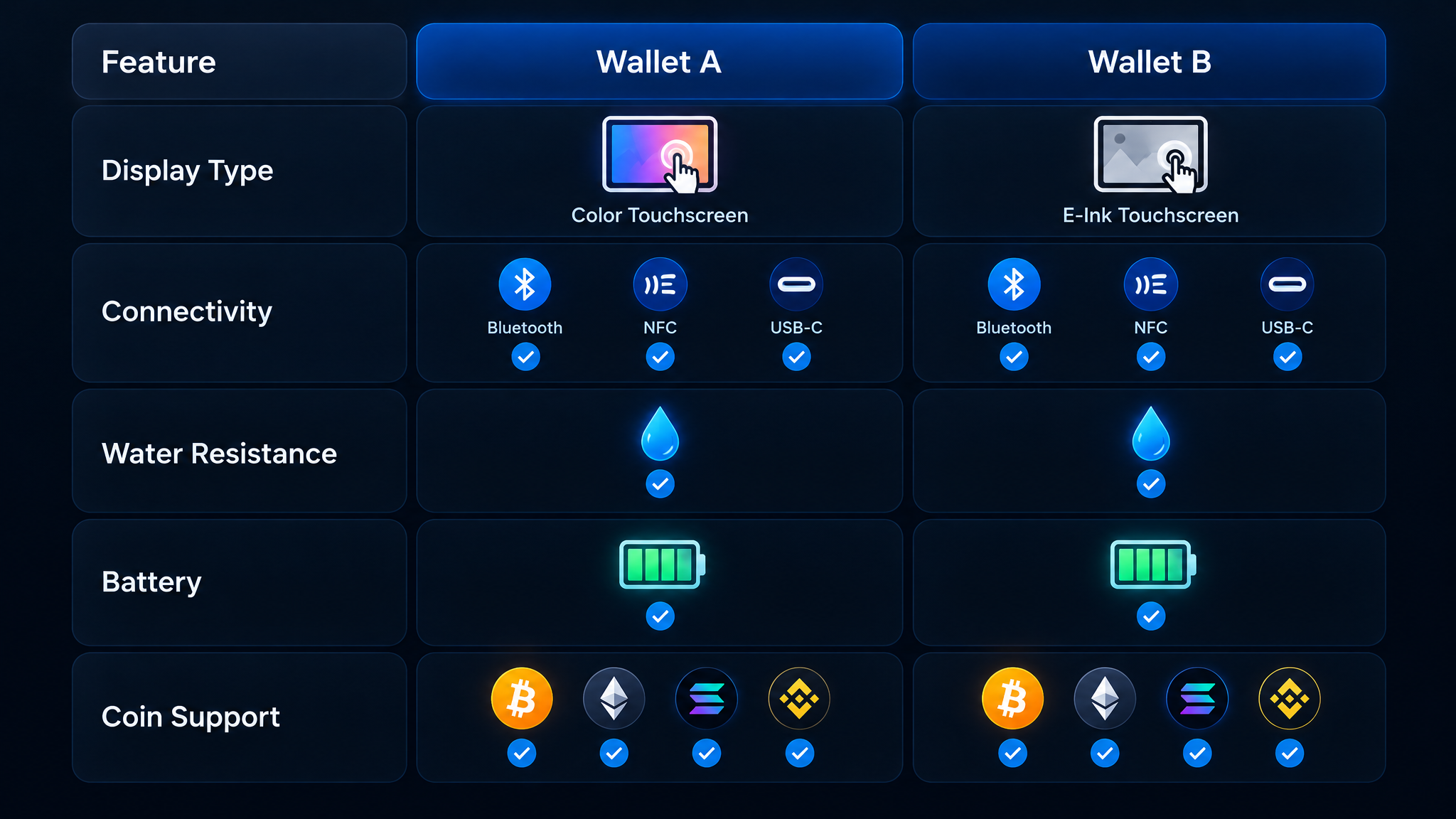
Numbers here favor Trezor on paper: the Safe 7 supports over 8,000 coins and tokens via Trezor Suite. Ledger Flex supports over 5,500 assets through Ledger Live. In practice, both cover every major asset most users will ever hold — Bitcoin, Ethereum, Solana, all major ERC-20 tokens, and hundreds of altcoins.
Where Ledger has an edge is ecosystem depth. Ledger Live integrates directly with DeFi protocols, NFT management, staking services, and a growing list of third-party apps. The Ledger ecosystem has had years to mature and it shows. Trezor Suite is solid and privacy-focused — it includes native Tor routing and CoinJoin for Bitcoin users who want transaction privacy — but the third-party app ecosystem is thinner.
Privacy Features
Trezor wins this category clearly. Native Tor support in Trezor Suite means your wallet queries are routed through the Tor network by default, masking your IP address from blockchain nodes. CoinJoin integration lets Bitcoin users mix transactions to break the on-chain link between addresses. These are not features most casual users need, but for privacy-conscious holders, they are significant.
Ledger does not offer equivalent built-in privacy tools. You can use Ledger with third-party privacy software, but it requires more setup.
Side-by-Side Specs
| Feature | Trezor Safe 7 | Ledger Flex |
|---|---|---|
| Price | $249 | $249 |
| Firmware | Fully open-source | Proprietary (BOLOS) |
| Secure Element | EAL6+ + TROPIC01 (open) | CC EAL6+ (single chip) |
| Display | 2.5" color touchscreen | 2.84" E-Ink touchscreen |
| Connectivity | USB-C, Bluetooth, Qi2 | USB-C, Bluetooth, NFC |
| Water Resistance | IP67 | None rated |
| Coin Support | 8,000+ | 5,500+ |
| Privacy Tools | Tor, CoinJoin | None built-in |
| Post-Quantum Crypto | Yes | No |
| Backup Options | Seed phrase + Shamir | Seed phrase + Ledger Recover |
Who Should Buy the Trezor Safe 7?
The Safe 7 is the right call if you care deeply about verifiable security. Open-source firmware means you are not trusting Trezor's word — you can verify the code yourself (or trust that thousands of security researchers already have). The IP67 rating adds real-world durability. Post-quantum protections are a genuine long-term advantage for anyone holding Bitcoin for 10+ years.
Privacy-focused users will appreciate the built-in Tor and CoinJoin support. Long-term Bitcoin holders who want maximum transparency and do not need a rich third-party app ecosystem will find the Safe 7 hard to beat.
The Trezor Model T offers top-tier security with an intuitive touchscreen interface — and the Safe 7 takes that foundation even further.
Who Should Buy the Ledger Flex?
The Flex makes more sense if you are deeply embedded in the Ledger ecosystem, use DeFi apps regularly through Ledger Live, or want NFC functionality. The E-Ink display is genuinely beautiful and battery-efficient. If you are already a Ledger user upgrading from an older device, the Flex is a natural step up.
Users who want a polished, app-rich experience and are comfortable with proprietary firmware will find the Flex excellent. Just be clear-eyed about the Ledger Recover debate and decide whether that trade-off works for you.
The Verdict
At the same price, the Trezor Safe 7 edges ahead on security fundamentals — open-source firmware, dual-chip architecture, post-quantum protections, IP67 durability, and Shamir backup. For anyone who treats hardware wallet security as non-negotiable, those advantages are meaningful.
The Ledger Flex wins on ecosystem maturity, NFC convenience, and the E-Ink display's battery efficiency. If you live in the Ledger Live ecosystem and value those integrations, the Flex delivers.
Neither choice is wrong. But if you are buying your first premium hardware wallet in 2026 and want the most verifiably secure option, the Trezor Safe 7 is the one to get.
Actionable Takeaways
- Both wallets cost $249 — the decision is about security philosophy and features, not price.
- Choose Trezor Safe 7 if you prioritize open-source transparency, IP67 durability, post-quantum crypto, and privacy tools (Tor, CoinJoin).
- Choose Ledger Flex if you want NFC, a mature app ecosystem via Ledger Live, and the E-Ink display's battery efficiency.
- Avoid Ledger Recover unless you fully understand the trust model — it is opt-in, but read the fine print.
- Either wallet is vastly more secure than leaving crypto on an exchange. If you have not moved to cold storage yet, do it now.
Ready to master crypto trading alongside your security setup? Explore Icoinpro's daily trading signals and education platform — structured learning that pairs well with a solid cold storage strategy.
Tools are only as good as the trader using them.
The best platform in the world won't help if your analysis is off. Before investing in more tools, consider investing in your trading education — it's the one thing that compounds everything else.
The program I recommend to people who ask me is this crypto trading course — it\'s the one I point friends and family to when they\'re serious about learning. Daily lessons, live analysis, and a community that actually helps.
Affiliate link — I may earn a commission at no extra cost to you. I only recommend what I genuinely use.
Disclaimer: The information provided on this website is for educational and informational purposes only. It should not be considered financial or investment advice. Cryptocurrency investments carry significant risk. Always do your own research and consult with a qualified financial advisor before making investment decisions.
Free Crypto Insights
Get weekly trading tips, market analysis, and exclusive strategies delivered to your inbox.