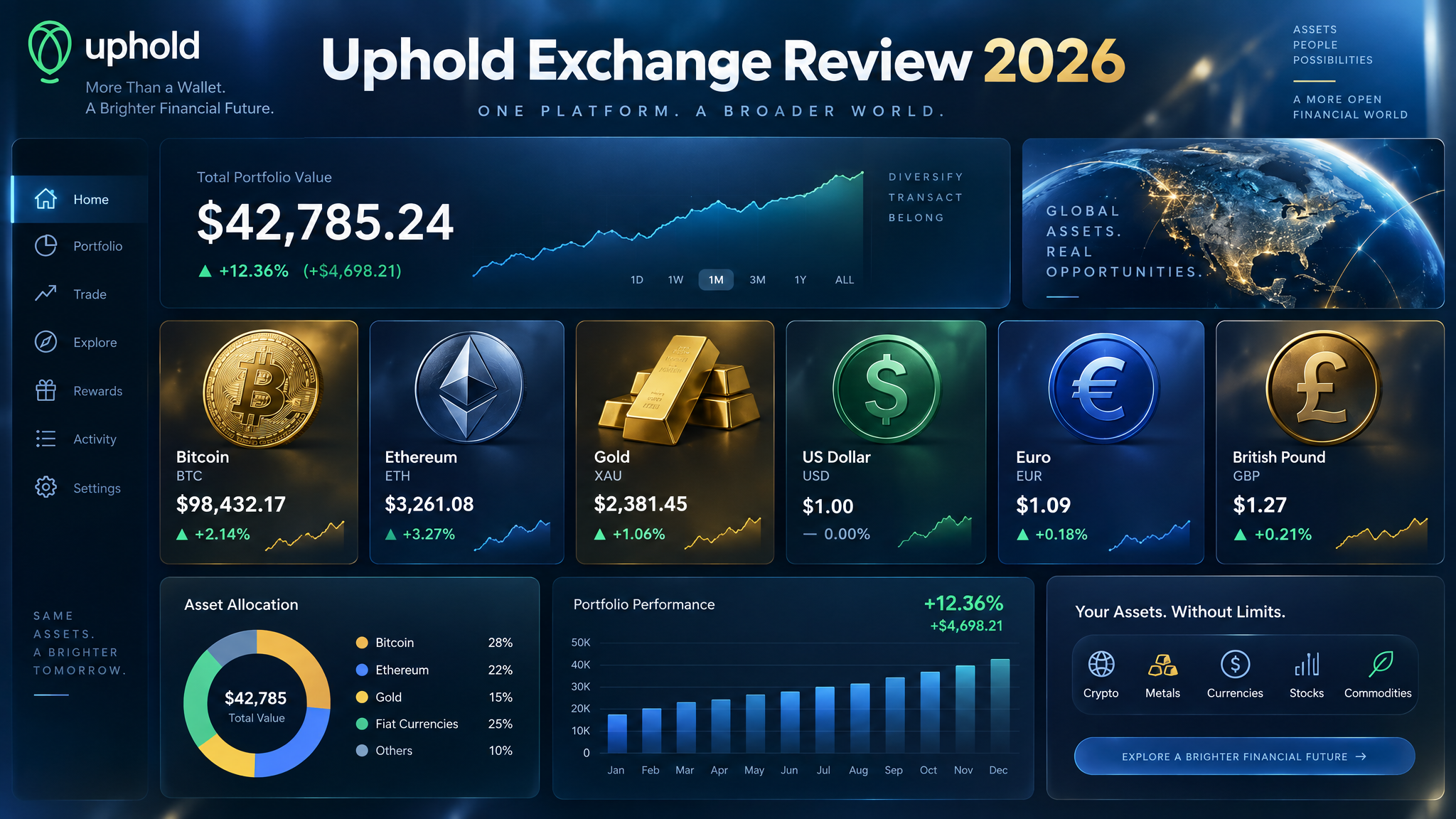
Uphold Exchange Review 2026: Is This Multi-Asset Platform Worth Your Money?
Affiliate Disclosure: This article may contain affiliate links. We may earn a commission at no extra cost to you. All opinions are our own.
Marcus Chen
Senior Crypto Analyst & Educator
Certified Blockchain Professional | Former Wall Street Analyst
Marcus Chen is a cryptocurrency analyst and educator with over 8 years of experience in digital asset trading. He has helped thousands of beginners navigate the crypto markets through practical, actionable education.
Disclaimer: This content is for informational purposes only and should not be considered financial advice. Cryptocurrency investments carry significant risk. Always do your own research (DYOR) before making any investment decisions.
This article contains affiliate links. We may earn a commission at no extra cost to you if you make a purchase through these links. See our affiliate disclosure for details.
Uphold Exchange Review 2026: Is This Multi-Asset Platform Worth Your Money?
The Uphold exchange review 2026 question I keep getting from readers is simple: is it actually useful, or just another crypto platform trying to do too much? After spending time with the platform and digging into its fee structure, staking options, and card program, I have a clear answer — and it depends entirely on what you're trying to do with your money.
Uphold isn't your typical crypto exchange. It's built around a concept called "anything-to-anything" trading, meaning you can swap Bitcoin directly for gold, or convert euros into Ethereum, all without touching USD as an intermediary. That's genuinely useful for a certain type of investor. But the fee structure? That's where things get complicated.
Let's break it all down.
What Is Uphold? The "Anything-to-Anything" Exchange
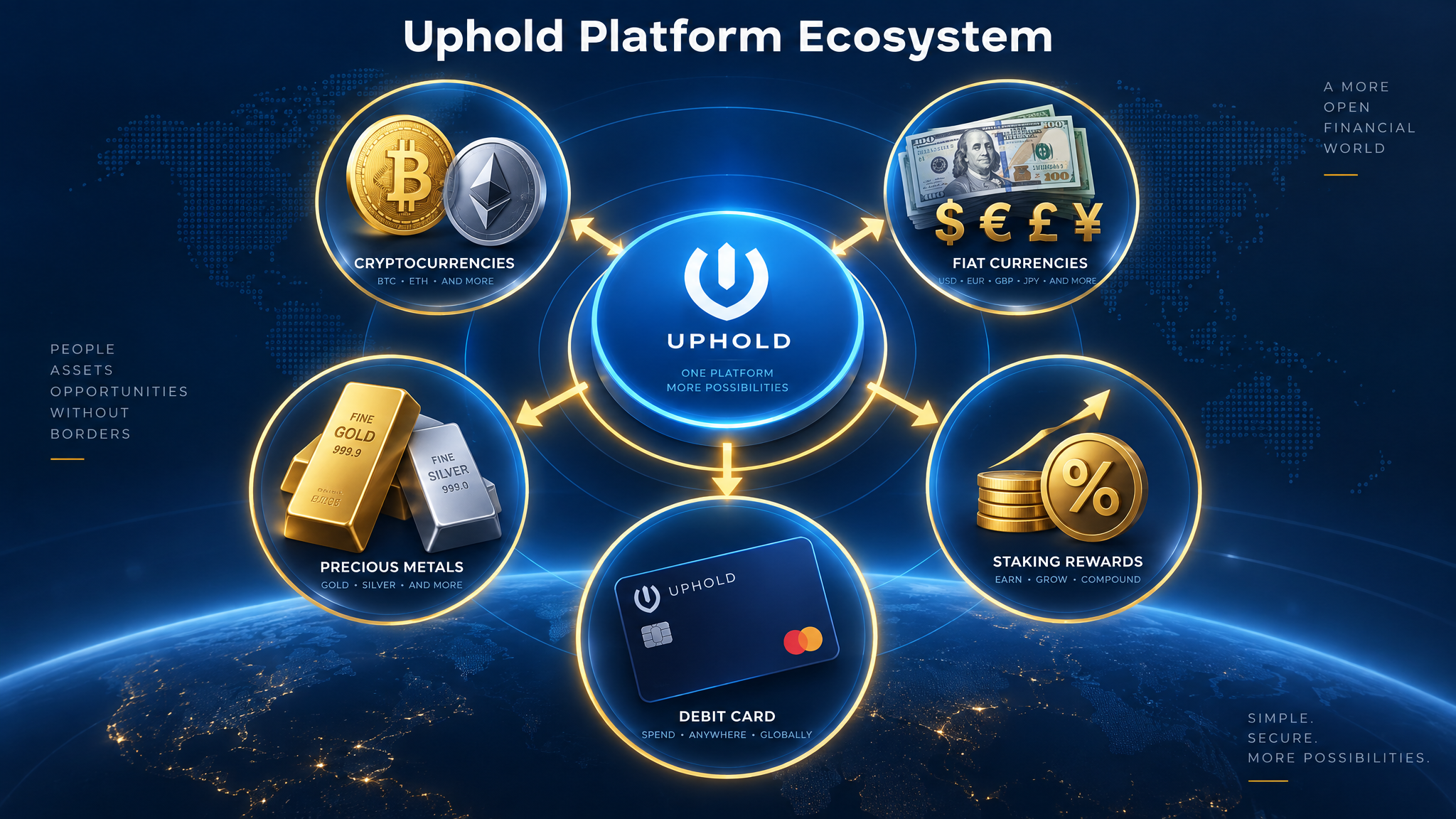
Uphold launched in 2014 and has quietly built one of the more unusual platforms in the crypto space. While most exchanges focus on crypto-to-crypto or crypto-to-fiat trading, Uphold added precious metals — gold, silver, platinum, palladium — to the mix early on. The result is a platform that supports over 250 cryptocurrencies, 27 fiat currencies, and four precious metals, all tradeable against each other in a single interface.
The "anything-to-anything" engine is the core differentiator. Want to convert your Solana gains directly into gold? Done. Need to move from British pounds into Ethereum without a separate FX step? Uphold handles it in one transaction. For investors managing multi-currency portfolios or those who want exposure to metals alongside crypto, this is genuinely convenient.
The platform targets beginners, dollar-cost averaging (DCA) investors, and people who want a unified view of diverse assets. It's not built for high-frequency traders or anyone who needs deep order books and advanced charting — and Uphold doesn't pretend otherwise.
Uphold Fees: The Spread Model Explained
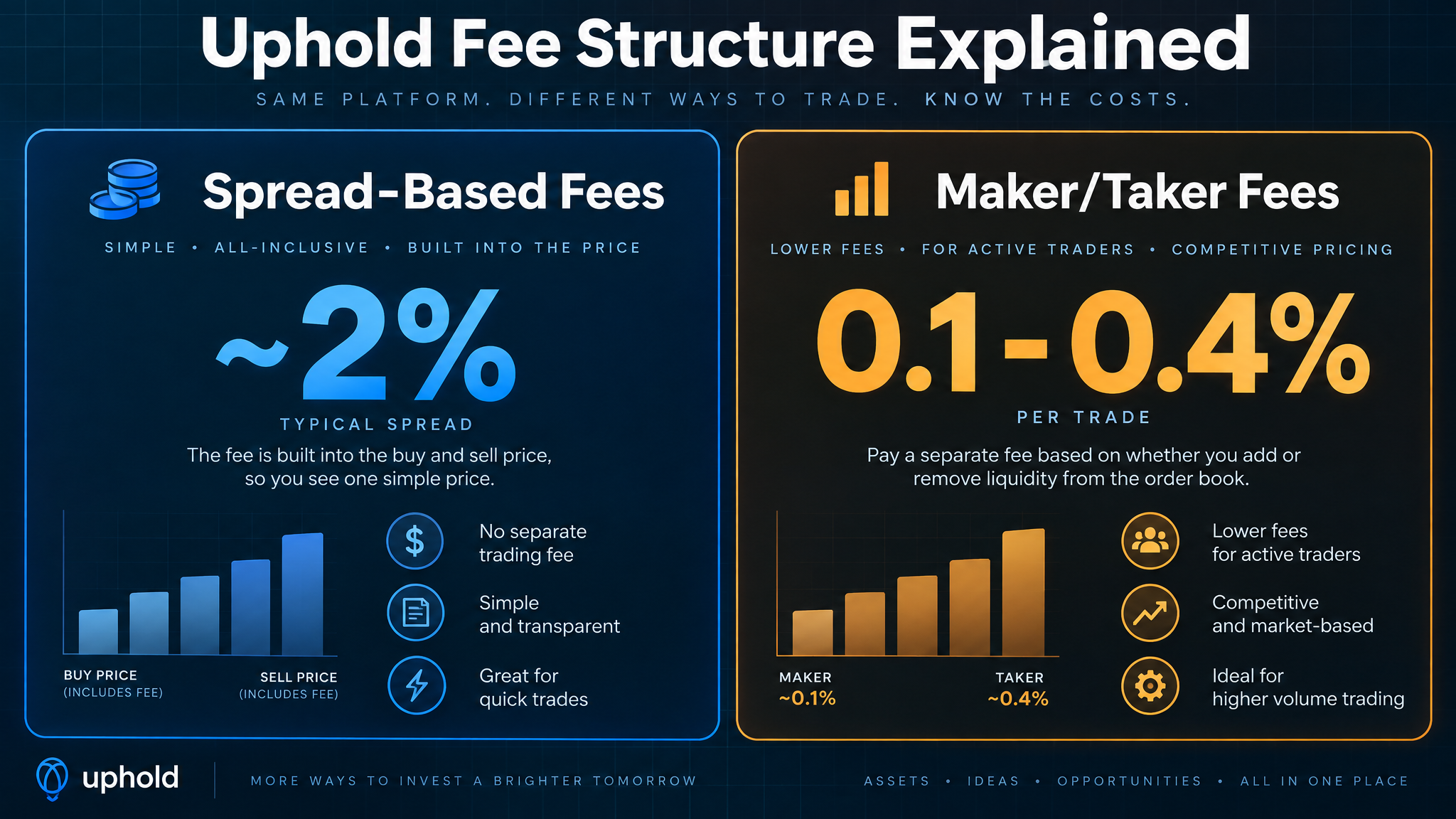
Here's where you need to pay close attention. Uphold doesn't charge traditional maker/taker fees. Instead, it uses a spread-based pricing model, which means the cost of trading is baked into the price you see. This is common among beginner-friendly platforms, but it can be significantly more expensive than you'd expect.
Crypto Spreads
For major assets like Bitcoin and Ethereum, Uphold's spreads typically run between 2.05% and 2.20% in the US, UK, and Europe. That means on a $1,000 Bitcoin purchase, you're paying roughly $20–$22 in hidden fees. For altcoins, spreads jump to 2.85%–3.80%, which adds up fast if you're trading frequently.
Compare that to a platform like Kraken Pro or Coinbase Advanced, where maker fees can be as low as 0.00%–0.40% depending on volume. For active traders, Uphold's spread model is expensive. For someone making one or two DCA purchases per month, it's more manageable — though still not cheap.
Stablecoin and Fiat Spreads
Stablecoin spreads are much tighter, often under 0.25%, which makes Uphold reasonable for stablecoin conversions. Major forex pairs hover around 0.3%, which is competitive with traditional FX platforms. If you're primarily moving between fiat currencies or stablecoins, the cost is acceptable.
Deposit and Withdrawal Fees
ACH deposits from US bank accounts are free, which is a plus. Debit and credit card deposits carry a 3.99% fee — avoid these if you can. Withdrawals are subject to network fees, and Uphold waives additional charges on some assets like XRP and HBAR. One important caveat: ACH-funded balances may face a 65-day hold on crypto withdrawals to external wallets. Plan accordingly if you intend to move assets off-platform.
Key Features That Set Uphold Apart
Multi-Asset Trading (Crypto, Fiat, Metals)
The multi-asset capability is Uphold's strongest selling point. Most crypto platforms treat precious metals as an afterthought, if they offer them at all. Uphold integrates gold and silver as first-class assets, letting you rebalance between crypto and metals in real time. For investors who want a hedge against crypto volatility without opening a separate brokerage account, this is genuinely useful.
The real-time transparency dashboard is another standout feature. Uphold publishes a live view of its assets and liabilities, updating every 30 seconds. The platform reports being 100%+ reserved, and holds SOC 2 Type 2, ISO 27001, and PCI DSS certifications. In a space where exchange insolvency has burned investors before, this level of transparency matters.
Uphold Staking: Flexible and Boosted Options
Uphold offers staking for a range of proof-of-stake assets, with both flexible and "boosted" fixed-term options. The yields are decent for a custodial platform, though Uphold takes a commission on rewards, which reduces your effective APY compared to direct validator staking or liquid staking protocols.
For beginners who want passive income without the complexity of setting up a validator or navigating DeFi protocols, Uphold's staking is a reasonable starting point. Just understand you're trading yield for convenience — and you're trusting Uphold with custody of your assets.
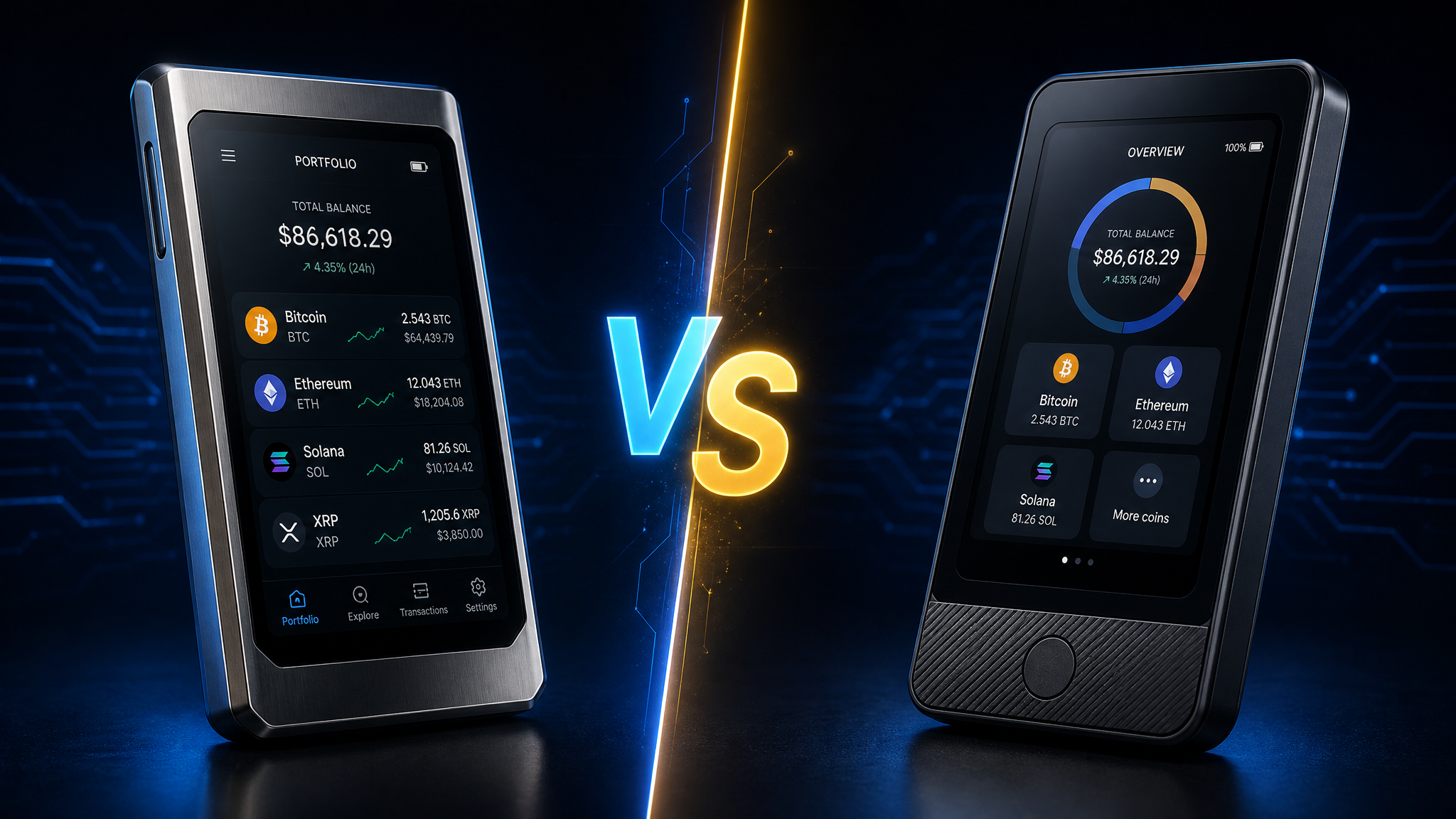
Speaking of custody: if you're holding significant amounts on any exchange, consider moving the bulk of your holdings to cold storage. Protect your crypto assets with a Ledger hardware wallet — the gold standard in cold storage security.
The Uphold Card: Spend Crypto Anywhere
The Uphold Mastercard debit card lets you spend crypto, fiat, or metals at any merchant that accepts Mastercard. The card was relaunched in the US in late 2025 with tiered reward plans — Essential and Elite — that offer XRP-denominated cashback on purchases.
The XRP cashback angle is interesting. If you're bullish on XRP long-term, getting paid in XRP for everyday spending is a way to accumulate without additional purchases. The Elite tier offers higher cashback rates but requires a larger XRP balance to qualify. Whether the rewards justify the tier cost depends on your spending volume and XRP conviction.
Uphold Vault: Self-Custody Option
Uphold's Vault feature is an assisted self-custody solution — a middle ground between full custodial storage and managing your own private keys. It's designed for users who want more control than a standard exchange account but aren't ready for a hardware wallet setup.
The Vault is a reasonable option for intermediate users. That said, for serious long-term holders, nothing beats a proper hardware wallet. The Trezor Model T offers top-tier security with an intuitive touchscreen interface — worth considering if you're accumulating meaningful amounts.
Security and Transparency
Uphold's security track record is solid. The platform has not suffered a major hack, which is more than can be said for several larger exchanges. Its real-time proof-of-reserves dashboard, SOC 2 Type 2 certification, and ISO 27001 compliance put it ahead of many competitors on transparency.
The main security caveat is the same as any custodial platform: you don't hold your private keys for assets in the main trading account. Uphold controls custody. The Vault feature mitigates this somewhat, but for large holdings, external cold storage remains the safest option.
One regional note: Uphold is not available to New York residents due to state licensing requirements. Check availability in your jurisdiction before signing up.
Uphold vs Coinbase: Which Should You Choose?
This comparison comes up constantly, so let's be direct about it.
Choose Uphold if: You want to trade crypto alongside precious metals and fiat currencies in one place. You're a DCA investor making infrequent purchases. You want the Uphold Card for XRP cashback. You value real-time proof-of-reserves transparency.
Choose Coinbase if: You want lower fees on active trading (use Coinbase Advanced). You need a wider selection of altcoins. You want a more established US-regulated platform with FDIC insurance on USD balances. You're a complete beginner who values educational resources.
The fee difference is significant for active traders. Uphold's 2%+ spreads versus Coinbase Advanced's sub-0.5% maker fees means Coinbase wins on cost for anyone trading more than once or twice a month. For the occasional DCA buyer who also wants gold exposure, Uphold's convenience may justify the premium.
If you're serious about improving your trading skills regardless of which platform you use, Ready to master crypto trading? Check out Icoinpro's comprehensive trading course.
Who Should Use Uphold?
Uphold makes the most sense for a specific type of investor:
- Multi-asset portfolio builders who want crypto, fiat, and precious metals in one dashboard
- DCA investors making monthly purchases who aren't sensitive to the spread premium
- XRP holders who want to earn XRP cashback through the Uphold Card
- International investors who need multi-currency fiat support without separate FX accounts
- Beginners who want a simple interface and don't plan to trade frequently
Uphold is not the right choice for active traders, anyone who needs advanced charting tools, or investors who prioritize the lowest possible fees. The 2%+ spread on crypto trades is a real cost that compounds over time.
Final Verdict
Uphold earns its place in the crypto ecosystem by doing something genuinely different: combining crypto, fiat, and precious metals in a single, transparent platform. The real-time proof-of-reserves dashboard and solid security track record are meaningful differentiators in a space where trust is hard-won.
The fee structure is the honest downside. Spreads of 2%+ on crypto trades are expensive, and the 65-day ACH withdrawal hold is an inconvenience worth knowing about upfront. For active traders, there are cheaper options. For the DCA investor who wants gold alongside Bitcoin, or the XRP enthusiast who wants cashback on everyday spending, Uphold delivers real value.
Bottom line: Uphold is a 7/10 platform for its target audience — multi-asset investors and DCA buyers — and a 4/10 for active traders. Know which category you're in before signing up.
Key Takeaways
- Uphold supports 250+ cryptos, 27 fiat currencies, and 4 precious metals in one platform
- Spread-based fees of 2.05%–2.20% on major crypto — expensive for active traders, manageable for DCA
- Real-time proof-of-reserves dashboard updated every 30 seconds — strong transparency
- Uphold Card offers XRP cashback on everyday spending
- Vault feature provides assisted self-custody for intermediate users
- Not available in New York; ACH-funded accounts face 65-day crypto withdrawal hold
- Best for: multi-asset investors, DCA buyers, XRP holders, international users
Tools are only as good as the trader using them.
The best platform in the world won't help if your analysis is off. Before investing in more tools, consider investing in your trading education — it's the one thing that compounds everything else.
The program I recommend to people who ask me is this crypto trading course — it\'s the one I point friends and family to when they\'re serious about learning. Daily lessons, live analysis, and a community that actually helps.
Affiliate link — I may earn a commission at no extra cost to you. I only recommend what I genuinely use.
Disclaimer: The information provided on this website is for educational and informational purposes only. It should not be considered financial or investment advice. Cryptocurrency investments carry significant risk. Always do your own research and consult with a qualified financial advisor before making investment decisions.
Free Crypto Insights
Get weekly trading tips, market analysis, and exclusive strategies delivered to your inbox.