Delta-Neutral Crypto Trading Strategy: How to Earn Without Directional Risk in 2026
Affiliate Disclosure: This article may contain affiliate links. We may earn a commission at no extra cost to you. All opinions are our own.
Marcus Chen
Senior Crypto Analyst & Educator
Certified Blockchain Professional | Former Wall Street Analyst
Marcus Chen is a cryptocurrency analyst and educator with over 8 years of experience in digital asset trading. He has helped thousands of beginners navigate the crypto markets through practical, actionable education.
Delta-Neutral Crypto Trading Strategy: How to Earn Without Directional Risk in 2026
The delta-neutral crypto trading strategy is one of the most powerful — and most misunderstood — approaches in advanced crypto trading. Instead of betting on whether Bitcoin goes up or down, you structure your positions so price direction becomes almost irrelevant. Your profit comes from something else entirely: funding rates. If you have $5,000 or more in capital and you're tired of getting wrecked by volatility, this guide breaks down exactly how it works, what the real risks are, and how to execute it in 2026.
What Does "Delta-Neutral" Actually Mean?
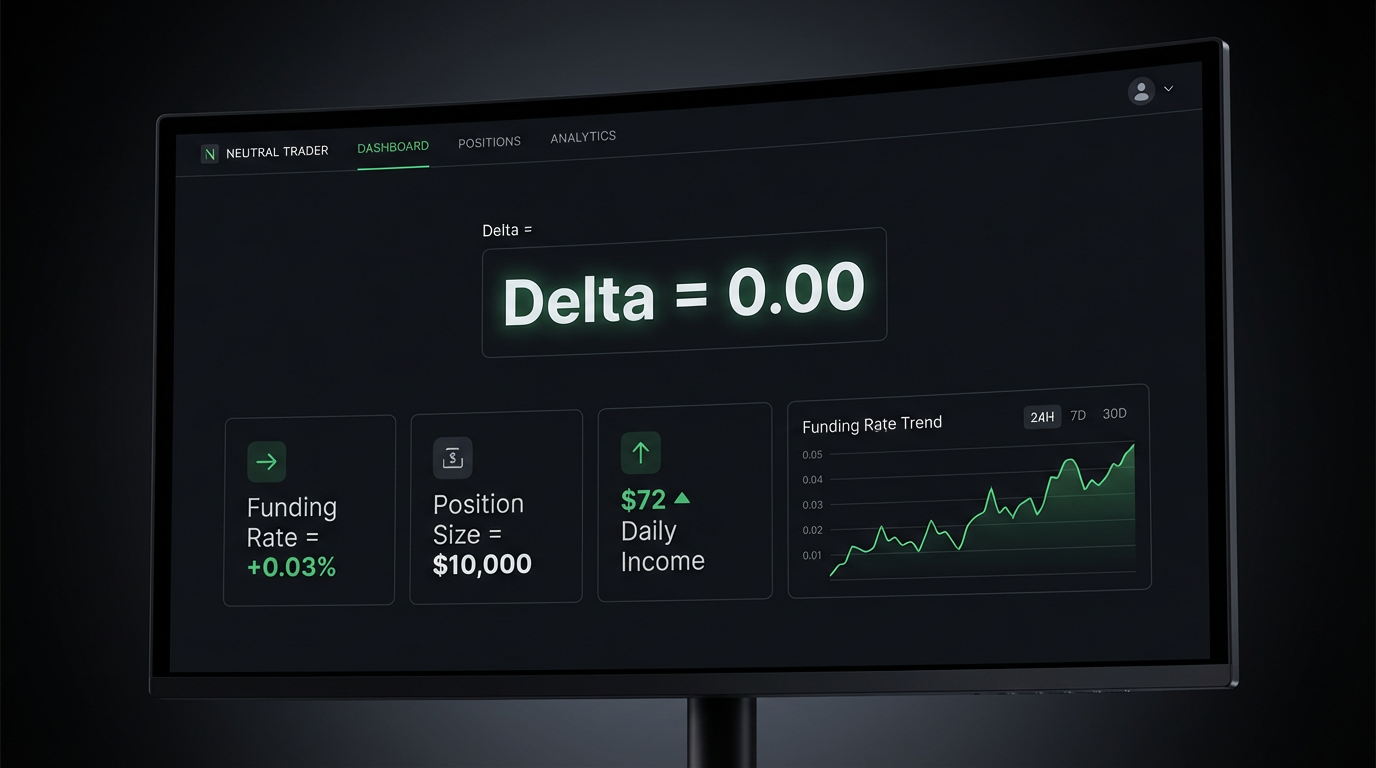
Delta measures how much your portfolio's value changes when the underlying asset moves by $1. A delta of 1.0 means you're fully exposed — every dollar Bitcoin moves, your portfolio moves with it. A delta of 0 means you're market-neutral. Price goes up $1,000? Your net position barely budges.
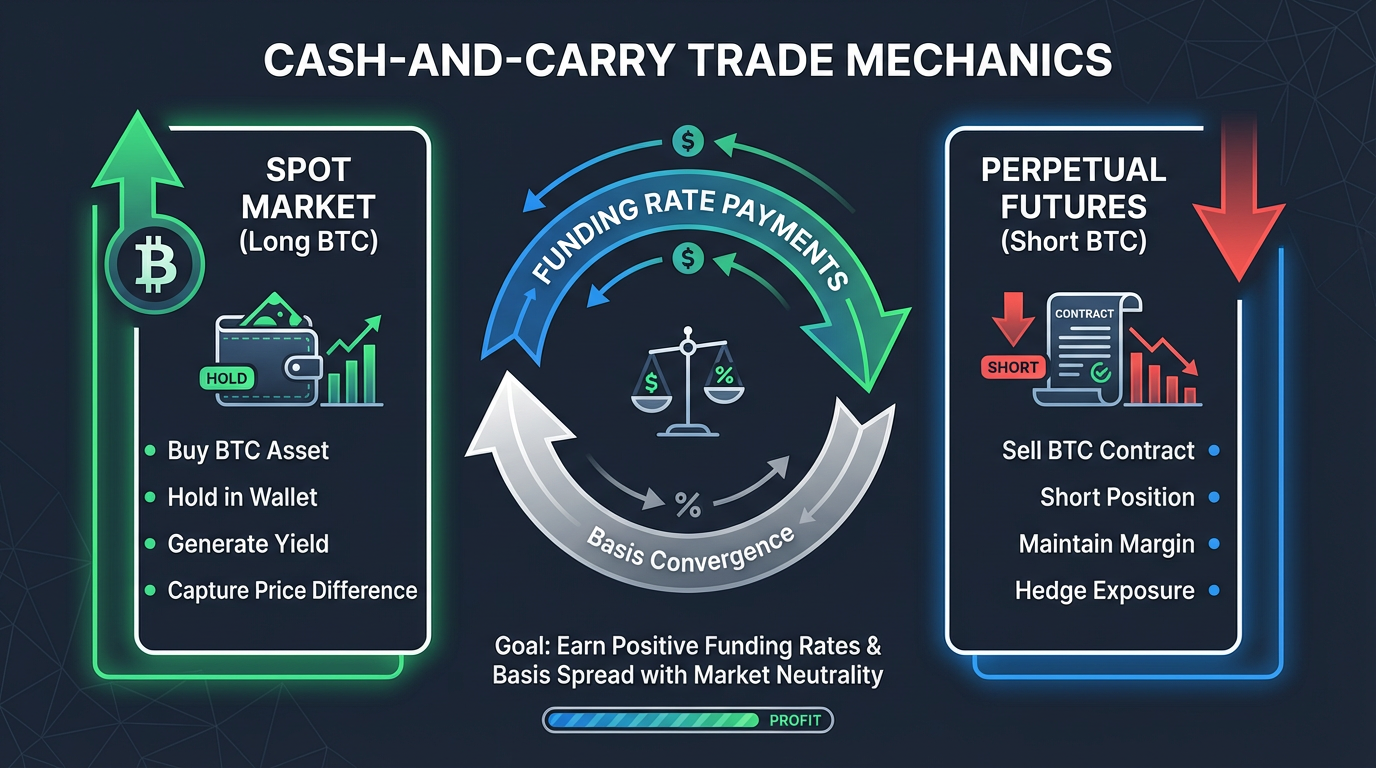
Achieving delta-zero doesn't mean you're not in the market. It means you've structured opposing positions that cancel each other out. The classic setup: buy Bitcoin on the spot market (long delta) and simultaneously short an equivalent amount via perpetual futures (negative delta). Net delta ≈ 0.
So where does the profit come from? Funding rates.
The Funding Rate Arbitrage Explained
Perpetual futures contracts — unlike traditional futures — never expire. To keep their price anchored to the spot price, exchanges use a funding rate mechanism. Every 8 hours (on most exchanges), one side pays the other:
- Positive funding rate: Longs pay shorts. This happens when the market is bullish and perpetual contracts trade at a premium to spot.
- Negative funding rate: Shorts pay longs. Happens in bearish conditions when perpetuals trade at a discount.
In a bull market — which 2026 has largely been — funding rates on Bitcoin perpetuals frequently run between 0.01% and 0.05% every 8 hours. That's 0.03% to 0.15% per day, or roughly 10–55% annualized on the notional position. Not bad for a strategy that doesn't care which way BTC moves.
The Cash-and-Carry Trade: Step-by-Step
This is the most common delta-neutral implementation. Here's how it works in practice:
Step 1: Choose Your Asset and Exchange
Bitcoin and Ethereum have the deepest liquidity and most stable funding rates. For the spot leg, use a reputable exchange with low withdrawal fees. For the perpetual leg, Binance, Bybit, and OKX all offer competitive funding rates and robust margin tools. Some traders run both legs on the same exchange to simplify collateral management.
Step 2: Size Your Position
Let's say you have $10,000 to deploy. You'd put $5,000 into spot BTC and use $5,000 as margin to short $5,000 worth of BTC perpetuals (1x leverage on the short side). This keeps your liquidation risk minimal while maintaining near-perfect delta neutrality.
At a 0.03% funding rate every 8 hours, your daily income on a $10,000 position works out to roughly $9/day — or about $270/month. Not life-changing on its own, but scale it up or combine it with other yield strategies and the numbers get interesting fast.
Step 3: Monitor and Rebalance
Delta neutrality isn't a set-and-forget setup. As BTC's price moves, the dollar value of your spot position changes while your futures position adjusts differently. If BTC pumps 20%, your spot is worth more but your short perpetual has an unrealized loss. You'll need to rebalance periodically — most traders do this weekly or when delta drifts beyond ±5%.
Ready to master crypto trading? Check out Icoinpro's comprehensive trading course — it covers advanced strategies including delta-neutral setups with real-world examples.
Real Numbers: What to Expect in 2026
Funding rates aren't static. During the Bitcoin rally in early 2026, BTC perpetual funding rates on major exchanges averaged around 0.02–0.04% per 8-hour period. Here's a realistic scenario:
- Position size: $20,000 ($10K spot BTC + $10K short perpetual at 1x)
- Average funding rate: 0.03% per 8 hours
- Daily income: ~$18
- Monthly income: ~$540
- Annualized yield: ~32% on deployed capital
That's before accounting for any spot appreciation (which is hedged away) or exchange trading fees. The net yield after fees typically lands in the 15–25% annualized range — still significantly better than most traditional fixed-income products.
Options-Based Delta-Neutral Strategies
The cash-and-carry trade isn't the only approach. Options give you more flexibility — and more complexity.
Long Straddle
Buy a call and a put at the same strike price and expiry. At initiation, the position is roughly delta-neutral. You profit if BTC makes a big move in either direction — the winning option's gain outpaces the losing option's premium cost. This is a volatility bet, not a funding rate play.
Iron Condor
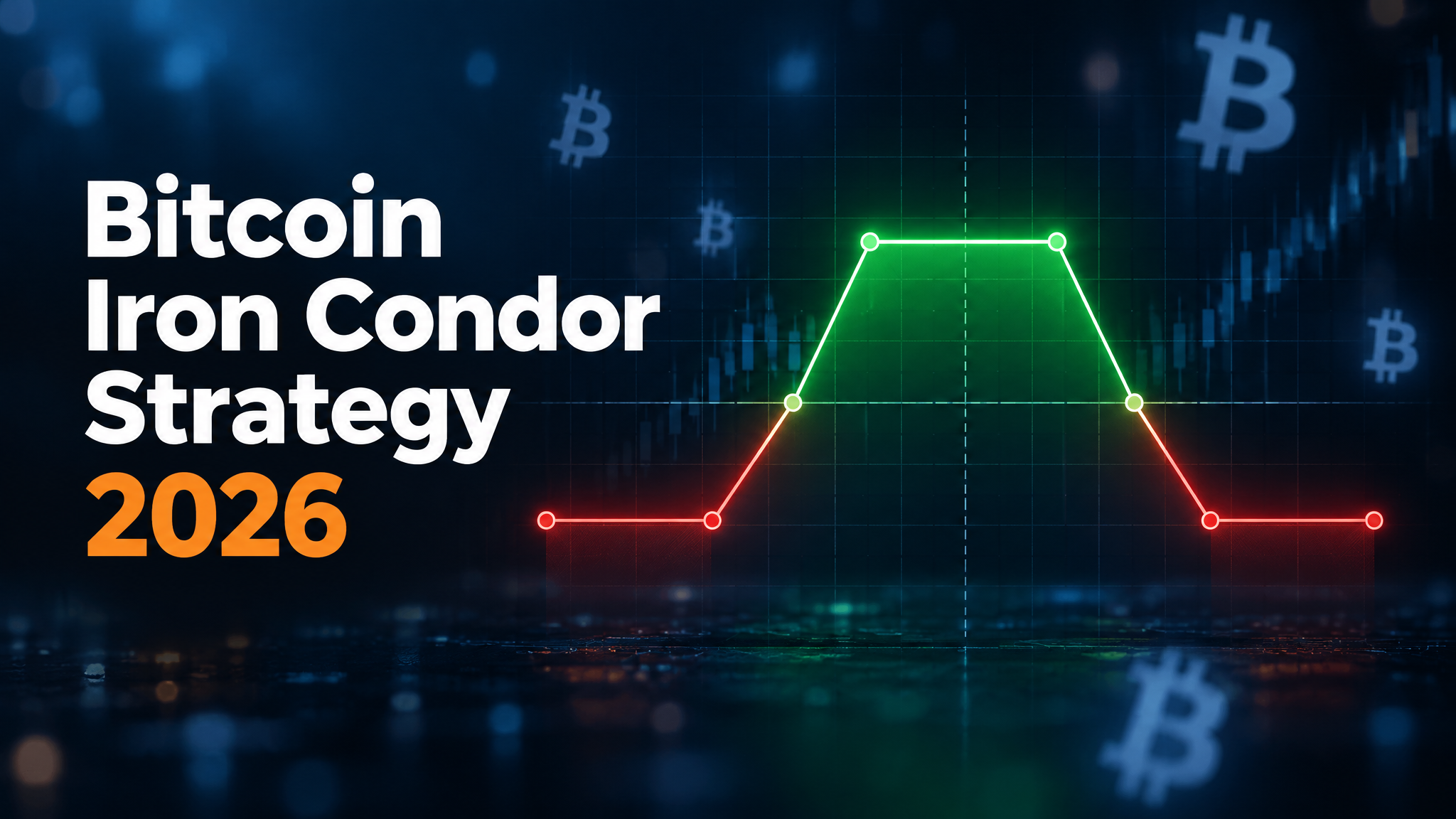
Sell an out-of-the-money call and put, then buy further out-of-the-money options to cap your risk. You collect premium upfront and profit if BTC stays within a defined range. This works well in sideways markets but can blow up fast if BTC breaks out hard.
For most advanced traders in 2026, the perpetual futures cash-and-carry remains the cleaner, more predictable implementation. Options strategies require active management of multiple Greeks (delta, gamma, theta, vega) and are better suited to traders with derivatives experience.
The Real Risks (Don't Skip This Section)
Delta-neutral sounds like a free lunch. It's not. Here are the risks that actually matter:
Funding Rate Reversal
If market sentiment flips bearish, funding rates can go negative. Now your short perpetual is paying longs instead of receiving payments. Your "income" strategy becomes a cost center. This happened during the crypto winter of 2022 and can happen again. Always monitor funding rate trends — if rates go negative for more than a few days, consider closing the position.
Liquidation Risk on the Futures Leg
Even at 1x leverage, extreme volatility can threaten your margin. If BTC drops 50% rapidly and your exchange's liquidation engine is slow, you could face partial liquidation on the short side. Use isolated margin (not cross-margin) to contain this risk to the specific position.
Exchange Counterparty Risk
You're trusting the exchange with your capital. FTX's collapse in 2022 was a brutal reminder. Spread your positions across two or more reputable, regulated exchanges. Never keep more than you can afford to lose on any single platform.
Delta Drift
As prices move, your delta drifts away from zero. A 30% BTC rally means your spot position is now worth significantly more than your short perpetual notional. You're no longer neutral — you've accidentally become long. Rebalance regularly.
Protect your crypto assets with a Ledger hardware wallet — the gold standard in cold storage security. When running delta-neutral strategies across multiple exchanges, keeping your spot holdings in cold storage between rebalancing periods reduces exchange exposure.
Tools and Platforms for Delta-Neutral Trading in 2026
You don't need to build this from scratch. Several platforms have made delta-neutral execution more accessible:
- Bybit: Excellent perpetual futures liquidity, real-time funding rate display, and portfolio margin mode for advanced traders.
- Binance: Deepest liquidity globally, supports both spot and perpetuals on the same account, making rebalancing straightforward.
- Coinglass: Free tool for monitoring funding rates across all major exchanges in real time. Essential for identifying the best funding rate opportunities.
- Deribit: Best platform for options-based delta-neutral strategies, with the highest crypto options liquidity globally.
- 3Commas / Bitsgap: Automated bots that can help manage rebalancing and monitor delta drift without constant manual oversight.
Who Should Use This Strategy?
Delta-neutral trading isn't for everyone. You need:
- At least $5,000–$10,000 in capital (smaller amounts get eaten by fees)
- Comfort with derivatives and margin trading
- Time to monitor positions at least daily
- Understanding of liquidation mechanics and margin requirements
- Emotional discipline to not panic-close during volatility
If you're still building your foundational trading knowledge, Want to accelerate your trading journey? Explore Icoinpro's daily trading signals and education platform — it's a solid starting point before tackling advanced strategies like this one.
Key Takeaways
- Delta-neutral strategies eliminate directional price risk by balancing long spot and short perpetual positions.
- Profit comes from collecting funding rate payments — typically 15–30% annualized in bullish markets.
- The cash-and-carry trade is the most accessible implementation: buy spot BTC, short equivalent perpetual at 1x leverage.
- Key risks: funding rate reversal, liquidation on the futures leg, exchange counterparty risk, and delta drift.
- Rebalance weekly or when delta drifts beyond ±5% of your target.
- Use isolated margin, spread across reputable exchanges, and monitor funding rates daily via tools like Coinglass.
About the Author
Marcus Chen is a Senior Crypto Analyst & Educator with 8+ years of experience in digital asset markets. A Certified Blockchain Professional and Former Wall Street Analyst, Marcus has navigated multiple crypto market cycles and specializes in advanced trading strategies, DeFi protocols, and institutional-grade risk management. His work has helped thousands of traders move beyond speculation into systematic, data-driven crypto investing.
Frequently Asked Questions: Delta-Neutral Crypto Trading
Q: Is delta-neutral trading still profitable in 2026?
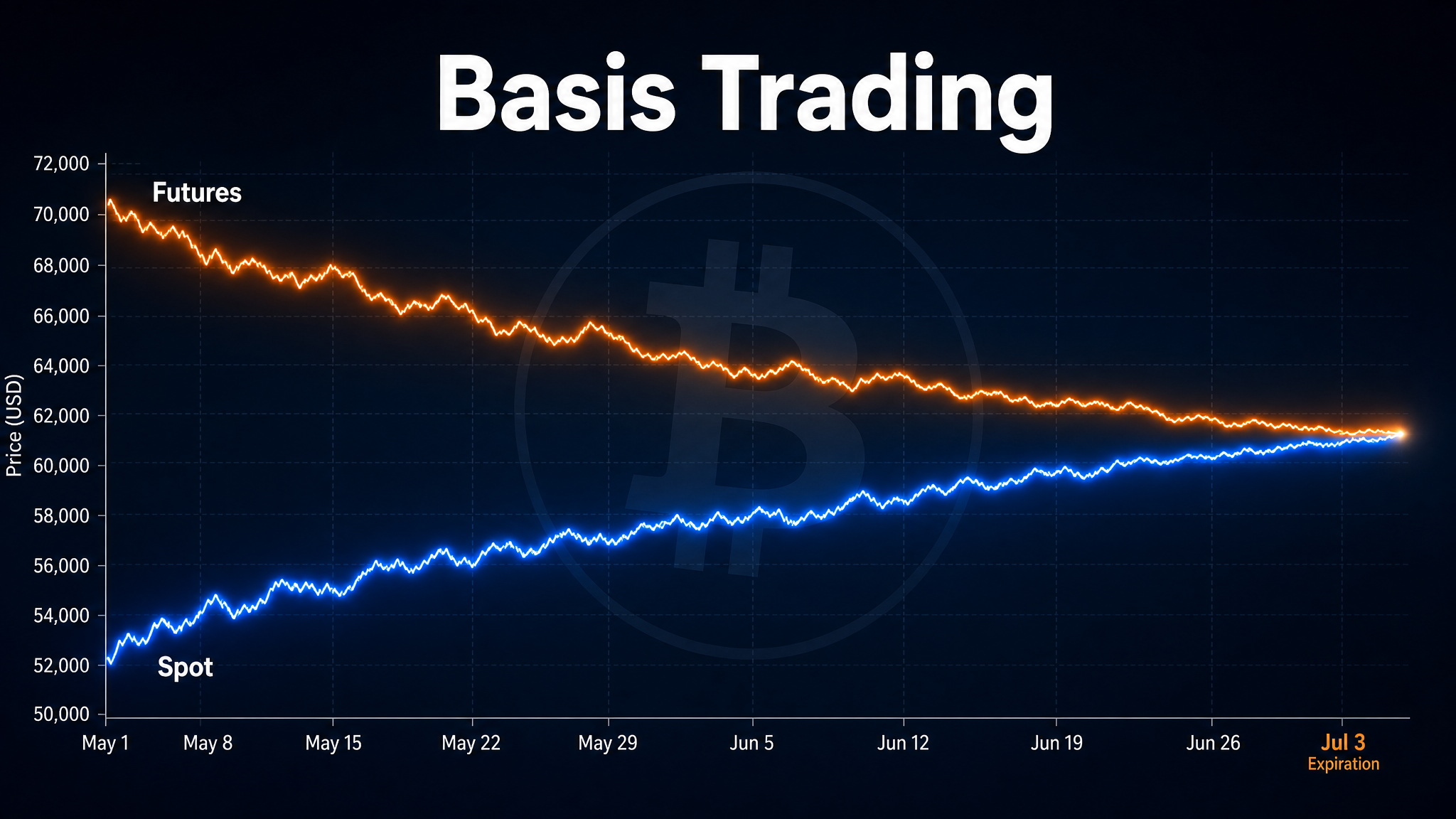
Yes, but yields have compressed. The annualized Bitcoin basis that hit 25% in early 2024 has declined to around 4–6% in 2026. Traders now layer multiple yield sources — funding rate carry, basis arbitrage, and interest-bearing collateral like BlackRock's BUIDL — to maintain attractive returns.
Q: What's the biggest risk in delta-neutral strategies?
Funding-regime flips. When funding turns negative, your short leg starts costing money instead of earning it. Most experienced traders exit if funding stays negative for three consecutive 8-hour intervals. Liquidation risk on the leveraged short leg is the second major concern.
Q: How much capital do I need to start?
Technically you can start with $500–$1,000, but transaction costs and slippage eat into small positions. Most practitioners recommend at least $5,000–$10,000 to make the strategy economically meaningful after fees.
Q: Can I automate delta-neutral strategies?
Yes. API-based automation via TradingView alerts or custom bots is increasingly common in 2026. Automation reduces "legging risk" — the gap between filling one side of the trade before the other — which is critical for maintaining true delta neutrality.
Q: Which exchanges are best for delta-neutral trading in 2026?
Hyperliquid (for decentralized perps with hourly funding), Binance Futures, and Bybit are the most popular. Hyperliquid's hourly funding settlement makes it particularly useful for granular position management. See our Hyperliquid DEX guide for setup details.
June 2026 Update: Market-neutral funds maintained positive returns throughout 2025 with significantly lower drawdowns than directional strategies. However, basis compression means traders must now combine funding carry with interest-bearing collateral strategies to achieve 10%+ APY targets. Platforms like Hyperliquid with hourly funding settlement have become preferred venues for active delta-neutral traders.
Frequently Asked Questions
What is a delta-neutral crypto strategy?
A delta-neutral strategy balances long and short positions so your portfolio has zero net directional exposure. You profit from market inefficiencies — like funding rate differentials or basis premiums — rather than price movements. The goal is consistent returns regardless of whether Bitcoin goes up or down.
What returns can I expect from delta-neutral trading in 2026?
Returns vary by strategy. Funding rate arbitrage typically yields 5–15% APY in normal markets, though rates can compress or flip negative during bear markets. Basis trading (cash-and-carry) currently yields 5–12% annualized. Stacking multiple strategies can push total returns higher but adds complexity.
Is delta-neutral trading risk-free?
No. Despite the 'neutral' label, these strategies carry basis risk (funding rates can flip), liquidation risk (if margin is insufficient during volatility), counterparty risk (exchange failures), and execution risk (slippage during rebalancing). Active monitoring is essential.
What tools do I need for delta-neutral trading?
You need access to both spot and perpetual futures markets (Hyperliquid, Binance, or Bybit work well), a spreadsheet or automated bot for tracking delta, and sufficient capital to maintain margin buffers. Automated rebalancing tools like PickMyTrade can reduce manual overhead.
Can beginners do delta-neutral trading?
It's not recommended for complete beginners. You need to understand perpetual futures, funding rates, margin mechanics, and liquidation risks before attempting these strategies. Start with paper trading or small positions, and consider DeFi vaults that handle the complexity for you.
Ready to put these strategies into practice?
The trading concepts in this article work — but only if you have the right foundation. I learned most of what I know through structured training that connected the dots between theory and live markets.
The program I recommend to people who ask me is this crypto trading course — it\'s the one I point friends and family to when they\'re serious about learning. Daily lessons, live analysis, and a community that actually helps.
Affiliate link — I may earn a commission at no extra cost to you. I only recommend what I genuinely use.
Disclaimer: The information provided on this website is for educational and informational purposes only. It should not be considered financial or investment advice. Cryptocurrency investments carry significant risk. Always do your own research and consult with a qualified financial advisor before making investment decisions.
Free Crypto Insights
Get weekly trading tips, market analysis, and exclusive strategies delivered to your inbox.