How to Build a Crypto Portfolio from Scratch: A Beginner's Complete Guide for 2026
Affiliate Disclosure: This article may contain affiliate links. We may earn a commission at no extra cost to you. All opinions are our own.
Marcus Chen
Senior Crypto Analyst & Educator
Certified Blockchain Professional | Former Wall Street Analyst
Marcus Chen is a cryptocurrency analyst and educator with over 8 years of experience in digital asset trading. He has helped thousands of beginners navigate the crypto markets through practical, actionable education.
This article contains affiliate links. We may earn a commission at no extra cost to you if you make a purchase through these links. See our affiliate disclosure for details.
How to Build a Crypto Portfolio from Scratch: A Beginner's Complete Guide for 2026
Building a crypto portfolio from scratch is one of the most common questions I get from new investors — and honestly, it's the right question to start with. Most beginners jump straight to "which coin should I buy?" without thinking about structure, risk, or how much they can actually afford to lose. In November 2026, with Bitcoin hovering around $76,000 and altcoins showing double-digit volatility, getting your foundation right matters more than ever.
This guide walks you through every step: how much to allocate, which assets to start with, how to buy and store them safely, and the common traps that wipe out beginners in their first year.
Step 1: Decide How Much of Your Money Should Be in Crypto
Before you buy a single satoshi, you need a number. Not a vague "some" or "a little" — an actual percentage of your investable assets.
The professional consensus in 2026 is pretty clear: most financial planners recommend keeping crypto between 1% and 10% of your total investment portfolio. Morgan Stanley suggests zero for conservative investors. Fidelity and Schwab lean toward 2–5% for cautious retail investors. If you're comfortable with higher risk and have a solid financial base, 5–10% is reasonable.
Here's the practical test: if your crypto allocation dropped 80% tomorrow (which has happened before, in 2018 and 2022), would you still be able to pay rent, cover emergencies, and sleep at night? If the answer is no, your allocation is too high.
A few non-negotiables before you invest anything:
- Emergency fund covering 3–6 months of expenses? ✓
- High-interest debt (credit cards, personal loans) paid off? ✓
- Retirement contributions on track? ✓
Only money left over after those boxes are checked belongs in crypto. This isn't pessimism — it's how you stay in the game long enough to benefit from the upside.
Step 2: Choose Your Core Assets — Bitcoin and Ethereum First
New investors often get distracted by the latest altcoin narrative. Resist that. Your first crypto portfolio should be boring by design.
The standard framework used by institutional investors and experienced retail traders alike is the core-satellite model:
The Core (60–80% of Your Crypto Allocation)
Bitcoin (BTC) is the anchor. It has the deepest liquidity of any crypto asset, the longest track record, and is the only cryptocurrency consistently attracting net inflows into spot ETFs from institutional investors. Think of it as digital gold — a store of value that doesn't require you to understand smart contracts or DeFi mechanics.
Ethereum (ETH) is the natural second holding. It's the infrastructure layer for decentralized applications, stablecoins, and tokenized financial assets. More complex than Bitcoin, but still a large-cap asset with genuine utility and institutional backing.
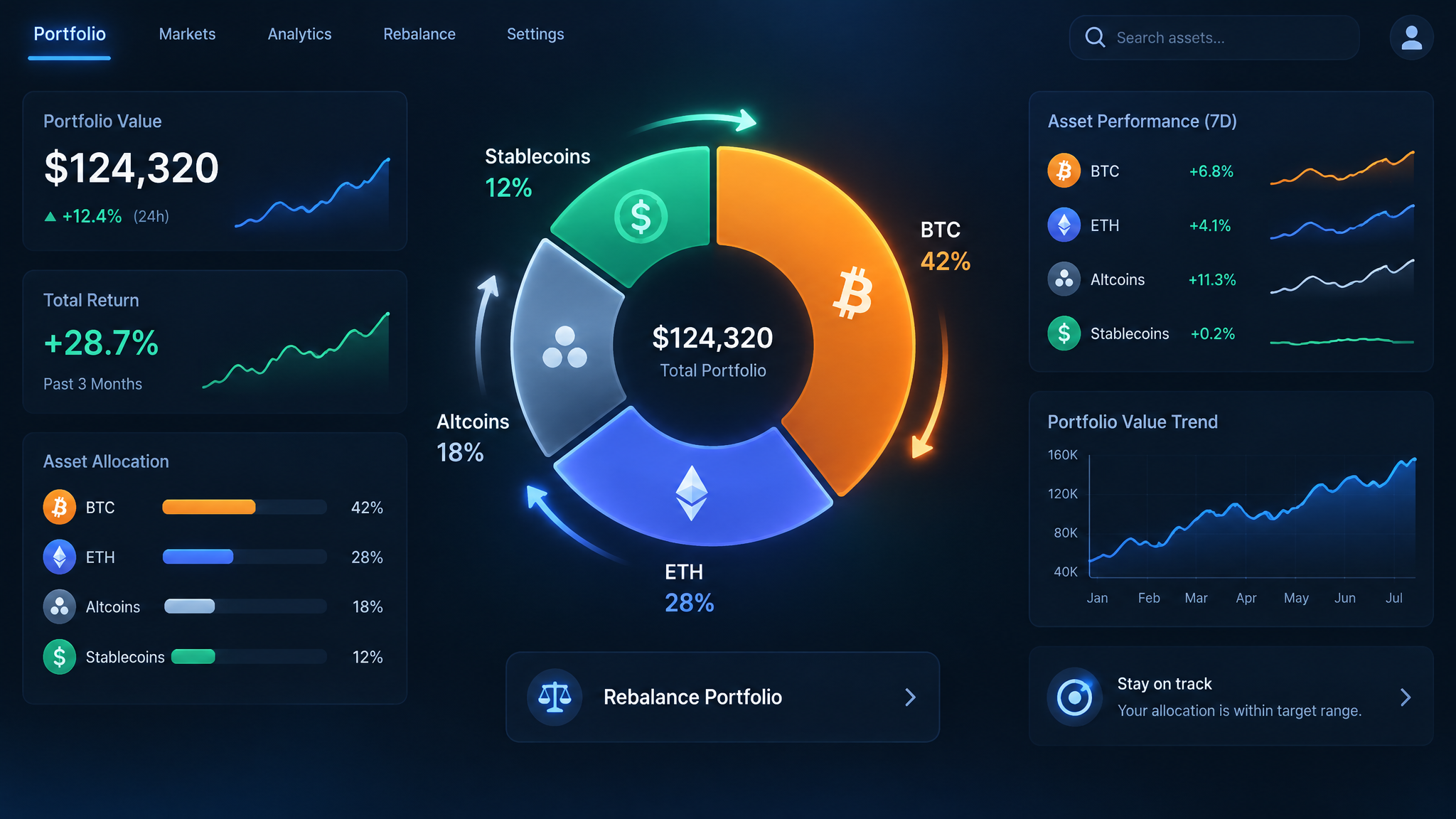
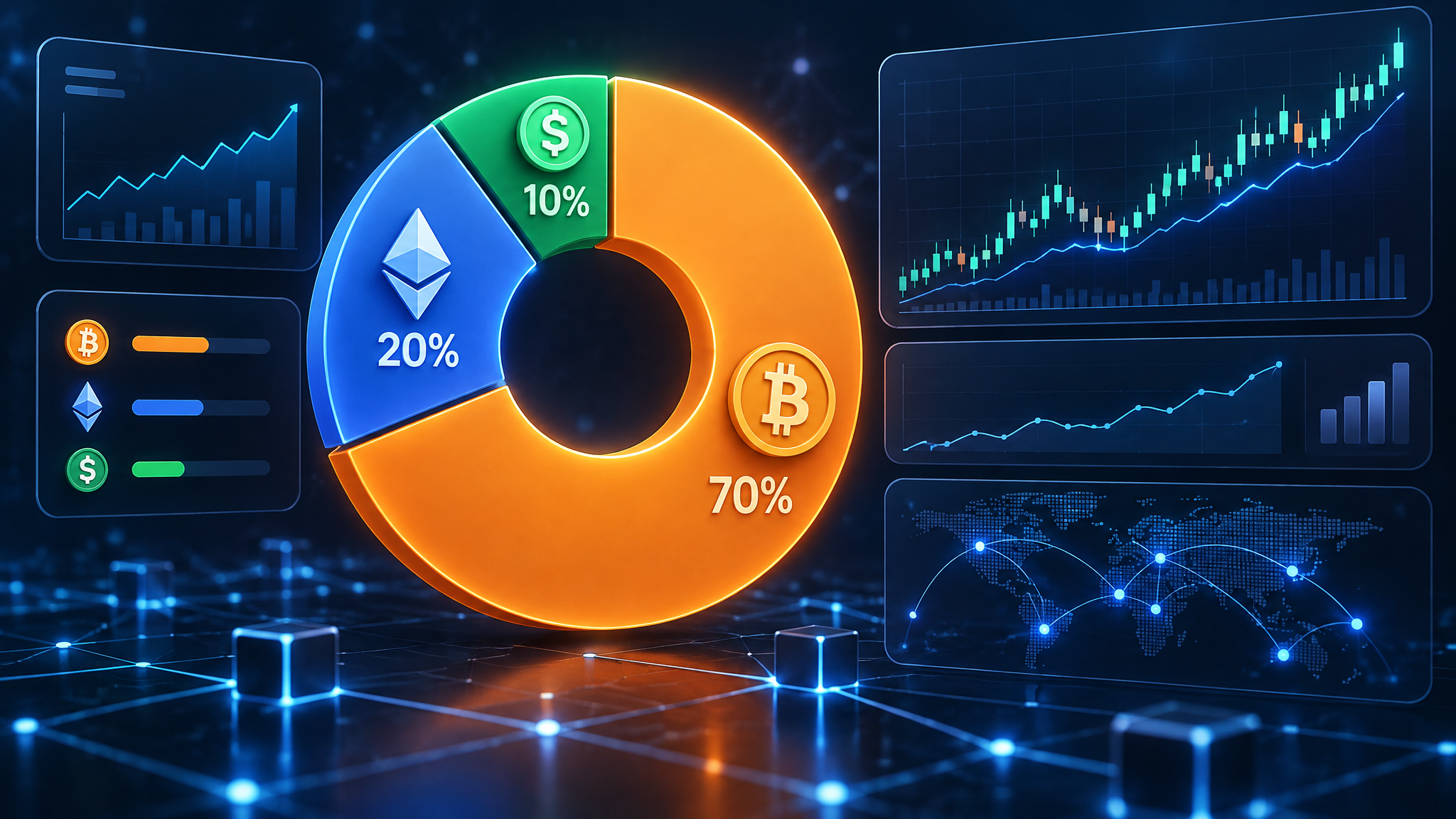
A simple starting split for most beginners: 70% Bitcoin, 30% Ethereum within your crypto allocation. If you're more conservative, 80/20 works fine. If you have high conviction in DeFi and Web3 applications, a 60/40 split is reasonable.
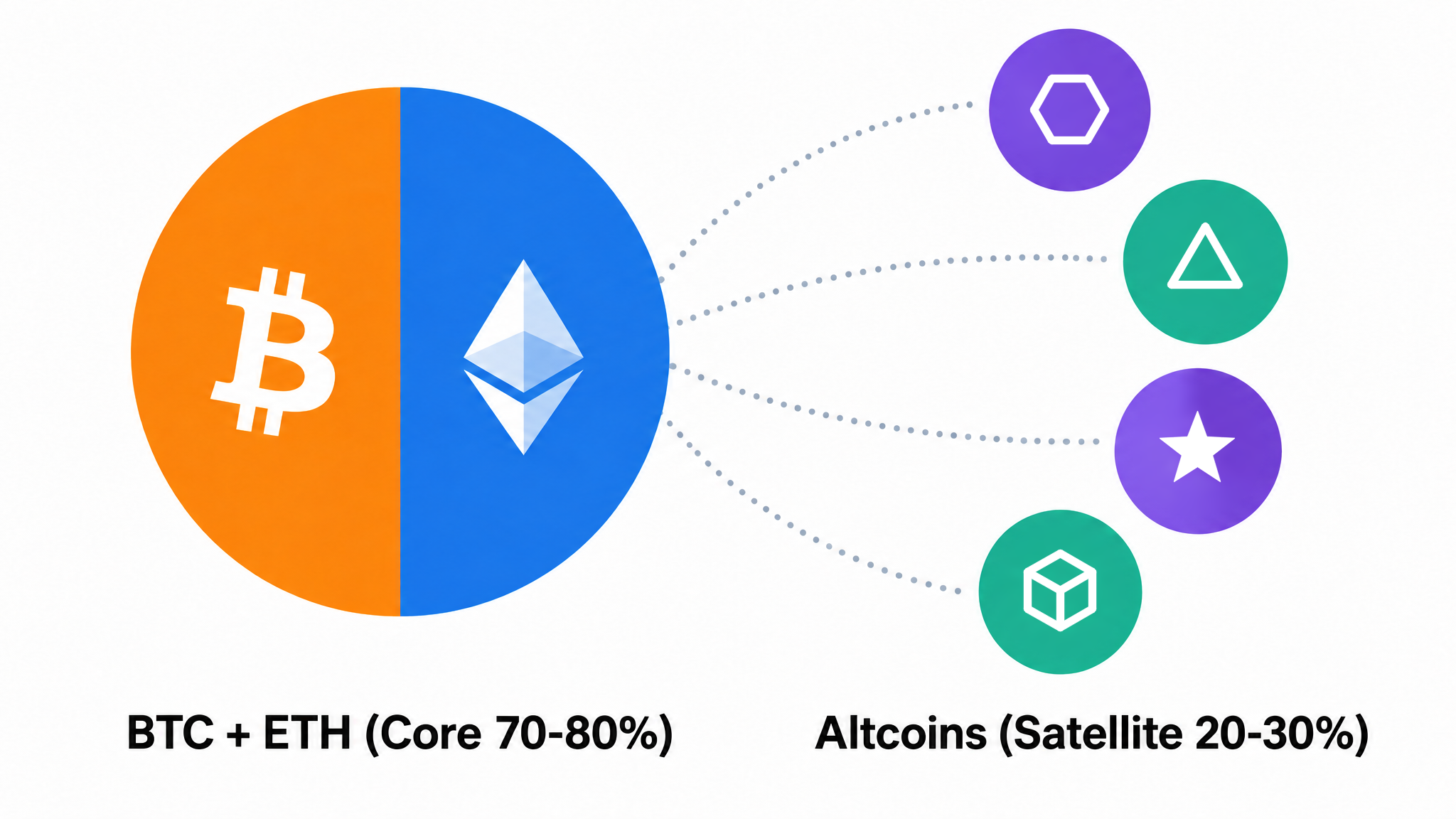
The Satellite (20–40% of Your Crypto Allocation)
This is where you can add exposure to higher-growth, higher-risk assets — but only after you're comfortable with your core. In 2026, large-cap altcoins like Solana (SOL) and XRP are the most common satellite additions for beginners. They have real utility, significant liquidity, and established communities.
Meme coins, micro-cap tokens, and anything promising 1,000x returns? Leave those alone until you've been in the market for at least a year and understand what you're doing.
One more thing: keep 5–10% of your crypto allocation in stablecoins (USDC or USDT). This "dry powder" lets you buy dips without selling your core holdings — a simple but powerful advantage during volatile periods.
Step 3: Use Dollar-Cost Averaging to Buy In
Timing the market is a losing game, even for professionals. The strategy that consistently works for beginners is Dollar-Cost Averaging (DCA) — investing a fixed dollar amount at regular intervals regardless of price.
Here's what it looks like in practice: instead of putting $2,400 into Bitcoin all at once, you invest $200 every month for 12 months. Some months you buy at $80,000, some at $65,000. Your average cost ends up somewhere in between, and you avoid the psychological trap of trying to pick the perfect entry point.
DCA works because it removes emotion from the equation. You're not checking prices every hour wondering if you should wait. You set a schedule, automate it if possible, and let time do the work.
Most major exchanges — Coinbase, Kraken, Gemini — let you set up recurring purchases. Use that feature. It's one of the best tools available to retail investors.
For a structured approach to learning crypto trading beyond just buying and holding, Icoinpro offers step-by-step training that has helped thousands of beginners understand market mechanics and build disciplined habits.
Step 4: Choose the Right Exchange
Where you buy matters. Not all exchanges are equal in terms of fees, security, and regulatory compliance.
For US-based beginners in 2026, the most commonly recommended options are:
- Coinbase — Most beginner-friendly interface, FDIC-insured USD balances, publicly traded company. Higher fees on the basic app; use Coinbase Advanced Trade to reduce costs.
- Kraken — Strong security track record, competitive fees, good customer support. Slightly steeper learning curve than Coinbase.
- Gemini — SOC 2 certified, regulated in New York, good for compliance-conscious investors.
What to look for: transparent fee structure, two-factor authentication (2FA), proof of reserves, and a track record of handling security incidents responsibly. Avoid exchanges that promise unusually high yields on deposits — that's often a red flag for insolvency risk.
One thing beginners often miss: the exchange is not a bank. If the platform goes under, your assets may not be protected by FDIC or SIPC insurance. This is exactly why Step 5 matters.
Step 5: Secure Your Crypto — Don't Skip This
This is where most beginners cut corners, and it's where the biggest losses happen. "Not your keys, not your coins" is a cliché because it's true.
For small amounts (under $1,000), keeping crypto on a reputable exchange is acceptable while you're learning. But once your holdings grow, moving to self-custody is the responsible move.
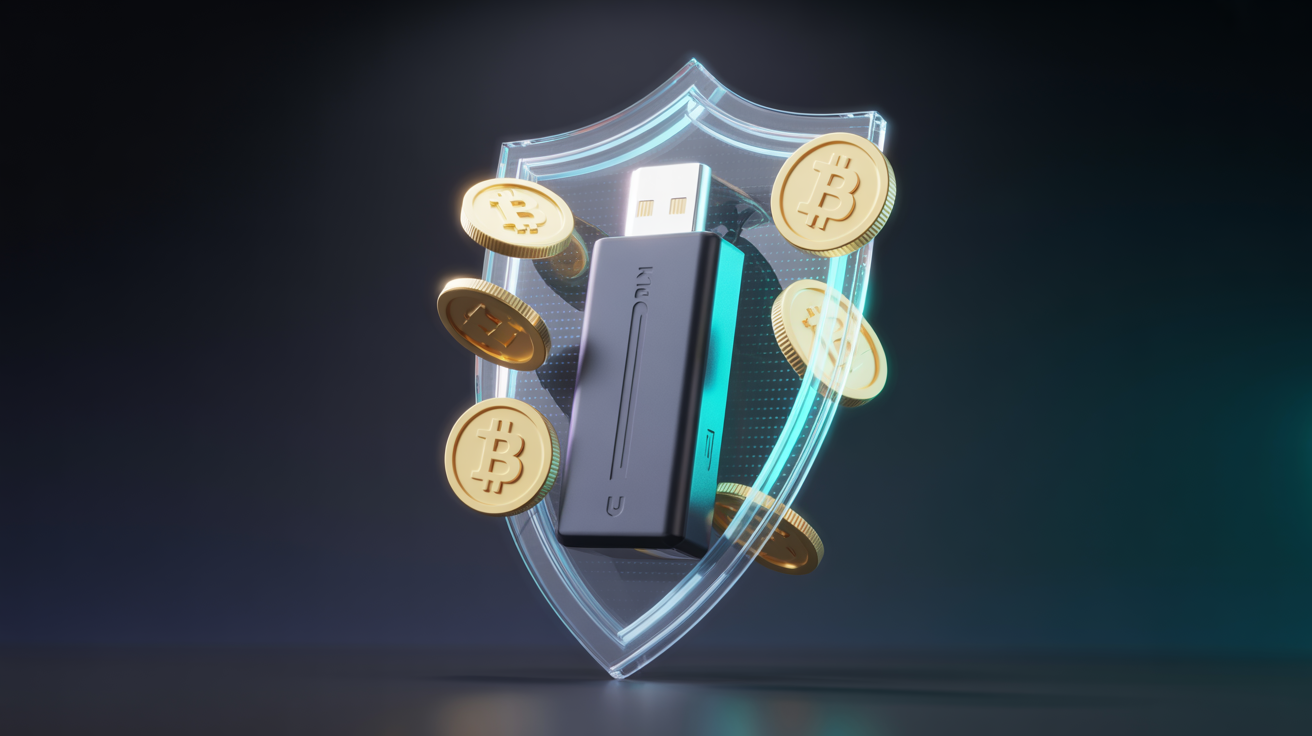
A hardware wallet stores your private keys offline, completely disconnected from the internet. Even if your computer is hacked, your crypto stays safe. Protect your crypto assets with a Ledger hardware wallet — the gold standard in cold storage security.
Whichever wallet you choose, the seed phrase (12 or 24 words) is everything. Write it down on paper. Store it somewhere fireproof and waterproof. Never photograph it, never type it into any website, never share it with anyone. Lose the seed phrase and you lose access to your crypto permanently — there's no customer support to call.
Step 6: Understand What You're Actually Buying
This sounds obvious, but it's skipped constantly. Before you buy any asset, you should be able to answer three questions:
- What does this project actually do? If you can't explain it in one sentence, you don't understand it well enough to own it.
- Where and how would you sell it? Is it listed on major exchanges? Is there enough liquidity to exit your position?
- Could you hold through a 90% drawdown? Bitcoin dropped from $69,000 to $15,500 between 2021 and 2022. Ethereum dropped 80%. If you'd panic-sell at -50%, your position size is too large.
For deeper context on Bitcoin's monetary philosophy and why it's attracted institutional interest, The Bitcoin Standard is essential reading for every crypto enthusiast. It's not a trading manual — it's the economic argument for why Bitcoin exists and why it matters.
Step 7: Track, Rebalance, and Stay Disciplined
Once your portfolio is set up, the job isn't done. Crypto moves fast. A 70/30 BTC/ETH split can become 85/15 after a strong Bitcoin rally, or 55/45 after an Ethereum surge. Rebalancing brings you back to your target allocation.
The most practical approach for beginners: threshold-based rebalancing. When any asset deviates more than 10–15% from its target weight, rebalance. This keeps your risk profile consistent without requiring constant attention.
A few behavioral rules that separate successful beginners from those who blow up their accounts:
- Don't check prices more than once a day. Obsessive price-checking leads to emotional decisions.
- Set rules before you need them. Decide in advance at what price you'd take profits or cut losses — before you're in the middle of a volatile move.
- Ignore social media hype. By the time something is trending on Twitter or Reddit, the smart money has already positioned.
- Keep records for taxes. Every buy, sell, and trade is a taxable event in most jurisdictions. Use crypto tax software from day one.
Common Beginner Mistakes to Avoid
I've watched thousands of new investors make the same errors. Here are the ones that hurt the most:
- Going all-in on one coin. Concentration risk is real. Even Bitcoin has had multi-year periods of underperformance.
- Chasing pumps. Buying after a 50% rally because you're afraid of missing out is how you buy the top.
- Ignoring fees. Exchange fees, network gas fees, and tax drag compound over time. They matter.
- Leaving large amounts on exchanges. Exchanges get hacked. Platforms go bankrupt. Self-custody is not optional for serious holdings.
- Investing money you need. If you need the money in 12 months, it doesn't belong in crypto.
Your Beginner Portfolio: A Simple Starting Template
If you're starting with $1,000 and a moderate risk tolerance, here's a concrete example:
- $700 — Bitcoin (BTC), purchased via DCA over 3–6 months
- $200 — Ethereum (ETH), purchased alongside BTC
- $100 — USDC stablecoin, held as dry powder for dips
That's it. No altcoins, no DeFi protocols, no leverage. Just a clean, simple structure that gives you real exposure to the crypto market while keeping risk manageable. Once you've held through a full market cycle and understand how these assets behave, you can consider expanding.
Key Takeaways
- Allocate only 1–10% of your total investment portfolio to crypto, based on your risk tolerance
- Start with Bitcoin and Ethereum as your core holdings (70/30 or 80/20 split)
- Use Dollar-Cost Averaging to buy in gradually — don't try to time the market
- Choose a reputable, regulated exchange with transparent fees
- Move significant holdings to a hardware wallet for self-custody
- Rebalance when allocations drift more than 10–15% from targets
- Keep records for taxes from day one
Disclaimer: This content is for informational purposes only and should not be considered financial advice. Cryptocurrency investments carry significant risk. Always do your own research (DYOR) before making any investment decisions.
Want structured training instead of piecing it together yourself?
Self-education works, but it's slow. The course that accelerated my learning the most gave me a daily framework — real market analysis, real setups, real accountability.
The program I recommend to people who ask me is this crypto trading course — it\'s the one I point friends and family to when they\'re serious about learning. Daily lessons, live analysis, and a community that actually helps.
Affiliate link — I may earn a commission at no extra cost to you. I only recommend what I genuinely use.
Disclaimer: The information provided on this website is for educational and informational purposes only. It should not be considered financial or investment advice. Cryptocurrency investments carry significant risk. Always do your own research and consult with a qualified financial advisor before making investment decisions.
Free Crypto Insights
Get weekly trading tips, market analysis, and exclusive strategies delivered to your inbox.