Bitcoin Crashes to a 2-Year Low at $55,130 — Then Bounces Back: What the November 2026 Selloff Really Means
Affiliate Disclosure: This article may contain affiliate links. We may earn a commission at no extra cost to you. All opinions are our own.
Marcus Chen
Senior Crypto Analyst & Educator
Certified Blockchain Professional | Former Wall Street Analyst
Marcus Chen is a cryptocurrency analyst and educator with over 8 years of experience in digital asset trading. He has helped thousands of beginners navigate the crypto markets through practical, actionable education.

Disclaimer: This content is for informational purposes only and should not be considered financial advice. Cryptocurrency investments carry significant risk. Always do your own research (DYOR) before making any investment decisions.
This article contains affiliate links. We may earn a commission at no extra cost to you if you make a purchase through these links. See our affiliate disclosure for details.
Bitcoin Crashes to a 2-Year Low at $55,130 — Then Bounces Back: What the November 2026 Selloff Really Means
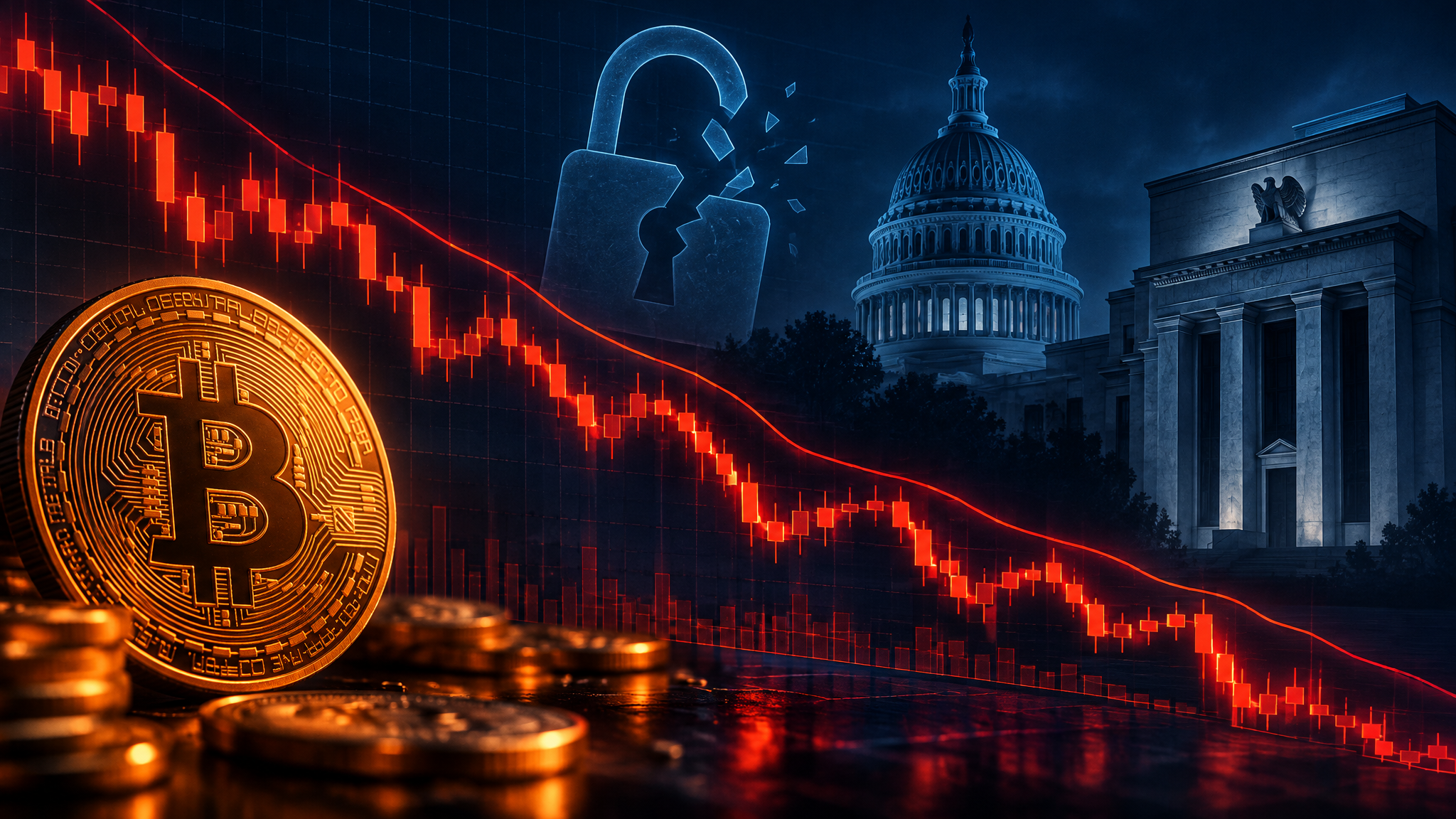
Bitcoin hit a 2-year low of $55,130 on Saturday, November 21, 2026 — and if you weren't watching, you probably woke up Monday to a very different number. By the time US markets opened on November 23, BTC had clawed back above $61,000. That's a 10%+ swing in under 48 hours. So what actually happened, and more importantly, what does it mean for where crypto goes from here?
Let's cut through the noise.
The Weekend Selloff: What Triggered the Drop to $55K
The catalyst wasn't a single event — it was a pile-up. AI-linked stocks took a beating last week, dragging risk assets broadly lower. When equities sneeze, crypto often catches a cold. Add in a wave of automatic stop-loss orders getting triggered as Bitcoin sliced through key support levels, and you had the conditions for a cascade.
Bitcoin's drop to $55,130 marked its lowest price since late 2024. For context, BTC was trading above $76,000 just weeks ago. That's a drawdown of roughly 27% from recent highs — painful, but not unprecedented in crypto's history of violent corrections.
The Fear & Greed Index hit 11 on November 23. That's deep in "extreme fear" territory. Historically, extreme fear readings have often preceded meaningful recoveries — though they can also precede further drops. Nobody rings a bell at the bottom.
The Kraken Flash Crash: Bitcoin at $17,000 (Yes, Really)
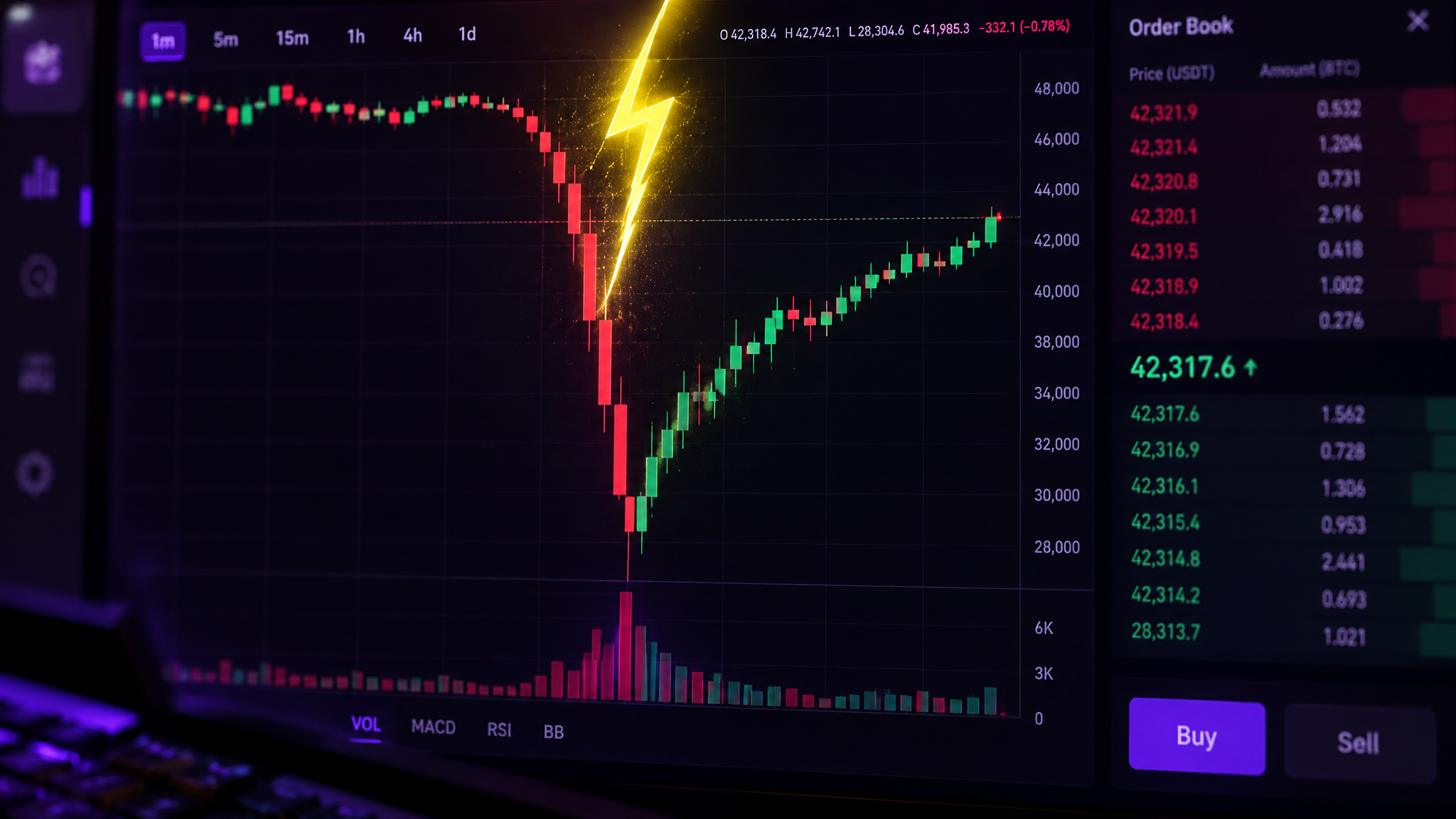
Here's the strangest story of the weekend: on Kraken's Canadian-dollar (CAD) order book, Bitcoin briefly traded at C$24,250 — roughly $17,000 USD. That's a 71% discount to global market prices.
What happened? Market makers providing liquidity in the CAD/USD pair apparently ran out of funds, creating a vacuum in the order book. With no bids to absorb sell orders, prices collapsed. Ether and Tether saw similar dislocations on the same CAD book.
Kraken confirmed no security breach occurred and that all executed trades will stand. So if you happened to be sitting on a CAD-denominated limit buy at $17,000 — congratulations, you got filled. For everyone else, it's a reminder that thin order books on currency-pair markets can create bizarre, temporary dislocations that have nothing to do with Bitcoin's actual value.
This kind of event is rare but not impossible. It's also a good argument for keeping your primary trading activity on deep, liquid markets — and for understanding that exchange-specific prices can diverge sharply from global spot prices during stress events.
Bitcoin ETF Outflows: The $3 Billion November Exodus
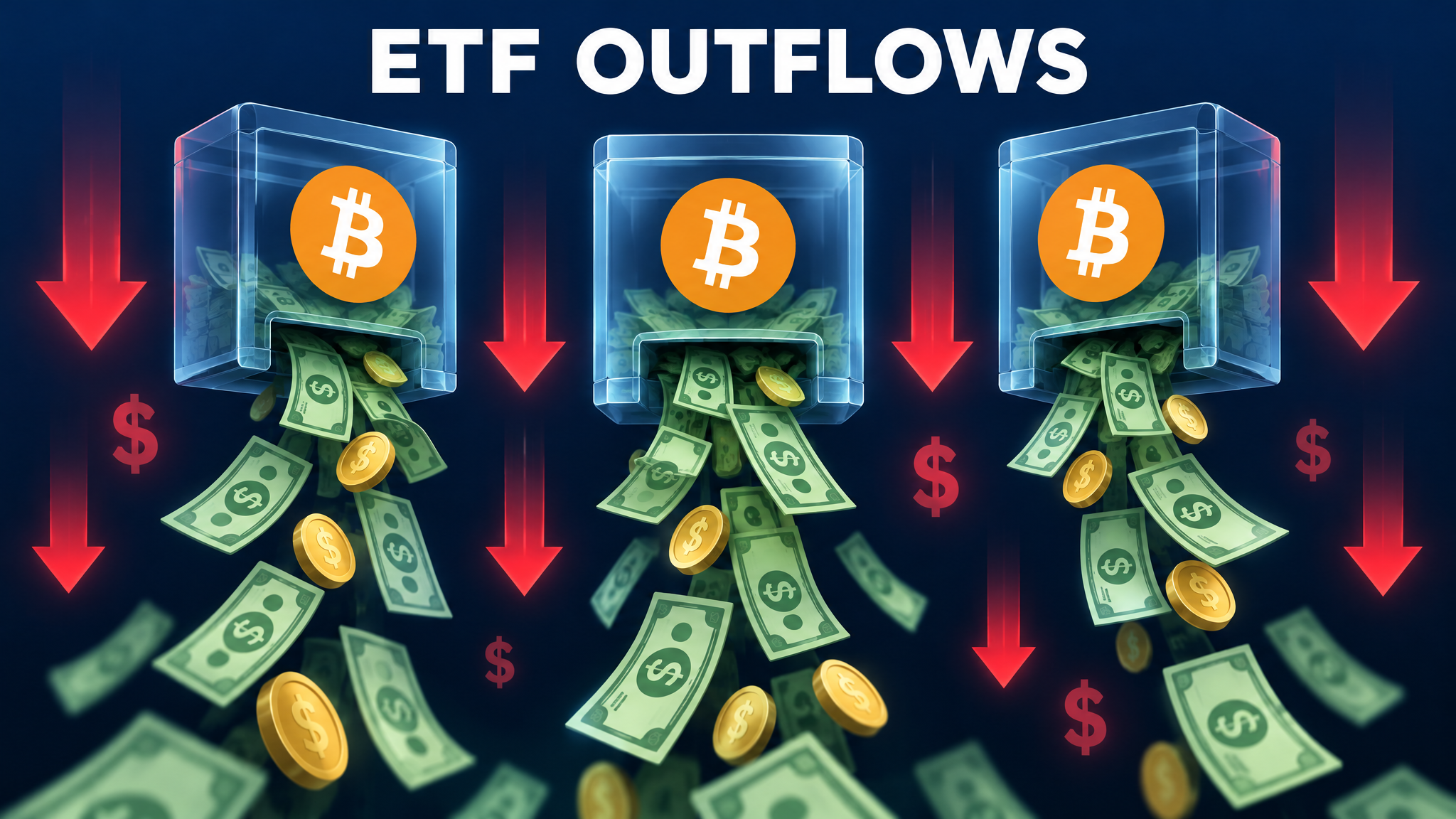
Spot Bitcoin ETFs have now seen nearly $3 billion in net outflows during November 2026, including approximately $1.24 billion in the week ending November 23 alone. That's three consecutive weeks of net outflows — a meaningful shift from the institutional buying frenzy we saw earlier in the year.
What's driving institutional selling? A few factors:
- Risk-off sentiment: The AI stock rout spooked institutional allocators who treat Bitcoin as a high-beta risk asset. When portfolios need trimming, liquid assets go first.
- Profit-taking: Many institutional buyers entered at much lower prices. With BTC still up significantly from 2024 lows even after this correction, some are locking in gains.
- Macro uncertainty: Rate expectations, equity volatility, and geopolitical noise are all contributing to a "wait and see" posture among large allocators.
The ETF outflow data matters because it's one of the clearest windows we have into institutional behavior. When the big money is selling, retail sentiment tends to follow — which is partly why the Fear & Greed Index is sitting at 11.
That said, outflows don't last forever. The same institutional infrastructure that's selling now is also the infrastructure that will buy when sentiment shifts. The question is timing.
The Rebound: What Does $61K Actually Mean?
Bitcoin's recovery above $61,000 by Monday morning broke an 18-day streak of lower daily price highs. That's a technical signal worth noting — not a guarantee of anything, but a sign that the relentless selling pressure may be easing.
A few things to keep in mind about this bounce:
Short covering plays a role. When prices drop sharply, short sellers who bet on further declines often close their positions by buying back — which mechanically pushes prices up. Some of Monday's recovery is likely short covering rather than fresh buying conviction.
Support levels matter. The $55,000-$57,000 zone held as support. If Bitcoin can hold above $60,000 in the coming days and reclaim $65,000, that would be a more meaningful signal of trend reversal. A failure to hold $60K would put $55K back in play.
Broader market correlation. Wall Street futures also recovered Monday as the AI stock selloff stabilized. Bitcoin's rebound is partly a reflection of broader risk appetite returning — which means it's also vulnerable to another leg down if equities roll over again.
Regulatory Context: What's Happening in the Background
While markets were volatile, regulators kept busy. Hong Kong published the Virtual Asset Services Legislation (Amendment) Bill 2026 on November 20, proposing mandatory licensing for crypto custodians, advisers, and asset managers under the Securities and Futures Commission. A first reading is scheduled for December 2.
In the US, the CFTC's recent approval of blockchain-based derivatives infrastructure (TLD Markets and Backpack Clearing) continues to build out the regulated crypto trading ecosystem. Meanwhile, FinCEN's November 6 action barring US institutions from transacting with MEXC Global — citing $16 billion in illicit flows — signals ongoing enforcement pressure on exchanges with compliance gaps.
None of this directly caused the November selloff, but regulatory clarity (or lack thereof) shapes the long-term institutional appetite for crypto. The trend toward clearer frameworks in major markets is generally positive for the asset class, even if individual enforcement actions create short-term noise.
What Should You Actually Do Right Now?
Here's the honest answer: it depends entirely on your time horizon and risk tolerance.
If you're a long-term holder (2+ years): Corrections like this are normal. Bitcoin has dropped 30-50% multiple times during bull markets and recovered to new highs. If your thesis is intact and you're not using leverage, the rational move is to hold — or add if you have dry powder and a long enough horizon.
If you're actively trading: The current environment rewards patience. Extreme fear readings can precede bounces, but they can also precede further drops. Wait for confirmation — a sustained hold above $60K with improving volume — before adding significant exposure.
If you're new to crypto: This is exactly the kind of volatility that shakes out underprepared investors. Before you make any moves, make sure you understand position sizing, stop-losses, and why you're in crypto in the first place. Want to build a stronger foundation? Ready to master crypto trading? Check out Icoinpro's comprehensive trading course.
On security: Market stress events are when scammers get active. Phishing attempts, fake "recovery" services, and social engineering attacks spike during downturns. Keep your assets in cold storage. Protect your crypto assets with a Ledger hardware wallet — the gold standard in cold storage security.
Key Takeaways
- Bitcoin dropped to a 2-year low of $55,130 on November 21, driven by AI stock weakness and cascading stop-losses, then rebounded above $61,000 by November 23.
- The Kraken CAD flash crash (Bitcoin at ~$17,000) was an exchange-specific liquidity event, not a reflection of global market prices — all trades stand.
- Spot Bitcoin ETFs saw nearly $3 billion in November outflows, reflecting institutional risk-off positioning amid equity market volatility.
- The Fear & Greed Index at 11 signals extreme fear — historically a contrarian indicator, but not a guaranteed bottom signal.
- Breaking the 18-day streak of lower highs is a positive technical development, but confirmation requires holding above $60K and reclaiming $65K.
- Long-term holders with no leverage have little reason to panic; active traders should wait for clearer confirmation before adding exposure.
For a deeper understanding of how to navigate volatile crypto markets, grab a copy of The Bitcoin Standard — essential reading for understanding Bitcoin's monetary fundamentals and why long-term holders stay the course through corrections like this.
Understanding the market is step one. Profiting from it is step two.
Reading analysis is valuable, but knowing how to generate your own — and act on it with discipline — is where real results come from. That skill is trainable.
The program I recommend to people who ask me is this crypto trading course — it\'s the one I point friends and family to when they\'re serious about learning. Daily lessons, live analysis, and a community that actually helps.
Affiliate link — I may earn a commission at no extra cost to you. I only recommend what I genuinely use.
Disclaimer: The information provided on this website is for educational and informational purposes only. It should not be considered financial or investment advice. Cryptocurrency investments carry significant risk. Always do your own research and consult with a qualified financial advisor before making investment decisions.
Free Crypto Insights
Get weekly trading tips, market analysis, and exclusive strategies delivered to your inbox.