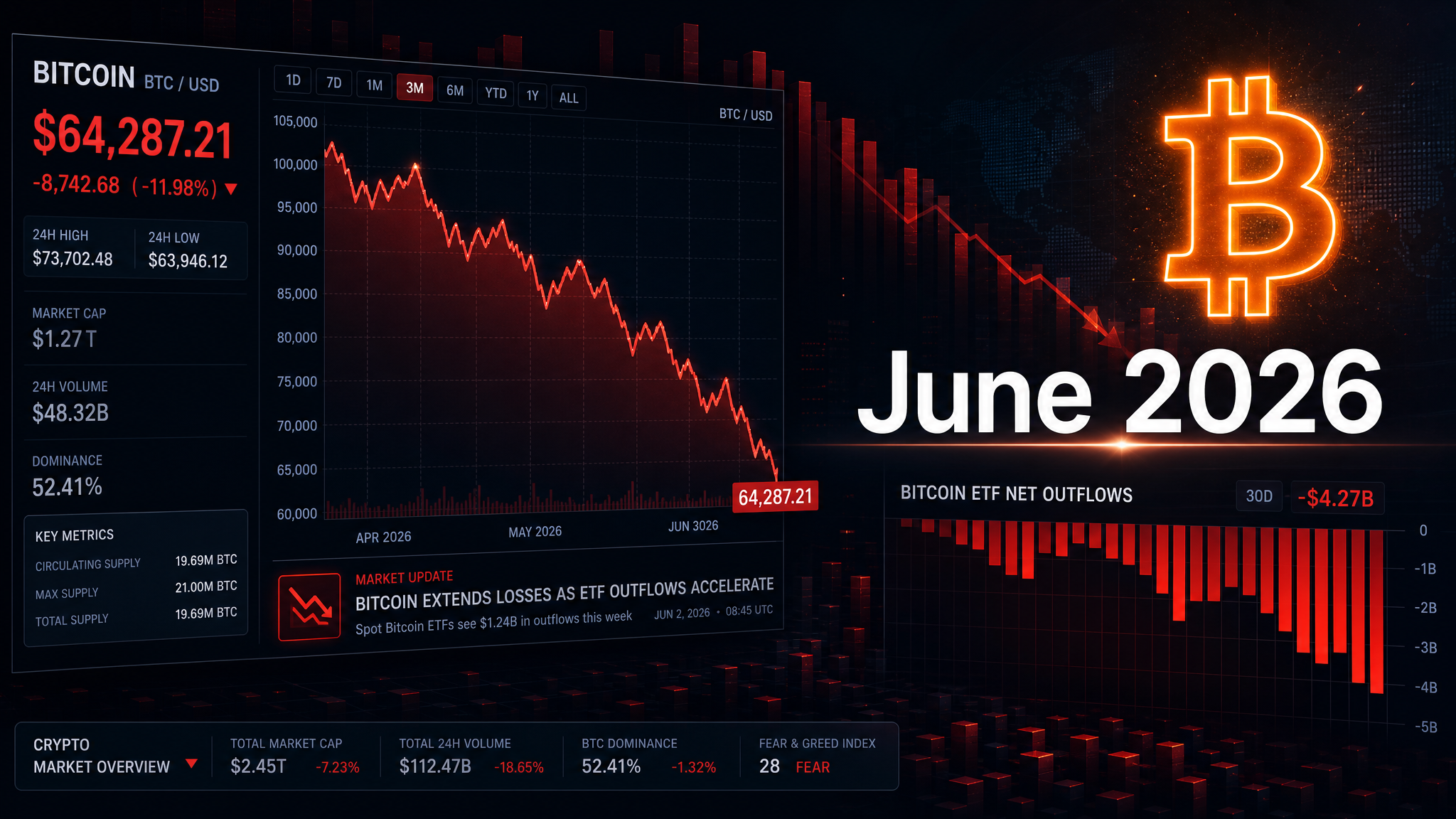
Bitcoin Pizza Day 2026: From $41 Pizzas to $777M — What 16 Years of Bitcoin Tells Us
Affiliate Disclosure: This article may contain affiliate links. We may earn a commission at no extra cost to you. All opinions are our own.
Marcus Chen
Senior Crypto Analyst & Educator
Certified Blockchain Professional | Former Wall Street Analyst
Marcus Chen is a cryptocurrency analyst and educator with over 8 years of experience in digital asset trading. He has helped thousands of beginners navigate the crypto markets through practical, actionable education.

Bitcoin Pizza Day 2026: From $41 Pizzas to $777M — What 16 Years of Bitcoin Tells Us
Bitcoin Pizza Day 2026 is here — May 22 — and those two Papa John's pizzas that cost Laszlo Hanyecz 10,000 BTC back in 2010 are now worth roughly $777 million. That's not a typo. Bitcoin's journey from a $41 novelty transaction to a $1.54 trillion asset class is one of the most remarkable financial stories of the 21st century, and this anniversary is a good moment to step back and ask: where does crypto actually stand right now, and what's coming next?
The Numbers Behind the Pizza
Let's put the Pizza Day math in perspective. On May 22, 2010, Hanyecz paid 10,000 BTC for two pizzas. Bitcoin was trading at roughly $0.0041. Fast forward to today: BTC sits around $77,787, making those same coins worth approximately $777.87 million. That's a gain of roughly 1.9 billion percent.
But here's the thing — Bitcoin Pizza Day 2026 arrives with a bit of a hangover. BTC is down about 29.7% from this time last year, when it was trading near $110,568. It's also sitting 38% below its all-time high of $126,000 reached in October 2025. Q1 2026 was Bitcoin's worst opening quarter since 2018, with a 22.2% decline driven by ETF outflows and geopolitical headwinds.
So is the party over? Not even close. The short-term price action tells one story; the structural developments happening beneath the surface tell a very different one.
Deloitte Just Bought a Crypto Infrastructure Firm — and That's a Big Deal
This week, Deloitte — one of the "Big Four" global accounting and consulting giants — quietly acquired Blocknative, a blockchain infrastructure company that specialized in real-time mempool monitoring, gas fee prediction, and transaction management for Ethereum and other EVM chains.
Blocknative wasn't a flashy consumer app or a speculative token project. It was foundational plumbing. The company built tools that let wallets, protocols, and institutional traders subscribe to pending transactions, simulate execution outcomes, and dynamically adjust gas prices in real time. Think of it as the Bloomberg Terminal equivalent for on-chain transaction data. Blocknative had previously raised approximately $34 million from investors including Blockchain Capital and Foundry Group.

Deloitte's move is characterized as a "talent acquisition-focused merger." Blocknative's commercial APIs and Gas Network services will wind down by June 19, 2026, with the team being integrated into Deloitte's Web3 innovation unit. The goal? Apply Blocknative's deep expertise in mempool analysis, MEV risk, and transaction simulation to enterprise-grade services: protocol due diligence, smart-contract assurance, stablecoin accounting, and proof-of-reserves attestations for institutional clients.
This is not a company buying a crypto token for its treasury. This is a $60 billion professional services firm embedding blockchain infrastructure into its core audit and advisory business. That's a fundamentally different signal.
Why This Matters More Than the Price
When Deloitte acquires blockchain infrastructure, it's because clients are demanding it. Enterprise clients — banks, asset managers, corporations — are deploying on public chains at scale. They need real-time data on transaction flows for risk management, compliance, and strategy. Retroactive analysis isn't good enough anymore.
This acquisition will likely pressure Deloitte's Big Four competitors — PwC, EY, and KPMG — to accelerate their own Web3 strategies. Expect a wave of M&A activity targeting blockchain infrastructure startups over the next 12-18 months.
Want to understand the economics and philosophy driving this institutional wave? The Bitcoin Standard is essential reading for every crypto enthusiast trying to make sense of why traditional finance keeps gravitating toward Bitcoin and blockchain technology.
What the Market Is Actually Doing Right Now
Bitcoin is trading near $77,700 as of Pizza Day 2026. Ethereum is around $2,130. The market is in a consolidation phase — BTC's implied volatility just hit a seven-month low, which signals calm rather than panic. Low volatility in crypto often precedes significant moves in either direction.
A few notable dynamics worth watching:
- XRP rotation: XRP ETFs attracted $8.88 million in the latest session and $42 million in net inflows over the past week. Some traders appear to be rotating out of BTC and ETH into XRP, possibly anticipating regulatory clarity benefits from the CLARITY Act.
- Hyperliquid momentum: The HYPE ETF has attracted $69.6 million since launching May 12, including $16.1 million on May 22 alone. Hyperliquid's revenue-to-buyback model is resonating with institutional allocators.
- Ethereum network strength: Despite institutional sell-offs making headlines, Ethereum still has 72.8 million monthly users — a number that doesn't lie about underlying adoption.
- Blockchain.com IPO filing: The crypto financial services firm filed a confidential S-1 with the SEC, signaling that crypto companies are increasingly confident in the public markets.
- Variational raises $50M: This peer-to-peer trading startup raised $50 million led by Dragonfly to offer perpetual futures on real-world assets like oil, silver, and gold — another sign of institutional-grade infrastructure being built.
The Regulatory Tailwind: CLARITY Act Progress
The single biggest structural development for crypto in 2026 isn't a price move — it's the regulatory clarity finally taking shape in Washington. The Digital Asset Market CLARITY Act cleared the Senate Banking Committee on May 14 with a bipartisan 15-9 vote. The bill aims to resolve the long-standing SEC vs. CFTC jurisdictional battle and codify Bitcoin and Ethereum as "digital commodities" under CFTC oversight.
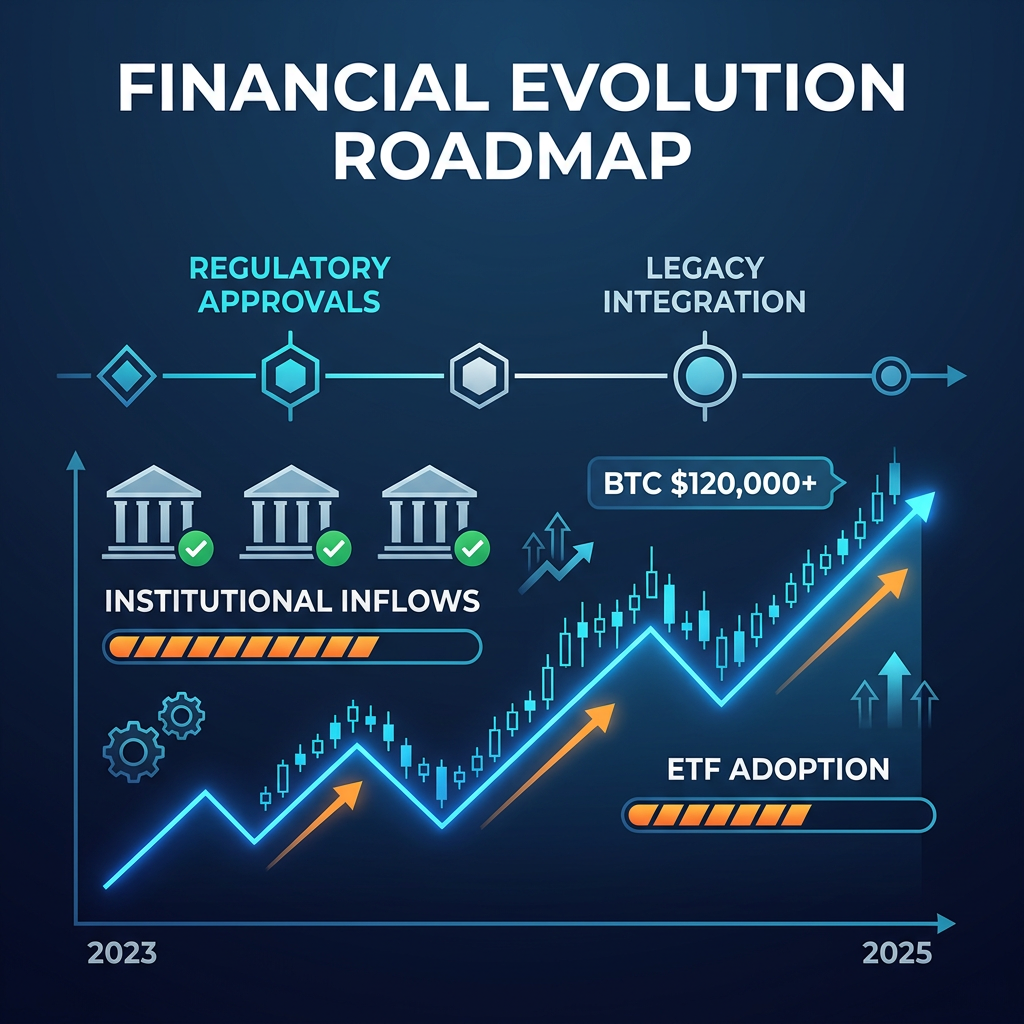
This matters enormously. Legal ambiguity has been the single biggest deterrent to deeper institutional involvement in crypto. When firms like Deloitte know the regulatory landscape, they can make long-term infrastructure investments with confidence. The CLARITY Act's progress is what gives a $60 billion consulting firm the conviction to acquire a blockchain infrastructure company.
For XRP specifically, the act could be transformative — providing a permanent statutory classification that would facilitate institutional products like ETFs and remove the regulatory overhang that's persisted since the SEC lawsuit in 2020.
16 Years of Bitcoin: Three Lessons That Still Apply
Pizza Day is a good excuse to zoom out. Here's what 16 years of Bitcoin actually teaches us:
1. Volatility Is the Price of Admission
Bitcoin has had multiple 80%+ drawdowns in its history. Every single time, the people who held through the pain and understood the underlying technology came out ahead. The current 38% pullback from all-time highs is uncomfortable — but it's not unusual. Mark Cuban recently sold most of his BTC, citing its failure as a geopolitical hedge. Michael Saylor, meanwhile, expects BTC to outperform the S&P 500 long-term. History has tended to favor the Saylors over the Cubans on this one.
2. Infrastructure Precedes Price
The Deloitte/Blocknative deal is a perfect example of a pattern that repeats in crypto: serious infrastructure investment precedes the next major price cycle. When the Big Four start embedding blockchain into their core business, it's not a sign of a dying market — it's a sign of a maturing one. The same pattern played out before the 2020-2021 bull run, when institutional custody solutions and futures markets were quietly being built.
3. Adoption Curves Are Slow, Then Sudden
In 2010, Hanyecz couldn't give Bitcoin away fast enough — he had to post on a forum to find someone willing to take 10,000 BTC for two pizzas. Today, four in ten U.S. crypto holders actively use digital assets in daily transactions. The tokenization of real-world assets — from U.S. Treasuries to gold — is accelerating. The adoption curve is bending upward again, and this time it's being driven by institutional demand rather than retail speculation.
What to Watch in the Next 90 Days
If you're trying to position intelligently right now, here are the catalysts worth tracking:
- CLARITY Act full Senate vote: If it passes, expect a significant re-rating of crypto assets, particularly XRP and ETH.
- Bitcoin $75K support: Analysts are watching this level closely. A hold here with low volatility could set up a Q3 accumulation phase before a potential Q4 rally toward $90K+.
- Big Four M&A activity: Watch for PwC, EY, or KPMG to make their own blockchain infrastructure acquisitions in response to Deloitte.
- RWA tokenization growth: The tokenized real-world asset market is expanding rapidly. Platforms enabling on-chain Treasuries and gold are seeing institutional inflows that could drive the next narrative cycle.
- Near Protocol dynamic resharding: Launching in June, this could significantly boost Ethereum's main competitor's throughput and attract developer migration.
For a structured approach to learning crypto trading and navigating these market cycles, Icoinpro offers step-by-step training that has helped thousands of beginners build real trading skills.
Protecting Your Crypto in a Volatile Market
One thing Pizza Day always reminds us: the people who lost 10,000 BTC on pizza didn't lose it to a hack — they spent it voluntarily. But plenty of other early Bitcoin holders did lose their coins to exchange hacks, lost keys, and poor security practices. As Bitcoin's value has grown, so has the importance of proper custody.
Protect your crypto assets with a Ledger hardware wallet — the gold standard in cold storage security. If you're holding meaningful amounts of crypto, a hardware wallet isn't optional — it's essential.
Key Takeaways
- Bitcoin Pizza Day 2026 marks 16 years since the first real-world BTC transaction; those 10,000 BTC are now worth ~$777M.
- BTC is down 29.7% year-over-year and 38% from its ATH of $126K, but implied volatility is at a 7-month low — consolidation, not collapse.
- Deloitte's acquisition of Blocknative is the most significant institutional crypto infrastructure move of 2026, signaling Big Four commitment to blockchain services.
- The CLARITY Act's bipartisan Senate Banking Committee passage is the regulatory catalyst enabling this wave of institutional investment.
- XRP ETF inflows ($42M past week), Hyperliquid HYPE ETF momentum ($69.6M since launch), and Blockchain.com's IPO filing all point to a market maturing, not dying.
- The next 90 days hinge on the CLARITY Act vote, Bitcoin's $75K support level, and continued institutional M&A in blockchain infrastructure.
About the Author
Marcus Chen — Senior Crypto Analyst & Educator | Certified Blockchain Professional | Former Wall Street Analyst
Marcus has spent 8+ years analyzing cryptocurrency markets, from early Bitcoin adoption through the DeFi explosion and institutional ETF era. His background in traditional finance gives him a unique lens for evaluating crypto's integration into mainstream markets. He holds a Certified Blockchain Professional designation and previously worked as a quantitative analyst on Wall Street before pivoting full-time to crypto education and research.
Understanding the market is step one. Profiting from it is step two.
Reading analysis is valuable, but knowing how to generate your own — and act on it with discipline — is where real results come from. That skill is trainable.
The program I recommend to people who ask me is this crypto trading course — it\'s the one I point friends and family to when they\'re serious about learning. Daily lessons, live analysis, and a community that actually helps.
Affiliate link — I may earn a commission at no extra cost to you. I only recommend what I genuinely use.
Disclaimer: The information provided on this website is for educational and informational purposes only. It should not be considered financial or investment advice. Cryptocurrency investments carry significant risk. Always do your own research and consult with a qualified financial advisor before making investment decisions.
Free Crypto Insights
Get weekly trading tips, market analysis, and exclusive strategies delivered to your inbox.