Bitget $387M Hack: What It Means for Your Crypto Security in 2026
Affiliate Disclosure: This article may contain affiliate links. We may earn a commission at no extra cost to you. All opinions are our own.
Marcus Chen
Senior Crypto Analyst & Educator
Certified Blockchain Professional | Former Wall Street Analyst
Marcus Chen is a cryptocurrency analyst and educator with over 8 years of experience in digital asset trading. He has helped thousands of beginners navigate the crypto markets through practical, actionable education.

Bitget $387M Hack: What It Means for Your Crypto Security in 2026
The Bitget hack of September 2026 just became one of the largest crypto exchange thefts in history — $387.5 million gone in a matter of hours, with North Korean state-sponsored hackers suspected. What makes this breach genuinely alarming isn't just the dollar figure. It's how they did it. No private keys were stolen. No cold storage was touched. The attackers walked right through the front door by tricking the exchange's own systems into signing fraudulent transactions. If you keep funds on any centralized exchange, this story matters to you.
What Happened: The Bitget Breach at a Glance
At 18:31 UTC on September 24, 2026, Bitget's security team detected unauthorized activity across its hot and warm wallet infrastructure. By the time the dust settled, the exchange had lost approximately $387.5 million spread across seven blockchain networks — including TRON, Zcash, and XRP. The single largest chunk: roughly 103 million XRP, worth about $157 million at the time.
Bitget paused withdrawals immediately while maintaining trading and deposit services. CEO Gracy Chen confirmed the exchange's User Protection Fund — holding over $464 million — would cover all user losses. A phased withdrawal resumption began September 28, starting with Bitcoin, with full services expected by October 2.
So far, so familiar. Exchange hacks happen. But the attack method here is what security researchers are calling a watershed moment.
How They Did It: Spoofed Transactions, Not Stolen Keys
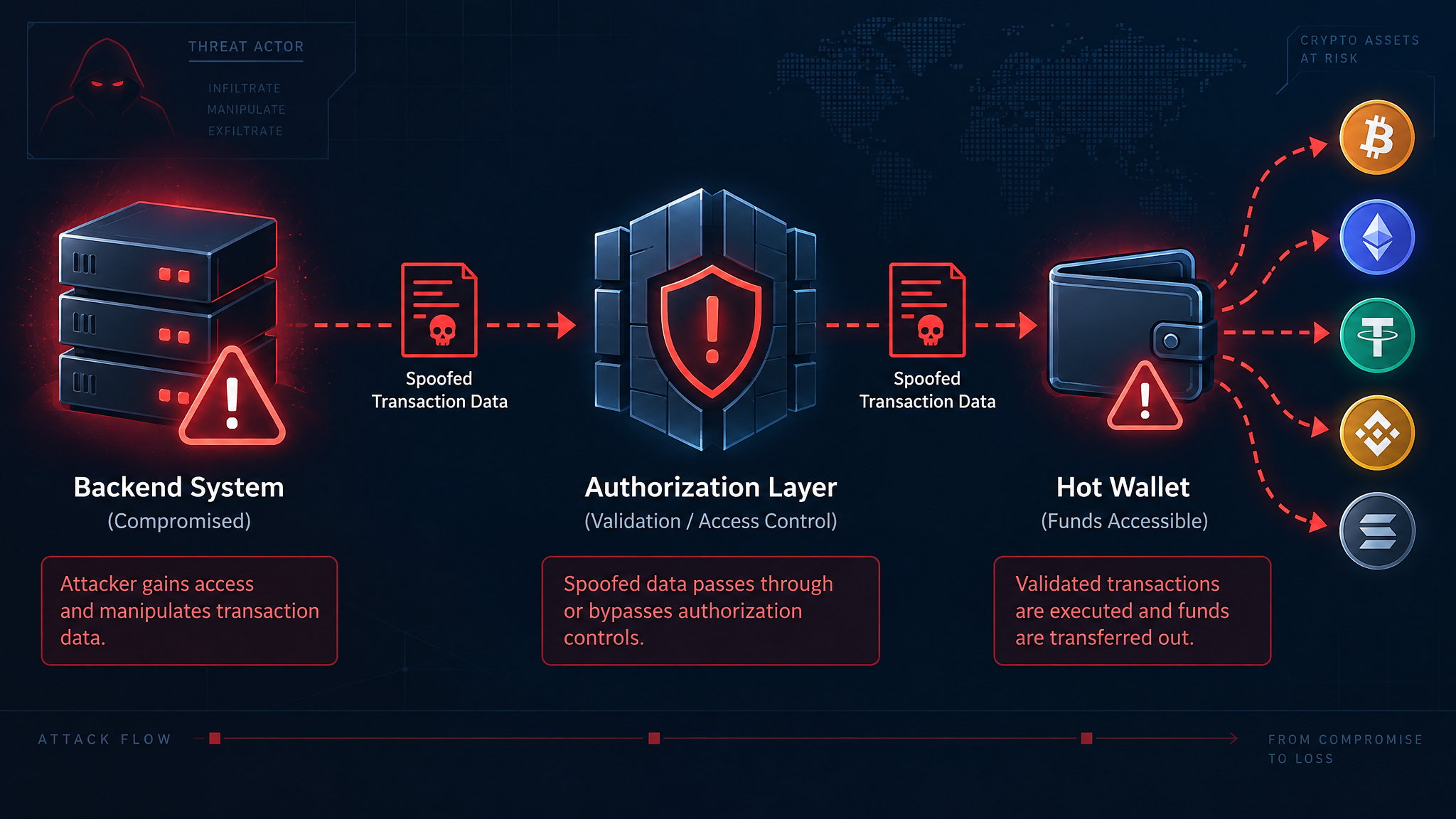
Here's the part that should make every crypto investor sit up straight. The attackers didn't steal Bitget's private keys. They didn't crack any cryptography. Instead, they compromised a backend system within the exchange's wallet infrastructure and used it to inject forged transaction requests.
Think of it this way: imagine a bank's internal approval system. A teller submits a withdrawal request, the system checks it, and if everything looks valid, it approves the transfer. The attackers didn't forge the teller's ID — they hacked the system that generates the withdrawal requests. So when the authorization layer checked the transaction data, it looked completely legitimate. The exchange's own signing keys processed the fraudulent transfers as routine payouts.
Security firm GoPlus confirmed the private keys themselves were never compromised. Blockchain analytics firm Elliptic noted that some of the stolen funds were routed through addresses previously linked to the 2025 Bybit theft — another $1.5 billion hack that used a nearly identical playbook. In that case, attackers compromised a developer machine to manipulate the signing interface. Same concept, different target.
The speed was staggering. According to CryptoTimes, approximately $185 million moved in under one minute during the initial breach window.
North Korea's Fingerprints — and Why It Keeps Happening
Bitget CEO Gracy Chen pointed to North Korean-linked actors, citing behavioral patterns, on-chain signatures, and VPN usage consistent with the Lazarus Group's sub-unit TraderTraitor. No government has officially confirmed attribution as of this writing, but the circumstantial evidence is strong.
The Lazarus Group has stolen an estimated $6.75 billion in crypto since 2017. In 2026 alone, they're believed to be responsible for roughly 76% of all crypto hack volume through April — including the $292 million Kelp DAO bridge exploit and the $285 million Drift Protocol attack. These aren't opportunistic criminals. They're a state-funded operation with a specific mandate: generate hard currency for North Korea's weapons programs.
Their 2026 playbook has evolved. Supply chain compromises, social engineering via fake LinkedIn recruiters, even in-person relationship-building at crypto conferences before executing an exploit months later. The Drift Protocol hack involved operatives meeting Drift employees face-to-face to build trust before the attack. This is nation-state-level patience and sophistication.
Once funds are stolen, they move fast: cross-chain hops through Ethereum, Avalanche, and BSC, then through decentralized mixers (Tornado Cash alternatives since the original was sanctioned), and finally off-ramped through Chinese OTC desks and Russian exchange networks.
What This Means for Everyday Crypto Investors
Let's be direct: if you're holding significant crypto on a centralized exchange, you're exposed to risks that have nothing to do with your own security practices. You can have a perfect hardware wallet setup at home and still lose funds if the exchange you're using gets hit by a sophisticated backend attack.
That said, there are practical steps you can take right now.
1. Don't Keep More on Exchanges Than You Need to Trade
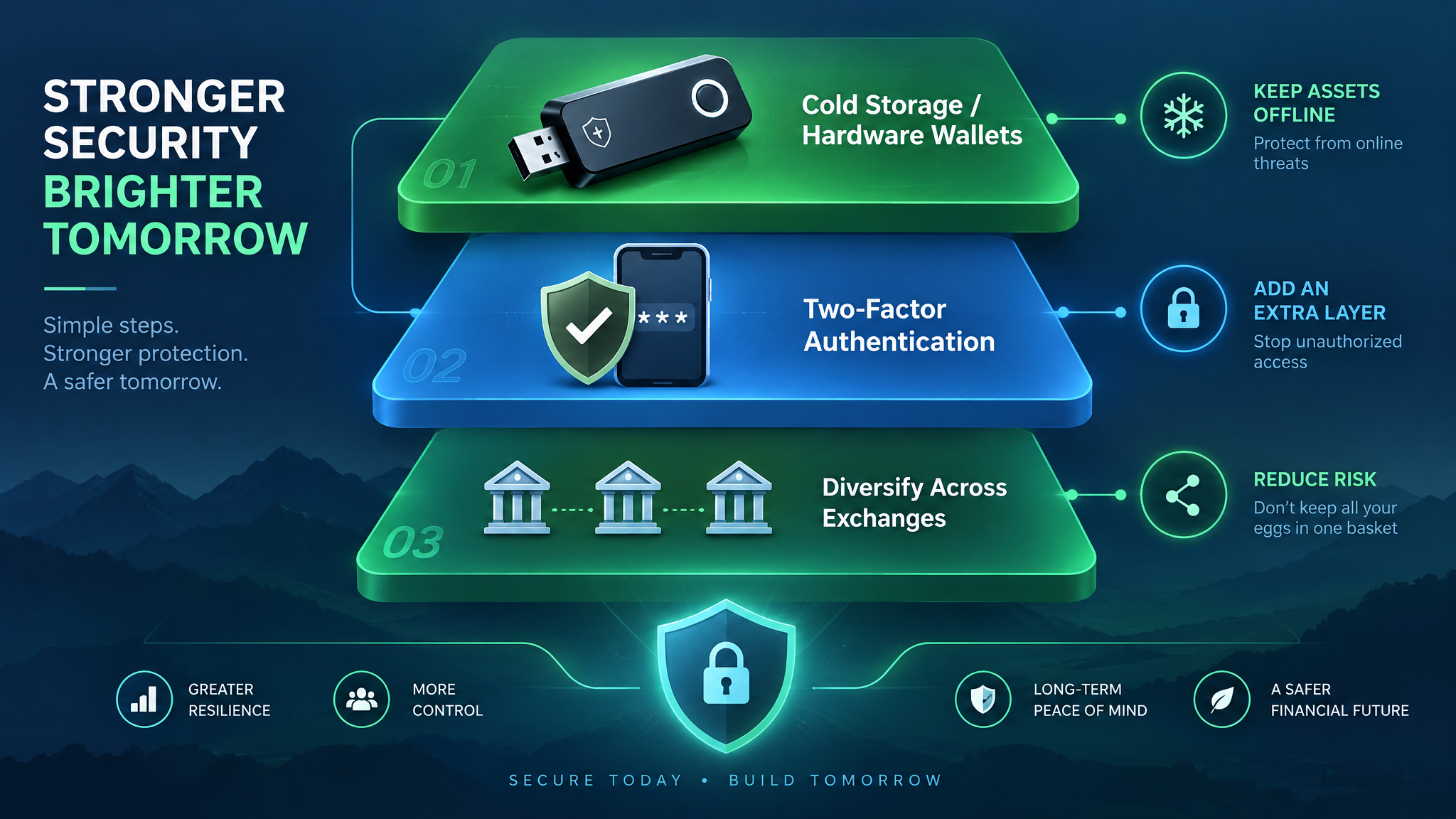
This is the oldest rule in crypto and still the most important. Exchanges are for trading. They're not savings accounts. If you're holding $10,000 in crypto and you're not actively trading, there's no good reason to keep more than $500–$1,000 on any single exchange. Move the rest to self-custody.
A hardware wallet like the Ledger hardware wallet keeps your private keys completely offline. Even if every exchange in the world got hacked simultaneously, your cold storage funds would be untouched. That's the point.
2. Diversify Across Exchanges
If you do need to keep funds on exchanges — for active trading, staking, or liquidity — spread them across two or three platforms. Bitget users who had their entire portfolio on the exchange were fully exposed. Those with funds split across Coinbase, Kraken, and Bitget had a much smaller percentage at risk.
3. Enable Every Security Feature Available
Two-factor authentication (2FA) via an authenticator app (not SMS), withdrawal address whitelisting, and anti-phishing codes are table stakes. Most exchanges offer all three. Most users enable none of them. Don't be most users.
4. Watch for Withdrawal Pause Announcements
When an exchange pauses withdrawals, that's your signal to pay attention. It doesn't always mean a hack — sometimes it's maintenance or regulatory compliance — but it's worth monitoring. Follow official exchange channels on X and Telegram, not third-party accounts that might spread misinformation during a crisis.
Is Bitget Safe Now? What Happens Next
Bitget's User Protection Fund covered the losses, which is genuinely reassuring. The fund held $464 million against a $387.5 million loss — a close call, but it held. The exchange is working with Mandiant and SlowMist on the investigation and has launched a 5% bounty for anyone who helps freeze or recover stolen funds.
The phased withdrawal resumption starting September 28 suggests the exchange is being methodical rather than rushing to restore normalcy. That's the right call. Rushing restoration after a breach often introduces new vulnerabilities.
Longer term, this incident will likely accelerate industry-wide adoption of more rigorous backend security — specifically around transaction authorization systems. The lesson from both Bybit and Bitget is that cryptographic key security alone isn't enough. The systems that generate transaction requests need the same level of scrutiny as the keys that sign them.
If you want to understand how professional traders think about exchange risk and position sizing, the Icoinpro Trading Course covers risk management frameworks that apply directly to situations like this — including how to structure your holdings across custodial and non-custodial solutions.
The Bigger Picture: Exchange Security in 2026
The Bitget hack is the third major exchange breach in 18 months, following Bybit ($1.5B, February 2025) and several smaller incidents. Each one has refined the Lazarus Group's playbook. Each one has also pushed the industry toward better practices — eventually.
The uncomfortable truth is that centralized exchanges are high-value targets with complex attack surfaces. They're also genuinely useful — for liquidity, fiat on-ramps, and trading features that self-custody wallets can't replicate. The answer isn't to avoid them entirely. It's to use them intelligently.
Keep your long-term holdings in cold storage. Use exchanges for what they're designed for. And when a breach happens — because another one will — you want to be the person who had $500 at risk, not $50,000.
For a deeper dive into hardware wallet options and how to set up proper cold storage, the Trezor hardware wallet is another excellent option worth considering alongside Ledger, depending on your specific needs.
Key Takeaways
- $387.5 million stolen from Bitget on September 24, 2026 — one of the largest exchange hacks ever
- No private keys were stolen — attackers compromised a backend system to spoof transaction data
- North Korean Lazarus Group is the primary suspect, consistent with the 2025 Bybit hack methodology
- User funds are covered by Bitget's $464M Protection Fund; withdrawals resuming September 28
- Your action items: move long-term holdings to cold storage, diversify across exchanges, enable all security features
- The attack method — compromising authorization systems rather than keys — represents an evolving threat that the entire industry must address
Understanding the market is step one. Profiting from it is step two.
Reading analysis is valuable, but knowing how to generate your own — and act on it with discipline — is where real results come from. That skill is trainable.
The program I recommend to people who ask me is this crypto trading course — it\'s the one I point friends and family to when they\'re serious about learning. Daily lessons, live analysis, and a community that actually helps.
Affiliate link — I may earn a commission at no extra cost to you. I only recommend what I genuinely use.
Disclaimer: The information provided on this website is for educational and informational purposes only. It should not be considered financial or investment advice. Cryptocurrency investments carry significant risk. Always do your own research and consult with a qualified financial advisor before making investment decisions.
Free Crypto Insights
Get weekly trading tips, market analysis, and exclusive strategies delivered to your inbox.