Ledger Supply Chain Breach 2026: $93M Stolen — What Every Crypto Holder Needs to Know
Affiliate Disclosure: This article may contain affiliate links. We may earn a commission at no extra cost to you. All opinions are our own.
Marcus Chen
Senior Crypto Analyst & Educator
Certified Blockchain Professional | Former Wall Street Analyst
Marcus Chen is a cryptocurrency analyst and educator with over 8 years of experience in digital asset trading. He has helped thousands of beginners navigate the crypto markets through practical, actionable education.
Ledger Supply Chain Breach 2026: $93M Stolen — What Every Crypto Holder Needs to Know
The Ledger supply chain breach 2026 is the kind of story that keeps crypto security experts up at night. Hardware wallets are supposed to be the safest way to store digital assets — offline, air-gapped, immune to remote hacks. But a sophisticated physical attack on devices sold through a Southeast Asian reseller called CryptoBilis has shattered that assumption for thousands of users, with losses now estimated between $86 million and $93 million across Bitcoin, Ethereum, and TRON.
Here's what actually happened, who's at risk, and — most importantly — what you should do right now if you own a Ledger device.
What Happened: The CryptoBilis Supply Chain Attack
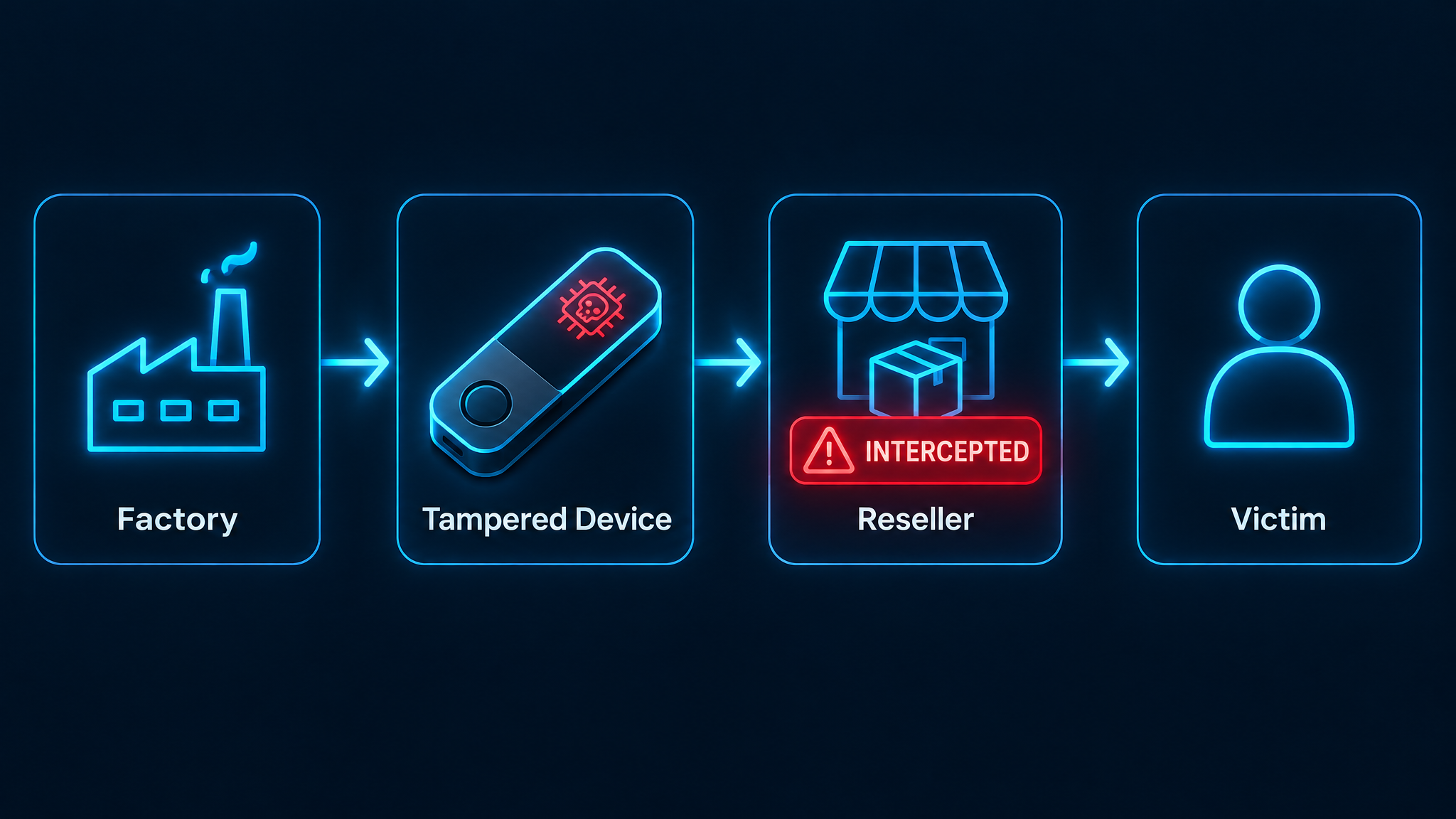
On October 9, 2026, blockchain investigators began flagging a wave of unexplained wallet drains. Victims had one thing in common: they'd purchased Ledger devices from CryptoBilis, a third-party reseller operating across Southeast Asia and Hong Kong.
Ledger's security team confirmed the worst. The devices weren't just counterfeit — they were genuine Ledger hardware that had been physically tampered with during distribution. Someone had opened the devices, installed an unauthorized circuit board beneath the screen, and resealed them. The implant was designed to do one thing: capture your 24-word recovery phrase the moment you set up the wallet.
Once the phrase was captured, the implant transmitted it via an LTE connection using a provisioned eSIM — silently, without any visible sign on the device. Attackers could then reconstruct the wallet on their own hardware and drain every asset at their leisure. Because the implant didn't touch the Secure Element, the devices still passed Ledger's "Genuine Check." Users had no way to know their device was compromised.
The Scale of the Damage
The numbers are staggering. Pseudonymous blockchain investigator Specter traced over $86 million in losses across multiple networks. Other analytics firms put the figure above $93 million when accounting for assets moved through mixers and cross-chain bridges before investigators could flag them.
The breakdown by network:
- Bitcoin: Largest share of losses, with funds swept to multiple intermediate addresses before consolidation
- Ethereum: Significant ETH and ERC-20 token losses, including stablecoins
- TRON: USDT on TRON was a primary target, likely due to lower on-chain fees making rapid movement easier
Ledger has confirmed that all verified cases are limited to devices sold through CryptoBilis. The company's own manufacturing facilities, core infrastructure, and software systems were not compromised. But that's cold comfort for the thousands of users who bought what they believed was a legitimate product from an authorized reseller.
Why This Attack Is Different
Most crypto hacks exploit software vulnerabilities — phishing sites, malicious smart contracts, compromised browser extensions. This attack is different because it's physical. The threat model for hardware wallets has always assumed that the device itself is trustworthy. That assumption just got stress-tested in the worst possible way.
What makes this particularly alarming:
- It bypassed Genuine Check. Ledger's built-in verification mechanism checks the Secure Element's cryptographic signature. The implant didn't modify the Secure Element — it sat alongside it, intercepting data at the display layer.
- It targeted the setup process. The 24-word phrase is only displayed once, during initial setup. Most users never think about that moment as a vulnerability window.
- It required physical access to the supply chain. This isn't a script kiddie operation. Whoever did this had access to devices before they reached end users — a sophisticated, organized effort.
Security researchers are now calling this a "supply chain interdiction" attack, similar to techniques documented in nation-state intelligence operations. The level of sophistication suggests a well-resourced threat actor, not opportunistic criminals.
Am I at Risk? How to Check
The key question: did you buy your Ledger device from CryptoBilis, or from a reseller in Southeast Asia or Hong Kong in the past 90 days?
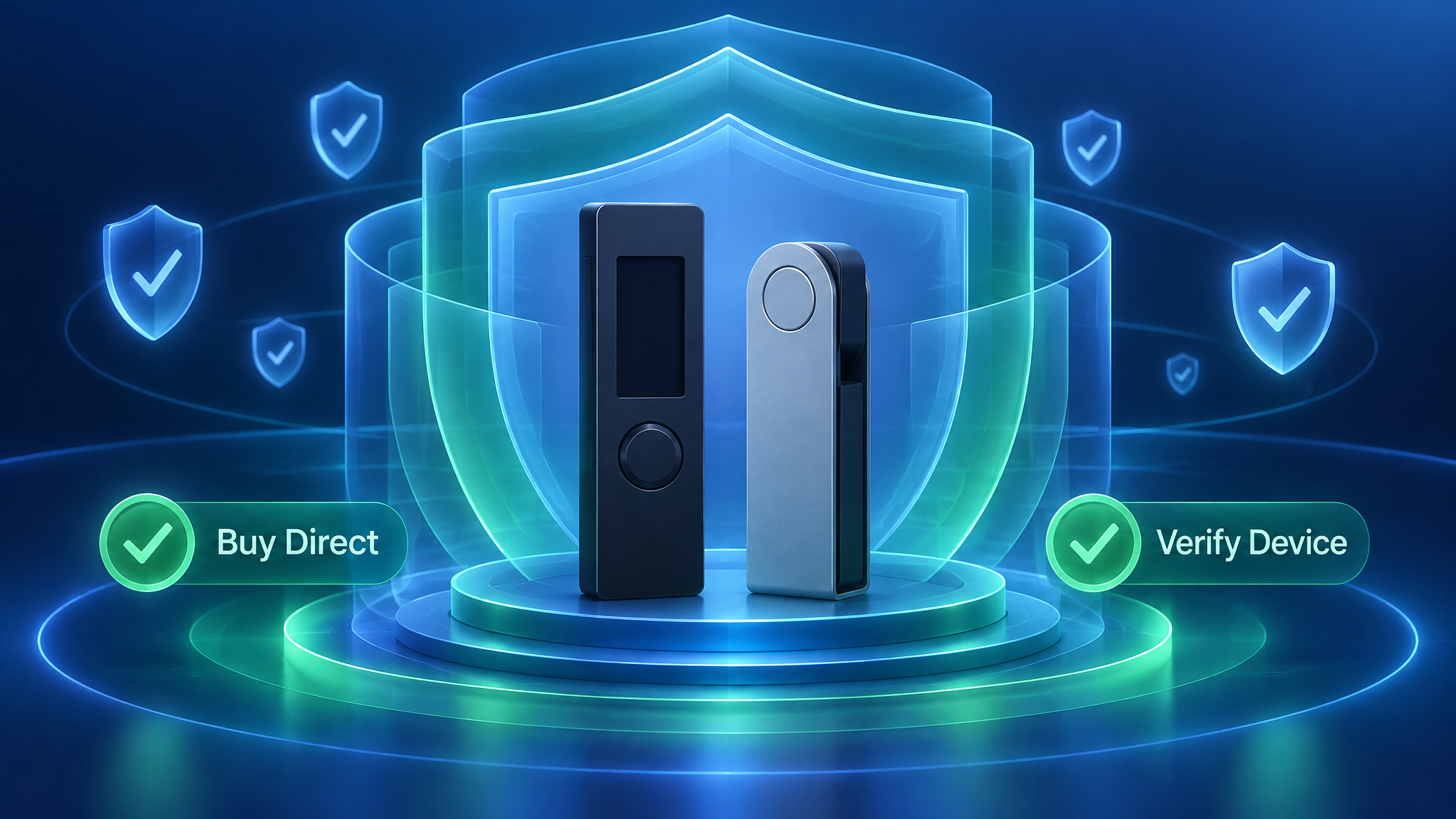
Ledger has confirmed the breach is contained to CryptoBilis's distribution chain. If you purchased directly from Ledger's official website (ledger.com) or from a major authorized retailer in North America or Europe, your device is almost certainly unaffected.
However, if there's any doubt about your device's provenance, treat it as potentially compromised. Here's Ledger's official guidance:
- Unused devices from CryptoBilis: Do not set them up. Do not enter a recovery phrase. Contact Ledger support immediately.
- Already set up via a CryptoBilis device: Move your assets to a new wallet generated on a device sourced directly from Ledger, using a completely new recovery seed. Do this before doing anything else.
- Unsure of your device's source: Err on the side of caution. Generate a new seed on a verified device and transfer assets.
One critical warning: Ledger will never contact you by phone, DM, or email asking for your 24-word recovery phrase. If anyone reaches out claiming to help you "recover" funds or "verify" your device, it's a scam. The breach has already spawned secondary phishing campaigns targeting affected users.
What Ledger Is Doing About It
Ledger has moved quickly since the breach became public. The company has:
- Requested that all resellers in Southeast Asia and Hong Kong pause sales and pull inventory pending investigation
- Confirmed that CryptoBilis has ceased all hardware wallet sales
- Issued a public security advisory with step-by-step guidance for potentially affected users
- Engaged law enforcement in multiple jurisdictions
- Announced an accelerated review of its reseller vetting and supply chain monitoring processes
The company has not yet announced a compensation fund for affected users, which has drawn criticism from the community. Given that Ledger's authorized reseller network is how many users in Asia access the product, questions about liability and due diligence are likely to follow.
The Broader Lesson: Hardware Wallet Security Isn't Just About the Device
This breach exposes a gap in how most people think about hardware wallet security. The device is only as trustworthy as the supply chain that delivered it. A few principles worth internalizing:
Always buy direct when possible. Ledger.com and Trezor.io ship directly to most countries. The price premium over third-party resellers is worth the supply chain certainty.
Inspect your device on arrival. Check for signs of tampering — broken seals, unusual weight, loose components. Ledger devices come with tamper-evident packaging; if the seal is broken or looks resealed, don't use it.
Never enter your seed phrase on a device you didn't buy from a verified source. This sounds obvious in hindsight, but the CryptoBilis devices looked and functioned exactly like legitimate Ledger hardware.
Consider diversifying your cold storage. Keeping all your assets on a single hardware wallet from a single manufacturer concentrates your supply chain risk. Using two different hardware wallets from two different manufacturers — say, a Ledger and a Trezor — means a breach of one supply chain doesn't expose everything.
Speaking of which: if you're looking for a hardware wallet you can trust right now, the Trezor Model T offers top-tier security with an intuitive touchscreen interface and has been trusted by millions since 2014. Trezor's open-source firmware is another advantage — the entire codebase is publicly auditable, which makes supply chain attacks harder to conceal.
What This Means for the Hardware Wallet Market
The short-term impact on Ledger's reputation is significant. The company has faced security controversies before — most notably the 2020 customer data breach that exposed 272,000 users' personal information. But a physical supply chain attack resulting in $93 million in losses is a different category of incident.
Expect to see:
- Increased scrutiny of reseller networks across the hardware wallet industry, not just Ledger
- Demand for open-source hardware designs that allow independent verification of device components
- Growth in direct-to-consumer sales as users become wary of third-party distribution
- Regulatory attention on hardware wallet supply chains, particularly in the EU under MiCA's broader digital asset security framework
Trezor, Coldcard, and Foundation Devices (makers of the Passport wallet) have all seen increased interest following the news. Coldcard in particular has long emphasized its supply chain transparency, including publishing the bill of materials for its devices.
Protecting Yourself Going Forward
The Ledger breach is a reminder that crypto security is layered. No single tool or practice is sufficient on its own. Here's a practical framework:
- Source hardware wallets directly from manufacturers or major, verifiable retailers
- Use a passphrase (25th word) on top of your 24-word seed — even if an attacker captures your seed, the passphrase adds another layer they'd need to crack
- Distribute assets across multiple wallets and storage methods — don't put everything in one place
- Regularly verify your wallet's firmware version against the manufacturer's official release notes
- Stay informed — security incidents in crypto move fast; following reputable security researchers on social media can give you early warning
For those who want to deepen their understanding of crypto security and trading fundamentals, Ready to master crypto trading? Check out Icoinpro's comprehensive trading course — it covers security best practices alongside trading strategy, which is a combination most courses skip.
Key Takeaways
- Ledger devices sold by CryptoBilis in Southeast Asia contained hardware implants that stole 24-word recovery phrases during setup
- Losses are estimated at $86–$93 million across Bitcoin, Ethereum, and TRON
- The attack bypassed Ledger's Genuine Check by targeting the display layer, not the Secure Element
- If you bought a Ledger from CryptoBilis in the past 90 days, do not use it — move assets to a new wallet immediately
- Always buy hardware wallets directly from manufacturers; consider using two different brands for diversified cold storage
- Ledger's core infrastructure was not compromised; the breach is contained to the CryptoBilis supply chain
Understanding the market is step one. Profiting from it is step two.
Reading analysis is valuable, but knowing how to generate your own — and act on it with discipline — is where real results come from. That skill is trainable.
The program I recommend to people who ask me is this crypto trading course — it\'s the one I point friends and family to when they\'re serious about learning. Daily lessons, live analysis, and a community that actually helps.
Affiliate link — I may earn a commission at no extra cost to you. I only recommend what I genuinely use.
Disclaimer: The information provided on this website is for educational and informational purposes only. It should not be considered financial or investment advice. Cryptocurrency investments carry significant risk. Always do your own research and consult with a qualified financial advisor before making investment decisions.
Free Crypto Insights
Get weekly trading tips, market analysis, and exclusive strategies delivered to your inbox.