Clarity Act September 15 Vote: What Every Crypto Investor Needs to Know
Affiliate Disclosure: This article may contain affiliate links. We may earn a commission at no extra cost to you. All opinions are our own.
Marcus Chen
Senior Crypto Analyst & Educator
Certified Blockchain Professional | Former Wall Street Analyst
Marcus Chen is a cryptocurrency analyst and educator with over 8 years of experience in digital asset trading. He has helped thousands of beginners navigate the crypto markets through practical, actionable education.

Disclaimer: This content is for informational purposes only and should not be considered financial advice. Cryptocurrency investments carry significant risk. Always do your own research (DYOR) before making any investment decisions.
This article contains affiliate links. We may earn a commission at no extra cost to you if you make a purchase through these links. See our affiliate disclosure for details.
Clarity Act September 15 Vote: What Every Crypto Investor Needs to Know
The Clarity Act September 15 vote is shaping up to be the most consequential moment for U.S. crypto regulation in 2026. On that date, the Senate will hold a procedural cloture vote on the Digital Asset Market Clarity (CLARITY) Act — a bill that would fundamentally reshape how Bitcoin, Ethereum, and thousands of altcoins are regulated in America. Whether it passes or fails, the outcome will ripple through crypto markets for months. Here's what you need to understand before September 15 arrives.
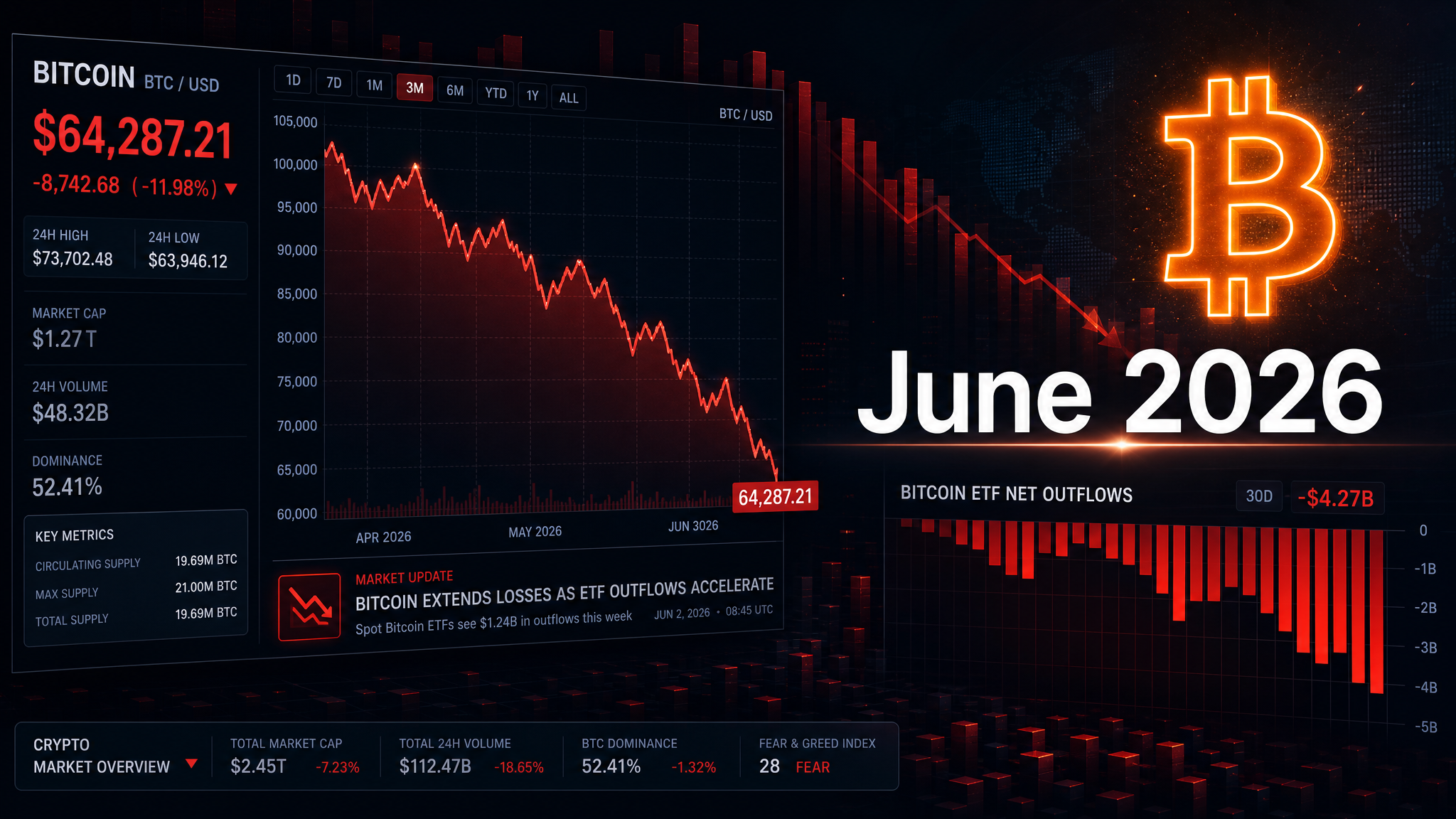
Bitcoin is trading around $78,300 today, down slightly from last week's $81K highs. Part of that pressure comes from macro headwinds — a stronger-than-expected August jobs report pushed back Fed rate-cut expectations. But the other part? Regulatory uncertainty. Markets hate ambiguity, and right now, the CLARITY Act is the biggest open question in U.S. crypto policy.
What Is the CLARITY Act and Why Does It Matter?
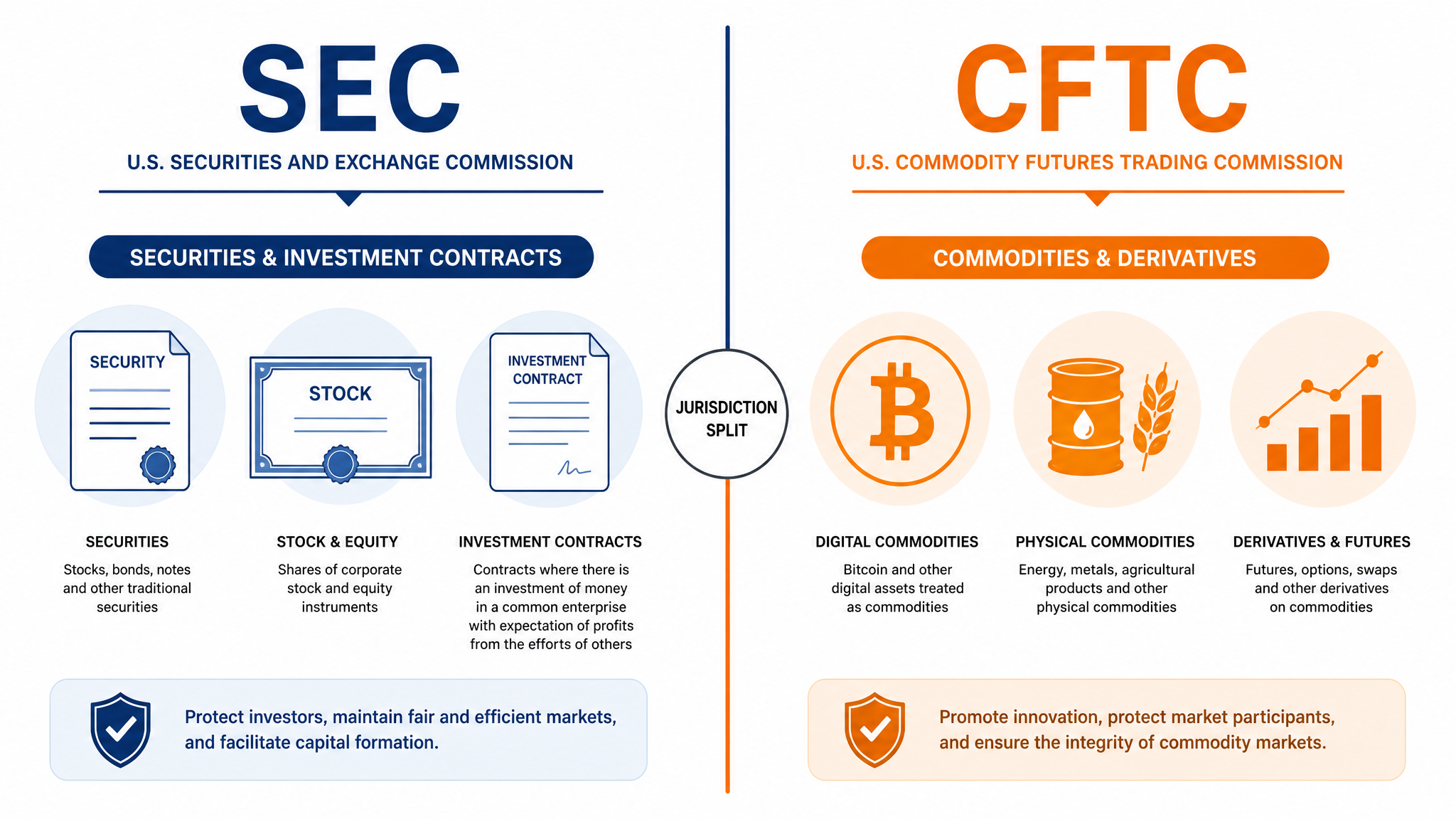
The Digital Asset Market Clarity Act (H.R. 3633) passed the House of Representatives in July 2025 by a 294-134 vote — a surprisingly bipartisan margin. The bill's core mission: draw a clear line between which crypto assets fall under SEC jurisdiction (securities) and which fall under CFTC oversight (commodities).
Right now, that line is blurry. The SEC has historically argued that most tokens are securities, while the CFTC has claimed Bitcoin and Ethereum as commodities. This jurisdictional tug-of-war has created a compliance nightmare for exchanges, developers, and investors alike. Projects can't raise capital without fear of an SEC enforcement action. Exchanges operate under constant legal threat. Institutional money sits on the sidelines.
The CLARITY Act would change that. Under the bill:
- Digital commodities (like Bitcoin and Ethereum) would fall under CFTC oversight for spot markets
- Digital assets that function as investment contracts would remain with the SEC
- A clear registration pathway would be established for crypto exchanges and token issuers
- Anti-money laundering (AML) requirements would be strengthened across the board
For a deeper understanding of Bitcoin's monetary foundations — which underpin much of this regulatory debate — The Bitcoin Standard by Saifedean Ammous remains essential reading for any serious crypto investor.
What Happens on September 15?
The 60-Vote Threshold Explained
The September 15 vote is not a final vote on the CLARITY Act itself. It's a cloture vote — a procedural motion to end debate and allow the Senate to formally consider the bill. To succeed, it needs 60 votes. That's the magic number to overcome a filibuster.
The Senate currently has 53 Republicans and 47 Democrats. Even with full Republican support (which isn't guaranteed), the bill needs at least 7 Democratic votes. That's a high bar. Several Democratic senators remain skeptical, particularly around ethics provisions that would restrict government officials from profiting on crypto holdings while in office — a provision that has bipartisan support in principle but contentious details in practice.
If 60 votes are secured, the Senate can begin formal floor debate. The bill still wouldn't be law — it would need to pass the full Senate, reconcile with the House version, and be signed by the President. But clearing cloture would signal that comprehensive crypto legislation is genuinely possible in 2026.
What a Failed Vote Means
A failure to reach 60 votes on September 15 would be a significant setback. The House has already canceled its voting sessions for the final two weeks of September, leaving almost no legislative runway before the midterm elections. Industry analysts and prediction markets are increasingly pricing in a failure — and the bill being shelved until at least 2027.
That's not necessarily catastrophic. The crypto industry has operated under regulatory uncertainty for years. But it does mean continued reliance on SEC and CFTC enforcement actions as de facto policy — a situation that favors established players with legal teams and hurts smaller projects and retail investors most.
The Four Sticking Points Blocking the Bill
The CLARITY Act has been in Senate limbo since passing the House over a year ago. Four issues keep derailing it:
1. Ethics and Conflicts of Interest
Senators want provisions preventing elected officials and their staff from profiting on crypto while in office. The debate isn't whether to include ethics rules — it's how strict they should be and whether they apply retroactively. This has become politically charged given the crypto holdings of several prominent government figures.
2. Stablecoin Rewards
Should crypto platforms be allowed to offer yield on stablecoin balances? Traditional banks say no — it's unfair competition with bank deposits. Crypto advocates say yes — it's a core feature of the technology. This single issue has held up the bill for months.
3. DeFi Regulation
Decentralized finance protocols present a unique challenge: who's responsible when there's no central operator? The bill's current language on DeFi is vague, and several senators want clearer AML requirements before they'll vote yes.
4. Jurisdictional Mechanics
Even the core SEC/CFTC split has unresolved details. How does an asset "graduate" from security to commodity status? What triggers that transition? The answers matter enormously for projects currently in regulatory gray zones.
How Bitcoin and Altcoins Could React
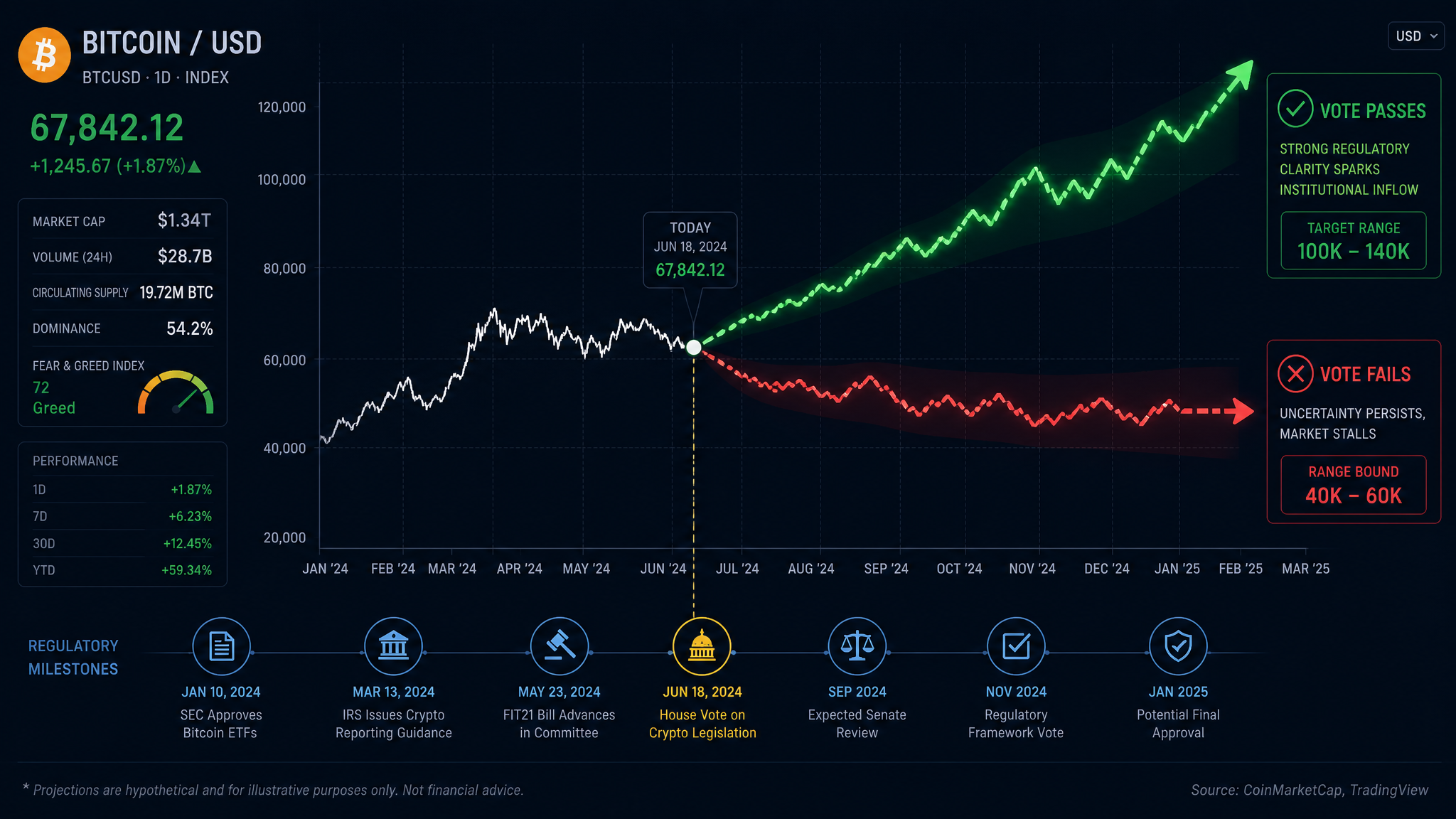
If the Vote Passes
A successful cloture vote would likely trigger a significant crypto rally. Markets have been pricing in regulatory uncertainty for months. Clarity — even just the prospect of it — tends to unlock institutional capital that's been sitting on the sidelines.
Bitcoin could push back toward $85K-$90K on the news. Altcoins with clear commodity characteristics (Ethereum, Solana, Avalanche) would likely outperform, as CFTC oversight is generally considered more favorable than SEC oversight. DeFi tokens could see mixed reactions depending on how the DeFi provisions are interpreted.
Spot Bitcoin ETF inflows — already running at $3.8 billion over the past three weeks — could accelerate sharply. BlackRock's IBIT alone captured $692 million in the first week of September. Regulatory clarity would give institutional allocators the green light to increase exposure.
If the Vote Fails
A failed cloture vote wouldn't necessarily crash markets — the outcome is already partially priced in. But it would remove a near-term catalyst and likely push Bitcoin back toward the $75K-$77K support range as risk-off sentiment takes hold.
The bigger impact would be on altcoins and DeFi. Projects that were hoping for regulatory clarity to launch U.S. operations or raise capital would face continued uncertainty. Some might accelerate offshore expansion. Others might pause development entirely.
Long-term, a failed vote shifts the regulatory landscape toward the SEC's "Regulation Crypto Assets" framework — the rules proposed on August 18, 2026, which include registration exemptions up to $75 million annually and a conditional safe harbor from securities classification. It's a workable framework, but it's the SEC's framework, not Congress's — and it can be reversed by the next administration.
The "Deregulation by Practice" Fallback
Here's something the headlines often miss: even if the CLARITY Act fails, the crypto industry isn't operating in the same hostile environment it faced in 2022-2024. The SEC and CFTC have both adopted significantly more accommodating postures under the current administration.
The SEC's proposed "Regulation Crypto Assets" framework — announced August 18, 2026 — offers two tiers of registration exemptions: one for offerings up to $5 million over four years, and another for offerings up to $75 million annually. There's also a conditional safe harbor that could allow assets to shed their securities classification once a project becomes sufficiently decentralized.
Coinbase's recent SEC filings to bring single-stock perpetual futures onshore — which sent COIN stock up 10% on September 3 — show that the regulatory environment is workable even without the CLARITY Act. The industry is adapting.
The risk? This "deregulation by practice" approach is fragile. It depends on the current administration's posture and can be reversed. Legislation would lock in protections that survive political cycles. That's why the September 15 vote still matters enormously, even if the immediate market impact of a failure is muted.
What Investors Should Do Right Now
Regulatory votes create volatility. Here's how to position yourself intelligently:
Don't make binary bets. The market has already partially priced in both outcomes. A pass doesn't guarantee a moon, and a fail doesn't guarantee a crash. Position sizing matters more than direction right now.
Watch the altcoin/Bitcoin ratio. If the vote passes, altcoins with commodity characteristics should outperform Bitcoin. If it fails, Bitcoin's relative strength tends to hold better than altcoins during regulatory uncertainty.
Keep your hardware wallet ready. Regulatory uncertainty sometimes triggers exchange outflows as investors move to self-custody. Protect your assets with a Ledger hardware wallet — the gold standard in cold storage security — so you're not dependent on any single platform's regulatory status.
Understand the macro context. The August jobs report (162,000 new jobs) pushed back Fed rate-cut expectations. That's a headwind for risk assets regardless of the regulatory outcome. Don't let the CLARITY Act vote distract from the broader macro picture.
Build your knowledge base. Regulatory cycles reward investors who understand the fundamentals. Want to master how to trade through volatile regulatory periods? Explore Icoinpro's daily trading signals and education platform — structured training that helps you make sense of market-moving events like this one.
Key Takeaways
- September 15 is a cloture vote, not a final vote — it needs 60 Senate votes to proceed to formal debate
- The bill faces four major sticking points: ethics rules, stablecoin rewards, DeFi regulation, and jurisdictional mechanics
- A pass would likely rally crypto markets, particularly altcoins with commodity characteristics; Bitcoin could push toward $85K-$90K
- A fail would remove a near-term catalyst but isn't catastrophic — the SEC's "Regulation Crypto Assets" framework provides a workable fallback
- Bitcoin ETF inflows remain strong at $3.8 billion over three weeks, showing institutional demand persists regardless of the legislative outcome
- The "deregulation by practice" environment is real but fragile — legislation would provide durable protections that survive political cycles
- Position for volatility, not a binary outcome — watch the altcoin/Bitcoin ratio as the key signal
The September 15 vote is a moment of genuine consequence for U.S. crypto markets. Whether it passes or fails, understanding what's at stake puts you ahead of the majority of retail investors who'll be reacting to headlines without context. Stay informed, stay positioned, and don't let short-term volatility shake you out of a long-term thesis.
Understanding the market is step one. Profiting from it is step two.
Reading analysis is valuable, but knowing how to generate your own — and act on it with discipline — is where real results come from. That skill is trainable.
The program I recommend to people who ask me is this crypto trading course — it\'s the one I point friends and family to when they\'re serious about learning. Daily lessons, live analysis, and a community that actually helps.
Affiliate link — I may earn a commission at no extra cost to you. I only recommend what I genuinely use.
Disclaimer: The information provided on this website is for educational and informational purposes only. It should not be considered financial or investment advice. Cryptocurrency investments carry significant risk. Always do your own research and consult with a qualified financial advisor before making investment decisions.
Free Crypto Insights
Get weekly trading tips, market analysis, and exclusive strategies delivered to your inbox.