SEC Regulation Crypto 2026: What the $75M Token Exemption and Safe Harbor Mean for Your Portfolio
Affiliate Disclosure: This article may contain affiliate links. We may earn a commission at no extra cost to you. All opinions are our own.
Marcus Chen
Senior Crypto Analyst & Educator
Certified Blockchain Professional | Former Wall Street Analyst
Marcus Chen is a cryptocurrency analyst and educator with over 8 years of experience in digital asset trading. He has helped thousands of beginners navigate the crypto markets through practical, actionable education.

SEC Regulation Crypto 2026: What the $75M Token Exemption and Safe Harbor Mean for Your Portfolio
The SEC's Regulation Crypto framework — formally unveiled in July 2026 — is the most significant shift in U.S. crypto securities law since the agency's first Bitcoin ETF approval. Three new exemption pathways now give token projects a legal route to raise capital, operate, and eventually exit securities classification altogether. If you hold altcoins, invest in early-stage crypto projects, or simply want to understand where U.S. regulation is heading, this changes the calculus.
Why Regulation Crypto Matters Right Now
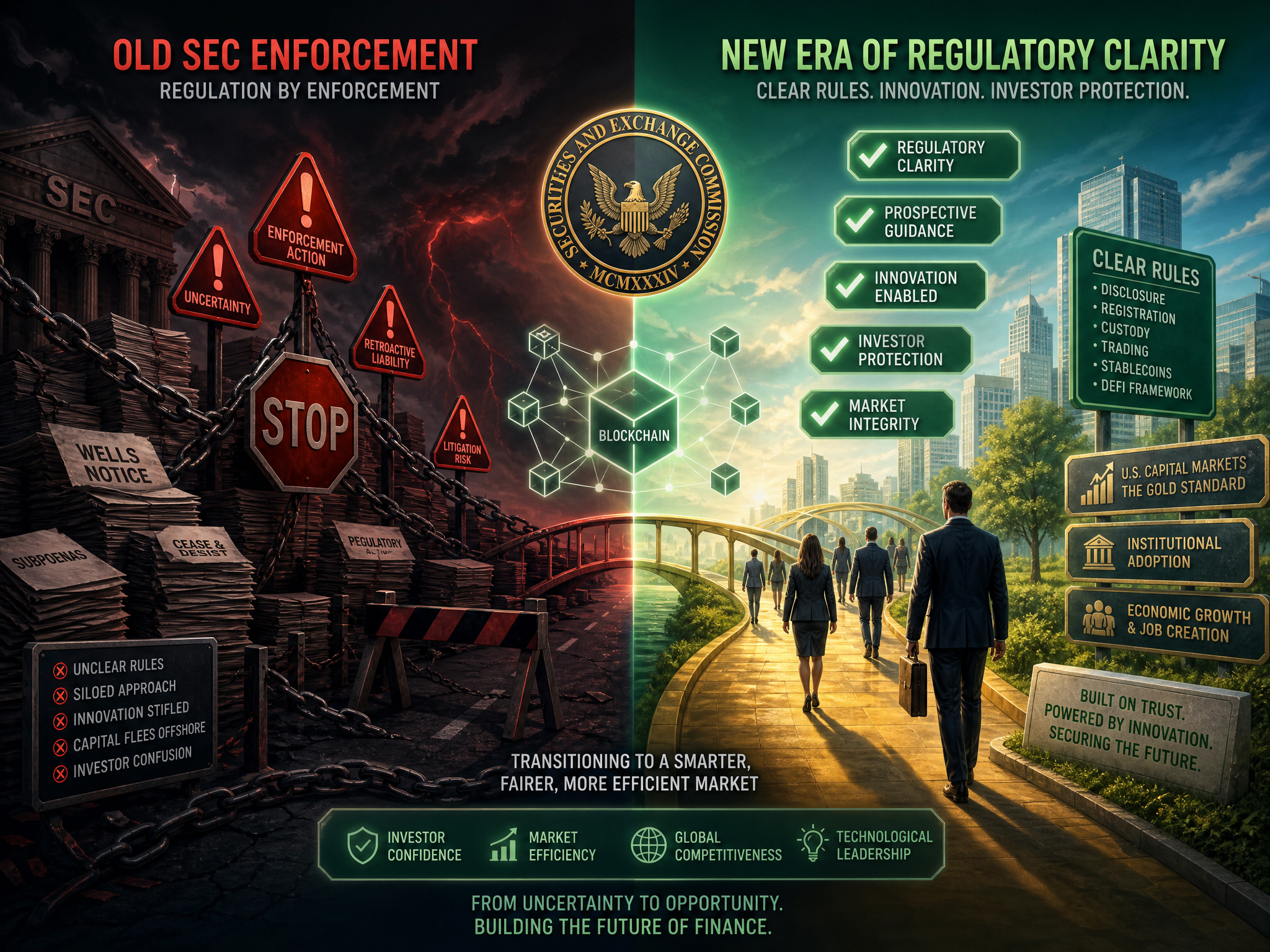
For years, the SEC's approach to crypto was simple: sue first, clarify later. That era is ending. The agency has now proposed a formal rulebook — "Regulation Crypto" — that creates structured, conditional exemptions for token issuers. It's currently under White House OIRA review, which is the mandatory step before a public comment period begins.
The timing is deliberate. The CLARITY Act — the legislative alternative — is stalled in the Senate, facing a 60-vote threshold and bipartisan gridlock over ethics provisions. If Congress doesn't act before the August 7 recess, Regulation Crypto becomes the default framework for U.S. crypto capital formation. The SEC isn't waiting.
Here's the key distinction that matters for investors: formal SEC rules, once finalized through notice-and-comment procedures, are far harder for future administrations to reverse than staff guidance or no-action letters. This isn't a memo. It's a rulebook.
The Three Exemption Pathways Explained
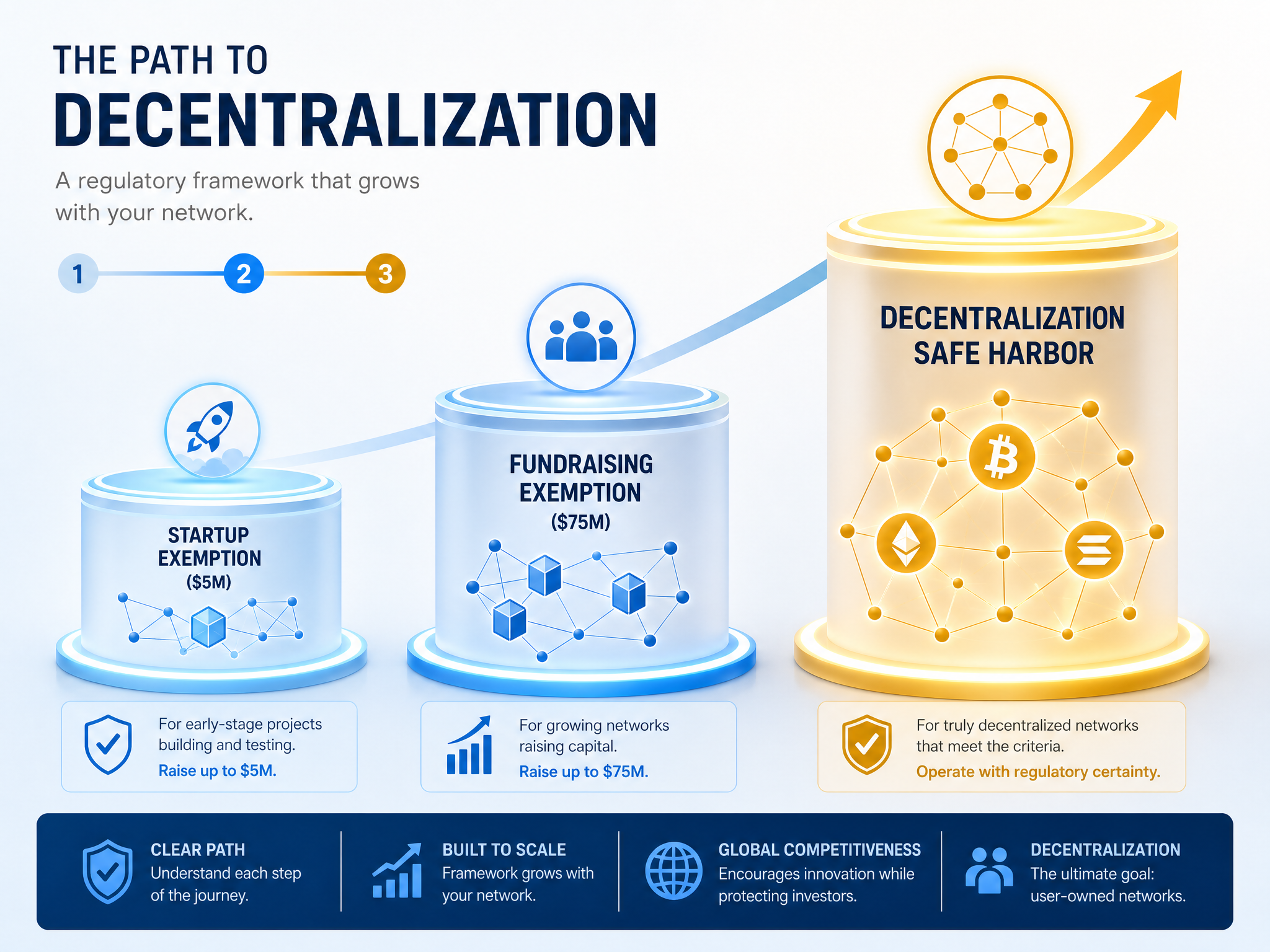
1. The Startup Exemption (Up to $5M, 4-Year Window)
Early-stage projects get the most breathing room. Under this pathway, a token issuer can raise up to $5 million over a four-year period without full securities registration. The disclosure requirements are simplified — think white-paper-style documentation rather than a full S-1 filing.
This is a genuine lifeline for legitimate projects that previously had two options: register as a security (expensive, slow, and often impractical for decentralized protocols) or operate in a legal gray zone and hope the SEC didn't notice. Now there's a third path.
The catch? Fail to meet disclosure obligations, misrepresent material facts, or exceed the cap, and the safe harbor evaporates. Full enforcement under securities law kicks in immediately.
2. The Fundraising Exemption (Up to $75M Per Year)
More established projects get a bigger runway. The fundraising exemption allows issuers to raise up to $75 million within any 12-month period, provided they submit audited financial statements and semi-annual reporting. The framework mirrors Regulation A+ — a well-understood structure that traditional finance already uses for smaller public offerings.
For context: $75 million is a meaningful number. Most mid-tier token launches in 2025–2026 raised between $20M and $60M. This exemption would have covered the majority of them legally, had it existed earlier.
The semi-annual reporting requirement is worth noting. It's not onerous by traditional standards, but it does mean projects need actual financial infrastructure — auditors, legal counsel, and a compliance function. Fly-by-night operations won't qualify.
3. The Decentralization Safe Harbor (The "Off-Ramp")
This is the most philosophically interesting piece of the framework. The investment-contract safe harbor provides a rules-based mechanism for tokens to exit securities classification once the issuer has permanently ceased all essential managerial efforts.
In plain English: if a project becomes genuinely decentralized — no team controlling upgrades, no central entity driving value — the token can stop being treated as a security. The issuer must meet specific criteria to demonstrate this transition, but the pathway now exists in writing.
This matters enormously for DeFi protocols. Ethereum itself went through this transition informally; the SEC eventually acknowledged it wasn't a security. Regulation Crypto would codify that process, giving future protocols a defined checklist rather than a years-long regulatory guessing game.
What This Means for Bitcoin and the Broader Market
Bitcoin isn't directly affected — it's already been treated as a commodity by both the SEC and CFTC. But the ripple effects are significant.
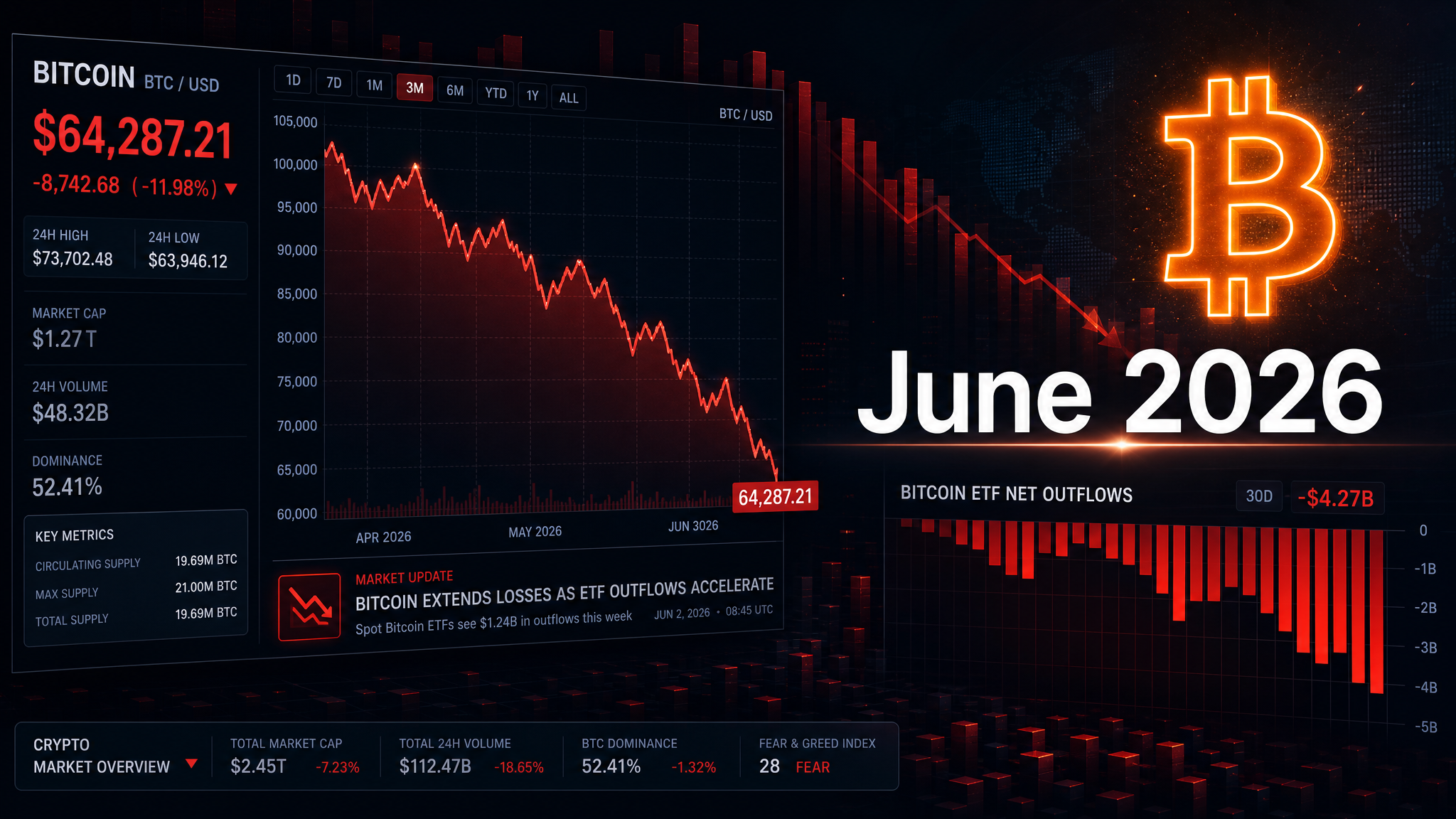
First, regulatory clarity tends to unlock institutional capital. The current environment — where Bitcoin ETFs have seen roughly $6 billion in year-to-date net outflows and the Coinbase Bitcoin Premium Index sat negative for a record 60 consecutive days through mid-July — reflects institutional hesitation, not institutional abandonment. Clear rules reduce the compliance risk that keeps large allocators on the sidelines.
Second, the altcoin market stands to benefit most directly. Projects that previously couldn't raise capital in the U.S. without legal exposure now have a structured path. That could accelerate development timelines, attract U.S.-based venture capital, and ultimately drive on-chain activity.
Third, the decentralization safe harbor creates a new category of "graduated" tokens — assets that started as securities and legally transitioned out. How markets price that transition will be fascinating to watch.
Want to understand the economics behind these regulatory shifts? The Bitcoin Standard provides essential context on why monetary policy and regulatory frameworks shape crypto markets at a fundamental level.
The CLARITY Act vs. Regulation Crypto: What's the Difference?
Both frameworks aim to define the SEC/CFTC jurisdictional split and create legal pathways for token issuers. But they differ in important ways.
The CLARITY Act is a statute — passed by Congress, signed by the President, and extremely difficult to reverse. It would also explicitly define which tokens are commodities (CFTC jurisdiction) versus securities (SEC jurisdiction), a question Regulation Crypto doesn't fully resolve.
Regulation Crypto is agency rulemaking. It's durable — more so than guidance — but still subject to legal challenge. Notably, the SEC hasn't yet formally identified the specific statutory authority for the "Crypto Assets" proposal on government registry sites, which legal analysts say could invite future court challenges.
The practical outcome for investors: if both pass, they're complementary. If only Regulation Crypto passes, it's a meaningful step forward but leaves jurisdictional ambiguity intact. If neither passes — unlikely given the SEC's momentum — the status quo continues.
State-Level Developments: California's New Licensing Regime
Federal action isn't the only regulatory story. California's new crypto licensing requirements took effect July 1, 2026, requiring businesses engaging in digital asset activities with state residents to obtain a license from the Department of Financial Protection and Innovation (DFPI).
California represents roughly 15% of U.S. GDP. A licensing requirement there effectively functions as a national standard for any company that wants to serve American users. Expect compliance costs to rise for smaller exchanges and wallet providers — and expect consolidation among platforms that can't absorb those costs.
How to Position Your Portfolio
Regulatory clarity is a long-term tailwind, not a short-term catalyst. Here's how to think about it:
- Layer-1 protocols with genuine decentralization benefit most from the safe harbor. Projects that can credibly demonstrate decentralization gain a path to commodity classification — historically a more favorable regulatory treatment.
- DeFi infrastructure tokens — particularly those with real on-chain revenue — are better positioned than speculative assets. The fundraising exemption rewards projects with actual financial infrastructure.
- U.S.-based exchanges and custodians face higher compliance costs short-term but gain competitive moats long-term. Regulated entities become the preferred counterparties for institutional capital.
- Early-stage token investments become more accessible to U.S. investors under the startup exemption. This could revive the domestic token launch market, which largely moved offshore after 2018.
Whatever your strategy, protecting your assets starts with security. Serious about keeping your crypto safe while navigating this evolving landscape? The Ledger Nano X keeps your private keys offline and safe — essential when regulatory uncertainty can trigger market volatility.
The Risks and Criticisms
Not everyone is celebrating. Consumer advocates and some lawmakers argue that the exemptions weaken investor protections compared to full registration. The concern is legitimate: a project raising $75M with semi-annual reporting has significantly less disclosure burden than a traditional IPO.
There's also the enforcement question. The SEC's track record on crypto enforcement has been aggressive. Whether the agency will apply the new exemptions generously or use technical violations as pretexts for enforcement actions remains to be seen. The rules are only as good as their consistent application.
Finally, the OIRA review process adds uncertainty. "Economically significant" rulemakings can take months to clear. The public comment period hasn't started yet. Final rules could look meaningfully different from the current proposal.
Actionable Takeaways
- The SEC's Regulation Crypto framework creates three legal pathways for token issuers: a $5M startup exemption, a $75M fundraising exemption, and a decentralization safe harbor.
- These rules are more durable than guidance but less certain than legislation — and they're currently under OIRA review before a public comment period begins.
- The CLARITY Act remains stalled; if it fails before the August recess, Regulation Crypto becomes the default U.S. framework.
- Regulatory clarity is a long-term tailwind for institutional adoption, DeFi infrastructure, and U.S.-based token launches.
- California's new licensing regime adds state-level compliance costs that will accelerate platform consolidation.
- Position toward genuinely decentralized protocols, real-revenue DeFi, and regulated custodians — and stay patient. This plays out over quarters, not days.
Ready to master the trading strategies that work in regulated markets? Explore Icoinpro's daily trading signals and education platform — built for investors who want to trade smarter as the regulatory landscape evolves.
About the Author
Marcus Chen is a Senior Crypto Analyst & Educator with 8+ years of experience in digital asset markets. A Certified Blockchain Professional and Former Wall Street Analyst, Marcus has guided thousands of investors through crypto market cycles, regulatory shifts, and DeFi strategy. His analysis focuses on actionable insights grounded in on-chain data and macroeconomic context.
Understanding the market is step one. Profiting from it is step two.
Reading analysis is valuable, but knowing how to generate your own — and act on it with discipline — is where real results come from. That skill is trainable.
The program I recommend to people who ask me is this crypto trading course — it\'s the one I point friends and family to when they\'re serious about learning. Daily lessons, live analysis, and a community that actually helps.
Affiliate link — I may earn a commission at no extra cost to you. I only recommend what I genuinely use.
Disclaimer: The information provided on this website is for educational and informational purposes only. It should not be considered financial or investment advice. Cryptocurrency investments carry significant risk. Always do your own research and consult with a qualified financial advisor before making investment decisions.
Free Crypto Insights
Get weekly trading tips, market analysis, and exclusive strategies delivered to your inbox.