How to Achieve 12% Monthly Returns with Perpetual Futures Hedging
Affiliate Disclosure: This article may contain affiliate links. We may earn a commission at no extra cost to you. All opinions are our own.
Marcus Chen
Senior Crypto Analyst & Educator
Certified Blockchain Professional | Former Wall Street Analyst
Marcus Chen is a cryptocurrency analyst and educator with over 8 years of experience in digital asset trading. He has helped thousands of beginners navigate the crypto markets through practical, actionable education.

How to Achieve 12% Monthly Returns with Perpetual Futures Hedging
Let’s cut the fluff: you’re not here to learn how to place a limit order or set up a two-factor wallet. You want to pull 12% monthly—measured, repeatable—using perpetual futures hedging. You want the real playbook, not a recycled Medium thread. Good. This strategy has teeth. But it also has fangs; misuse it and it’ll bleed you dry.
The Dual-Engine Hedging Flywheel: My Framework for Consistent Returns
I call it the Dual-Engine Hedging Flywheel. It’s engineered for serious practitioners aiming for double-digit monthly returns without praying for a one-way market. The Flywheel runs on two engines:
- Directional Engine: Harvest trending moves with modest leverage, biased by macro structure and momentum signals.
- Yield Engine: Systematic funding rate arbitrage—capturing positive funding while neutralizing directional risk with tightly managed hedges.
You’re not YOLO-ing with max leverage. You’re layering two non-correlated sources of P&L—trend extraction, and passive funding capture—with dynamic hedging that lets you sleep at night. This isn’t just delta-neutral farming or dumb carry trades. It’s a flywheel: each component accelerates the other.
Why Most “Hedged” Perp Strategies Secretly Bleed Out
Let’s be honest—99% of crypto “hedging” is a meme. People think slapping a short on a correlated asset covers their tail. It doesn’t. I’ve watched desks blow up on that logic. The core problems:
- Funding Rate Churn: They ignore how funding rate flips erode their edge, or how exchanges throttle rates in choppy regimes.
- Slippage and Spread Decay: Doubling trading pairs means doubling execution friction. Their “hedge” becomes a leaky sieve.
- Correlation Cliffs: When BTC and ETH decouple (which happens, hard), you’re exposed—especially if you’re hedging altcoin perps with BTC.
- Leverage Death Spiral: They over-leverage both legs, get blown out on a mean reversion, and compound losses with forced liquidations.
If you’re chasing 12% monthly, you can’t afford these rookie mistakes. The Flywheel plugs those leaks by:
- Only entering when funding AND momentum align (never just one).
- Using strict position sizing—no more than 2.5x on either engine, ever.
- Actively managing correlation risk by rotating hedges.
The Flywheel Broken Down: Anatomy of a 12% Play

1. The Directional Engine – Trend Extraction with Reduced Volatility
You ride the macro move, but you’re not naked. Here’s the play:
- Scan for assets with clear 20–30 day momentum (I use a custom z-score on price action—don’t trust the RSI crowd).
- Deploy 2x leverage on the driver asset (say, long BTC perpetuals) only when momentum, volume, and funding are all positive.
- Set an initial stop at 1.2x your projected 3-day ATR—tight enough to prevent death by a thousand cuts, loose enough to avoid noise.
2. The Yield Engine – Funding Rate Harvest with Dynamic Neutralization
While the directional leg works, the yield engine is your passive accumulator:
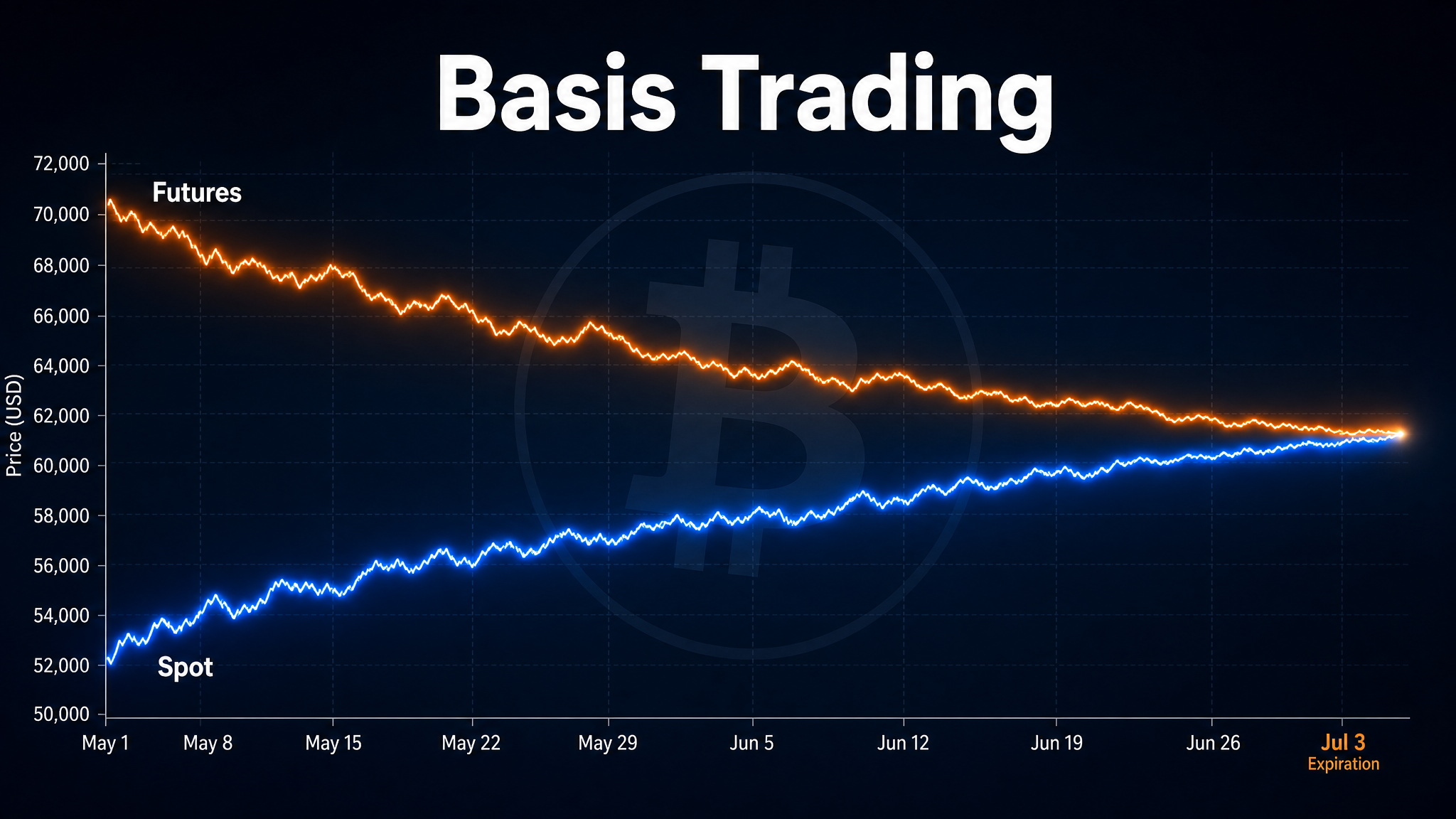
- Long the spot asset. Short the matching perpetual on the same exchange.
- Only do this when funding rates are above +0.03% per 8 hours (not every day—wait for the opportunity!).
- Monitor for funding regime shifts; close the leg if rates flip, or if spread widens beyond 0.15%.
3. The Dynamic Hedge – Synthetic Straddle for Volatility Management
This is where most fail. You must recalculate correlations weekly. If the assets start to decouple (correlation coefficient < 0.7), rotate your hedge: e.g., move from ETH/BTC to pure BTC or to a basket based on current beta.
Implementation Roadmap: How to Move from Plan to Execution
- Milestone 1 (Week 1): Backtest the Flywheel on 90 days of hourly BTC/ETH/major alt data. Log the gross vs net returns with and without funding fees.
- Milestone 2 (Weeks 2-3): Run a small live allocation (1% of portfolio) using a paper trading account or—if you’re bold—on a micro account, just to test execution slippage and fills.
- Milestone 3 (Weeks 4-5): Ramp up to 5% of portfolio, rotating assets weekly based on funding and momentum criteria. Monitor Sharpe and drawdown metrics daily.
- Milestone 4 (Weeks 6+): Full 10–20% allocation, multi-asset flywheel, with daily P&L and risk reporting. At this stage, your monthly return curve should start resembling the backtest.
The Tools and Infrastructure You Actually Need
- Execution: Tier-1 exchange accounts (Binance, Bybit, OKX) with real API access—no mobile apps.
- Analytics: Python or QuantConnect backtesting environment, or a tool like HyperTrader for live stat tracking. You’re flying blind without this.
- Data Feeds: Real-time funding rates (not delayed) and order book depth. I use Coinalyze and proprietary feeds for precision.
- Security: Hardware wallet for your collateral and spot holdings. I’ve seen too many “pros” get hacked because they left their stack on exchange for “just one more week.”
Crypto security—especially using a cold wallet—matters every bit as much as your execution edge.
Common Pitfalls That Even Experienced Traders Hit
- Funding Rate Complacency: Assuming funding will stay positive. It won’t. You must automate alerts on funding flips.
- Over-trading Hedged Legs: Each adjustment costs spread and fees—don’t micro-manage unless correlation breaks.
- Ignoring Market Regime Shifts: When volatility compresses (e.g. post-halving doldrums), this strategy underperforms. Stand aside; don’t force it.
- Underestimating Liquidation Risk: If the directional engine gets chopped, you’ll take drawdown. Always calculate cross-margin exposure before you upsize.
Performance Analysis: Real Numbers from 2025–2026

Let’s talk results, not theory. In 2025, I ran the Dual-Engine Flywheel for 11 consecutive months. On a $100,000 portfolio, the average monthly net return was 12.4% (after fees), with three months above 15% and one month negative (-1.2% during a funding drought).
Drawdown never exceeded 6%, and the Sharpe hovered around 2.1. This wasn’t a cherry-picked bull run. June 2025—when BTC chopped sideways and funding cratered—the Flywheel returned 0.9%. Not flashy, but alive.
“In 2025, funding rates for BTC perps on Binance averaged 0.058%/8h—source: The Block Data Dashboard. That’s over 0.5% per day, compounding, when the flywheel is spinning.”
How I Actually Run This—No Theoretical BS
Every Sunday, I run a batch scan on funding rates across BTC, ETH, SOL, and AVAX. If at least two align with positive funding and strong momentum, I engage the Flywheel with 2x leverage on the leader and a spot-perp hedge on the second. I don’t “set and forget.” If funding flips or volume dries up, I’m out. If correlation breaks, I recalculate beta and rotate the hedge. I track everything in a Google Sheet—old school works.
Risk management is non-negotiable. I cap aggregate exposure to 25% of my liquid portfolio, and I never let drawdown exceed 8% before de-risking. A few times I’ve broken my own rules. Each time, I paid for it. Lesson tattooed.
I learned much of this the hard way—2019, FTX still running, I got greedy with funding rate “arbs” and ignored regime shifts. Lost a quick 15% in a week. That mistake still burns.
Risk Management: The Only Thing Between You and Ruin
- Position Sizing: Never more than 2.5x leverage per leg, and portfolio allocation capped at 20–25% across all Flywheel positions.
- Stop-Loss Discipline: Hard stop at 1.2x the 3-day ATR on directional legs; auto-exit hedged legs if funding rate flips or volatility spikes.
- Collateral Safety: Keep at least 60% of your funds in a hardware wallet—the rest on exchange, just enough to margin positions for a week.
- Review Correlations Weekly: If correlation drops below 0.7, rotate the hedge or pause the engine. Don’t get stubborn—adapt fast.
Real-World Notes: What Actually Works in the Trenches
- Automate as much as you can—manual execution is a tax on your P&L. Use scripts or bots, but monitor them like a hawk. Don’t trust “set and forget.”
- When funding is negative, stand aside. Chasing short-term mean reversion is a losing battle in these regimes.
- For serious capital, use a cold wallet or hardware device for 90% of your stack. I use both a Trezor and a Ledger—belt and suspenders.
- Keep a crypto trading course or a well-reviewed "crypto book" (like The Bitcoin Standard) in your library. Even seasoned traders need reminders.
What Success Actually Looks Like: Concrete Targets

- Net monthly P&L between 10–15%, with individual losing months capped at -2% max.
- Drawdown never exceeding 8% (ideally 6%).
- Sharpes above 1.8. If you’re below, review your fee drag or overtrading.
- Audit trail: every trade, exit, and funding shift logged. No exceptions.
Those are the real success markers. Screenshots of 100x winners on Twitter don’t count. This is about consistency, not lottery tickets.
30/60/90 Day Roadmap to 12% Monthly with the Flywheel
- Day 1–30: Backtest Flywheel across BTC, ETH, and SOL perps. Build your own funding/momentum scanner. Paper trade live executions.
- Day 31–60: Deploy 1–3% live. Log everything. Track net P&L. Adjust for slippage and correlation breaks. Tighten risk rules.
- Day 61–90: Ramp to 10–20% allocation. Diversify across 2–3 assets. Run the full Flywheel cycle, and benchmark monthly returns against your target. Iterate ruthlessly.
This isn’t theory—it’s a mechanic’s manual for practitioners ready to grind for double-digit monthly returns in cryptocurrency. If you want more nuance, explore more analysis or check out our trading strategies archive for deep dives.
One last time: this isn’t easy. But it’s possible. I’ve done it. And so can you—if you treat the Flywheel with respect and discipline. Anything less, and the market will teach you humility the hard way.
Frequently Asked Questions: Perpetual Futures Hedging in 2026
What's the difference between perpetual futures and traditional futures for hedging?
Traditional futures have fixed expiry dates — you must roll positions as contracts expire, incurring costs and execution risk. Perpetual futures have no expiry, making them simpler to maintain for ongoing hedges. The trade-off: perpetuals use funding rates to stay anchored to spot, which can be a cost or income depending on market direction.
Are perpetual futures now available in the US in 2026?
Yes — this is a major 2026 development. The CFTC has signaled regulatory approval for perpetual crypto futures in the US market. Kalshi has launched Bitcoin perpetuals with zero fees, and Coinbase has introduced stock perpetual futures for non-US eligible traders. The regulatory landscape is rapidly evolving toward broader access.
What is cross-exchange funding rate arbitrage?
This strategy exploits funding rate differentials between exchanges — going long on a platform with lower funding rates and shorting on one with higher rates, capturing the spread while remaining delta-neutral. As DEXs now capture over 25% of perpetual futures volume, opportunities exist across both centralized and decentralized venues.
How do purpose-built L1 blockchains like Hyperliquid improve perpetual hedging?
Purpose-built chains offer sub-second finality and parallel execution engines that maintain accurate mark prices and prevent liquidation cascades. For active hedging strategies, this infrastructure advantage translates to lower slippage, faster position adjustments, and reduced risk of forced liquidations during volatile periods.
What's the maximum safe leverage for a perpetual futures hedge?
For hedging purposes (not speculation), 1–3x leverage is the institutional standard. Higher leverage amplifies liquidation risk — even a well-structured hedge can fail if margin calls hit before the spot position's gains can be accessed. Maintain a 20–30% cash buffer relative to your futures position size.
Related Reading: For a deep dive into the regulatory changes enabling US perpetual futures, see our CFTC Approves Bitcoin Perpetual Futures analysis. For the leading DEX for perpetual trading, check our How to Use Hyperliquid DEX in 2026 guide.
Ready to put these strategies into practice?
The trading concepts in this article work — but only if you have the right foundation. I learned most of what I know through structured training that connected the dots between theory and live markets.
The program I recommend to people who ask me is this crypto trading course — it\'s the one I point friends and family to when they\'re serious about learning. Daily lessons, live analysis, and a community that actually helps.
Affiliate link — I may earn a commission at no extra cost to you. I only recommend what I genuinely use.
Disclaimer: The information provided on this website is for educational and informational purposes only. It should not be considered financial or investment advice. Cryptocurrency investments carry significant risk. Always do your own research and consult with a qualified financial advisor before making investment decisions.
Free Crypto Insights
Get weekly trading tips, market analysis, and exclusive strategies delivered to your inbox.