How to Choose a Crypto Exchange in 2026: A Beginner's Complete Guide
Affiliate Disclosure: This article may contain affiliate links. We may earn a commission at no extra cost to you. All opinions are our own.
Marcus Chen
Senior Crypto Analyst & Educator
Certified Blockchain Professional | Former Wall Street Analyst
Marcus Chen is a cryptocurrency analyst and educator with over 8 years of experience in digital asset trading. He has helped thousands of beginners navigate the crypto markets through practical, actionable education.
How to Choose a Crypto Exchange in 2026: A Beginner's Complete Guide
Knowing how to choose a crypto exchange is the single most important decision you'll make as a new crypto investor. Pick the wrong platform and you're looking at hidden fees that eat your returns, clunky interfaces that cause costly mistakes, or — worst case — a security breach that wipes your holdings. The good news? In 2026, the exchange landscape has matured considerably. Regulated, user-friendly options exist for every type of beginner. This guide cuts through the noise and gives you a clear framework for making the right call.
Why Your Exchange Choice Matters More Than You Think
Most beginners treat exchange selection as an afterthought — they Google "buy Bitcoin," click the first result, and sign up. That's a mistake. Your exchange is your gateway to the entire crypto ecosystem. It determines what coins you can buy, how much you pay in fees, how safe your assets are, and how easy it is to actually use your crypto.
Here's a concrete example. Say you invest $1,000 in Bitcoin. On a platform charging 3.5% for instant purchases, you immediately lose $35 to fees. On an exchange with a 0.5% maker fee, that same trade costs $5. Over a year of regular investing, that difference compounds into hundreds of dollars. Fees alone can make or break your returns before the market even moves.
Security matters just as much. The Bitget hack of September 2026 — which saw $387 million drained — was a stark reminder that not all exchanges are built equal. Choosing a platform with robust cold storage, proof-of-reserves audits, and a clean security history isn't paranoia. It's basic due diligence.
The 5 Key Factors to Evaluate Before Signing Up
1. Regulatory Standing and Licensing
This is non-negotiable. In 2026, the regulatory environment has tightened significantly. The GENIUS Act in the US and the fully enforced MiCA framework in Europe mean that legitimate exchanges now operate under real legal oversight. That's actually good news for beginners — it means customer funds must be segregated from company assets, KYC requirements protect against fraud, and you have legal recourse if something goes wrong.
Before signing up anywhere, check whether the exchange holds a FinCEN registration (US), a MiCA CASP license (EU), or equivalent local authorization. Platforms operating without clear licensing are a red flag. They may disappear overnight, freeze withdrawals, or get shut down by regulators — leaving you scrambling.
2. Fee Structure (What You Actually Pay)
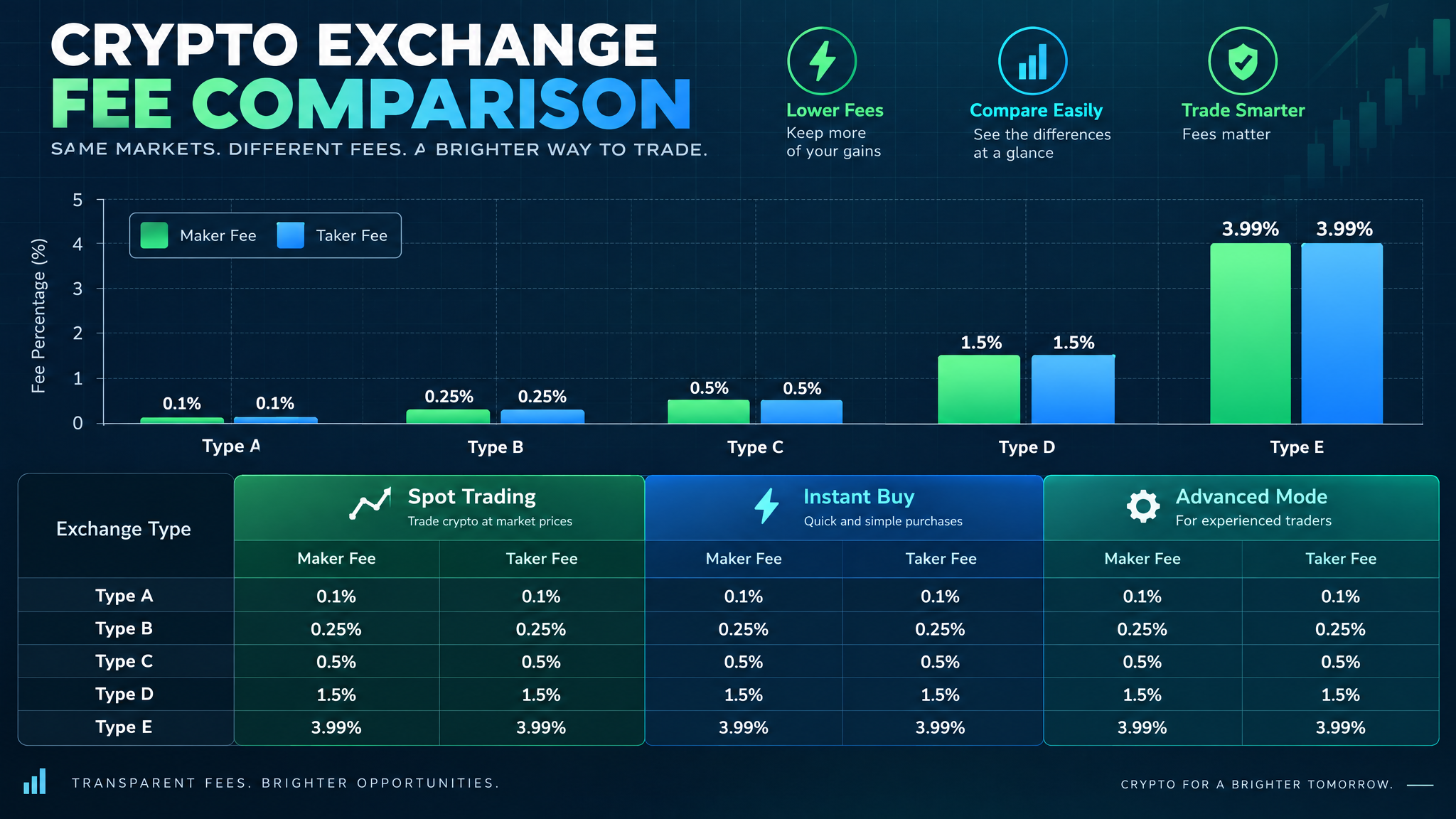
Exchange fees are sneaky. Most platforms advertise a low "trading fee" but bury the real cost in spreads, withdrawal fees, and conversion charges. Here's what you're actually paying:
- Instant Buy Fee: The "simple" buy button on most exchanges charges 1.5% to 3.99%. Convenient, but expensive.
- Maker/Taker Fee: If you use the advanced trading interface (limit orders), fees drop dramatically — often 0.1% to 0.6%. Worth learning.
- Spread: Some exchanges don't charge a visible fee but widen the bid-ask spread. You pay more than the market price without realizing it.
- Withdrawal Fee: Moving crypto off the exchange to your own wallet costs a network fee. These vary by coin and congestion.
The practical takeaway: always check the "Advanced Trade" or "Pro" interface on your chosen exchange. Coinbase Advanced Trade, for instance, charges 0% to 0.6% — a fraction of the 3.99% on the standard app. Spending 10 minutes learning the order book interface saves real money.
3. Security Track Record
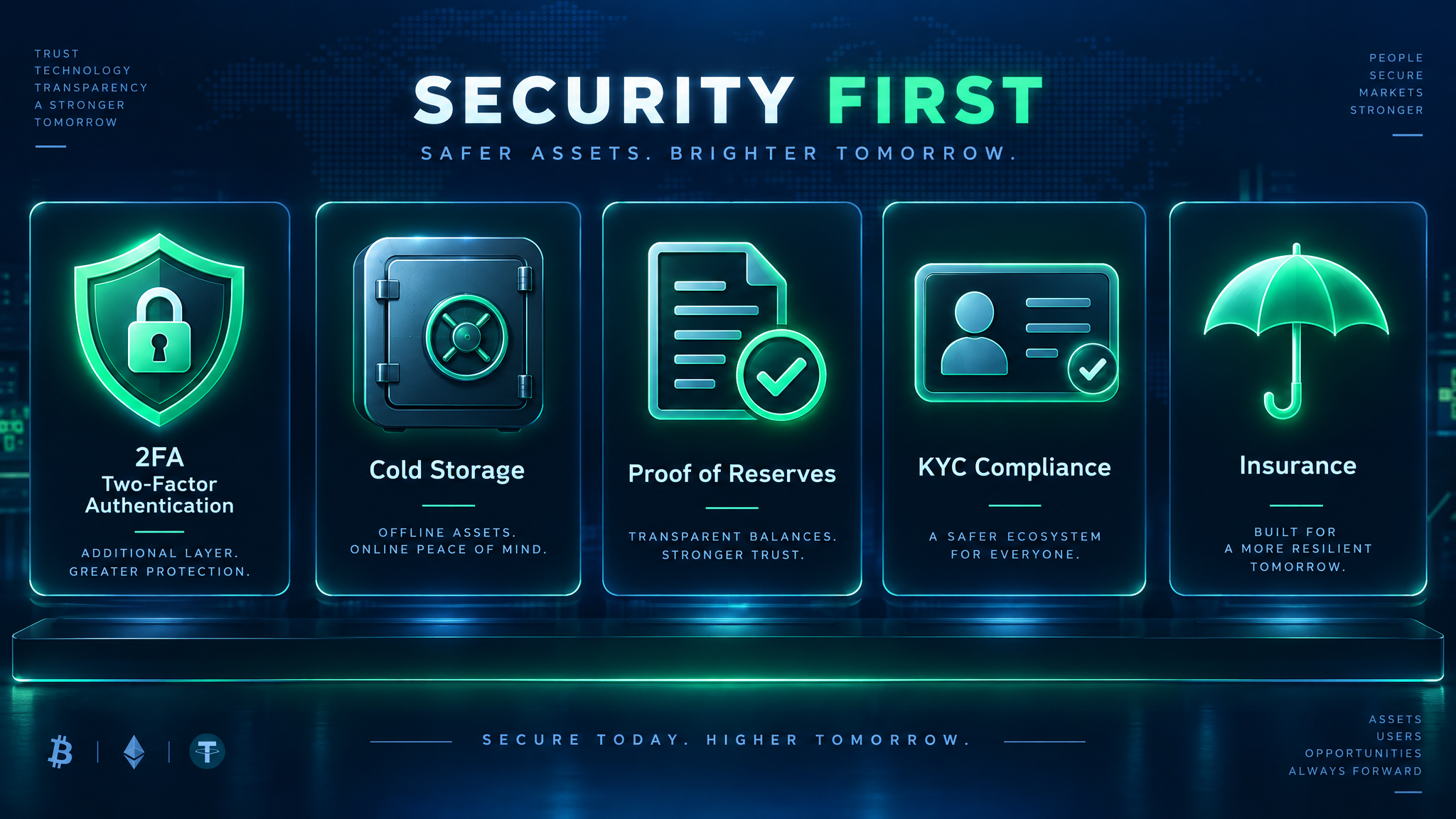
No exchange is 100% hack-proof. But some are dramatically safer than others. When evaluating security, look for these five things:
- Cold Storage: The majority of customer funds should be held offline, away from internet-connected systems. Most reputable exchanges store 90%+ of assets in cold wallets.
- Two-Factor Authentication (2FA): The exchange should require 2FA — ideally via an authenticator app or hardware key, not just SMS (which is vulnerable to SIM-swap attacks).
- Proof of Reserves: Regular third-party audits confirming the exchange actually holds the assets it claims. This became standard practice after the FTX collapse.
- Insurance: Some exchanges carry crime insurance covering losses from hacks. Check the coverage limits and what's actually protected.
- Security History: Research the exchange's past. Kraken, for example, has operated since 2011 without a major platform-level breach. That track record matters.
Enable every security feature available the moment you create your account. Don't wait until you have "enough" crypto to bother — attackers don't care about your balance size.
4. User Interface and Ease of Use
A confusing interface causes real financial mistakes. Beginners have accidentally sent crypto to the wrong address, bought the wrong asset, or confirmed transactions they didn't intend to — all because the UI was unclear. This isn't a minor concern.
Look for exchanges that offer a "beginner mode" or simplified dashboard alongside the advanced interface. Coinbase's standard app is genuinely beginner-friendly. Kraken's interface is clean but slightly more technical. Binance's full platform can overwhelm newcomers with its sheer density of options.
Mobile app quality matters too. If you're managing your portfolio on your phone, the app needs to be stable, fast, and intuitive. Read recent App Store and Google Play reviews — they'll surface current bugs and UX issues that official marketing won't mention.
5. Supported Assets and Features
As a beginner, you probably don't need access to 500 altcoins. Start with an exchange that does Bitcoin and Ethereum well, then expand from there. That said, think about where you want to go in the next 12 months:
- Want to earn yield on your holdings? Look for exchanges with staking support.
- Interested in DeFi? You'll eventually want a self-custody wallet, but an exchange with a built-in Web3 wallet (like Coinbase Wallet) eases the transition.
- Planning to trade actively? Check for limit orders, stop-losses, and charting tools.
- Need fiat on/off ramps? Confirm the exchange supports your local currency and payment methods (bank transfer, debit card, etc.).
For a structured approach to learning crypto trading, Icoinpro offers step-by-step training that has helped thousands of beginners navigate exchanges, read charts, and build their first portfolio with confidence.
Top Crypto Exchanges for Beginners in 2026
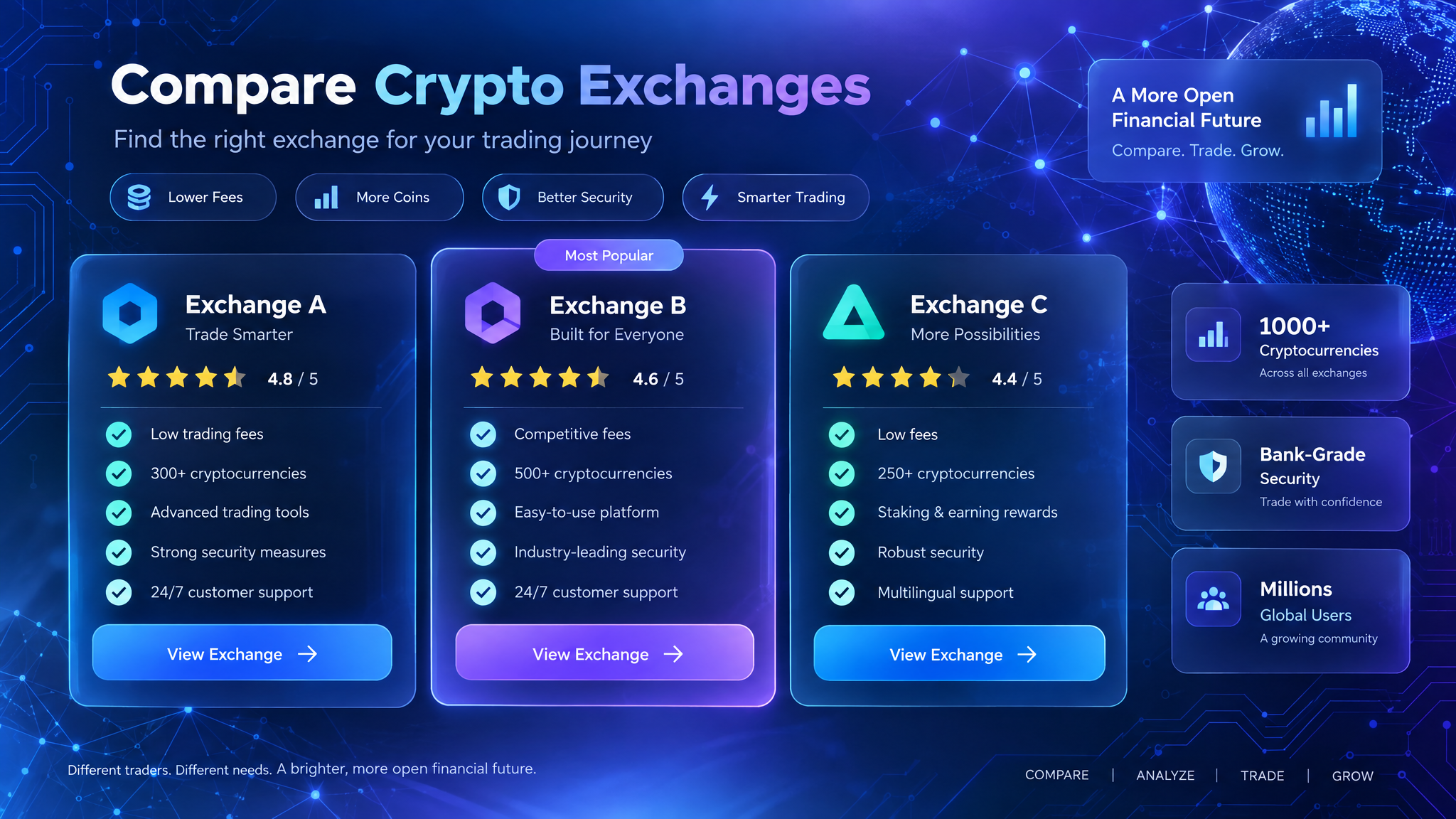
Based on the five factors above, here's how the leading platforms stack up for new investors:
Coinbase remains the gold standard for US beginners. It's Nasdaq-listed, FDIC-insured on USD balances, and has an interface that genuinely doesn't intimidate newcomers. The catch: standard app fees are high. Use Coinbase Advanced Trade to cut costs significantly.
Kraken is the strongest alternative. No major platform breaches in 15 years of operation, transparent fee structure, and a solid selection of assets. The "Kraken Pro" interface offers competitive maker/taker fees. Slightly less beginner-friendly than Coinbase, but worth the small learning curve for the security track record alone.
Gemini shines for compliance-focused investors. It holds a New York BitLicense, maintains FDIC-eligible cash coverage, and insures custodial assets. Fees on the standard interface are steep, but the "ActiveTrader" mode brings them down considerably.
Crypto.com works well for mobile-first users who want trading, staking, and a crypto debit card in one app. The interface is polished and the feature set is broad. Just be aware that the CRO token staking requirements for premium card tiers add complexity.
Robinhood is worth considering if you already use it for stocks. The integrated experience is seamless, fees are competitive, and the interface is familiar. The downside: fewer coins supported and limited advanced features.
Protect your crypto assets with a Ledger hardware wallet — the gold standard in cold storage security. Once your exchange holdings grow, moving assets to cold storage is the single best security upgrade you can make.
How to Avoid Common Beginner Mistakes
Even with the right exchange, new investors make predictable errors. Here's what to watch for:
Leaving everything on the exchange. Exchanges are convenient but they're not your personal vault. "Not your keys, not your coins" is a cliché because it's true. Once you're holding more than a few hundred dollars in crypto, move a portion to a hardware wallet.
Ignoring the fee structure. We covered this above, but it bears repeating. Always use the advanced trading interface when possible. The difference between 0.5% and 3.5% per trade is enormous over time.
Signing up for multiple exchanges at once. Beginners often create accounts on five platforms "to compare." This spreads your attention thin and creates security risks. Pick one, learn it thoroughly, then expand if needed.
Skipping 2FA setup. This takes three minutes and prevents the most common account compromises. Do it immediately after creating your account — before you deposit anything.
Chasing obscure coins on sketchy platforms. If a coin is only available on an unregulated exchange you've never heard of, that's a warning sign, not an opportunity. Stick to regulated platforms until you have a solid foundation.
Want to understand the economics behind Bitcoin? The Bitcoin Standard is essential reading for every crypto enthusiast — it gives you the mental framework to evaluate any crypto investment with clarity.
Step-by-Step: Opening Your First Crypto Account
Once you've chosen your exchange, here's the process:
- Create your account. Use a strong, unique password. Don't reuse passwords from other sites.
- Enable 2FA immediately. Download an authenticator app (Google Authenticator or Authy) and link it before doing anything else.
- Complete KYC verification. This typically requires a government ID and a selfie. It's mandatory on regulated exchanges and usually takes 5-30 minutes.
- Link a payment method. Bank transfers (ACH in the US) are cheapest. Debit cards are faster but carry higher fees.
- Start small. Make your first purchase with an amount you're comfortable losing entirely. This is your learning trade — focus on understanding the process, not the profit.
- Withdraw to a wallet. Once you're comfortable with the platform, consider moving a portion of your holdings to a self-custody wallet for long-term storage.
Key Takeaways
- Knowing how to choose a crypto exchange starts with regulatory standing — only use licensed, compliant platforms.
- Always use the advanced trading interface to minimize fees; the "simple" buy button is the most expensive option.
- Enable 2FA, check for cold storage and proof-of-reserves, and research the exchange's security history before depositing.
- For US beginners, Coinbase and Kraken are the two strongest starting points in 2026.
- Don't leave large amounts on any exchange long-term — hardware wallets are the safest home for significant holdings.
- Start with one exchange, learn it well, and expand only when you have a clear reason to.
Want structured training instead of piecing it together yourself?
Self-education works, but it's slow. The course that accelerated my learning the most gave me a daily framework — real market analysis, real setups, real accountability.
The program I recommend to people who ask me is this crypto trading course — it\'s the one I point friends and family to when they\'re serious about learning. Daily lessons, live analysis, and a community that actually helps.
Affiliate link — I may earn a commission at no extra cost to you. I only recommend what I genuinely use.
Disclaimer: The information provided on this website is for educational and informational purposes only. It should not be considered financial or investment advice. Cryptocurrency investments carry significant risk. Always do your own research and consult with a qualified financial advisor before making investment decisions.
Free Crypto Insights
Get weekly trading tips, market analysis, and exclusive strategies delivered to your inbox.