Arbitrum vs Optimism: Which Ethereum Layer 2 Should You Use in 2026?
Affiliate Disclosure: This article may contain affiliate links. We may earn a commission at no extra cost to you. All opinions are our own.
Marcus Chen
Senior Crypto Analyst & Educator
Certified Blockchain Professional | Former Wall Street Analyst
Marcus Chen is a cryptocurrency analyst and educator with over 8 years of experience in digital asset trading. He has helped thousands of beginners navigate the crypto markets through practical, actionable education.
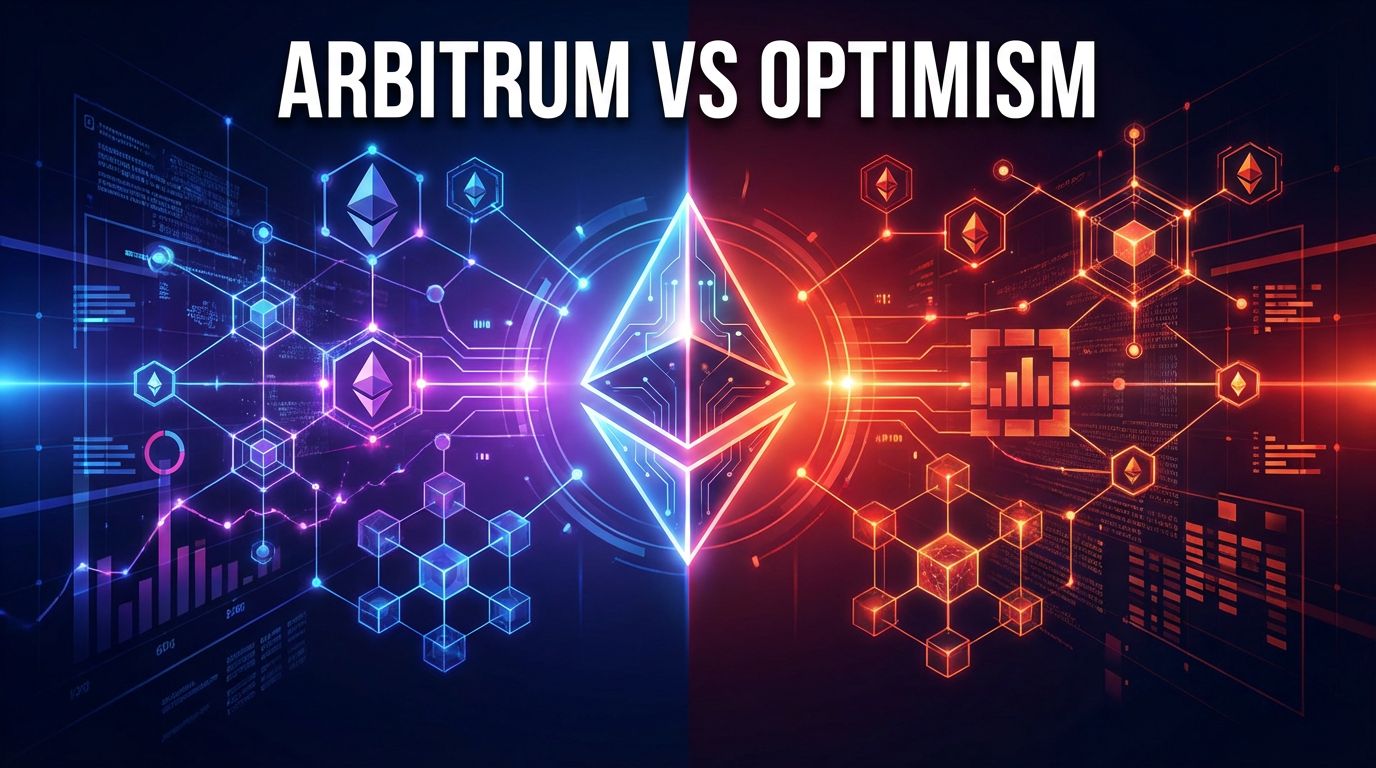
Arbitrum vs Optimism: Which Ethereum Layer 2 Should You Use in 2026?
If you've spent any time in DeFi lately, you've probably noticed that almost nobody is transacting directly on Ethereum mainnet anymore. Gas fees that once hit $50 or more per swap have pushed users toward Layer 2 networks — and two names keep coming up: Arbitrum vs Optimism. Both are Optimistic Rollups built on Ethereum, both slash fees to pennies, and both have billions locked in their ecosystems. So which one actually deserves your attention in 2026?
This article contains affiliate links. We may earn a commission at no extra cost to you if you make a purchase through these links. See our affiliate disclosure for details.
The short answer: it depends on what you're doing. The longer answer is what this guide is for.
Why Ethereum Layer 2 Solutions Matter
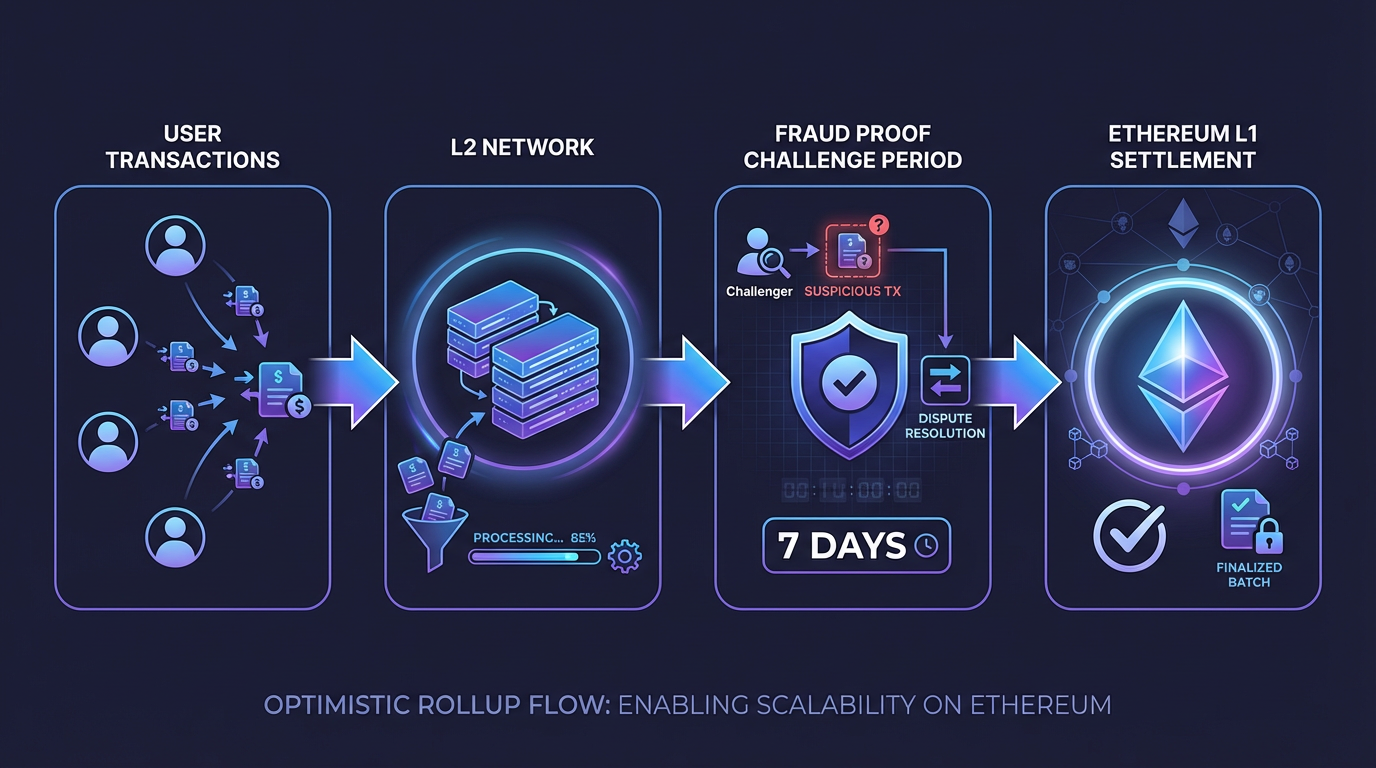
Ethereum's base layer processes roughly 15 transactions per second. During bull markets, that ceiling gets hit fast — and when it does, fees spike. We saw this play out repeatedly in 2021 and again in 2024. Layer 2 solutions fix this by processing transactions off-chain, bundling them up, and posting a compressed summary back to Ethereum. The result? Throughput jumps to hundreds or even thousands of TPS, and fees drop to a few cents.
By early 2026, the combined TVL across Ethereum L2s has crossed $60 billion. That's not a niche experiment anymore — it's where the action is. Arbitrum and Optimism together account for a significant chunk of that activity, making this comparison genuinely consequential for anyone navigating DeFi.
Arbitrum: The DeFi Powerhouse
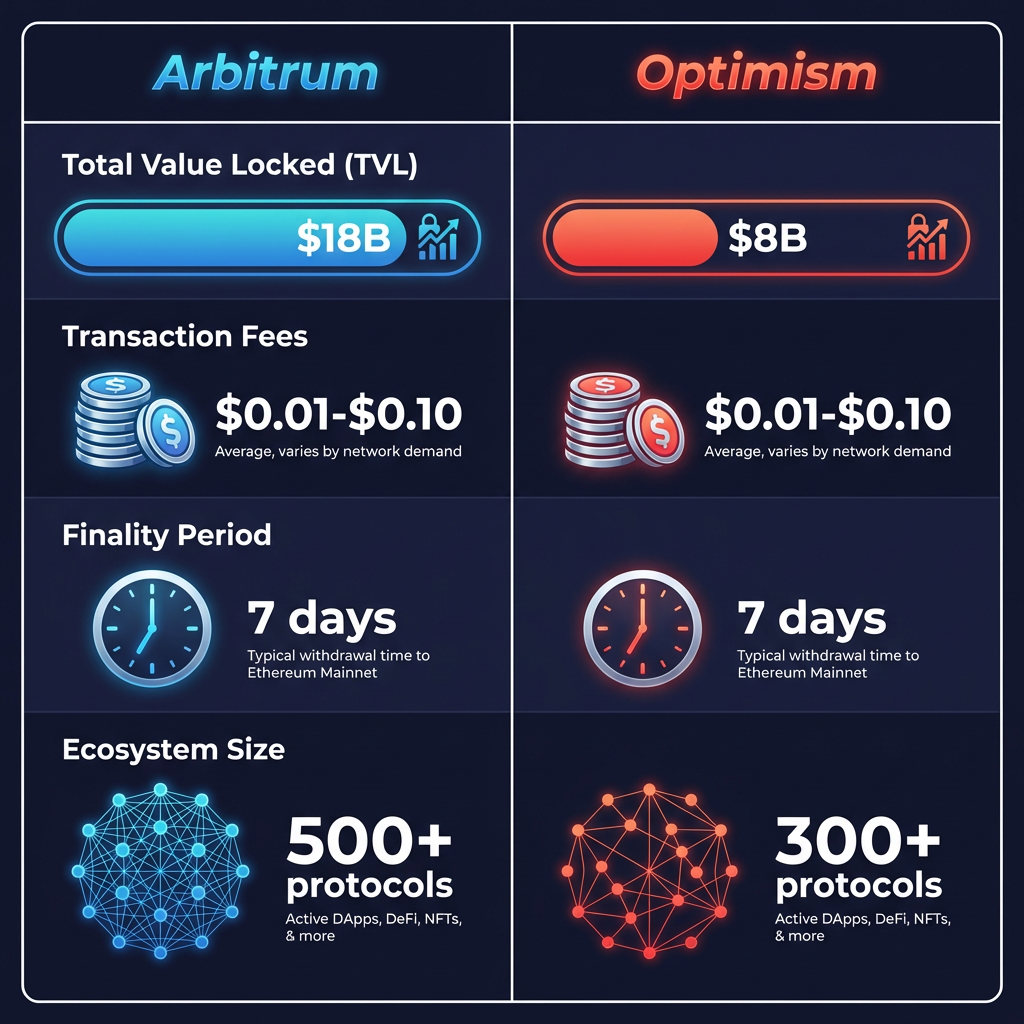
Arbitrum launched in 2021 and quickly became the dominant L2 by TVL. As of April 2026, it holds over $18 billion in Total Value Locked — more than any other L2 network. That dominance didn't happen by accident.
Arbitrum Key Stats and Features
- TVL: ~$18 billion (April 2026)
- Transaction fees: Typically $0.01–$0.10 per transaction
- Finality: 7-day challenge period for L1 withdrawals
- EVM compatibility: Full — deploy existing Solidity contracts with minimal changes
- Key DeFi protocols: GMX, Uniswap, Aave, Camelot, Radiant Capital
- Native token: ARB (governance)
Arbitrum uses a fraud-proof system called Nitro, which compresses transaction data efficiently and keeps costs low. Developers love it because porting an Ethereum dApp to Arbitrum is often as simple as changing the RPC endpoint. That low friction helped it attract the deepest DeFi liquidity of any L2.
Arbitrum Pros and Cons
Pros:
- Largest DeFi ecosystem among L2s — more protocols, more liquidity
- Battle-tested security with years of mainnet operation
- Extremely low fees, even during high-traffic periods
- Arbitrum Orbit lets projects launch custom L3 chains
Cons:
- 7-day withdrawal delay to move funds back to Ethereum mainnet (bridges can speed this up, but add trust assumptions)
- ARB token has faced criticism for limited utility beyond governance
- Sequencer is still somewhat centralized, though decentralization is in progress
For most DeFi users — especially those trading perpetuals on GMX or providing liquidity on Uniswap — Arbitrum is the default choice. The ecosystem depth is hard to beat.
Optimism and the Superchain Vision
Optimism launched around the same time as Arbitrum but has taken a distinctly different strategic path. Rather than competing purely on TVL, Optimism has positioned itself as the infrastructure layer for an entire network of L2 chains — what it calls the Superchain.
Optimism Key Stats and Features
- TVL (OP Mainnet): ~$8 billion (April 2026)
- Superchain ecosystem TVL: $25+ billion (including Base, Zora, Mode, and others)
- Transaction fees: Typically $0.01–$0.05 per transaction
- Finality: 7-day challenge period (same as Arbitrum)
- EVM compatibility: Full
- Key protocols: Velodrome, Synthetix, Uniswap, Aave
- Native token: OP (governance + retroactive public goods funding)
The OP Stack is Optimism's open-source framework that lets anyone spin up their own L2 chain. Coinbase used it to launch Base, which has become one of the most active chains in crypto. Zora, Mode, and dozens of other chains run on the same stack. The vision: a unified "Superchain" where all these networks share sequencing, security, and eventually seamless interoperability.
Optimism Pros and Cons
Pros:
- OP Stack ecosystem is massive — Base alone has more daily active users than most L1s
- Retroactive Public Goods Funding (RetroPGF) creates a unique incentive model for developers
- Superchain interoperability is maturing fast, reducing cross-chain friction
- Slightly lower fees than Arbitrum in many scenarios
Cons:
- OP Mainnet's own TVL lags behind Arbitrum significantly
- Liquidity is fragmented across Superchain networks — not all chains are equally liquid
- The Superchain vision is still being built; full interoperability isn't complete yet
Arbitrum vs Optimism: Head-to-Head Comparison
Transaction Fees
Both networks are cheap. On a typical day, a token swap on either chain costs between $0.01 and $0.10. Optimism edges out Arbitrum slightly in some scenarios, but the difference is rarely meaningful for individual users. Where fees diverge more noticeably is during network congestion — Arbitrum's Nitro compression tends to handle spikes efficiently.
Post-EIP-4844 (the "proto-danksharding" upgrade), both chains saw fees drop by 80–90% as blob transactions replaced expensive calldata. This was a game-changer for both ecosystems.
Speed and Finality
Both Arbitrum and Optimism share the same fundamental limitation: the 7-day challenge period. This is the window during which anyone can submit a fraud proof to contest a transaction. Until that window closes, your funds aren't fully "settled" on Ethereum L1.
In practice, this rarely matters for most users. You can transact freely within the L2 ecosystem without waiting. The delay only affects withdrawals back to mainnet — and third-party bridges like Across or Hop can speed this up (with their own trust trade-offs).
DeFi Ecosystem and TVL
This is where Arbitrum wins clearly. With $18 billion in TVL versus Optimism Mainnet's $8 billion, Arbitrum has deeper liquidity across more protocols. If you're a serious DeFi user — farming yields, trading perps, or providing liquidity — Arbitrum's ecosystem gives you more options and better execution.
That said, if you count the entire Superchain (Base, Zora, Mode, etc.), Optimism's broader ecosystem actually surpasses Arbitrum. Base alone has become a cultural hub for crypto-native applications, NFTs, and consumer apps. It depends on how you define "Optimism."
Developer Experience
Both chains offer full EVM compatibility, so existing Ethereum developers can deploy with minimal friction. Arbitrum's Orbit framework and Optimism's OP Stack both allow teams to launch custom L3 chains. The OP Stack has a slight edge in adoption here — more teams have used it to launch production chains, and the documentation and tooling are mature.
For developers building consumer-facing apps, Base (built on OP Stack) has become the go-to destination, with Coinbase's distribution and onboarding tools making it easier to reach mainstream users.
Ready to master crypto trading? Check out Icoinpro's comprehensive trading course — it covers DeFi strategies, L2 navigation, and how to maximize returns across the Ethereum ecosystem.
Which L2 Is Right for You?
Here's a practical breakdown based on your goals:
- You're a DeFi power user (yield farming, perp trading, liquidity provision): Arbitrum. The ecosystem depth and liquidity are unmatched.
- You're a developer building a consumer app: OP Stack / Base. Coinbase's distribution and the Superchain's growing interoperability make it compelling.
- You want the lowest possible fees: Either works — the difference is negligible for most transactions.
- You're exploring NFTs and social apps: Base (Optimism ecosystem) has become the cultural center for this.
- You need maximum DeFi liquidity: Arbitrum, no contest.
The honest answer is that most experienced crypto users have wallets active on both. There's no rule saying you have to pick one. Bridge a portion of your ETH to each, explore the protocols, and let the experience guide you.
Protect your crypto assets with a Ledger hardware wallet — the gold standard in cold storage security. Whether you're holding ETH, ARB, or OP tokens, keeping your private keys offline is non-negotiable.
Want to understand the economics behind Bitcoin and crypto more broadly? The Bitcoin Standard is essential reading for every crypto enthusiast looking to build a solid foundation.
Key Takeaways
- Both Arbitrum and Optimism are Optimistic Rollups with full EVM compatibility and sub-cent fees
- Arbitrum leads in TVL (~$18B) and DeFi ecosystem depth — best for serious DeFi users
- Optimism's Superchain (including Base) has broader ecosystem reach and is growing fast
- Both share the 7-day withdrawal delay — use bridges for faster exits if needed
- Post-EIP-4844, fees on both chains dropped 80–90%, making L2 DeFi more accessible than ever
- Most experienced users operate on both — there's no reason to limit yourself to one
Disclaimer: This content is for informational purposes only and should not be considered financial advice. Cryptocurrency investments carry significant risk. Always do your own research (DYOR) before making any investment decisions.
2026 Update: The L2 Landscape Has Shifted
Since this article was first published, the Ethereum Layer 2 landscape has consolidated significantly. As of mid-2026, three networks dominate roughly 90% of all L2 transaction volume: Arbitrum, Base, and Optimism. Here's what's changed and what it means for your decision.
Arbitrum One now holds $15.5–16.9 billion in TVL, commanding roughly 38–44% of the L2 market. Its Stylus upgrade — enabling smart contracts written in Rust, C, and C++ — has attracted a new wave of non-Solidity developers. The Arbitrum Orbit framework now powers sovereign L3 chains, including Robinhood Chain for tokenized real-world assets.
Optimism has leaned fully into its Superchain vision. OP Mainnet's standalone TVL sits around $1.5–1.9 billion, but the broader Superchain ecosystem (which includes Base, World Chain, Soneium, and Kraken's Ink) represents a much larger footprint. The upcoming interoperability layer promises seamless cross-chain messaging across all Superchain networks.
Base — built on the OP Stack — has emerged as the dominant consumer network with $10.7–12.8 billion in TVL and the highest daily active user count of any L2. It's the only L2 to achieve profitability, driven by Coinbase's massive retail distribution.
Both Arbitrum and Optimism have achieved Stage 1 decentralization status on L2BEAT, with permissionless fault proofs now live on both networks. The "training wheels" era is officially over.
For DeFi users and institutional capital: Arbitrum remains the deepest liquidity hub. For consumer apps and retail onboarding: Base (OP Stack) wins. For modular ecosystem builders: Optimism's Superchain is the reference architecture. Learn more about DeFi opportunities in our guide to Best Crypto Lending Platforms 2026.
Frequently Asked Questions
Is Arbitrum or Optimism better for DeFi in 2026?
Arbitrum is generally better for DeFi due to its deeper liquidity, higher TVL ($15–17B), and broader protocol support including Aave, GMX, and Uniswap. Optimism's Superchain ecosystem is growing but its standalone TVL is lower.
What is the Arbitrum Stylus upgrade?
Stylus allows developers to write Arbitrum smart contracts in Rust, C, and C++ — not just Solidity. This opens the network to a much larger developer base and enables more computationally intensive applications.
What is the Optimism Superchain?
The Superchain is a network of interoperable L2 chains all built on the OP Stack, including Base, World Chain, Soneium, and Kraken's Ink. Optimism's upcoming interop layer will allow seamless cross-chain messaging between all Superchain networks.
Are Arbitrum and Optimism safe in 2026?
Both have achieved Stage 1 decentralization on L2BEAT, meaning users can withdraw funds even if the operator is unresponsive. Both have implemented permissionless fault proofs, removing centralized control over dispute resolution.
What happened to smaller L2 networks?
Many smaller rollups that launched during the post-Dencun hype cycle have seen TVL collapse as liquidity mining incentives expired. The market has consolidated around networks with inherent distribution moats, deep institutional liquidity, or modular ecosystem standards.
DeFi moves fast. Your trading skills need to keep up.
Whether you're yield farming or trading tokens, the fundamentals of reading charts, managing risk, and timing entries apply everywhere in crypto. Those skills are worth developing properly.
The program I recommend to people who ask me is this crypto trading course — it\'s the one I point friends and family to when they\'re serious about learning. Daily lessons, live analysis, and a community that actually helps.
Affiliate link — I may earn a commission at no extra cost to you. I only recommend what I genuinely use.
Disclaimer: The information provided on this website is for educational and informational purposes only. It should not be considered financial or investment advice. Cryptocurrency investments carry significant risk. Always do your own research and consult with a qualified financial advisor before making investment decisions.
Free Crypto Insights
Get weekly trading tips, market analysis, and exclusive strategies delivered to your inbox.