How to Use Uniswap in 2026: Complete DEX Trading Guide
Affiliate Disclosure: This article may contain affiliate links. We may earn a commission at no extra cost to you. All opinions are our own.
Marcus Chen
Senior Crypto Analyst & Educator
Certified Blockchain Professional | Former Wall Street Analyst
Marcus Chen is a cryptocurrency analyst and educator with over 8 years of experience in digital asset trading. He has helped thousands of beginners navigate the crypto markets through practical, actionable education.
How to Use Uniswap in 2026: Complete DEX Trading Guide
If you've been wondering how to use Uniswap — the world's largest decentralized exchange — you're in the right place. Uniswap lets you swap hundreds of crypto tokens directly from your wallet, no account required, no KYC, no waiting for withdrawals. With Uniswap V4 now live and processing billions in daily volume across 40+ blockchains, it's become the go-to DEX for serious DeFi traders in 2026. This guide walks you through everything: connecting your wallet, making your first swap, understanding fees, and staying safe.
This article contains affiliate links. We may earn a commission at no extra cost to you if you make a purchase through these links. See our affiliate disclosure for details.
⚠️ Disclaimer: This content is for informational purposes only and should not be considered financial advice. Cryptocurrency investments carry significant risk. Always do your own research (DYOR) before making any investment decisions.
What Is Uniswap and Why Does It Matter?
Uniswap is a decentralized exchange protocol built on Ethereum. Unlike Coinbase or Binance, there's no company holding your funds. You connect your own wallet, trade directly against liquidity pools, and keep full custody of your assets the entire time.
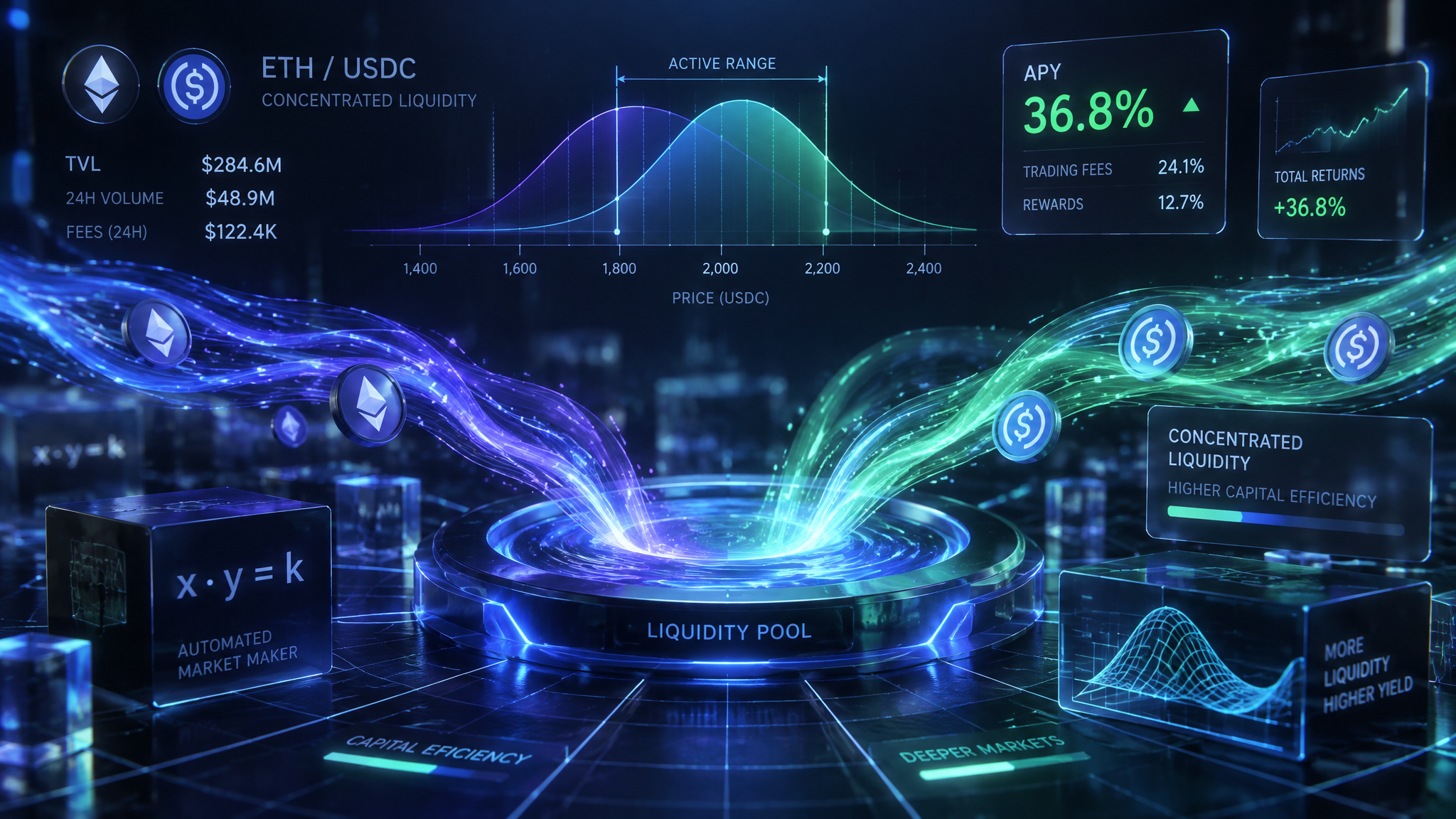
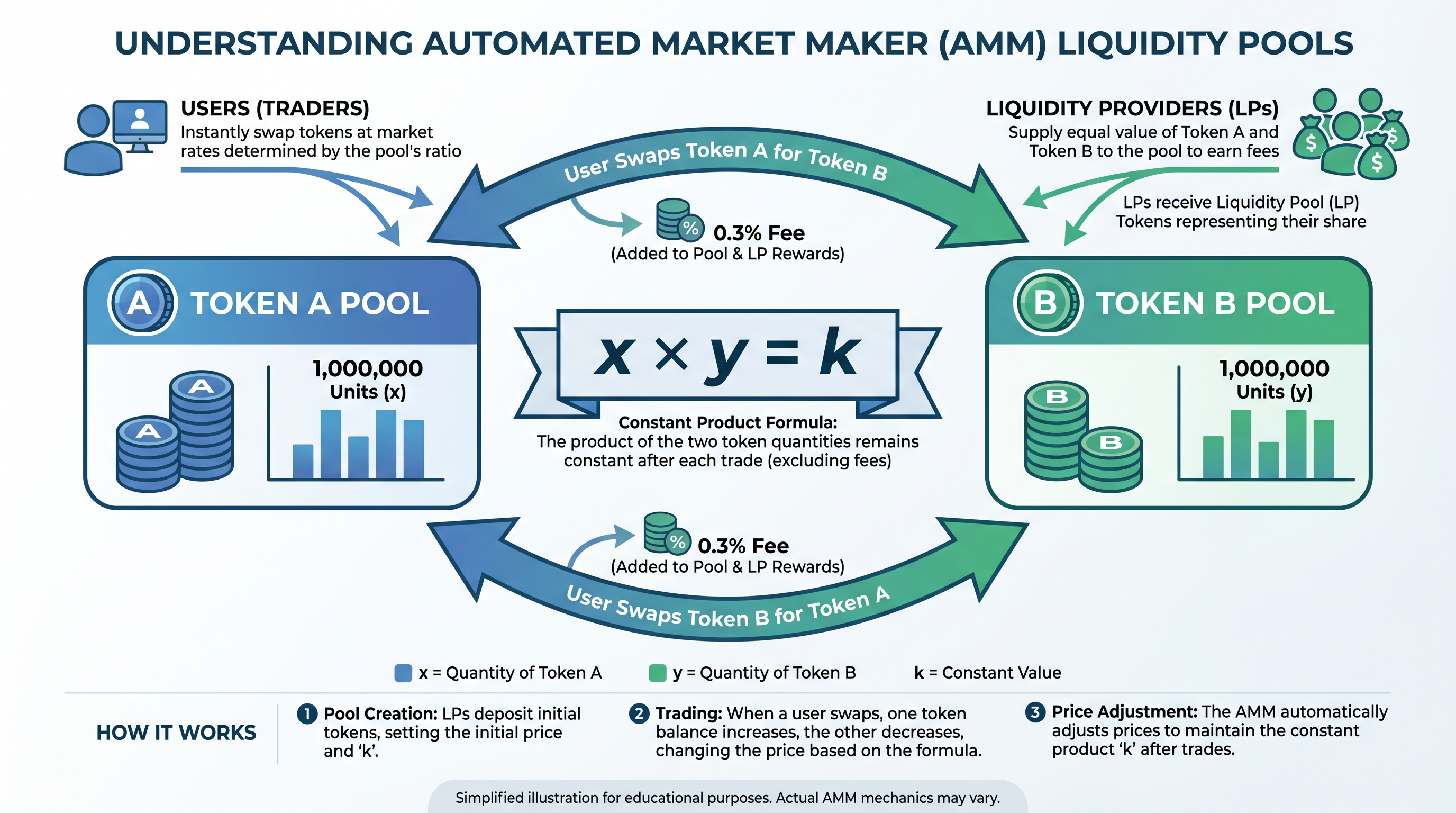
The protocol uses an Automated Market Maker (AMM) model — instead of matching buyers with sellers via an order book, trades execute against pools of tokens locked in smart contracts. The math behind it is elegant: a constant product formula (x × y = k) keeps the pool balanced as trades happen.
Uniswap V4, launched in January 2025, introduced "hooks" — customizable logic that runs before or after swaps. This unlocked features like limit orders, dynamic fees, and MEV protection that were previously impossible on-chain. As of early 2026, there are nearly 5,000 tracked V4 pools with an average APY of 56% for liquidity providers.
The numbers speak for themselves: Uniswap regularly processes $2–5 billion in daily volume. It's deployed on Ethereum, Arbitrum, Base, Optimism, Polygon, and 35+ other networks. For most DeFi users, it's the first stop for any token swap.
What You Need Before You Start
Getting set up takes about five minutes. Here's what you need:
- A self-custody wallet: MetaMask is the most popular choice. Rabby, Coinbase Wallet, and Rainbow also work great with Uniswap's interface.
- ETH or the native gas token: Every transaction on Ethereum costs gas. On mainnet, expect $2–20 per swap. On Layer 2 networks like Base or Arbitrum, fees drop to $0.01–0.50.
- The tokens you want to trade: You'll need at least one token to swap from.
One thing beginners often miss: you need gas even if you're not swapping ETH. If you want to swap USDC for another token, you still need ETH in your wallet to pay the network fee. Keep a small ETH buffer — $20–50 worth is usually plenty for several transactions.
Want to accelerate your trading journey? Explore Icoinpro's daily trading signals and education platform.
Step-by-Step: How to Use Uniswap for Your First Swap
Step 1: Go to the Official Uniswap App
Always navigate directly to app.uniswap.org. Bookmark it. Phishing sites that mimic Uniswap's interface are common — they look identical but drain your wallet the moment you approve a transaction. Never click Uniswap links from Twitter DMs, Telegram groups, or random Discord servers.
Step 2: Connect Your Wallet
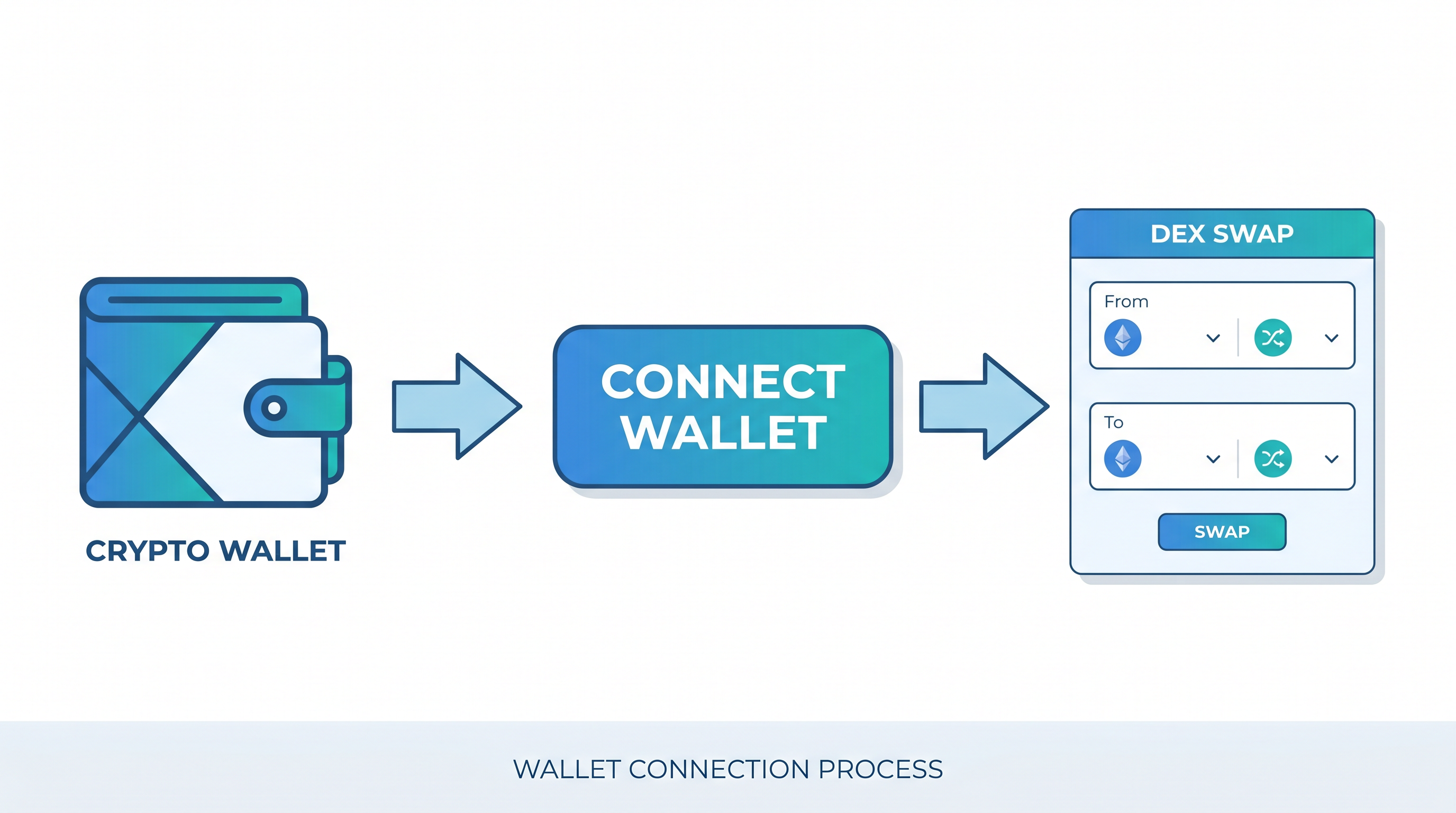
Click "Connect" in the top-right corner. Select your wallet from the list — MetaMask will pop up a confirmation window. Approve the connection. You'll see your wallet address appear in the top-right once connected.
Next, select your network. The default is Ethereum Mainnet, but if you want cheaper fees, switch to Arbitrum or Base using the network dropdown. Your wallet needs to be on the same network as the tokens you're trading.
Step 3: Select Your Tokens
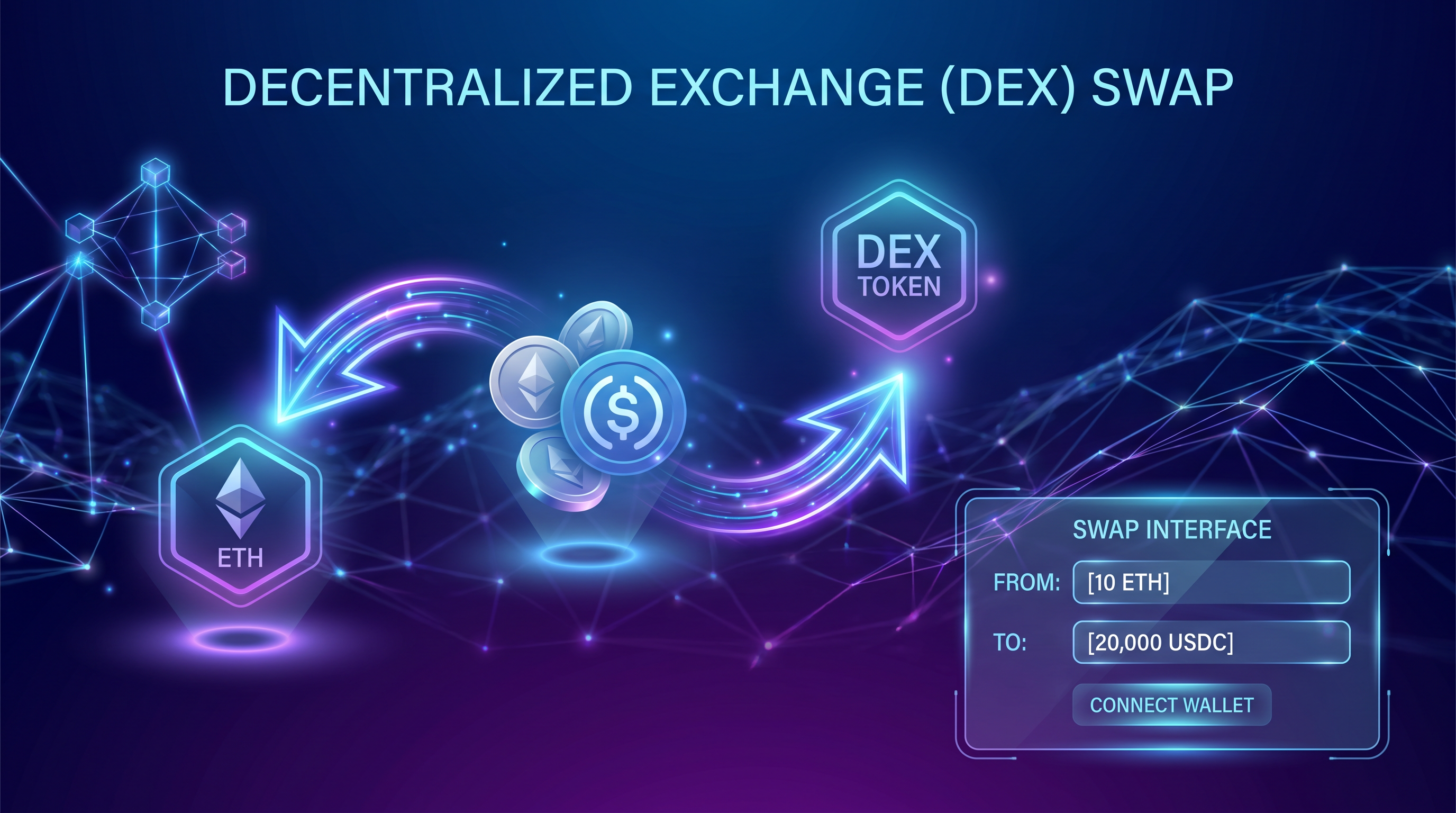
On the Swap page, you'll see two token fields: "You pay" and "You receive." Click each field to search for tokens by name or paste a contract address.
For well-known tokens like ETH, USDC, WBTC, or UNI, just type the name. For newer or smaller tokens, always paste the official contract address from CoinGecko or the project's official website. Anyone can create a token called "USDC" — the contract address is what matters.
Step 4: Enter Your Amount and Review the Details
Type in how much you want to swap. Uniswap will show you:
- Exchange rate: How many tokens you'll receive
- Price impact: How much your trade moves the pool price (keep this under 1% for most trades)
- Minimum received: The worst-case output after slippage
- Network fee: The gas cost in ETH
If price impact is above 3%, your trade is large relative to the pool's liquidity. Consider splitting it into smaller trades or using a different pool.
Step 5: Set Slippage Tolerance
Slippage is the difference between the price you see and the price you get. Markets move fast. Click the settings gear icon to adjust:
- 0.1–0.5%: For stablecoin pairs (USDC/USDT)
- 0.5–1%: For major tokens (ETH, WBTC)
- 2–5%: For volatile or low-liquidity tokens
Don't set slippage above 5% unless you know exactly what you're doing. High slippage makes you vulnerable to sandwich attacks — bots that front-run your transaction and extract value from the price difference.
Step 6: Confirm the Swap
Click "Swap," review the final confirmation screen, then click "Confirm Swap." Your wallet will pop up asking you to approve the transaction. Check the gas fee one more time, then confirm.
The transaction goes into the mempool and typically confirms within 15–30 seconds on Ethereum mainnet, or under 2 seconds on Layer 2 networks. You can track it on Etherscan using your wallet address.
Understanding Uniswap Fees
There are three types of fees when using Uniswap:
- Swap fee (0.01%–1%): Goes to liquidity providers. The fee tier depends on the pool — stablecoin pairs use 0.01%, most major pairs use 0.3%, exotic pairs use 1%.
- Uniswap interface fee (0.25%): Added by the official frontend on select token pairs. You can avoid this by using aggregators like 1inch or Paraswap.
- Gas fee: Paid to Ethereum validators. Varies from $0.01 on Base to $20+ on mainnet during congestion.
For a $500 swap on Ethereum mainnet, you might pay $1.50 in swap fees plus $5–10 in gas. On Arbitrum, that same swap costs under $1 total. Layer 2 networks are almost always the better choice for trades under $10,000.
Layer 2 Networks: Where to Trade for Cheaper Fees
One of the biggest improvements in 2026 is how easy it's become to use Uniswap on Layer 2 networks. Here's a quick comparison:
- Ethereum Mainnet: $2–20 gas, 12-second finality. Best for large trades ($50K+) where security matters most.
- Arbitrum: $0.05–0.50 gas, 1-second finality. Best all-around for most DeFi users.
- Base: $0.01–0.10 gas, 2-second finality. Excellent for small trades and frequent swaps.
- Optimism: $0.05–0.30 gas, 2-second finality. Popular for DeFi yield strategies.
To use Uniswap on Arbitrum, you first need to bridge ETH from mainnet to Arbitrum using the official Arbitrum Bridge. The bridge takes about 10 minutes and costs one mainnet gas fee. After that, all your Arbitrum transactions are cheap.
Providing Liquidity on Uniswap: Is It Worth It?
Beyond swapping, you can earn fees by depositing tokens into Uniswap liquidity pools. In V3 and V4, this uses "concentrated liquidity" — you set a price range where your capital is active, which dramatically increases capital efficiency compared to older AMM designs.
The catch is impermanent loss. If the price of your tokens diverges significantly from when you deposited, you end up with less value than if you'd just held them. Concentrated liquidity amplifies both the fee earnings and the impermanent loss risk.
For most beginners, providing liquidity is more complex than it looks. Start with swapping, get comfortable with the interface, then explore LP positions once you understand the mechanics.
Staying Safe on Uniswap: 5 Rules That Matter
DeFi is permissionless — which means there's no customer support to call if something goes wrong. These five rules will protect you:
- Always verify the URL: Bookmark app.uniswap.org. Never click links from social media.
- Check token contracts: Use CoinGecko or CoinMarketCap to verify contract addresses before trading unknown tokens.
- Watch for honeypots: Some tokens can be bought but not sold. Use DEXTools to check if a token has sell restrictions before buying.
- Revoke unused approvals: When you approve a token for Uniswap, that approval stays active. Use Revoke.cash periodically to clean up old approvals.
- Test with small amounts first: Before moving $5,000, do a $10 test swap to confirm everything works as expected.
Protect your crypto assets with a Ledger hardware wallet — the gold standard in cold storage security.
UniswapX: The Smarter Way to Swap in 2026
UniswapX is an opt-in routing system that sends your trade to a network of "fillers" who compete to give you the best price. Instead of executing directly against a pool, fillers source liquidity from multiple venues — on-chain pools, off-chain market makers, and other DEXs.
The result: better prices, MEV protection, and sometimes gas-free swaps (the filler pays gas and recoups it in the spread). For trades above $1,000, UniswapX often beats standard routing by 0.1–0.5%. Enable it in the Uniswap settings under "Routing."
Common Mistakes Beginners Make on Uniswap
After watching thousands of traders navigate DeFi for the first time, these are the mistakes I see most often:
- Trading on mainnet when Layer 2 is available: Paying $15 in gas for a $100 swap is a 15% fee. Use Arbitrum or Base.
- Ignoring price impact: A 10% price impact means you're getting 10% less than the quoted price. Always check this number.
- Buying tokens without checking liquidity: Low-liquidity tokens have massive spreads and are easy to manipulate. Check the pool's TVL before trading.
- Setting unlimited token approvals: When Uniswap asks to approve a token, set a specific amount rather than "unlimited."
- Forgetting about gas during congestion: During major market events, Ethereum gas can spike 10x. Either wait it out or use a Layer 2.
Key Takeaways
- Uniswap V4 is the most advanced DEX in crypto, supporting 40+ chains with customizable pool logic via hooks.
- Always use app.uniswap.org and verify the URL — phishing sites are the #1 risk for new users.
- Layer 2 networks (Arbitrum, Base) cut gas fees by 95%+ compared to Ethereum mainnet.
- Keep slippage under 1% for major tokens; check price impact before confirming any swap.
- UniswapX offers better prices and MEV protection for larger trades — enable it in settings.
- Verify token contract addresses from CoinGecko before trading any unfamiliar token.
Want to understand the economics behind Bitcoin? The Bitcoin Standard is essential reading for every crypto enthusiast.
⚠️ Disclaimer: This content is for informational purposes only and should not be considered financial advice. Cryptocurrency investments carry significant risk. Always do your own research (DYOR) before making any investment decisions.
DeFi moves fast. Your trading skills need to keep up.
Whether you're yield farming or trading tokens, the fundamentals of reading charts, managing risk, and timing entries apply everywhere in crypto. Those skills are worth developing properly.
The program I recommend to people who ask me is this crypto trading course — it\'s the one I point friends and family to when they\'re serious about learning. Daily lessons, live analysis, and a community that actually helps.
Affiliate link — I may earn a commission at no extra cost to you. I only recommend what I genuinely use.
Disclaimer: The information provided on this website is for educational and informational purposes only. It should not be considered financial or investment advice. Cryptocurrency investments carry significant risk. Always do your own research and consult with a qualified financial advisor before making investment decisions.
Free Crypto Insights
Get weekly trading tips, market analysis, and exclusive strategies delivered to your inbox.