Best DeFi Yield Farming Platforms in 2026: Where to Put Your Crypto to Work
Affiliate Disclosure: This article may contain affiliate links. We may earn a commission at no extra cost to you. All opinions are our own.
Marcus Chen
Senior Crypto Analyst & Educator
Certified Blockchain Professional | Former Wall Street Analyst
Marcus Chen is a cryptocurrency analyst and educator with over 8 years of experience in digital asset trading. He has helped thousands of beginners navigate the crypto markets through practical, actionable education.
Best DeFi Yield Farming Platforms in 2026: Where to Put Your Crypto to Work
If you've been sitting on ETH, stablecoins, or other crypto assets earning nothing in a wallet, you're leaving real money on the table. The DeFi yield farming platforms of 2026 have matured dramatically — audited protocols, sustainable real yields, and multi-chain options that didn't exist two years ago. This guide ranks the best platforms based on actual APYs, security track records, and who each one is genuinely suited for. None of them are perfect, but the right one depends on your risk tolerance, your assets, and how hands-on you want to be.
This article contains affiliate links. We may earn a commission at no extra cost to you if you make a purchase through these links. See our affiliate disclosure for details.
Disclaimer: This content is for informational purposes only and should not be considered financial advice. Cryptocurrency investments carry significant risk. Always do your own research (DYOR) before making any investment decisions.
What Is DeFi Yield Farming? (Quick Primer)
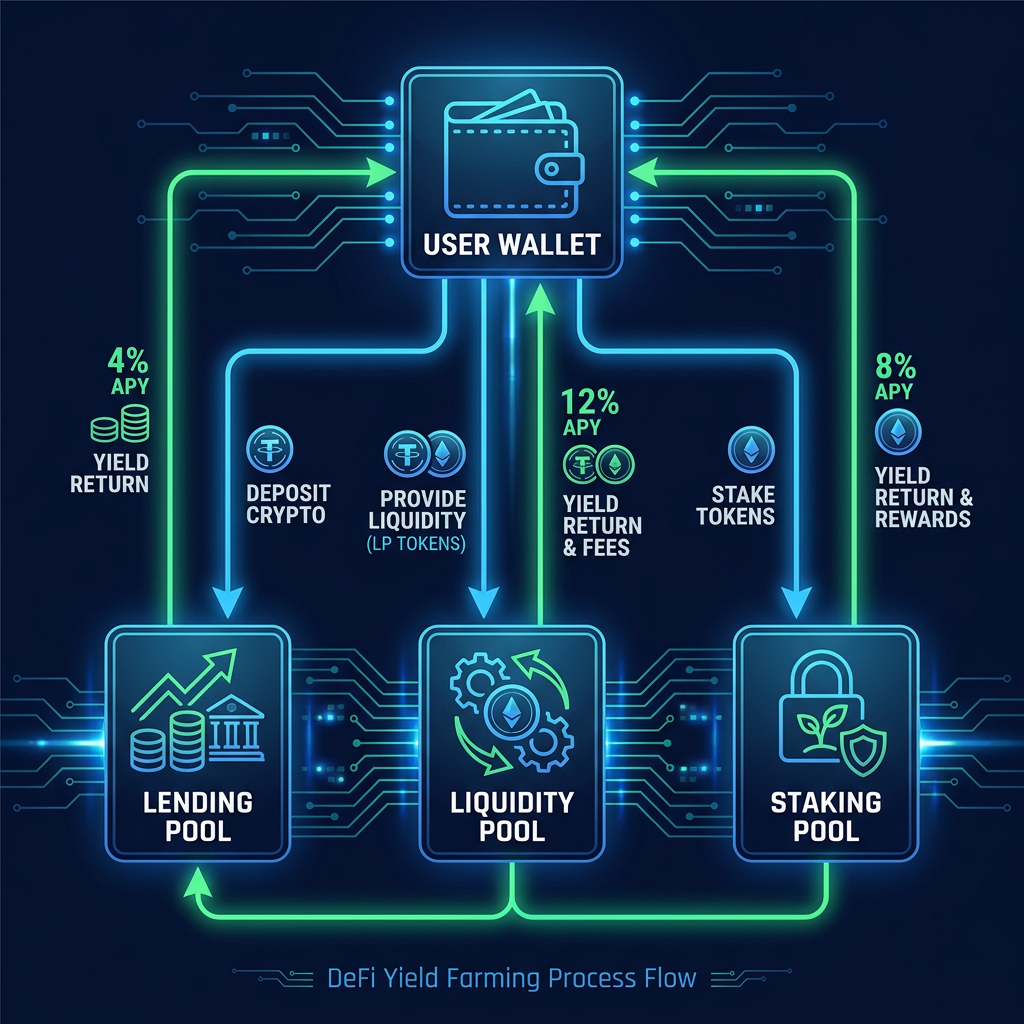
Yield farming is the practice of putting your crypto assets to work in decentralized finance protocols to earn returns. Instead of a bank paying you 0.5% on savings, you're lending to other users, providing liquidity to trading pools, or staking tokens — all governed by smart contracts, no middleman required.
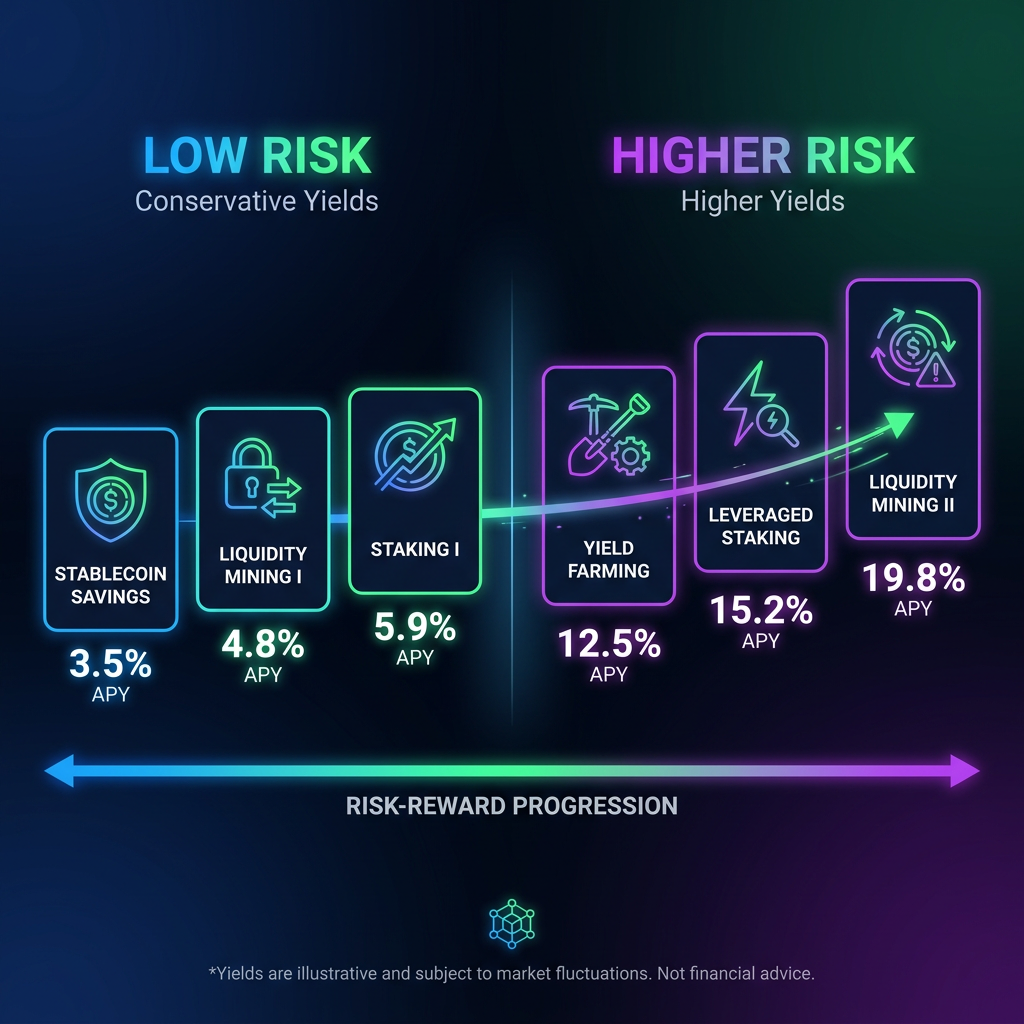
The returns vary wildly. Conservative stablecoin lending on Aave might net you 4-6% annually. Aggressive liquidity provision on newer protocols can push 20%+, but with proportionally higher risk. The key is matching the strategy to your situation.
Want to understand the deeper economics before jumping in? For a structured approach to learning crypto trading, Icoinpro offers step-by-step training that has helped thousands of beginners navigate DeFi and trading fundamentals.
1. Aave — Best for Conservative Stablecoin Yield
Aave is the blue-chip of DeFi lending. It's been running since 2017, has survived multiple market cycles, and currently holds billions in TVL across Ethereum mainnet and several Layer 2 networks. If you want to earn yield on USDC, USDT, or DAI without losing sleep, Aave is where most serious DeFi participants start.
Key Stats & APYs
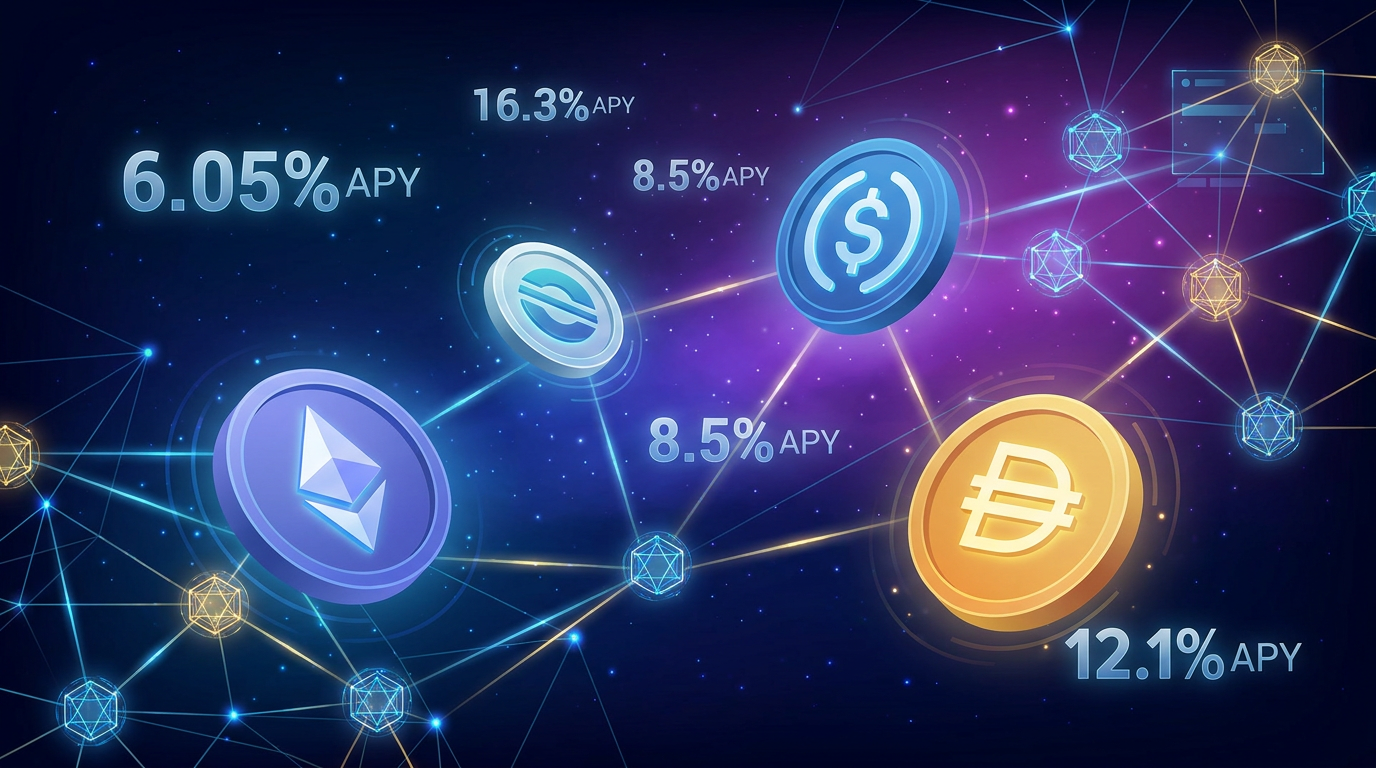
As of May 2026, Aave's USDC supply APY on Ethereum mainnet sits around 6.05%. On Polygon and Arbitrum, rates fluctuate between 4-8% depending on utilization. The protocol uses a variable rate model — when borrowing demand spikes, lenders earn more. When it drops, rates compress. That's not a bug; it's the mechanism working as designed.
Who It's For
Aave suits anyone who wants predictable, low-drama yield on stablecoins or major assets like ETH and WBTC. Aave v3's efficiency mode and cross-chain portals add flexibility for more advanced users. It's not going to make you rich overnight, but it's the kind of platform you can set up and check monthly. Even $500 in USDC earns meaningfully over a year.
2. Pendle Finance — Best for Fixed-Rate Yield Strategies
Pendle is genuinely clever. It takes yield-bearing assets — think stETH, aUSDC, or PT tokens — and splits them into two components: the principal token (PT) and the yield token (YT). You can buy the PT at a discount and lock in a fixed yield to maturity, or buy the YT to speculate on yield going higher. It's the DeFi equivalent of bond stripping.
How Pendle Works
Say you deposit stETH into Pendle. You receive PT-stETH (redeemable for 1 stETH at maturity) and YT-stETH (which captures all the staking yield until maturity). If you think ETH staking yields will rise, you buy YT. If you want certainty, you buy PT at a discount and hold to maturity for a guaranteed return.
Who It's For
Pendle is ideal for users who want fixed-rate exposure to DeFi yields — locking in today's rates before they potentially drop. Pendle's "Simple" mode hides the mechanics and just shows: "Deposit X, earn Y% fixed until [date]." If you're comfortable with concepts like duration and yield curves from traditional finance, Pendle will feel familiar.
3. Yearn Finance — Best Auto-Compounding Vaults
Yearn does one thing exceptionally well: it takes your assets, deploys them across the highest-yielding strategies it can find, and automatically compounds the returns. You deposit, you wait, you withdraw more than you put in. The complexity is abstracted away.
Vault Performance
Yearn's vault directory has shown some impressive numbers — the LP Yearn CRV Vault v2 has posted estimated APYs around 16.3% in recent months. That's not a guaranteed number; it fluctuates with market conditions and the underlying strategies. But Yearn's track record of consistently finding yield across market cycles is hard to argue with.
Who It's For
Yearn is for the "set it and forget it" crowd. The 2% management fee and 20% performance fee sound steep until you consider the alternative: manually managing multiple protocols, paying gas on every rebalance, and missing optimal timing. For positions of $5,000+, Yearn earns its keep.
4. Curve + Convex — Best for Stablecoin Liquidity Providers
Curve Finance is the dominant AMM for stablecoin and pegged-asset swaps. Convex Finance sits on top of Curve, boosting rewards for liquidity providers without requiring them to lock CRV tokens themselves.
The Curve-Convex Combo
Deposit stablecoins into a Curve pool, receive LP tokens, then stake those on Convex. Convex uses its massive CRV holdings to boost your rewards, and you earn CRV + CVX + trading fees simultaneously. Combined yield on major stablecoin pools typically runs 4-8%, with some pools hitting higher during periods of high volume.
Who It's For
Curve + Convex suits users comfortable with liquidity provision who want to maximize stablecoin yield without significant impermanent loss risk. Stablecoin pools have minimal IL since the assets are pegged. It's a slightly more involved setup than Aave, but the yield premium is usually worth it for larger positions.
5. Lido — Best for ETH Liquid Staking Yield
Lido is the largest liquid staking protocol in DeFi, controlling a significant share of all staked ETH. When you stake ETH through Lido, you receive stETH — a token that represents your staked ETH plus accruing rewards. The current staking APY hovers around 3.5-4.5%, which isn't spectacular on its own, but stETH is accepted as collateral across dozens of DeFi protocols, letting you stack additional yield on top.
stETH and DeFi Integration
The real power of Lido is composability. Deposit stETH into Aave as collateral, borrow stablecoins against it, deploy those stablecoins into a Curve pool — suddenly your ETH is earning staking yield, lending yield, and LP fees simultaneously. Approximately 33% of all ETH supply is now staked, with Lido holding the largest share. The protocol has been audited multiple times and has operated without major incident since 2020.
Who It's For
Anyone holding ETH long-term should seriously consider liquid staking. You're earning yield on an asset you'd hold anyway, and stETH gives you flexibility that locked staking doesn't. The 10% fee Lido takes on rewards is the trade-off for that liquidity and composability.
6. Kamino Finance — Best Solana Yield Platform
If your portfolio includes SOL or Solana-based assets, Kamino is the standout yield platform on that chain. It offers automated concentrated liquidity management, lending markets, and leverage strategies — all with Solana's sub-cent transaction fees and near-instant finality.
Solana-Native Advantages
Kamino's concentrated liquidity vaults automatically rebalance your LP positions within optimal price ranges, capturing more fees than passive liquidity provision. The lending market lets you borrow against SOL, USDC, and other assets at competitive rates. And because Solana's gas fees are negligible, the auto-compounding math works even for smaller positions — something that's often uneconomical on Ethereum mainnet.
Who It's For
Kamino is the go-to for Solana holders who want to put their assets to work without bridging to Ethereum. Solana's TVL hit an all-time high of 80 million SOL in early 2026, and Kamino has captured a significant share. Solana's negligible gas fees make active DeFi participation accessible at any portfolio size — something that's often uneconomical on Ethereum mainnet.
DeFi Yield Risks You Can't Ignore
No yield comes without risk. Here's what actually matters:
Smart contract risk is the big one. Every protocol on this list has been audited, but audits aren't guarantees. Never put more into any single protocol than you can afford to lose.
Impermanent loss affects liquidity providers when the price ratio of deposited assets changes. Stablecoin pools have minimal IL; volatile asset pairs can be brutal.
Liquidation risk applies if you're using borrowed funds. A 20% price drop in your collateral can trigger liquidation fast. Keep collateral ratios at 200%+ to stay safe.
Emissions risk is the sneaky one. Many protocols advertise high APYs paid mostly in governance tokens. When those tokens drop — and they often do — your "yield" evaporates. The platforms on this list are weighted toward real yield from fees and interest, not token emissions.
Protect your assets with a Ledger hardware wallet — the gold standard in cold storage security. Even if you're actively using DeFi, keeping the bulk of your holdings in cold storage is non-negotiable.
Quick Comparison Table
| Platform | Best For | Typical APY | Risk Level | Chain |
|---|---|---|---|---|
| Aave | Conservative stablecoin yield | 4–8% | Low | ETH, Polygon, Arbitrum |
| Pendle | Fixed-rate yield locking | 5–12% (fixed) | Low–Medium | ETH, Arbitrum |
| Yearn | Auto-compounding vaults | 8–18% | Medium | ETH, Fantom |
| Curve + Convex | Stablecoin LP yield | 4–10% | Low–Medium | ETH, Arbitrum |
| Lido | ETH liquid staking | 3.5–4.5% | Low | ETH |
| Kamino | Solana-native yield | 5–15% | Medium | Solana |
Final Verdict: Which Platform Is Right for You?
Stablecoin holders start with Aave. ETH long-termers should use Lido — you're earning yield on an asset you'd hold anyway. For maximizing stablecoin returns, Curve + Convex consistently outperforms simple lending. Hands-off investors with larger positions should look at Yearn. Solana holders go to Kamino. And if you want to lock in today's rates before they drop, Pendle is the most sophisticated tool here.
The sustainable yields in DeFi today — 4-16% on established platforms — are genuinely compelling. But they require understanding what you're doing. Want to understand the economics behind Bitcoin and crypto more deeply? The Bitcoin Standard is essential reading for every crypto enthusiast building toward financial independence.
Actionable Takeaways
- Start with Aave or Lido if you're new to DeFi yield — both are battle-tested and relatively simple to use.
- Never put more than 20-30% of your portfolio into any single DeFi protocol, regardless of how established it is.
- Focus on real yield (lending interest, trading fees) over token emission rewards, which can evaporate when governance tokens drop.
- Keep your hardware wallet as the home base for long-term holdings — only bridge what you're actively using in DeFi.
- Check APYs weekly — DeFi rates move fast, and what was optimal last month may not be today.
- Layer strategies carefully — stETH as Aave collateral is smart; five layers of leverage on a volatile asset is a liquidation waiting to happen.
About the Author
Marcus Chen is a Senior Crypto Analyst & Educator with 8+ years of experience in cryptocurrency markets and decentralized finance. Holding the Certified Blockchain Professional designation and drawing on his background as a Former Wall Street Analyst, Marcus specializes in translating complex DeFi mechanics into actionable strategies for everyday investors. His work has helped thousands of readers navigate crypto markets with confidence.
Updated July 2026: Added July 2026 DeFi TVL data ($153B+ three-year high), updated platform landscape including Aerodrome Finance on Base and Kamino Finance on Solana, added CeDeFi integration trends, and expanded FAQ section.
For related strategies, explore our guide on EigenLayer restaking for extra ETH yield and our deep dive on Pendle Finance's yield tokenization strategy. If you're considering borrowing against your DeFi positions, see our best crypto lending platforms review.
Frequently Asked Questions: DeFi Yield Farming 2026
What is "real yield" in DeFi and why does it matter in 2026?
Real yield refers to returns generated from actual protocol usage — trading fees, lending interest, and derivatives funding rates — rather than inflationary token emissions. In 2026, protocols that offer real yield are considered more sustainable because the returns don't depend on continuously attracting new capital to pay existing users. Aave, Curve, and Pendle Finance are leading examples.
What is the current Total Value Locked (TVL) in DeFi?
DeFi TVL reached a three-year high of $153 billion by mid-2025 and has continued growing into 2026. This growth reflects increased institutional participation, the maturation of Layer-2 ecosystems (Base, Arbitrum), and the expansion of yield strategies beyond Ethereum mainnet.
Which DeFi platforms are best for beginners in 2026?
Aave is the safest starting point for beginners — it's the gold standard for lending with a long security track record. For stablecoin yield, Curve Finance offers relatively stable returns with lower impermanent loss risk. Yearn Finance's automated vaults are also beginner-friendly since they handle rebalancing automatically.
What is impermanent loss and how do I avoid it?
Impermanent loss occurs when the price ratio of tokens in a liquidity pool changes from when you deposited them. The greater the price divergence, the larger the loss relative to simply holding the tokens. To minimize it: stick to stablecoin pairs (USDC/USDT), use concentrated liquidity ranges carefully, or choose protocols like Pendle that separate yield from price exposure.
Is DeFi yield farming safe in 2026?
Safer than 2021, but not risk-free. Smart contract exploits remain the primary threat. Stick to protocols with multiple reputable audits, significant TVL (indicating battle-tested code), and active bug bounty programs. Diversify across 3-5 protocols rather than concentrating in one. Never invest more than you can afford to lose entirely.
DeFi moves fast. Your trading skills need to keep up.
Whether you're yield farming or trading tokens, the fundamentals of reading charts, managing risk, and timing entries apply everywhere in crypto. Those skills are worth developing properly.
The program I recommend to people who ask me is this crypto trading course — it\'s the one I point friends and family to when they\'re serious about learning. Daily lessons, live analysis, and a community that actually helps.
Affiliate link — I may earn a commission at no extra cost to you. I only recommend what I genuinely use.
Disclaimer: The information provided on this website is for educational and informational purposes only. It should not be considered financial or investment advice. Cryptocurrency investments carry significant risk. Always do your own research and consult with a qualified financial advisor before making investment decisions.
Free Crypto Insights
Get weekly trading tips, market analysis, and exclusive strategies delivered to your inbox.