How to Use Coinbase Base Blockchain in 2026: Your Complete Step-by-Step Guide
Affiliate Disclosure: This article may contain affiliate links. We may earn a commission at no extra cost to you. All opinions are our own.
Marcus Chen
Senior Crypto Analyst & Educator
Certified Blockchain Professional | Former Wall Street Analyst
Marcus Chen is a cryptocurrency analyst and educator with over 8 years of experience in digital asset trading. He has helped thousands of beginners navigate the crypto markets through practical, actionable education.
How to Use Coinbase Base Blockchain in 2026: Your Complete Step-by-Step Guide
If you've been looking for a faster, cheaper way to use Ethereum-based DeFi apps, the Coinbase Base blockchain might be exactly what you need. Base is a Layer 2 network built by Coinbase that processes transactions off-chain and settles them on Ethereum — giving you sub-second speeds and fees that are often less than a penny. In 2026, it's become one of the most active blockchain ecosystems in crypto, with billions in total value locked and a growing suite of DeFi protocols, social apps, and AI-powered tools.
This guide walks you through everything: setting up your wallet, bridging ETH to Base, exploring the top dApps, and managing risk. Whether you're brand new to DeFi or just new to Base specifically, you'll have a clear path forward by the end.
What Is Coinbase Base and Why Does It Matter?
Base launched in August 2023 as Coinbase's answer to Ethereum's persistent gas fee problem. Built on the OP Stack — the same technology powering Optimism — it's an optimistic rollup that batches transactions together before posting them to Ethereum mainnet. The result: transaction costs that are typically $0.001 to $0.05, compared to $5–$50 on Ethereum L1 during busy periods.
By mid-2026, Base has processed over 2 billion transactions and hosts more than 1,000 active dApps. The "Base App" (formerly Coinbase Wallet) has become a primary gateway, integrating copy trading, social features, and direct DeFi access into a single interface. Aerodrome Finance serves as the main liquidity hub, while Morpho has emerged as the leading lending market — particularly popular for using cbBTC (Coinbase's wrapped Bitcoin) as collateral.
One thing worth knowing upfront: Base has no native token. ETH is the gas token. Anyone claiming to sell you a "BASE token" is running a scam — Coinbase has been explicit about this.
Step 1: Set Up a Compatible Wallet
You need a self-custodial wallet to interact with Base. Two solid options:
Coinbase Wallet (Recommended for Beginners)
Download the Coinbase Wallet app (iOS or Android) or the browser extension. This is separate from the main Coinbase exchange app — it's a self-custody wallet where you control your private keys. During setup, you'll receive a 12-word seed phrase. Write it down on paper and store it somewhere safe. Lose this phrase and you lose your funds permanently — there's no customer support that can recover it.
MetaMask
If you already use MetaMask, you can add Base manually. Go to Settings → Networks → Add Network and enter these details:
- Network Name: Base
- RPC URL: https://mainnet.base.org
- Chain ID: 8453
- Currency Symbol: ETH
- Block Explorer: https://basescan.org
Alternatively, visit chainlist.org, search "Base," and click "Add to MetaMask" — it fills everything in automatically.
Step 2: Get ETH and Bridge to Base
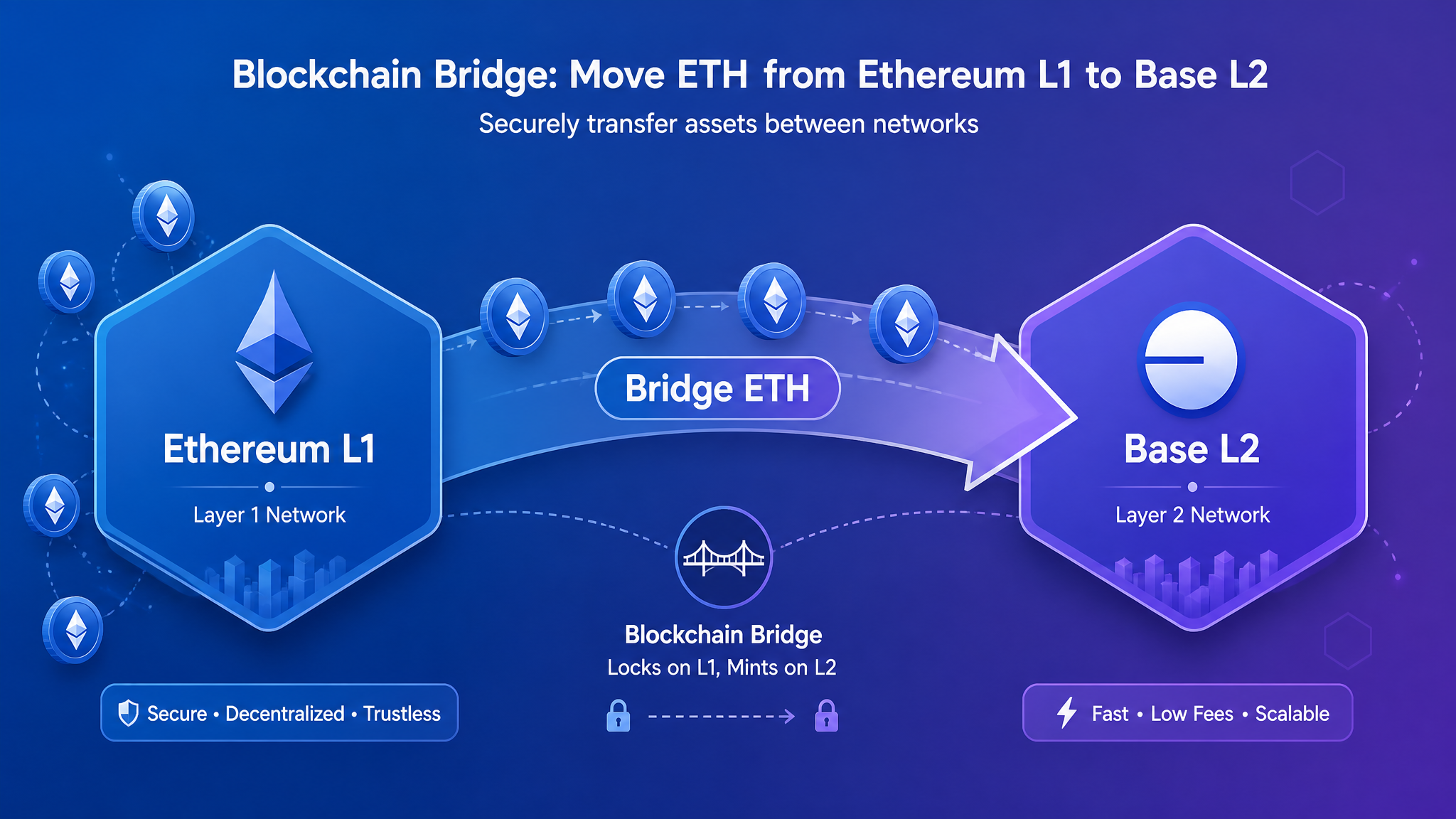
You need ETH on the Base network to pay gas fees and interact with dApps. There are two main ways to get it there.
Option A: Buy Directly on Base via Coinbase
If you have a Coinbase account, you can withdraw ETH directly to your Base wallet address. In the Coinbase app, go to Send/Receive, select ETH, choose "Base" as the network, and enter your wallet address. Funds typically arrive in under 5 minutes. This is the easiest path for most people.
Option B: Bridge from Ethereum Mainnet
If you already hold ETH on Ethereum L1, use the official Base Bridge at bridge.base.org. Connect your wallet, select the amount to bridge, and confirm the transaction. Bridging from L1 to Base takes about 1–3 minutes. Bridging back from Base to Ethereum takes 7 days due to the optimistic rollup challenge period — though third-party bridges like Across Protocol or Stargate can speed this up for a small fee.
Critical tip: Always bridge some ETH for gas before bridging stablecoins. If you bridge USDC without any ETH, you'll be stuck — you can't pay gas fees to move your USDC without ETH in the wallet.
How Much ETH Do You Need?
For casual DeFi use, $10–$20 worth of ETH covers hundreds of transactions on Base. Gas fees are genuinely cheap here — a token swap on Aerodrome might cost $0.02, a lending deposit on Morpho around $0.05. You won't be burning through ETH the way you would on mainnet.
Step 3: Explore the Base DeFi Ecosystem
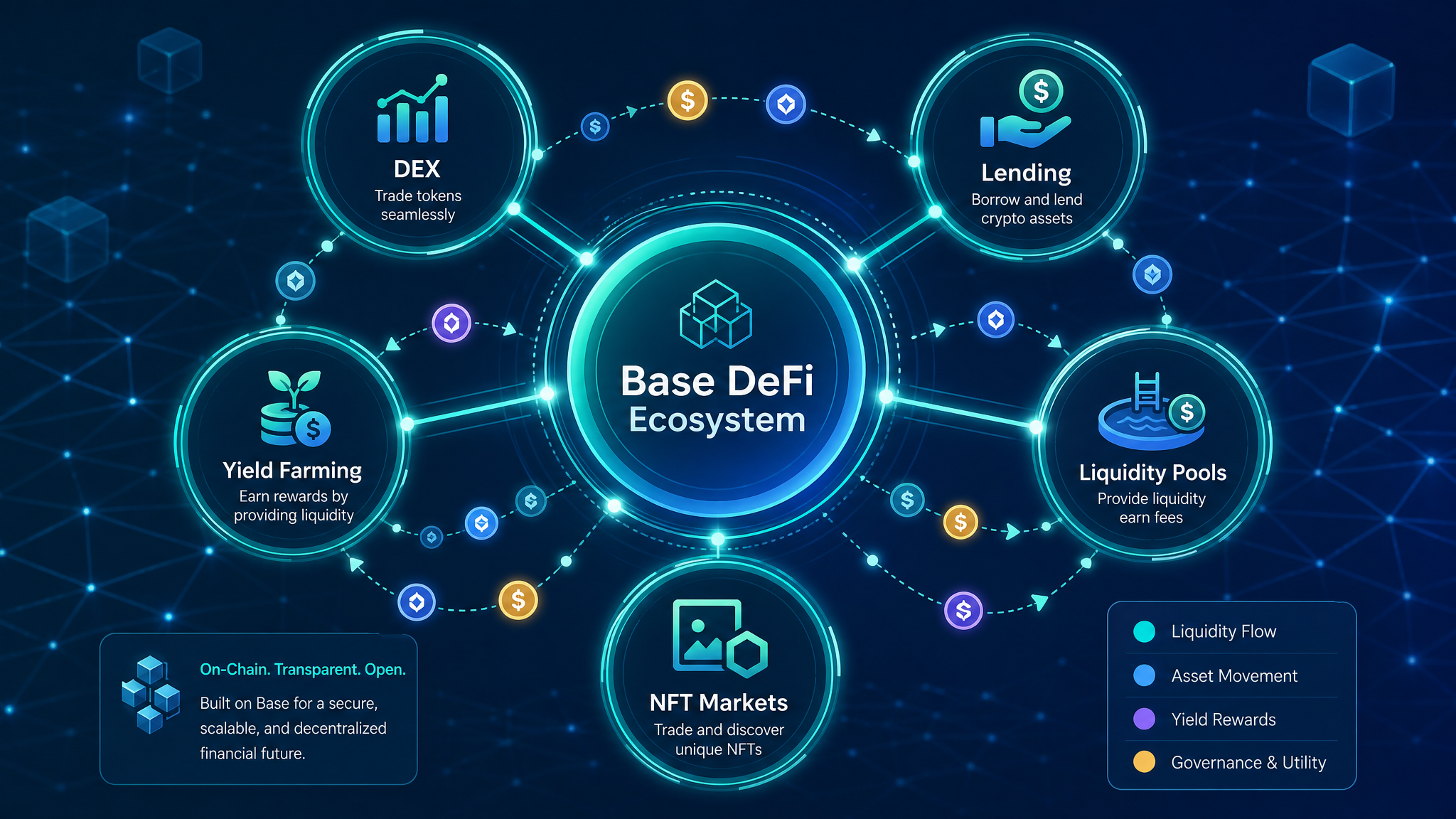
Once you have ETH on Base, you're ready to explore. Here are the core protocols worth knowing.
Aerodrome Finance — The Main DEX
Aerodrome is Base's dominant decentralized exchange, handling the majority of on-chain trading volume. It uses an automated market maker (AMM) model with a vote-lock governance system. You can swap tokens, provide liquidity to earn trading fees, or lock AERO tokens to vote on emissions and earn protocol revenue.
To swap on Aerodrome: connect your wallet at aerodrome.finance, select your input and output tokens, review the price impact and fees, then confirm. For most liquid pairs like ETH/USDC, price impact is minimal and fees are around 0.05%.
Morpho — Lending and Borrowing
Morpho has become Base's go-to lending protocol. You can deposit ETH, cbBTC, or stablecoins to earn yield, or borrow against your holdings. The interface is cleaner than Aave and the rates are often more competitive. A popular strategy in 2026: deposit cbBTC as collateral, borrow USDC, then deploy that USDC into yield-bearing positions — effectively leveraging your Bitcoin exposure while earning yield on the borrowed capital.
Uniswap v4 on Base
Uniswap v4 launched on Base in early 2026 with its "hooks" architecture, allowing custom logic to be attached to liquidity pools. For most users, it's simply a reliable DEX for swapping tokens. The concentrated liquidity model means you can earn more fees as a liquidity provider, though it requires active management to stay in range.
The Base App — Social DeFi
The Base App (formerly Coinbase Wallet) has evolved into something closer to a social trading platform. You can follow other traders, see their on-chain activity, copy their positions, and discover trending tokens through community leaderboards. It's a genuinely different experience from traditional DeFi — more accessible, more social, and integrated directly with Coinbase's fiat on-ramps.
Step 4: Understand the Risks
Base is one of the safer Layer 2 environments, but DeFi always carries real risks. Here's what to watch for:
Smart Contract Risk
Every protocol you interact with runs on smart contracts. If there's a bug or exploit, funds can be lost. Stick to protocols with long track records, multiple audits, and active bug bounty programs. Aerodrome and Morpho both meet this bar. Random new protocols with 1,000% APY offers? Treat those with extreme skepticism.
Impermanent Loss
If you provide liquidity to a trading pair, you're exposed to impermanent loss — the phenomenon where your LP position underperforms simply holding the tokens if prices diverge significantly. For volatile pairs like ETH/MEME, this can be substantial. Stablecoin pairs (USDC/USDT) have minimal impermanent loss but also lower fees.
Phishing and Scams
Always navigate directly to protocol URLs — don't click links in Discord, Telegram, or Twitter DMs. Bookmark the real sites. Never enter your seed phrase anywhere online, ever. Legitimate protocols will never ask for it.
Bridging Risk
Third-party bridges carry additional smart contract risk. The official Base Bridge is the safest option for moving assets, even if it's slower for withdrawals.
Step 5: Track Your Portfolio and Taxes
Every swap, deposit, and withdrawal on Base is a taxable event in most jurisdictions. Use a crypto tax tool like Koinly or CoinTracker — they support Base and can import your transaction history automatically via your wallet address. Set this up from day one rather than trying to reconstruct months of DeFi activity later.
For portfolio tracking, DeBank and Zapper both support Base and give you a clear view of your positions across protocols — LP positions, lending deposits, borrowed amounts, and unrealized gains.
Getting Serious About Crypto Education
Base makes DeFi more accessible, but the underlying concepts — liquidity pools, collateralization ratios, funding rates, impermanent loss — still require real understanding to navigate safely. For a structured approach to learning crypto trading, Icoinpro offers step-by-step training that has helped thousands of beginners build a solid foundation before putting real capital at risk.
And once you're moving meaningful amounts of crypto, keeping assets in a self-custody wallet on-chain means you're responsible for your own security. Protect your crypto assets with a Ledger hardware wallet — the gold standard in cold storage security. Even if you're actively using Base DeFi, keeping the bulk of your holdings in cold storage is smart risk management.
Key Takeaways
- Base is Ethereum's fastest-growing Layer 2 — sub-second transactions, fees under $0.05, and a thriving DeFi ecosystem in 2026.
- Setup is straightforward — Coinbase Wallet or MetaMask, bridge ETH from Coinbase or Ethereum mainnet, and you're ready.
- Always bridge ETH first before stablecoins — you need it for gas fees.
- Core protocols to know: Aerodrome (DEX), Morpho (lending), Uniswap v4 (swaps), Base App (social trading).
- There is no BASE token — anyone selling one is scamming you.
- Track every transaction for tax purposes from day one.
- Start small — learn the mechanics with amounts you can afford to lose before scaling up.
DeFi moves fast. Your trading skills need to keep up.
Whether you're yield farming or trading tokens, the fundamentals of reading charts, managing risk, and timing entries apply everywhere in crypto. Those skills are worth developing properly.
The program I recommend to people who ask me is this crypto trading course — it\'s the one I point friends and family to when they\'re serious about learning. Daily lessons, live analysis, and a community that actually helps.
Affiliate link — I may earn a commission at no extra cost to you. I only recommend what I genuinely use.
Disclaimer: The information provided on this website is for educational and informational purposes only. It should not be considered financial or investment advice. Cryptocurrency investments carry significant risk. Always do your own research and consult with a qualified financial advisor before making investment decisions.
Free Crypto Insights
Get weekly trading tips, market analysis, and exclusive strategies delivered to your inbox.