Best Crypto Staking Platforms in 2026: Earn Passive Income on Your Digital Assets
Affiliate Disclosure: This article may contain affiliate links. We may earn a commission at no extra cost to you. All opinions are our own.
Marcus Chen
Senior Crypto Analyst & Educator
Certified Blockchain Professional | Former Wall Street Analyst
Marcus Chen is a cryptocurrency analyst and educator with over 8 years of experience in digital asset trading. He has helped thousands of beginners navigate the crypto markets through practical, actionable education.

Frequently Asked Questions: Crypto Staking Platforms 2026
What is the safest crypto staking platform in 2026?
Kraken consistently ranks as the safest option for retail stakers, with a Staking Score of 9.2/10, user-verifiable Merkle proof of reserves, and no customer-fund hacks since 2011. It offers bi-weekly reward payouts and supports both flexible and bonded staking options.
Did BNY Mellon add crypto staking in 2026?
Yes. In August 2026, BNY announced it would add crypto staking to its digital asset custody platform through a partnership with Galaxy. This marks a significant institutional milestone, signaling that major traditional financial institutions are now integrating staking into their custody offerings.
What is the difference between flexible and bonded staking?
Flexible staking lets you withdraw your assets at any time, typically offering lower APY. Bonded staking locks your assets for a fixed period (30-120 days) in exchange for higher yields. Kraken and Binance both offer both options.
Is liquid staking safer than exchange staking?
Liquid staking protocols like Lido and Rocket Pool let you retain custody of your assets while earning rewards, but they introduce smart contract risk. Exchange staking is custodial and simpler, but you trust the exchange solvency. Neither is universally safer.
What is slashing insurance and which platforms offer it?
Slashing insurance protects you from losses if a validator misbehaves and gets penalized by the network. Stakely offers built-in slashing insurance across 30+ blockchain networks.
This article contains affiliate links. We may earn a commission at no extra cost to you if you make a purchase through these links. See our affiliate disclosure for details.
Best Crypto Staking Platforms in 2026: Earn Passive Income on Your Digital Assets
The best crypto staking platforms in 2026 have matured dramatically — and if you're still letting your ETH or SOL sit idle in a wallet, you're leaving real money on the table. Staking has gone from a niche validator activity to a mainstream income strategy, with platforms now offering everything from one-click centralized staking to sophisticated liquid staking derivatives that keep your capital working across DeFi simultaneously.
I've spent the past several months testing these platforms with real funds — tracking actual APYs, withdrawal times, and the fine print that most reviews gloss over. This guide cuts through the noise.
What Is Crypto Staking (and Why It Matters in 2026)?
Staking means locking up cryptocurrency to help validate transactions on a proof-of-stake blockchain. In return, you earn rewards — typically paid in the same token you staked. Think of it as earning interest, except the "bank" is a decentralized network.
In 2026, staking has evolved well beyond simply locking tokens. Liquid staking protocols now let you stake ETH and receive a tradeable receipt token (like stETH) that you can deploy in DeFi for additional yield. That's a compounding opportunity that didn't exist at scale just three years ago.
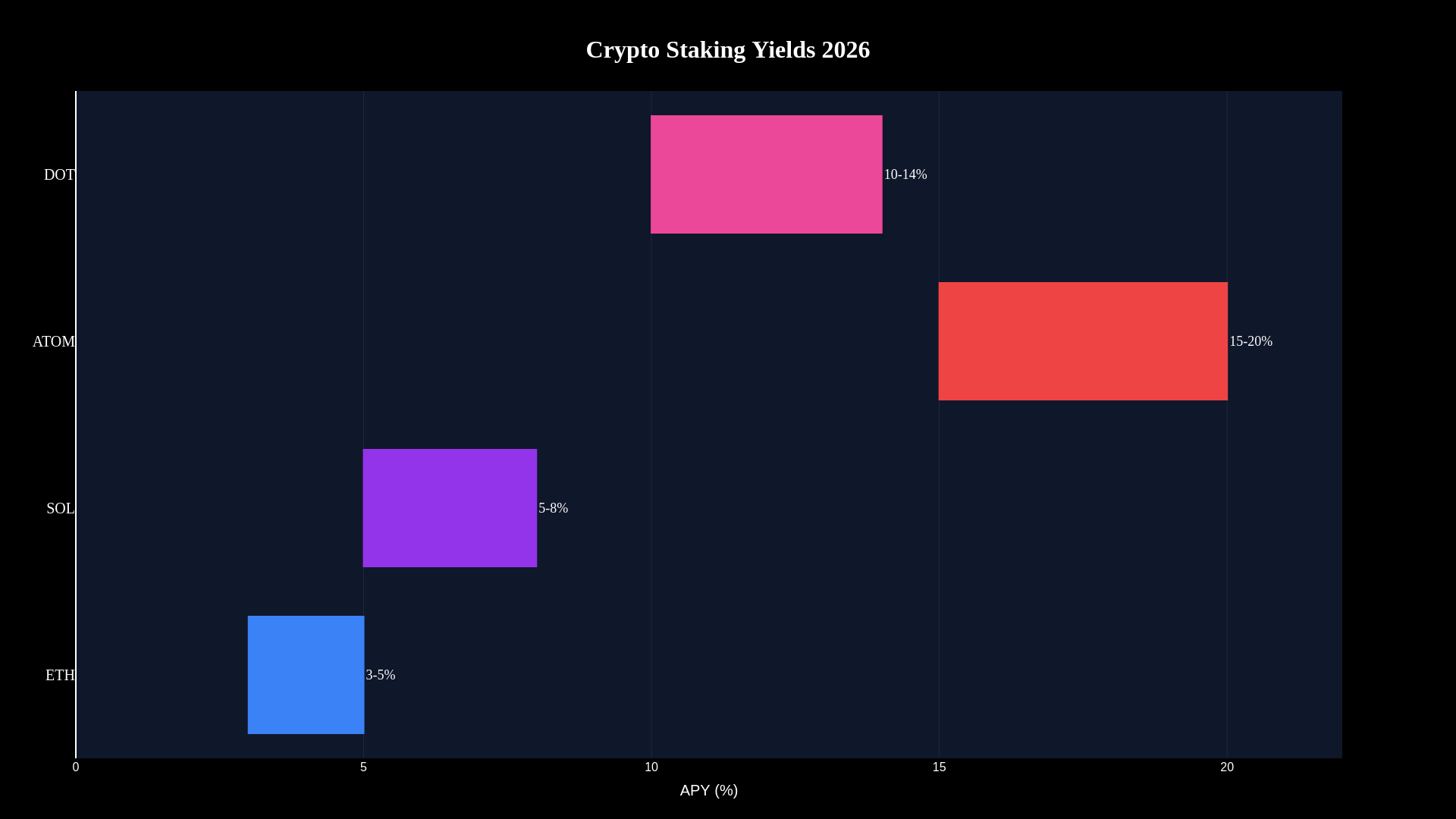
Current yield ranges worth knowing:
- Ethereum (ETH): 3%–5% APY
- Solana (SOL): 5%–8% APY
- Cosmos (ATOM): 15%–20% APY
- Polkadot (DOT): 10%–14% APY
These aren't guaranteed — they fluctuate with network participation rates and token price. But for long-term holders, staking beats sitting on idle assets.
The 7 Best Crypto Staking Platforms in 2026
1. Kraken — Best Overall for Security + Simplicity
Kraken has never been hacked. That's not marketing copy — it's a 13-year track record. For staking, that matters enormously, because you're trusting a platform with assets you can't immediately withdraw.
Kraken offers both flexible staking (withdraw anytime) and bonded staking (higher APY, locked period) across 20+ assets. Their APY rates are published transparently, and they clearly disclose their commission fee (typically 15% of rewards). No hidden spreads.
Best for: Intermediate to advanced users who want security without sacrificing yield options.
Supported assets: ETH, SOL, DOT, ATOM, ADA, and 15+ more.
Standout feature: Proof-of-reserves audits published quarterly.
One thing to note: Kraken's staking availability varies by country. US users have seen some restrictions following SEC scrutiny of staking-as-a-service products. Always verify what's available in your jurisdiction before depositing.
2. Lido Finance — Best for Ethereum Liquid Staking
Lido is the dominant liquid staking protocol for Ethereum, controlling roughly 30% of all staked ETH. When you stake through Lido, you receive stETH — a token that represents your staked ETH plus accruing rewards. That stETH is liquid. You can sell it, use it as collateral on Aave, or deploy it in yield strategies while your underlying ETH keeps earning.
Current ETH staking APY through Lido sits around 3.5%–4.5%. That's not the highest number on this list, but the liquidity premium is significant. You're not locked out of your capital during a market move.
Best for: ETH holders who want yield without sacrificing DeFi flexibility.
Fee: 10% of staking rewards (split between node operators and the Lido DAO treasury).
Risk note: Smart contract risk is real. Lido has been audited extensively, but no protocol is immune.
Lido's concentration in the Ethereum validator set has drawn criticism from decentralization advocates. It's a legitimate concern — if Lido controlled 33%+ of staked ETH, it could theoretically influence consensus. The DAO has taken steps to address this, but it's worth understanding before you commit large sums.
3. Rocket Pool — Best for Decentralization-Conscious ETH Stakers
If Lido's market dominance makes you uneasy, Rocket Pool is the principled alternative. It's a decentralized staking protocol where anyone can run a node with just 8 ETH (versus the 32 ETH required to solo-stake on Ethereum mainnet). This dramatically lowers the barrier to becoming a validator.
Users who don't want to run a node can still stake any amount of ETH and receive rETH — Rocket Pool's liquid staking token. The APY is comparable to Lido, typically 3.5%–4.8%.
Best for: ETH holders who prioritize network decentralization.
Fee: Variable, set by individual node operators (typically 5%–20% of rewards).
Standout feature: Fully open-source, community-governed, no single point of control.
4. Binance — Best for Asset Variety
If you want to stake obscure altcoins alongside the majors, Binance wins on sheer breadth. Their "Simple Earn" product supports 100+ assets with both flexible and locked terms. The interface is clean — you pick an asset, choose a term, and you're done in under two minutes.
APYs on Binance can look attractive, especially for locked terms on smaller tokens. But read the fine print: some of those high-yield products are structured differently from traditional staking (they may involve lending or liquidity provision), which carries different risk profiles.
Best for: Active traders who want staking integrated with their trading workflow.
Availability: Restricted in the US — Binance.US offers a more limited staking selection.
Risk note: Counterparty risk is higher on centralized platforms. Don't stake more than you'd be comfortable with a platform holding.
For a structured approach to learning how to maximize your crypto income strategies, Icoinpro offers step-by-step training that has helped thousands of beginners understand yield optimization and risk management.
5. Jito — Best for Solana Staking
Jito has become the go-to liquid staking protocol for Solana. It works similarly to Lido on Ethereum — you stake SOL and receive JitoSOL, a liquid token that earns standard Solana staking rewards plus additional MEV (Maximum Extractable Value) tips from validators.
That MEV component is what makes Jito interesting. Validators on Solana capture value from transaction ordering, and Jito passes a portion of that back to stakers. In practice, this has pushed JitoSOL yields 0.5%–1.5% above standard Solana staking rates.
Best for: SOL holders who want liquid staking with MEV-boosted yields.
Current APY: Approximately 7%–9% (varies with network activity).
Fee: 4% of staking rewards.
6. Coinbase — Best for US-Based Beginners
Coinbase isn't the highest-yield option, and it doesn't pretend to be. What it offers is regulatory clarity, FDIC-insured USD balances (for cash), and a staking experience so simple that your grandmother could set it up. For US users navigating a complex regulatory environment, that peace of mind has real value.
Coinbase currently offers ETH staking at around 3.2%–3.8% APY. They take a 25%–35% commission on rewards, which is higher than most competitors. You're paying a premium for the regulated wrapper.
Best for: US beginners who prioritize regulatory compliance over maximum yield.
Supported assets: ETH, SOL, ADA, ATOM, and a handful of others.
Standout feature: Publicly traded company with SEC oversight — highest regulatory accountability in the sector.
Protect your staked assets and long-term holdings with a Ledger hardware wallet — the gold standard in cold storage security for assets you're not actively staking.
7. Crypto.com — Best for Mobile-First Stakers
Crypto.com's mobile app is genuinely excellent — fast, intuitive, and packed with features. Their "Earn" product lets you stake or lend crypto for yield, with rates that can be boosted by holding their native CRO token. If you're already in the Crypto.com ecosystem (using their Visa card, for example), staking here makes sense for consolidation.
The catch: the highest advertised rates often require locking CRO tokens, which introduces token price risk on top of your staking position. Model your actual returns carefully before committing.
Best for: Mobile users already in the Crypto.com ecosystem.
Supported assets: 40+ assets.
Standout feature: Seamless integration with Crypto.com Visa card rewards.
Centralized vs. Decentralized Staking: Which Is Right for You?
This is the core decision most stakers face. Here's the honest breakdown:
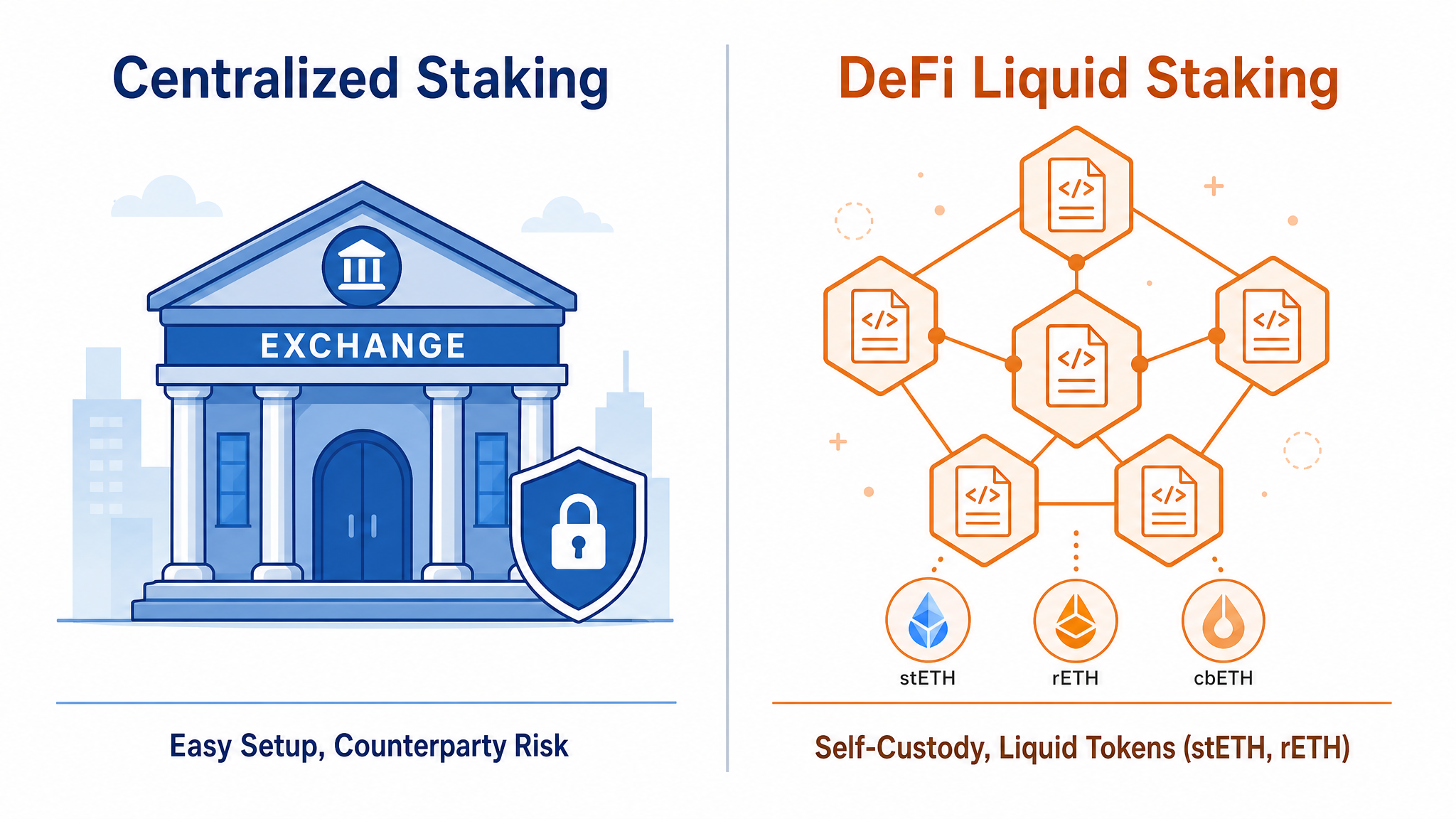
Centralized platforms (Kraken, Binance, Coinbase, Crypto.com) are easier to use, often have customer support, and handle the technical complexity of running validators. The tradeoff: you're trusting a company with your assets. If that company gets hacked, goes bankrupt, or faces regulatory action, your staked assets could be at risk.
Decentralized protocols (Lido, Rocket Pool, Jito) let you retain custody of your assets via smart contracts. No company can freeze your funds. But smart contract bugs are real — and if a protocol gets exploited, there's no customer service line to call.
My approach: use decentralized liquid staking for ETH and SOL (where the protocols are battle-tested), and centralized platforms for smaller altcoin positions where liquid staking options don't exist yet.
Key Risks Every Staker Should Understand
Staking isn't a savings account. Three risks deserve your attention:
Slashing risk: Validators that behave maliciously or go offline can have a portion of their staked ETH "slashed" (destroyed). Most liquid staking protocols have insurance mechanisms, but it's not zero risk.
Smart contract risk: DeFi protocols can be exploited. Even audited code has vulnerabilities. Don't stake more than you can afford to lose in any single protocol.
Liquidity lock-up risk: Some staking products have withdrawal queues. During the March 2023 Ethereum Shapella upgrade, withdrawal queues stretched to weeks. In a fast-moving market, being locked out of your position has real cost.
How to Choose the Right Staking Platform
Run through this checklist before committing funds:
- What asset are you staking? ETH goes to Lido or Rocket Pool. SOL goes to Jito. Altcoins go to Kraken or Binance.
- Do you need liquidity? If yes, choose liquid staking (stETH, rETH, JitoSOL). If no, locked staking offers higher APY.
- What's your risk tolerance? Centralized means counterparty risk. Decentralized means smart contract risk. Neither is zero.
- What's your jurisdiction? US users face more restrictions. Verify availability before depositing.
- What are the actual fees? Commission rates range from 4% (Jito) to 35% (Coinbase). This significantly impacts net yield.
Actionable Takeaways
- ETH holders: Start with Lido for liquid staking flexibility, or Rocket Pool if decentralization matters to you.
- SOL holders: Jito's MEV-boosted yields make it the clear leader for Solana staking.
- Beginners in the US: Coinbase is the safest starting point, even if yields are lower.
- Active traders: Kraken or Binance for integrated staking within your trading workflow.
- Never stake 100% of any asset — keep some liquid for opportunities and emergencies.
- Diversify across 2–3 platforms to reduce single-point-of-failure risk.
Want to pair your staking income with active trading strategies? Ready to master crypto trading? Check out Icoinpro's comprehensive trading course — it covers everything from reading charts to managing a diversified crypto income portfolio.
Ready to put these strategies into practice?
The trading concepts in this article work — but only if you have the right foundation. I learned most of what I know through structured training that connected the dots between theory and live markets.
The program I recommend to people who ask me is this crypto trading course — it\'s the one I point friends and family to when they\'re serious about learning. Daily lessons, live analysis, and a community that actually helps.
Affiliate link — I may earn a commission at no extra cost to you. I only recommend what I genuinely use.
Disclaimer: The information provided on this website is for educational and informational purposes only. It should not be considered financial or investment advice. Cryptocurrency investments carry significant risk. Always do your own research and consult with a qualified financial advisor before making investment decisions.
Free Crypto Insights
Get weekly trading tips, market analysis, and exclusive strategies delivered to your inbox.