Crypto Basis Trading: The Cash-and-Carry Strategy Earning 5–15% Annualized in 2026
Affiliate Disclosure: This article may contain affiliate links. We may earn a commission at no extra cost to you. All opinions are our own.
Marcus Chen
Senior Crypto Analyst & Educator
Certified Blockchain Professional | Former Wall Street Analyst
Marcus Chen is a cryptocurrency analyst and educator with over 8 years of experience in digital asset trading. He has helped thousands of beginners navigate the crypto markets through practical, actionable education.
Disclaimer: This content is for informational purposes only and should not be considered financial advice. Cryptocurrency investments carry significant risk. Always do your own research (DYOR) before making any investment decisions.
This article contains affiliate links. We may earn a commission at no extra cost to you if you make a purchase through these links. See our affiliate disclosure for details.
Crypto Basis Trading: The Cash-and-Carry Strategy Earning 5–15% Annualized in 2026
Crypto basis trading is one of the most underrated market-neutral strategies available to sophisticated investors in 2026. While retail traders chase volatile altcoin pumps, a growing cohort of institutional desks and savvy individuals are quietly pocketing 5–15% annualized yields — with minimal directional exposure to Bitcoin’s price swings. The mechanics are elegant: buy spot BTC, short a futures contract at a premium, and collect the spread as it converges. No price prediction required.
This guide breaks down exactly how the trade works, what yields look like right now, where the real risks hide, and how to execute it whether you’re using CME futures, perpetual contracts, or spot Bitcoin ETFs.
What Is Crypto Basis Trading?
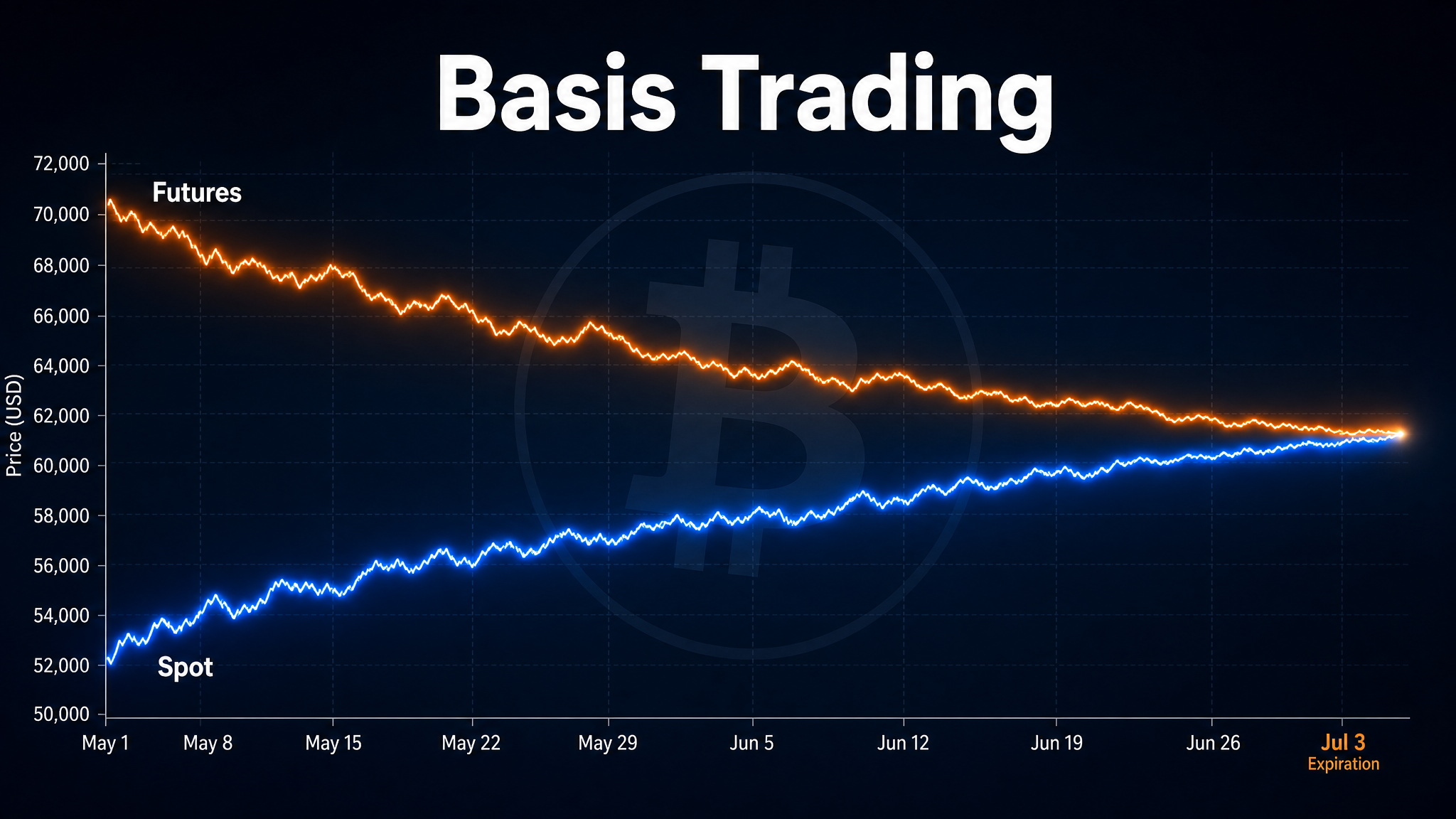
The “basis” in crypto refers to the price difference between a spot asset and its corresponding futures contract. In most market conditions, Bitcoin futures trade at a premium to spot — a state called contango. That premium exists because leveraged traders are willing to pay extra for futures exposure rather than tying up capital in spot holdings.
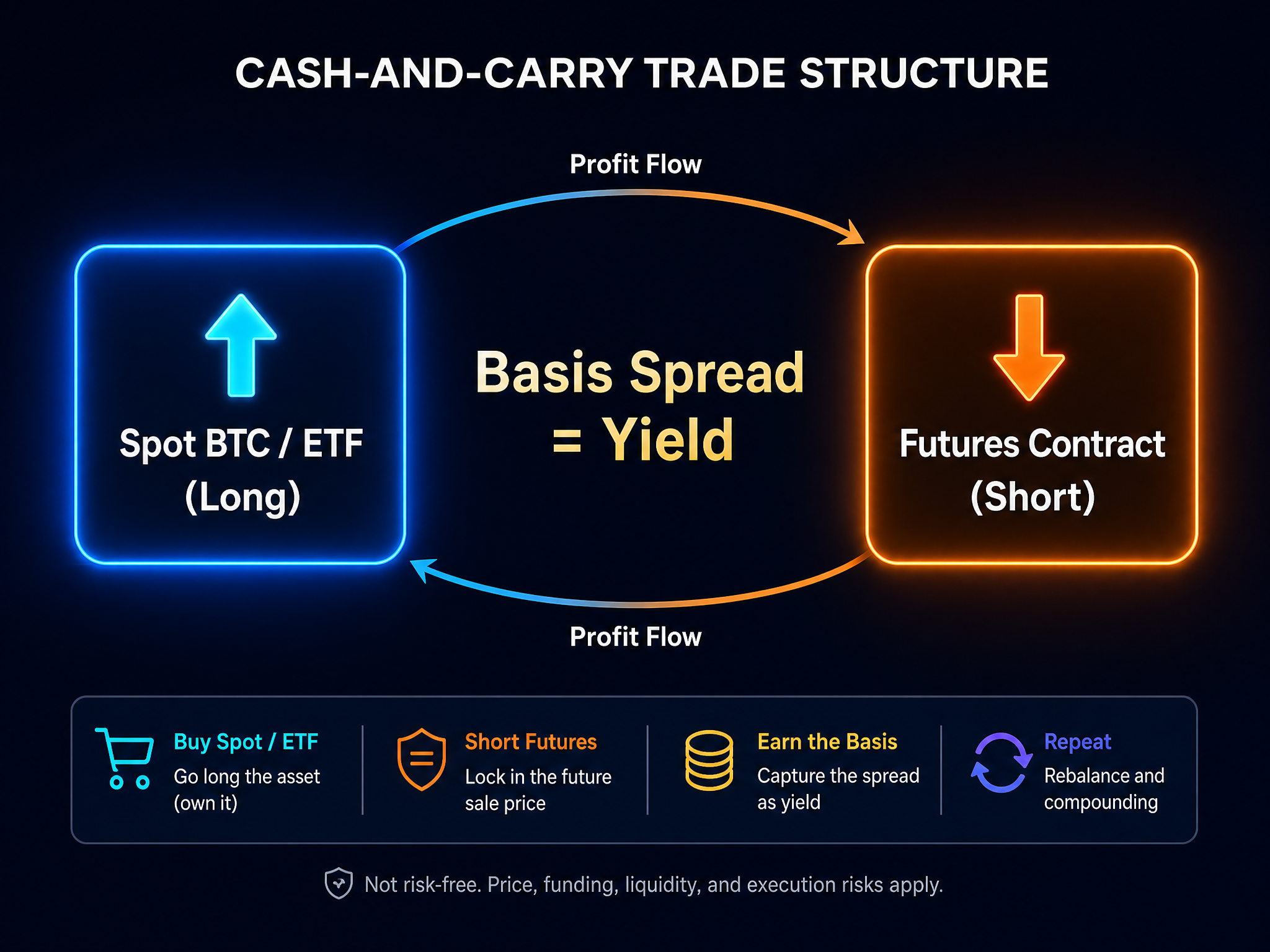
The cash-and-carry trade exploits this gap:
- Buy spot Bitcoin (or a spot-equivalent like IBIT ETF shares)
- Short a futures contract at the higher futures price
- Hold until expiry — the futures price converges to spot, and you pocket the spread
The result is a position that’s essentially delta-neutral. If Bitcoin drops 20%, your spot position loses value — but your short futures position gains roughly the same amount. The profit comes purely from the basis convergence, not from price direction.
Current Yield Environment: What Basis Trades Are Paying in Mid-2026
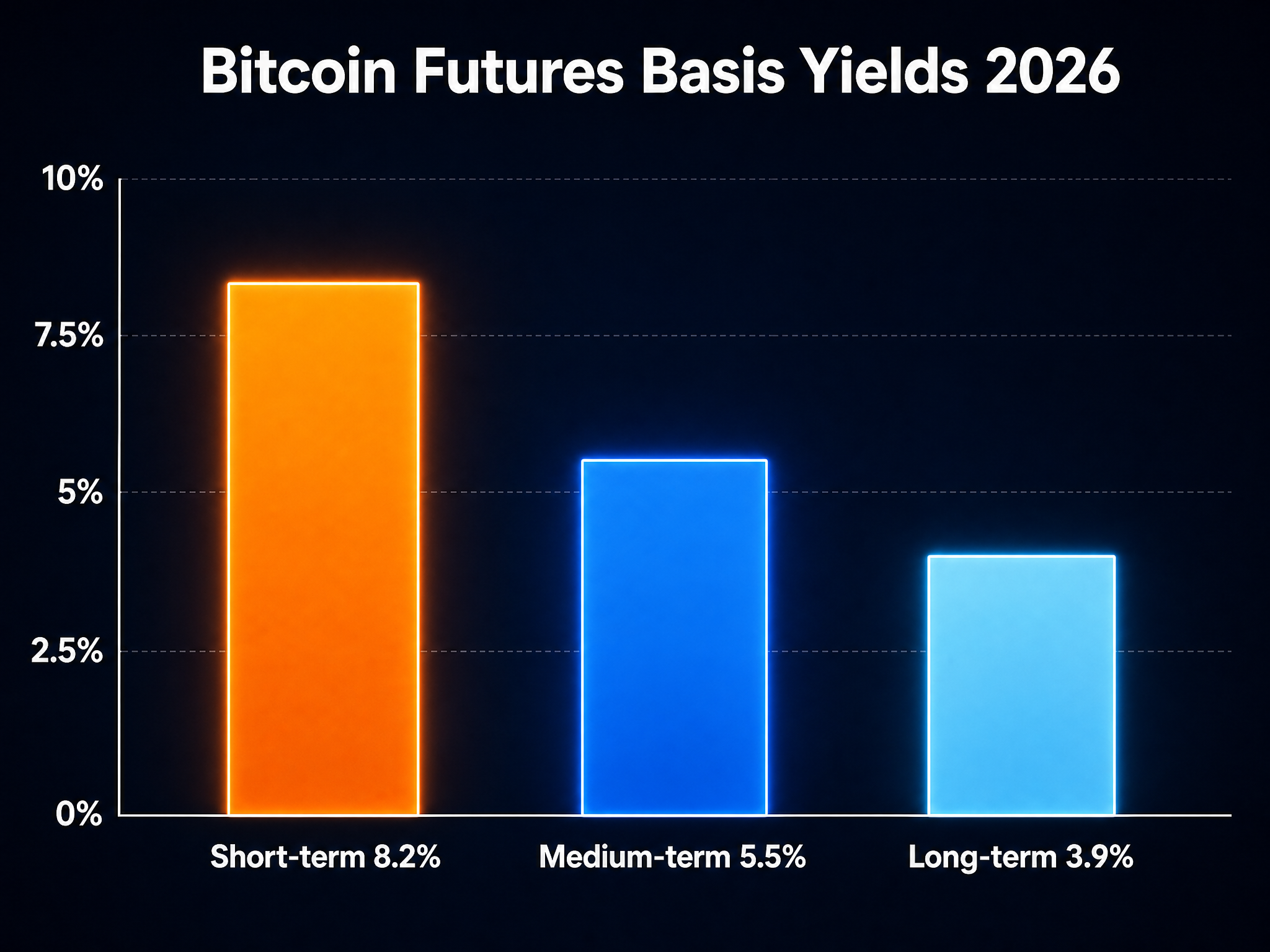
As of mid-June 2026, annualized basis yields vary considerably depending on contract duration and exchange:
- Short-term contracts (≈10 days to expiry): 2.35%–8.20% annualized, with some Huobi contracts touching the higher end
- Medium-term contracts (100–200 days): 3.0%–5.5% annualized on major venues like Binance, OKX, and Kraken
- December 2026 CME contracts: Approximately 2.96%–3.89% annualized
- 2027 dated futures: 2.39%–4.11% annualized
These numbers look modest compared to the 40%+ spikes seen during bull market peaks. But here’s the thing — 5–8% annualized on a market-neutral position, with no directional risk, compares favorably to most fixed-income alternatives. And during periods of elevated market sentiment, those yields can spike dramatically.
Historical data from 2019–2024 shows average annualized carry around 7–8%, with Sharpe ratios in the 7–10 range for well-executed strategies. That’s institutional-grade risk-adjusted performance.
Two Ways to Execute the Basis Trade
Method 1: CME Futures + Spot ETF (Institutional Approach)
This is the cleanest version of the trade for U.S.-based investors. You buy shares of a spot Bitcoin ETF — IBIT (BlackRock) or FBTC (Fidelity) are the most liquid — and simultaneously short CME Bitcoin futures contracts.
Why this pairing works so well: both instruments reference the same underlying rate (the CME CF Bitcoin Reference Rate), which minimizes tracking error. The “price singularity” between them means the basis converges predictably at expiry.
Practical setup for a 00,000 position:
- Buy 00,000 of IBIT shares in a brokerage account
- Short 2 CME Bitcoin micro futures contracts (each represents 0.1 BTC; adjust sizing to match your spot exposure)
- CME micro contracts make this accessible for accounts starting around 0,000–0,000
- Hold to expiry, collect the basis spread minus fees
The main friction: CME requires a futures-approved account, and margin requirements can be substantial. Transaction costs — including ETF management fees, futures commissions, and bid-ask spreads — eat into the net yield. Budget roughly 0.5–1.0% annually in costs for a well-optimized setup.
Method 2: Perpetual Funding Rate Capture (Crypto-Native Approach)
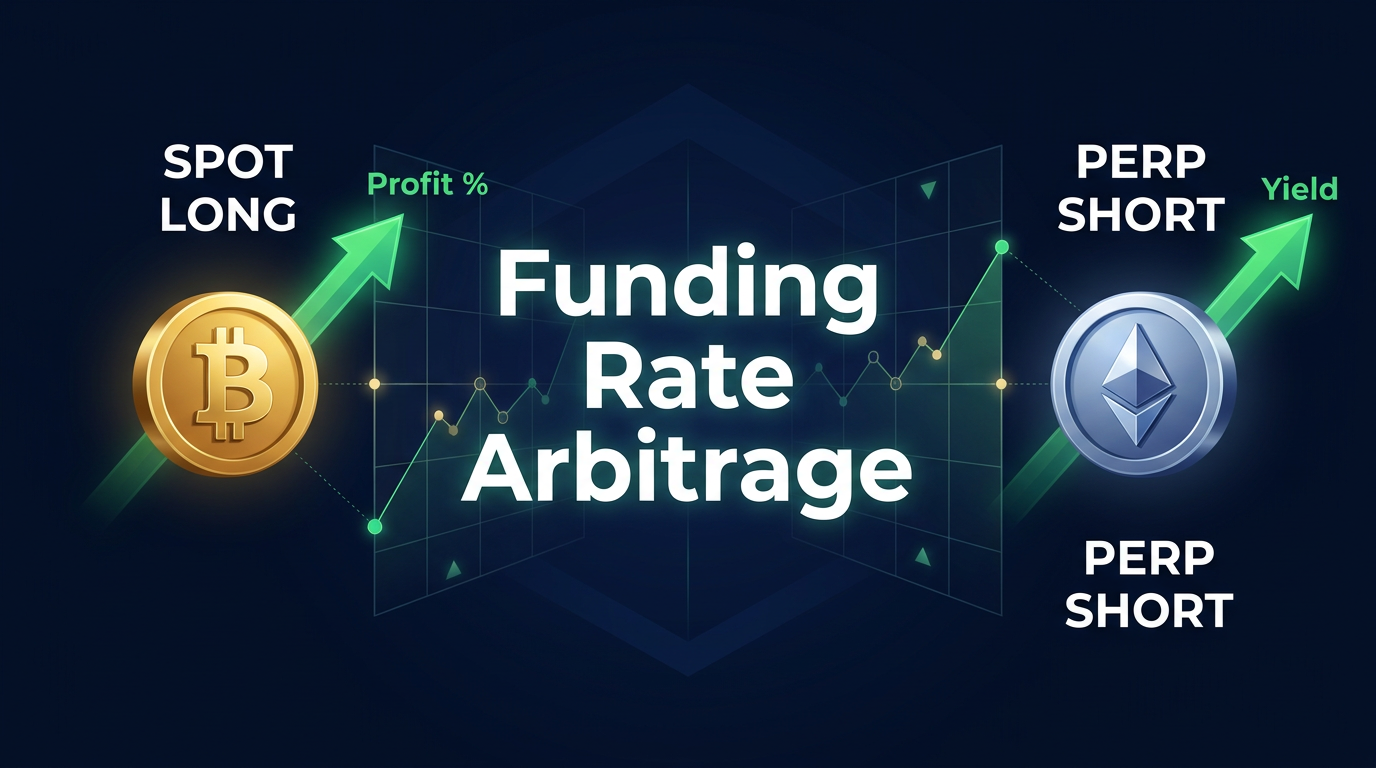
On crypto exchanges like Binance, Bybit, and OKX, perpetual futures don’t expire — instead, they use a funding rate mechanism to keep the contract price anchored to spot. When the market is bullish and longs dominate, funding rates turn positive: longs pay shorts every 8 hours.
The trade: buy spot BTC on the exchange, short the perpetual contract, and collect funding payments. When funding rates run at 0.05–0.10% per 8-hour period, that annualizes to roughly 54–109%. Obviously those rates don’t persist — but even at normalized 0.01% per period, you’re looking at ~11% annualized.
The catch: funding rates can flip negative during bearish periods, turning your income stream into a cost. You need to monitor rates actively and be prepared to exit when the trade turns unfavorable. This is why many traders set automated alerts at funding rate thresholds.
Ready to master crypto trading? Check out Icoinpro’s comprehensive trading course — it covers derivatives strategies including basis trading with step-by-step execution guides.
The Real Risks (That Most Guides Gloss Over)
The cash-and-carry trade is often marketed as “risk-free arbitrage.” It isn’t. Here’s where things actually go wrong:
Liquidation Risk on the Short Leg
If Bitcoin surges 30% rapidly, your short futures position faces margin calls. Even though your spot position has gained the same amount, the gains aren’t immediately accessible to cover futures margin — they’re in different accounts or instruments. Research shows a 10% increase in standardized carry predicts a 22% increase in short-position liquidations. This is the trade’s biggest practical danger.
Mitigation: use conservative leverage (1–2x maximum on the futures leg), maintain a cash buffer of 20–30% of position size for margin calls, and set stop-loss orders on the futures position.
Funding Rate Compression
For perpetual-based strategies, funding rates can compress to near-zero or flip negative during market downturns. The 2022 bear market saw extended periods of negative funding — meaning shorts were paying longs. If you entered expecting positive carry and rates flip, you’re now paying to hold the position.
Execution and Fee Drag
On a 5% gross yield, a 1.5% annual cost structure leaves you with 3.5% net. That’s still decent, but it means execution quality matters enormously. Use limit orders where possible, choose exchanges with maker rebates, and account for all costs before entering.
Counterparty and Smart Contract Risk
Exchange insolvency (FTX being the cautionary tale) can wipe out both legs of the trade simultaneously. For DeFi-based implementations, smart contract bugs are a real concern. Diversify across venues and never concentrate more than you can afford to lose on a single platform.
Protect your crypto assets with a Ledger hardware wallet — the gold standard in cold storage security — to keep your spot holdings safe while you execute basis trades.
Advanced Execution: Optimizing the Trade in 2026
Timing Your Entry
Basis yields expand during periods of high market optimism — when retail and leveraged traders pile into long futures positions. The best entry points for basis trades are often when the Fear & Greed Index is in “Greed” or “Extreme Greed” territory, because that’s when futures premiums are fattest.
Conversely, entering during bearish periods when funding rates are compressed or negative means you’re accepting thin (or negative) carry. Patience pays here.
Calendar Spread Variations
Instead of spot vs. futures, some traders run calendar spreads: long a near-term futures contract, short a longer-dated one. The logic is that the term structure (the shape of the futures curve) can be exploited when near-term and long-term premiums diverge. This approach avoids the need to hold spot Bitcoin entirely, which can simplify the capital structure.
Scaling with Micro Contracts
CME’s micro Bitcoin futures (0.1 BTC per contract) have made this strategy accessible to accounts as small as 0,000–0,000. You don’t need institutional capital to run a basis trade — you need discipline, a futures-approved account, and a clear understanding of the margin requirements.
Monitoring Tools
Track basis yields in real time using:
- Coinalyze.net — shows annualized basis across exchanges and contract durations
- Glassnode Studio — 3-month annualized basis chart for BTC
- CryptoQuant — CME futures basis tracking with historical context
Set alerts when basis yields cross your target threshold (e.g., above 8% annualized) to identify optimal entry windows.
Is Basis Trading Right for You?
This strategy suits a specific type of investor: someone who wants Bitcoin exposure without the stomach-churning volatility, who has access to futures markets, and who is comfortable managing margin positions. It’s not a passive “set and forget” trade — it requires active monitoring, especially for the perpetual funding rate version.
If you’re newer to derivatives and want to build the foundational knowledge before executing this strategy, Icoinpro offers step-by-step training that has helped thousands of beginners understand crypto derivatives from the ground up.
Key Takeaways
- Crypto basis trading captures the spread between spot and futures prices — a market-neutral yield strategy
- Current annualized yields range from 2.35%–8.20% depending on contract duration and exchange
- Two main approaches: CME futures + spot ETF (institutional) or perpetual funding rate capture (crypto-native)
- Key risks: liquidation on the short leg, funding rate compression, fee drag, and counterparty risk
- Best entry timing: when market sentiment is elevated and futures premiums are fat
- Use real-time tools like Coinalyze, Glassnode, and CryptoQuant to monitor basis yields
- CME micro contracts make this accessible to accounts starting around 0,000–0,000
Ready to put these strategies into practice?
The trading concepts in this article work — but only if you have the right foundation. I learned most of what I know through structured training that connected the dots between theory and live markets.
The program I recommend to people who ask me is this crypto trading course — it\'s the one I point friends and family to when they\'re serious about learning. Daily lessons, live analysis, and a community that actually helps.
Affiliate link — I may earn a commission at no extra cost to you. I only recommend what I genuinely use.
Disclaimer: The information provided on this website is for educational and informational purposes only. It should not be considered financial or investment advice. Cryptocurrency investments carry significant risk. Always do your own research and consult with a qualified financial advisor before making investment decisions.
Free Crypto Insights
Get weekly trading tips, market analysis, and exclusive strategies delivered to your inbox.