Perpetual Funding Rate Arbitrage: The Market-Neutral Crypto Strategy Earning 10–30% APY in 2026
Affiliate Disclosure: This article may contain affiliate links. We may earn a commission at no extra cost to you. All opinions are our own.
Marcus Chen
Senior Crypto Analyst & Educator
Certified Blockchain Professional | Former Wall Street Analyst
Marcus Chen is a cryptocurrency analyst and educator with over 8 years of experience in digital asset trading. He has helped thousands of beginners navigate the crypto markets through practical, actionable education.
Disclaimer: This content is for informational purposes only and should not be considered financial advice. Cryptocurrency investments carry significant risk. Always do your own research (DYOR) before making any investment decisions.
This article contains affiliate links. We may earn a commission at no extra cost to you if you make a purchase through these links. See our affiliate disclosure for details.
Perpetual Funding Rate Arbitrage: The Market-Neutral Crypto Strategy Earning 10–30% APY in 2026
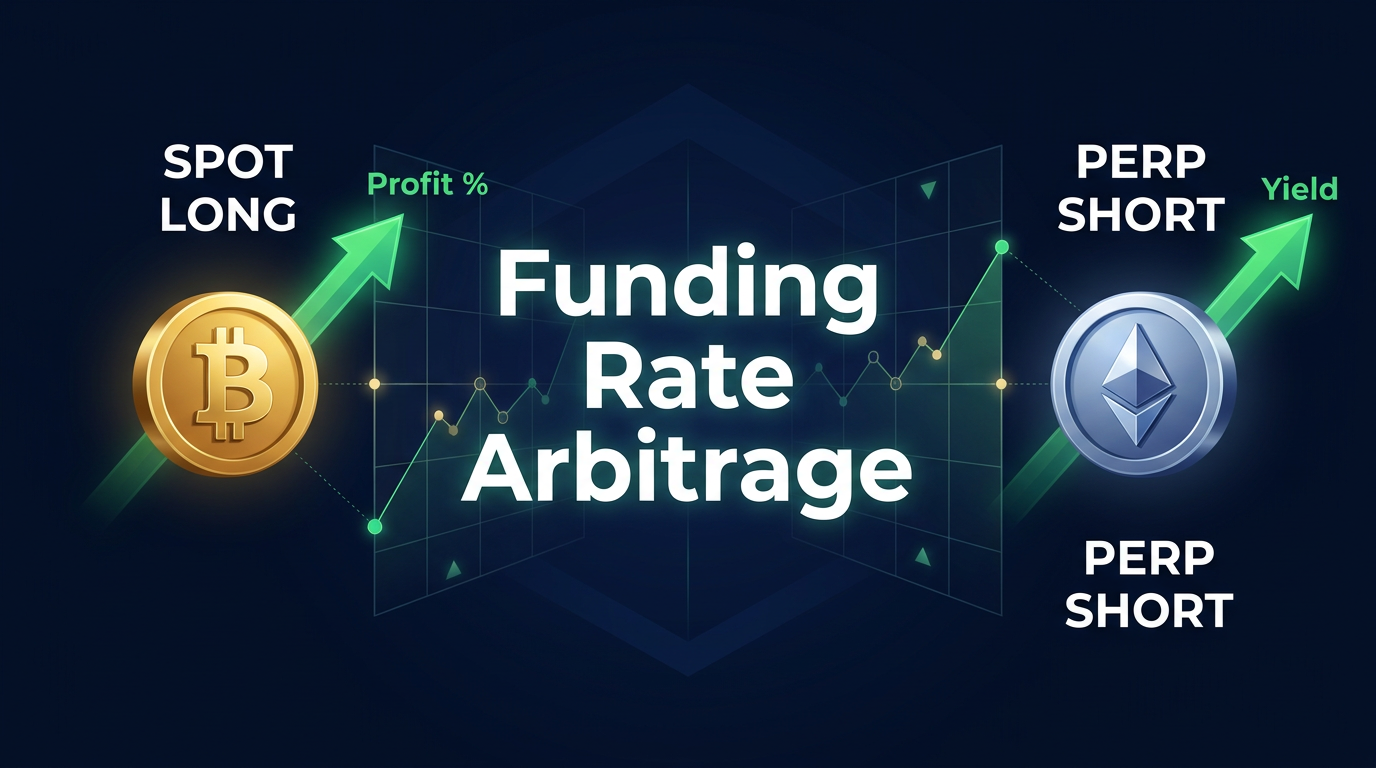
Perpetual funding rate arbitrage is one of the most reliable delta-neutral strategies in crypto — and in August 2026, it’s more relevant than ever. With annualized yields ranging from 8% to 30% depending on market conditions, this approach lets you earn consistent returns without betting on price direction. The core idea: go long spot, short perpetual, collect the funding payment every 8 hours. Simple in theory, nuanced in execution.
How Perpetual Funding Rate Arbitrage Works
Perpetual futures contracts don’t have an expiry date, so exchanges use a funding mechanism to keep their price anchored to the spot market. When bullish sentiment dominates and longs outnumber shorts, the funding rate turns positive — meaning long holders pay short holders every 8 hours. By holding an equal long position in spot and a short in perpetuals, you cancel out price risk entirely while pocketing those funding payments.
Here’s a concrete example. Say BTC is trading at $95,000 and the 8-hour funding rate is 0.03%. On a $10,000 position, that’s $3 every 8 hours, or roughly $9/day and $3,285/year — a 32.8% annualized yield before fees. In calmer markets, rates typically settle between 0.01% and 0.02% per 8-hour period, translating to 10–18% APY.
August 2026 Updates: What’s Changed
The strategy has evolved significantly since early 2026. A few key developments worth noting:
- Hyperliquid and Drift Protocol have emerged as top venues for on-chain funding rate arbitrage, offering transparent fee structures and deep liquidity on BTC and ETH perps.
- Bybit’s H1 2026 Security Report confirmed the exchange intercepted over $700 million in suspicious withdrawals — a reassuring sign for traders using it as an arbitrage venue.
- Funding rate volatility has increased during macro events. During August 2026 Fed meeting speculation, BTC funding rates briefly spiked to 0.08% per 8 hours before normalizing.
- Centralized exchanges like Binance, OKX, and Bybit remain the most liquid venues, but decentralized alternatives are closing the gap fast.
For a broader look at how perpetual futures fit into the regulatory landscape, see our guide on CFTC-approved Bitcoin perpetual futures.
Key Risks You Cannot Ignore
This strategy isn’t risk-free. Three failure modes kill most arbitrage trades:
Funding rate reversals. If sentiment flips bearish, the funding rate can go negative — now you’re paying instead of earning. Always set alerts for when rates drop below your break-even fee threshold.
Liquidation on the short leg. Even in a delta-neutral setup, a sharp price spike can push your futures margin toward liquidation. Maintain 25–30% excess margin and use isolated margin mode to contain the damage.
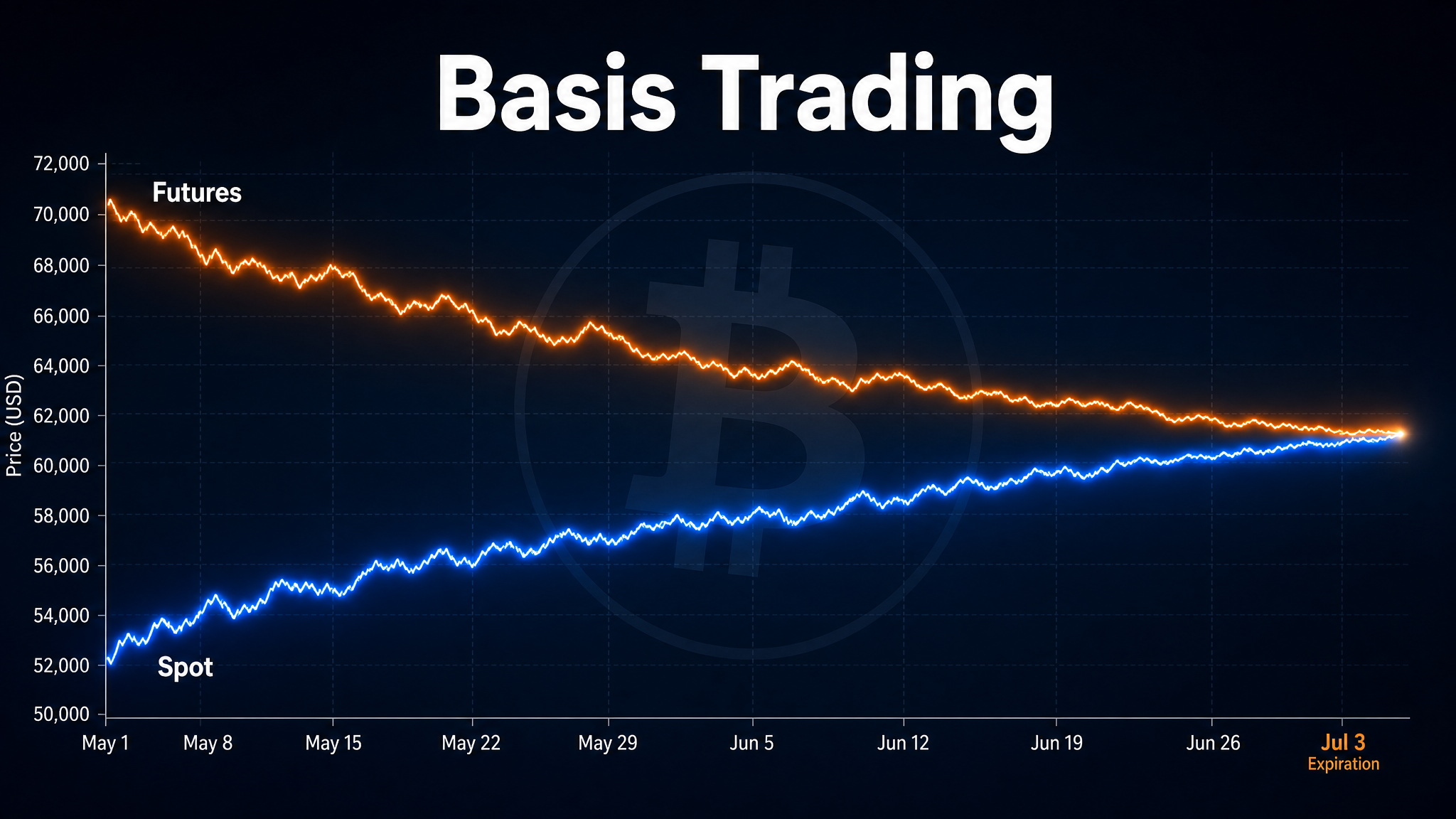
Basis risk. The spot and perpetual prices don’t always move in perfect lockstep. During extreme volatility, the basis can widen enough to erode accumulated funding gains. Stick to BTC and ETH — the most liquid pairs — to minimize this.
Best Practices for 2026
Experienced arbitrageurs follow a tight playbook:
- Minimum capital: $5,000–10,000. Below this, transaction fees eat your yield.
- Use limit orders to enter and exit. Market orders on less liquid pairs cause slippage that can wipe out days of funding income.
- Monitor continuously. Automated alert tools are essential. You need to know the moment funding rates drop below your cost basis.
- Diversify venues. Running the trade on two exchanges reduces counterparty risk but introduces cross-venue basis risk. Know the tradeoff.
- Rebalance actively. Funding payments don’t compound automatically. Redeploy profits regularly to maintain your target position size.
Want to pair this with a structured education on crypto trading mechanics? Icoinpro’s comprehensive trading course covers funding rate strategies alongside broader market structure concepts.
Comparing Venues: CEX vs DEX in 2026
The venue choice matters more than most traders realize. Here’s how the main options stack up:
- Binance: Deepest liquidity, lowest slippage on BTC/ETH. Best for large positions ($50K+).
- Bybit: Strong derivatives suite, good API support. Post-2025 security overhaul makes it more trustworthy.
- OKX: Competitive fees, solid unified account structure.
- Hyperliquid: Fully on-chain, no KYC, transparent order book. Funding rates can be more volatile but the transparency is a genuine edge.
- Drift Protocol (Solana): Fast settlement, low fees. Best for smaller positions in the DeFi-native crowd.
For a deeper comparison of Bybit and OKX specifically, check our OKX vs Bybit 2026 review.
FAQ: Perpetual Funding Rate Arbitrage
Q: What annualized return can I realistically expect in 2026?
A: In stable or moderately bullish markets, 8–18% APY is realistic. During high-sentiment periods, rates can spike to 50%+ temporarily, but these windows close fast as arbitrageurs pile in.
Q: Is this strategy suitable for beginners?
A: Not really. You need to understand margin mechanics, liquidation risk, and how to monitor funding rates in real time. Start with paper trading before committing real capital.
Q: Can I run this on a DEX?
A: Yes. Hyperliquid and Drift Protocol both support it. The tradeoff is slightly higher slippage and more volatile funding rates compared to top CEXs.
Q: What happens if the exchange gets hacked?
A: Your funds on the exchange are at risk. Never keep more capital on any single exchange than you’re willing to lose. Consider splitting between two venues.
Q: How often should I rebalance?
A: Most traders rebalance weekly or when the position drifts more than 5% from delta-neutral. Automated bots can handle this continuously.
Actionable Takeaways
- Perpetual funding rate arbitrage earns 8–30% APY by collecting funding payments on a delta-neutral long spot / short perp position.
- Minimum viable capital is $5,000–10,000; below that, fees destroy the yield.
- Top venues in August 2026: Binance, Bybit, OKX (CEX); Hyperliquid, Drift (DEX).
- Set automated alerts for funding rate reversals — this is the strategy’s primary risk.
- Maintain 25–30% excess margin on the futures leg to avoid liquidation during volatility spikes.
Protect the capital you’re deploying in this strategy with proper cold storage. The Ledger Nano X keeps your spot holdings offline and safe while your futures position runs on the exchange.
Understanding Funding Rate Cycles
Funding rates don’t move randomly. They follow market sentiment cycles that experienced traders learn to read. During bull runs, rates stay elevated for weeks — sometimes months — as retail FOMO drives perpetual longs. During corrections, rates can flip negative quickly as panic sellers pile into shorts.
The most profitable windows for this strategy are the early stages of a bull run, before arbitrageurs fully compress the rates. By the time a funding rate is widely discussed on crypto Twitter, the easy money is usually gone. Monitoring tools like Coinglass and Velo Data give you real-time funding rate data across exchanges, letting you spot elevated rates before they normalize.
One practical approach: set a minimum threshold of 0.02% per 8 hours (roughly 21.9% annualized) before entering a new position. Below that, the risk-adjusted return doesn’t justify the operational complexity and counterparty risk of running the trade.
Tax Considerations for Funding Rate Income
Funding payments are generally treated as ordinary income in most jurisdictions, not capital gains. This matters for your after-tax return calculation. If you’re in a 37% federal tax bracket in the US, a 20% gross yield becomes roughly 12.6% after federal taxes — still attractive, but the math changes significantly. Consult a crypto-specialized tax professional before scaling this strategy.
Ready to put these strategies into practice?
The trading concepts in this article work — but only if you have the right foundation. I learned most of what I know through structured training that connected the dots between theory and live markets.
The program I recommend to people who ask me is this crypto trading course — it\'s the one I point friends and family to when they\'re serious about learning. Daily lessons, live analysis, and a community that actually helps.
Affiliate link — I may earn a commission at no extra cost to you. I only recommend what I genuinely use.
Disclaimer: The information provided on this website is for educational and informational purposes only. It should not be considered financial or investment advice. Cryptocurrency investments carry significant risk. Always do your own research and consult with a qualified financial advisor before making investment decisions.
Free Crypto Insights
Get weekly trading tips, market analysis, and exclusive strategies delivered to your inbox.